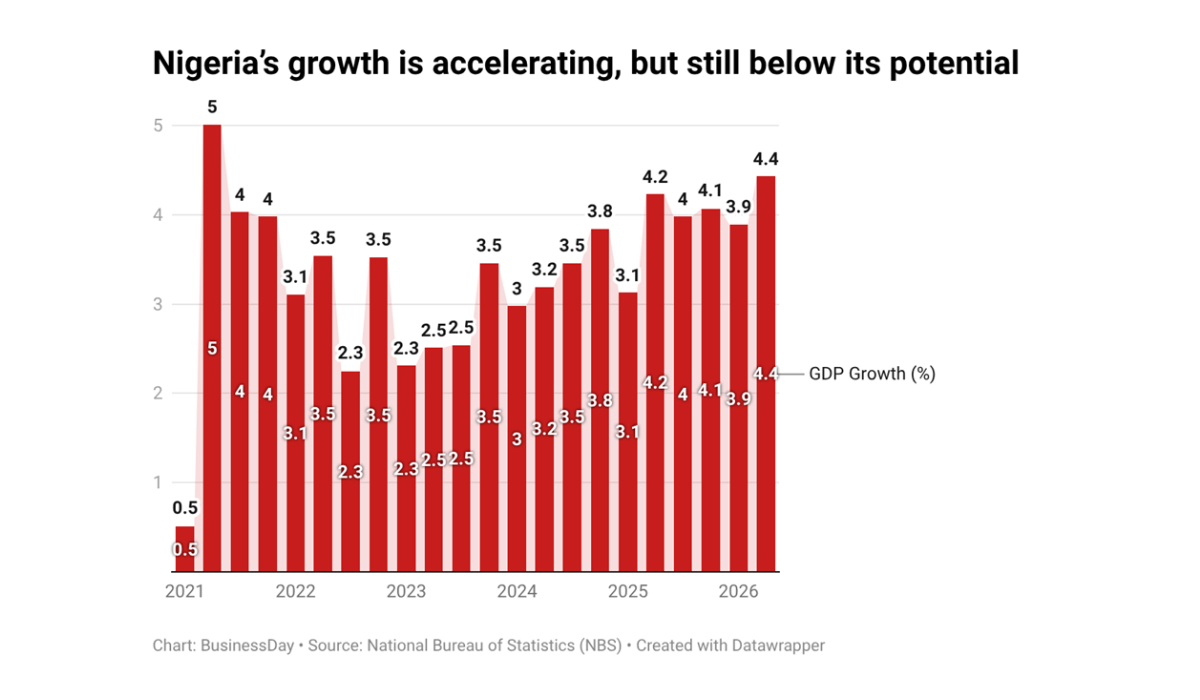
All of this leads to the one question that accompanied me through every page of the report: Is Nigeria’s economy now growing faster because the reforms put in place by the incumbent federal government have removed the macroeconomic constraints on growth, or is it growing faster because the economy is recovering from the extraordinary disruption of the Buhari/Emefiele diarchy?
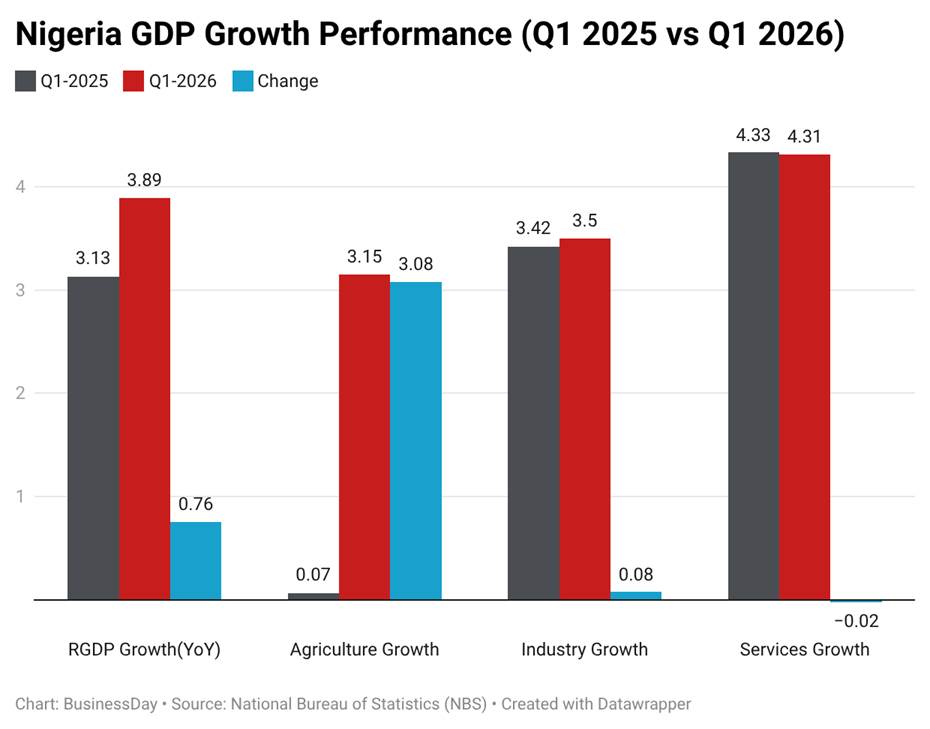
Against the backdrop provided by the incumbent government’s professed ambitions for the country, the 4.43 per cent by which the economy grew on an annualised basis in the second quarter of this year is far from the kind of high-productivity growth trajectory that the country needs. As further evidence, though, of the economy’s continued return to normalcy, it is a more than welcome outcome. In this latter sense, it reinforces the messaging from the 3.89 per cent growth recorded in the first three months of this year. And it is also the strongest second quarter performance recorded by the economy in the last three years, up from the 4.23 per cent recorded in the same period, last year.
In the last twenty years, the economy has skittered between the low (about 2—3 per cent average annual growth rates) of the last decade, in which growth was too tepid to raise living standards, even as population growth pressures prevailed, and periods before that, when high oil prices and investment booms produced bursts of 6—7 per cent average annual growth rates. The lessons from the limited reforms put in place by the Tinubu administration go beyond the fact that they have been able to nudge the economy towards a semblance of recovery from yesterday’s economic lassitude. These lessons matter more in our present circumstances as an admonitory codicil to the government’s current medium-term aspiration of a 7 per cent trend growth rate for the economy.