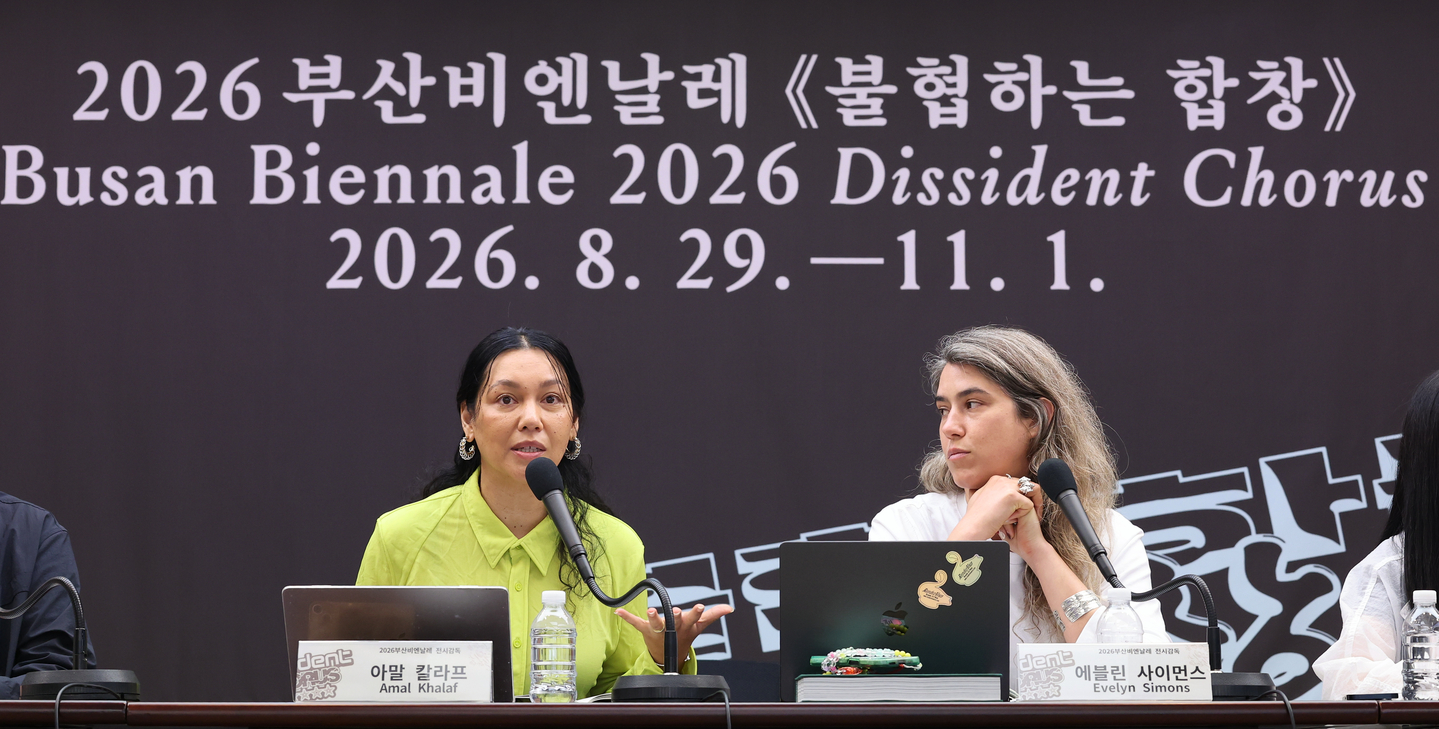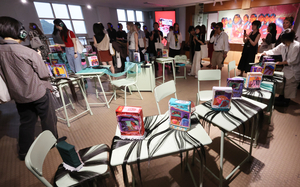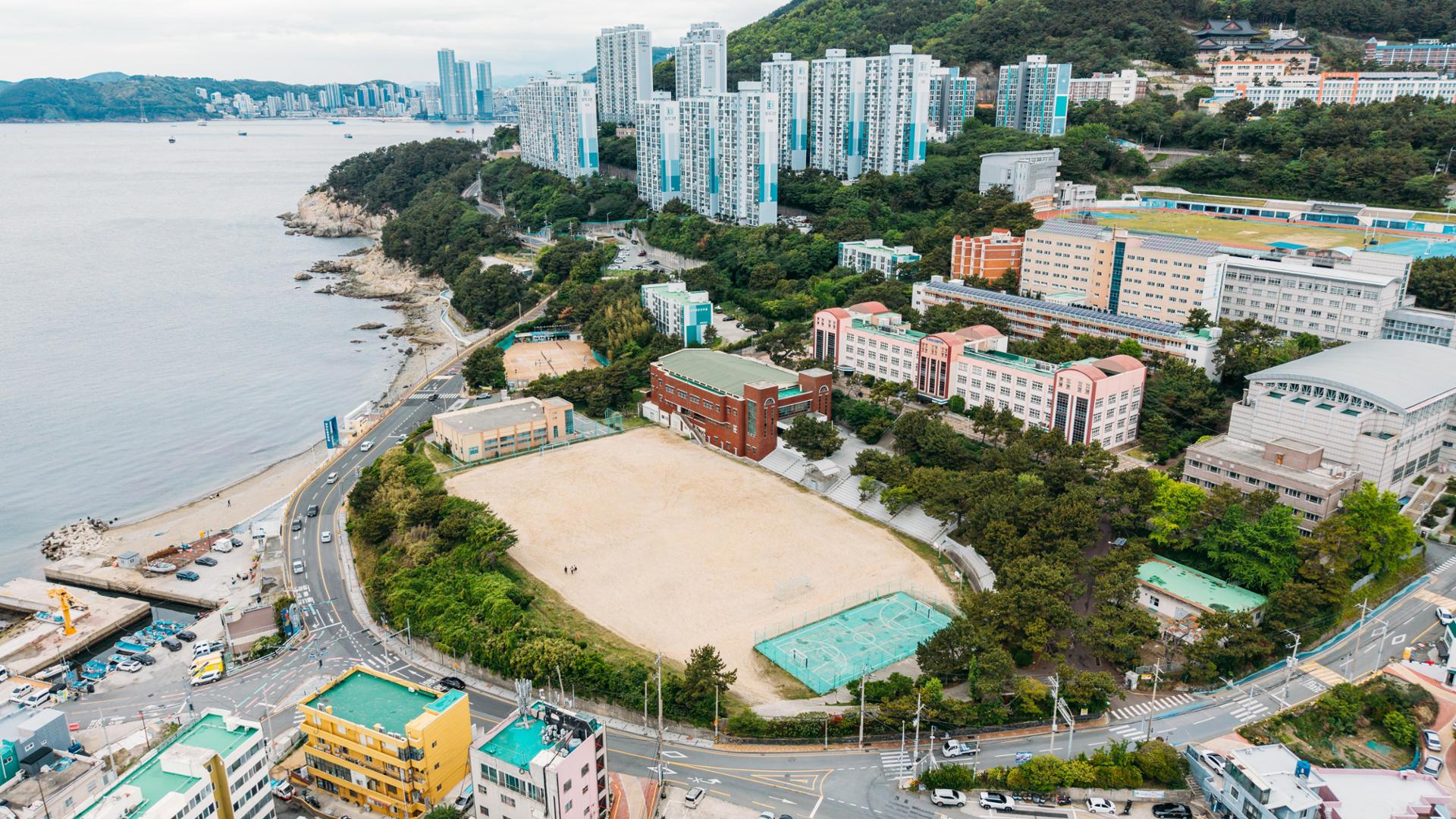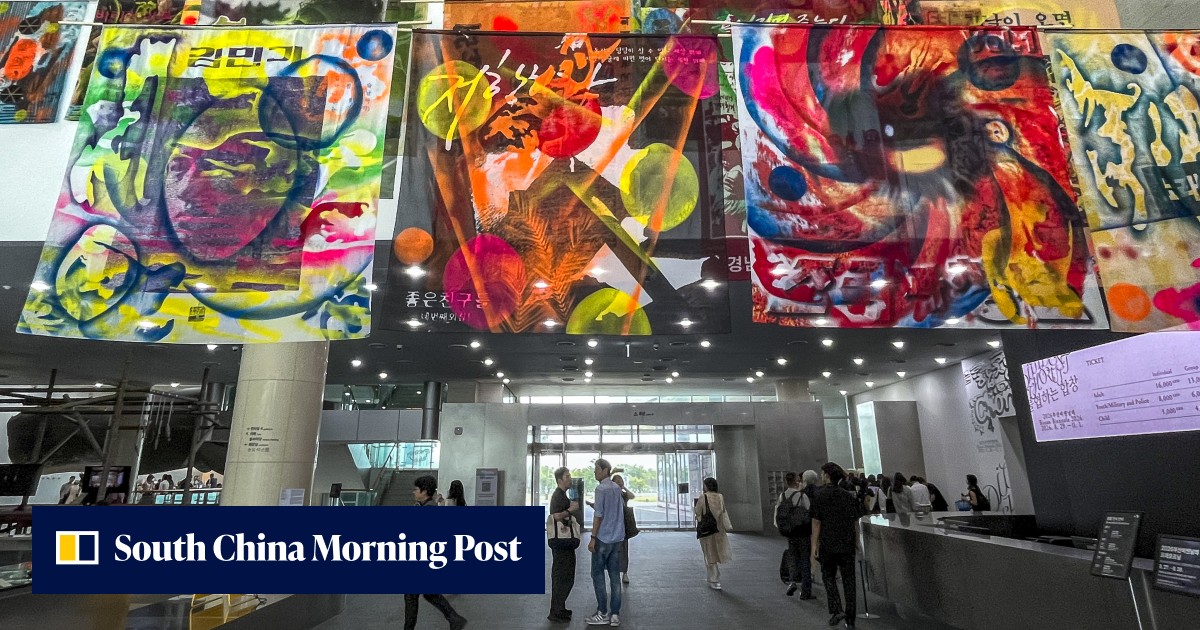
However, at the Busan Biennale, political noise is not an unfortunate sideshow: it is the whole curatorial premise.The curators, Bahraini-Singaporean artist Amal Khalaf and Brussels-based writer Evelyn Simons, have called their edition of South Korea’s oldest biennale, “Dissident Chorus”.The biennale seeks to move away from “the ruins of speech” – a breakdown of trust and the divisiveness of conventional communication – echoing Cameroonian-Swiss curator Koyo Kouoh’s title for this year’s Venice Biennale, “In Minor Keys”.In Busan, the focus on sound is meant to be literal, as is the curators’ intention of bringing politics into the exhibition.Collective acts of listening can create solidarity and political agency, they say, pointing to the 20th century’s history of aural activism – using sound to drive social change. In the 1990s, American electronic music duo Drexciya used music to create an empowering Afrofuturist myth. Their album art, designed by American artist Abdul Qadim Haqq, is displayed prominently in Space OneZ, a former port warehouse and one of the Busan Biennale’s three venues.
Busan Biennale 2026: a ‘Dissident Chorus’ of sound, art and politics
This year, South Korea’s oldest biennale explores politics through sound, performance and art, but does it truly challenge the status quo?
167 words~1 min read