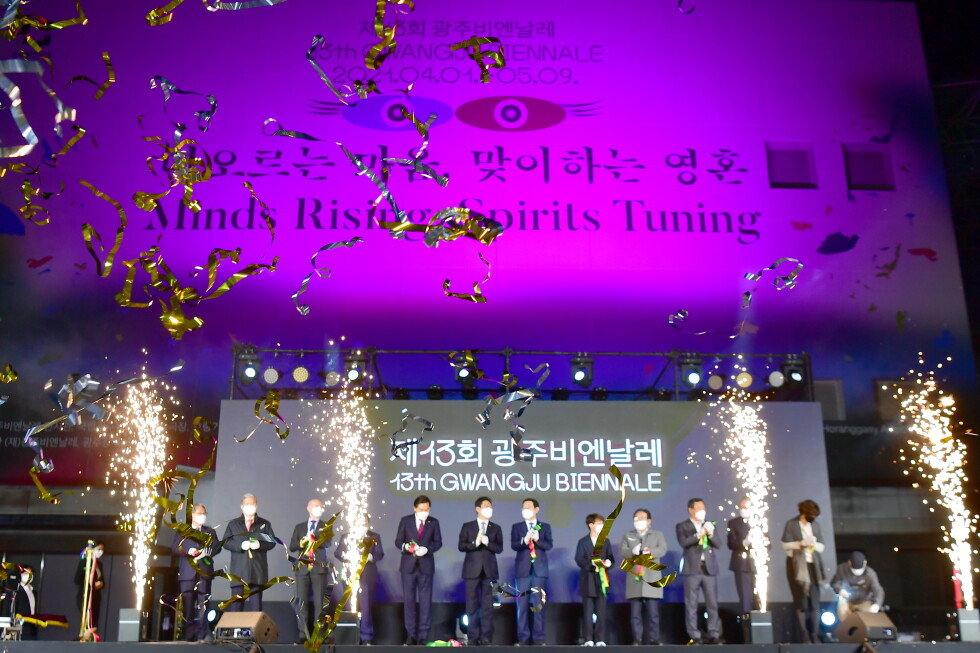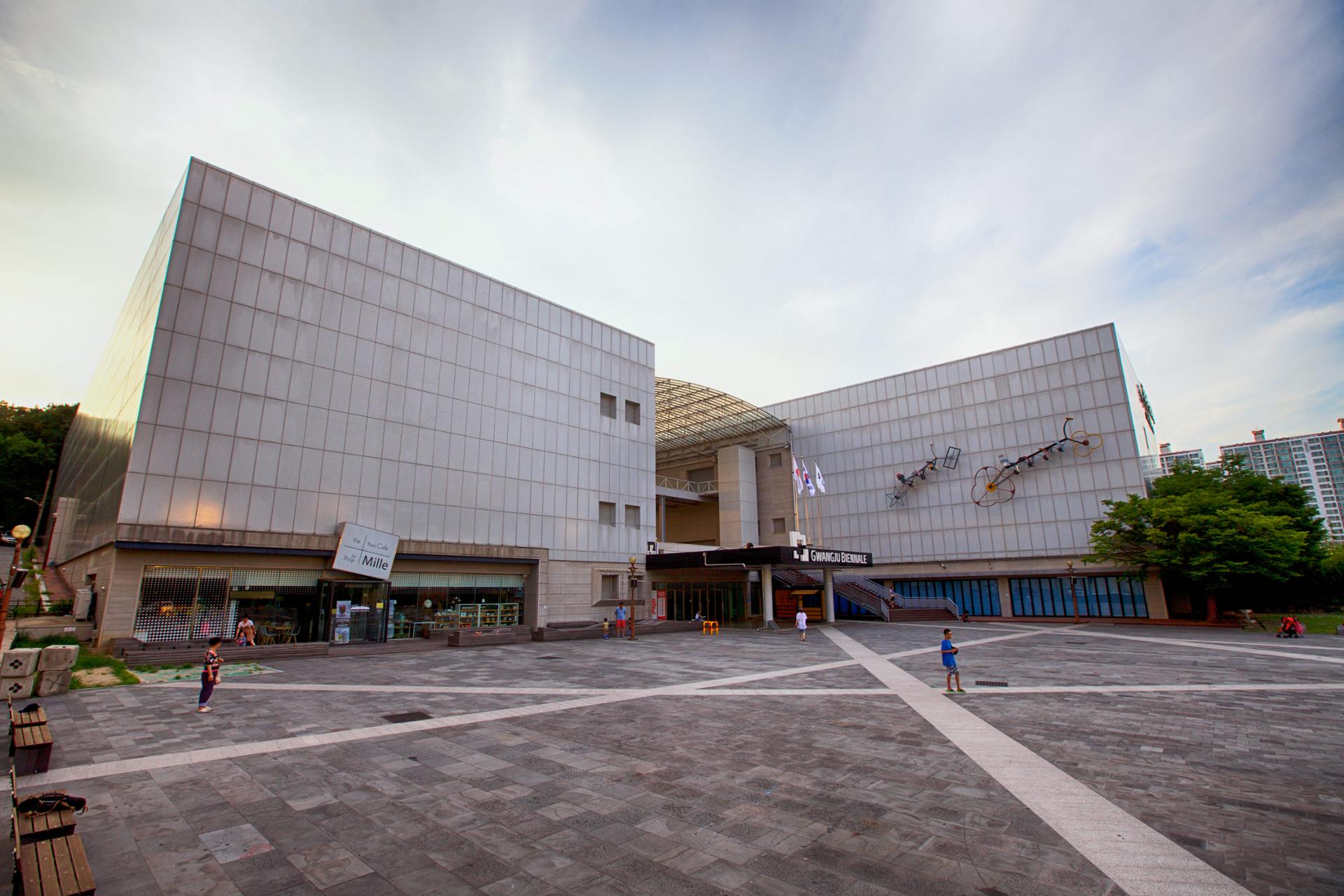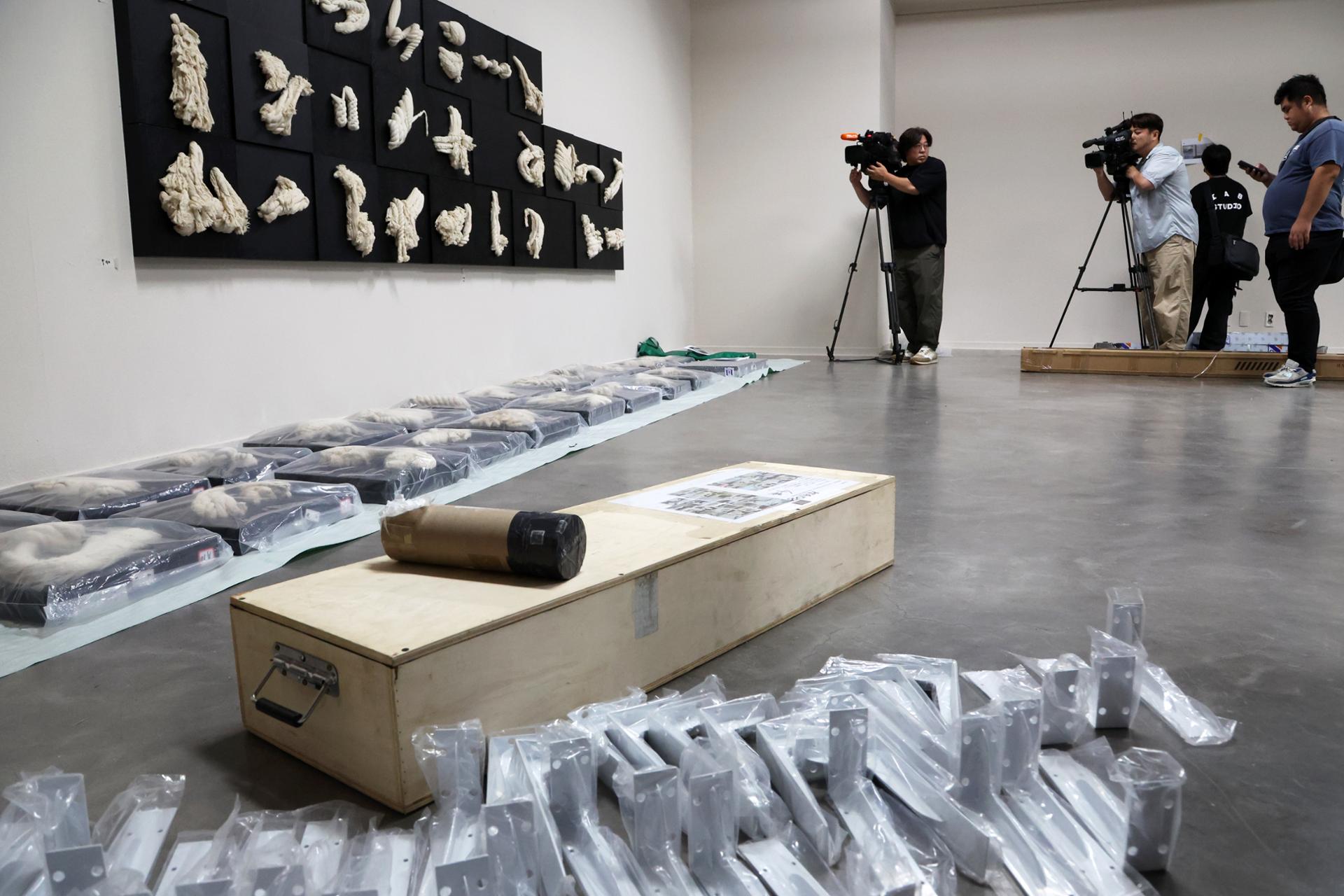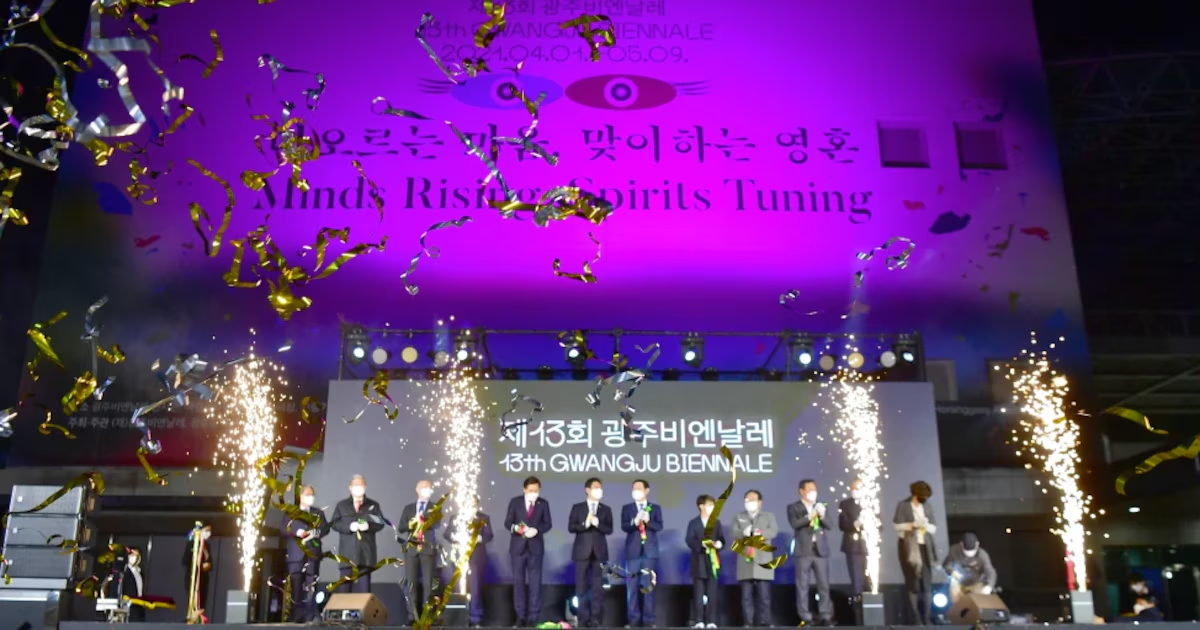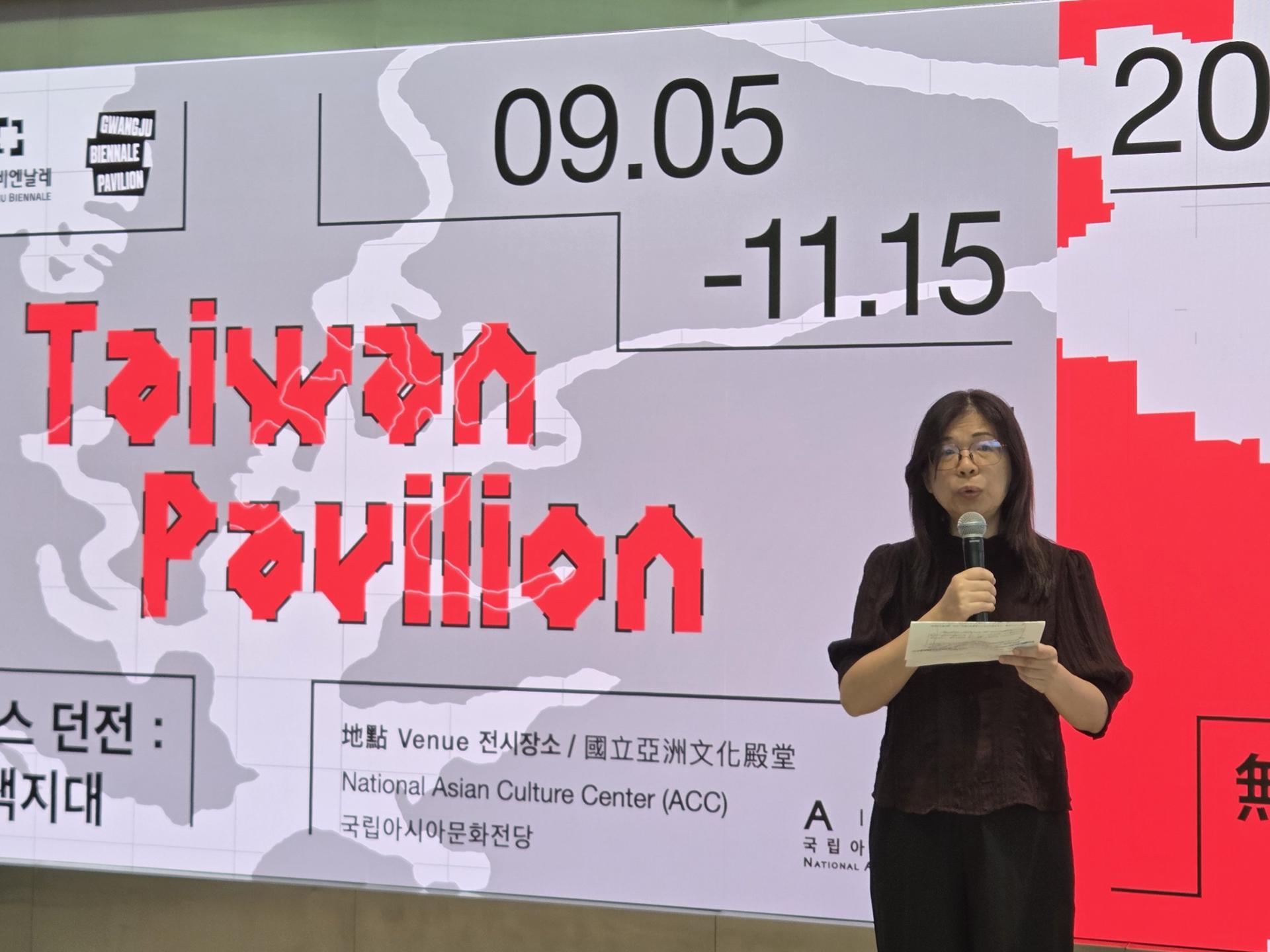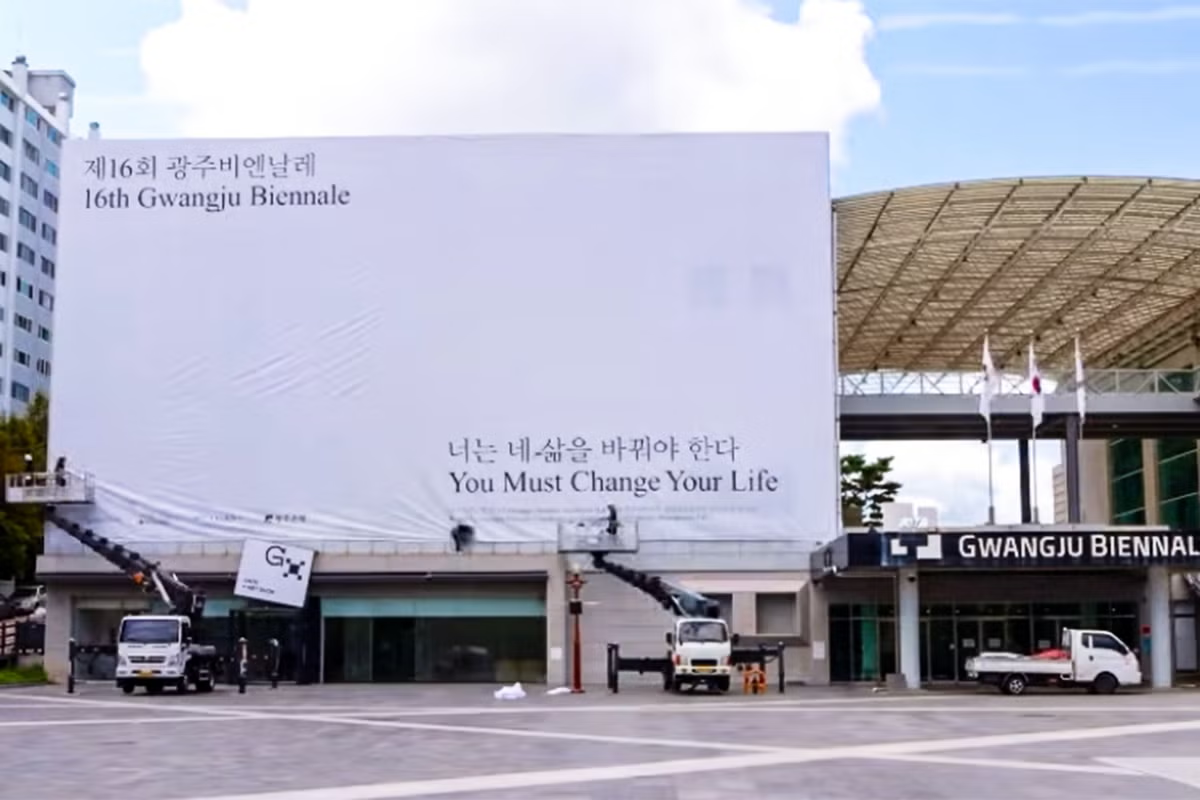
China has pulled out from one of Asia’s biggest contemporary art festivals after a row over the words “Taiwan pavilion” escalated into a diplomatic dispute between Beijing and South Korea.The Gwangju Biennale, founded in 1995 and held every two years in Gwangju, in southwestern South Korea, is Asia’s longest-running contemporary art biennale. Its 16th edition will run from 5 September to 15 November across venues in the city, with 43 participating artists. The Chinese exhibition team announced on Thursday that it had unanimously decided to withdraw from the Gwangju Biennale, two days before the festival opens to the public in the South Korean city. The Chinese presentation, being staged as part of the biennale’s separate Pavilion Project, had already been left unfinished after installation work was halted last week, according to Yonhap.Ruan Yuelai, curator of the Chinese pavilion, announced the decision at a press conference at Gwangju’s Ha Jung-woong Museum of Art, where the exhibition was being installed, saying: “We attach great importance to the Gwangju Biennale and have been actively preparing to take part in this exhibition, and we have put a great deal of care into the curated show in the Chinese pavilion.”“But the Gwangju Biennale’s use of an incorrect name concerning the participation of the China and Taiwan regions has brought about a situation in which political factors intervene in the domain of art,” he said, according to Korea JoongAng Daily. At the centre of the controversy is a Taiwanese exhibition organised by the National Taiwan Museum of Fine Arts. The Gwangju Biennale Foundation originally agreed to the name “Taiwan pavilion”, before changing it in June to “NTMoFA pavilion”, using the English initials of the museum.The Gwangju Biennale, founded in 1995 and held every two years in Gwangju, in southwestern South Korea, is Asia’s longest-running contemporary art biennale (Gwangju Biennale Foundation)Taiwan’s ministry of culture said the exhibition had been approved under the name “Taiwan pavilion” on 2 April and that an agreement signed later also used that designation.The ministry subsequently accused the foundation of political censorship, while the participating artists and curator said the change had been made without their consent.The Gwangju Biennale Foundation rejected the censorship allegation, saying the National Taiwan Museum of Fine Arts had entered the project as an institution rather than a national pavilion. It said applications for national pavilions required an approval letter from an embassy or culture ministry, which it said had not been provided by Taiwan.“This matter does not concern the content of an exhibition or freedom of expression,” the foundation told ArtNews. “It arises from an administrative difference concerning participant classification and naming conventions.”After Taiwanese artists and officials accused the biennale of erasing Taiwan and criticised the absence of the name from promotional material in an open letter, the foundation reversed its decision on 25 August and formally approved the name “Taiwan pavilion”. Chinese ambassador to South Korea, Dai Bing, then raised the issue directly with Gwangju mayor Min Hyung Bae, expressing Beijing’s “regret and concern” over the decision to approve the name. According to MBC, Min responded that “political considerations should not affect the field of art.”The following day, Chinese curators and installation staff stopped work on the China pavilion at Gwangju’s Ha Jung-woong Museum of Art and left the venue. The Chinese artists had not yet arrived in South Korea at the time.The Chinese embassy in Seoul escalated its objections on Thursday, saying the use of “Taiwan pavilion” violated the One China principle and threatened the political foundations of China-South Korea relations.“There is only one China in the world and Taiwan is an inseparable part of Chinese territory,” the embassy said in a statement. It accused the biennale organisers of allowing Taiwan to use a designation that did not correspond with its status and said China “reserves the right to safeguard its own interests”.China considers Taiwan part of its territory, and has not renounced the use of force to bring the island under its control. Taiwan has governed itself separately since 1949, but is not a member of the United Nations and has limited formal diplomatic recognition.South Korea has respected the One China policy since establishing diplomatic relations with Beijing in 1992. Foreign ministry spokesperson, Park Doo Soon, said the name had been “decided independently by the private sector in the cultural and artistic sphere and is unrelated to our government’s position on Taiwan”.“We hope this matter will not affect South Korea-China relations or exchanges and cooperation between the two countries,” he added. The Gwangju Biennale Foundation apologised on Wednesday for the ‘concern, confusion and disappointment’ caused by the dispute (Gwangju Biennale Foundation)The Gwangju Biennale Foundation apologised on Wednesday for the “concern, confusion and disappointment” caused by the dispute, while maintaining that it had never interfered with the exhibitions themselves.
Chinese artists pull out of Korean exhibition over ‘Taiwan pavilion’
Chinese curators say the decision allowed ‘political elements to intrude into realm of art’
793 words~4 min read