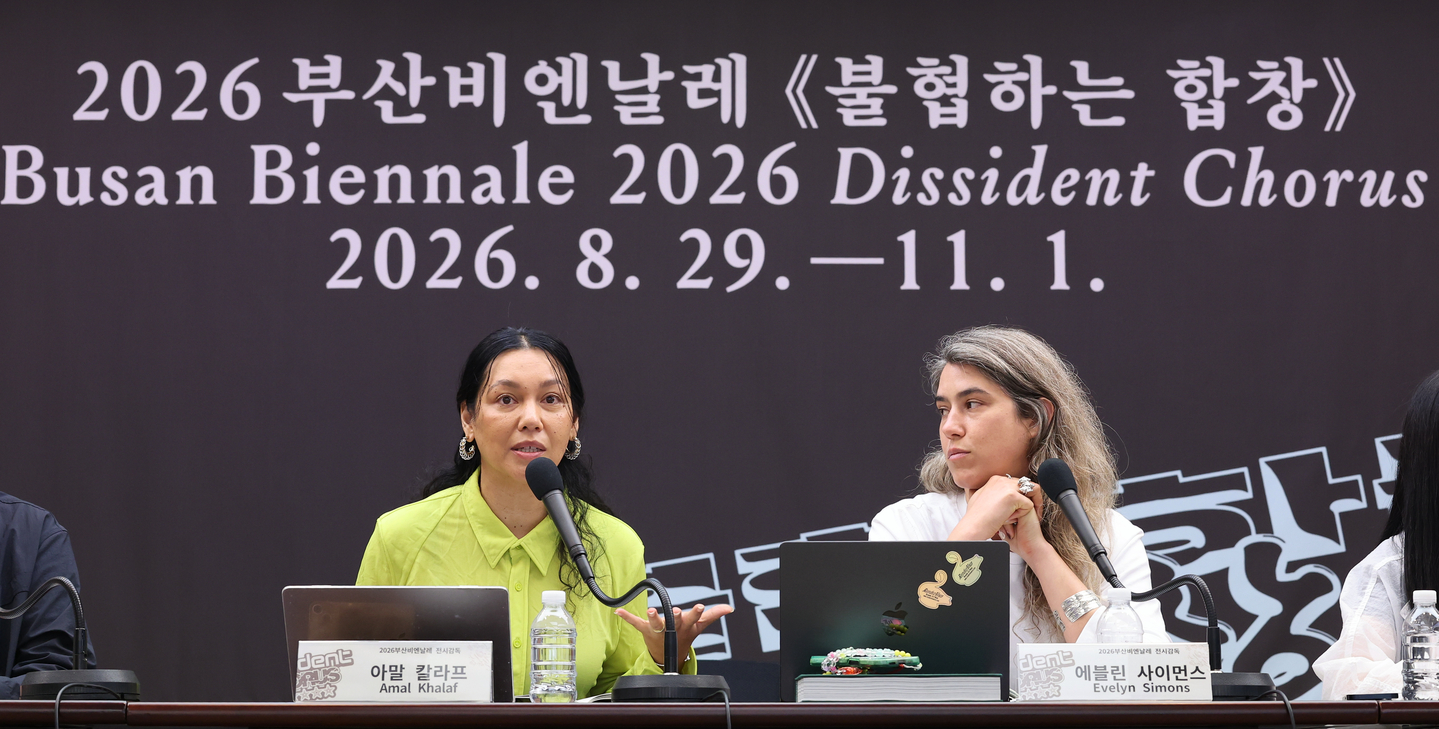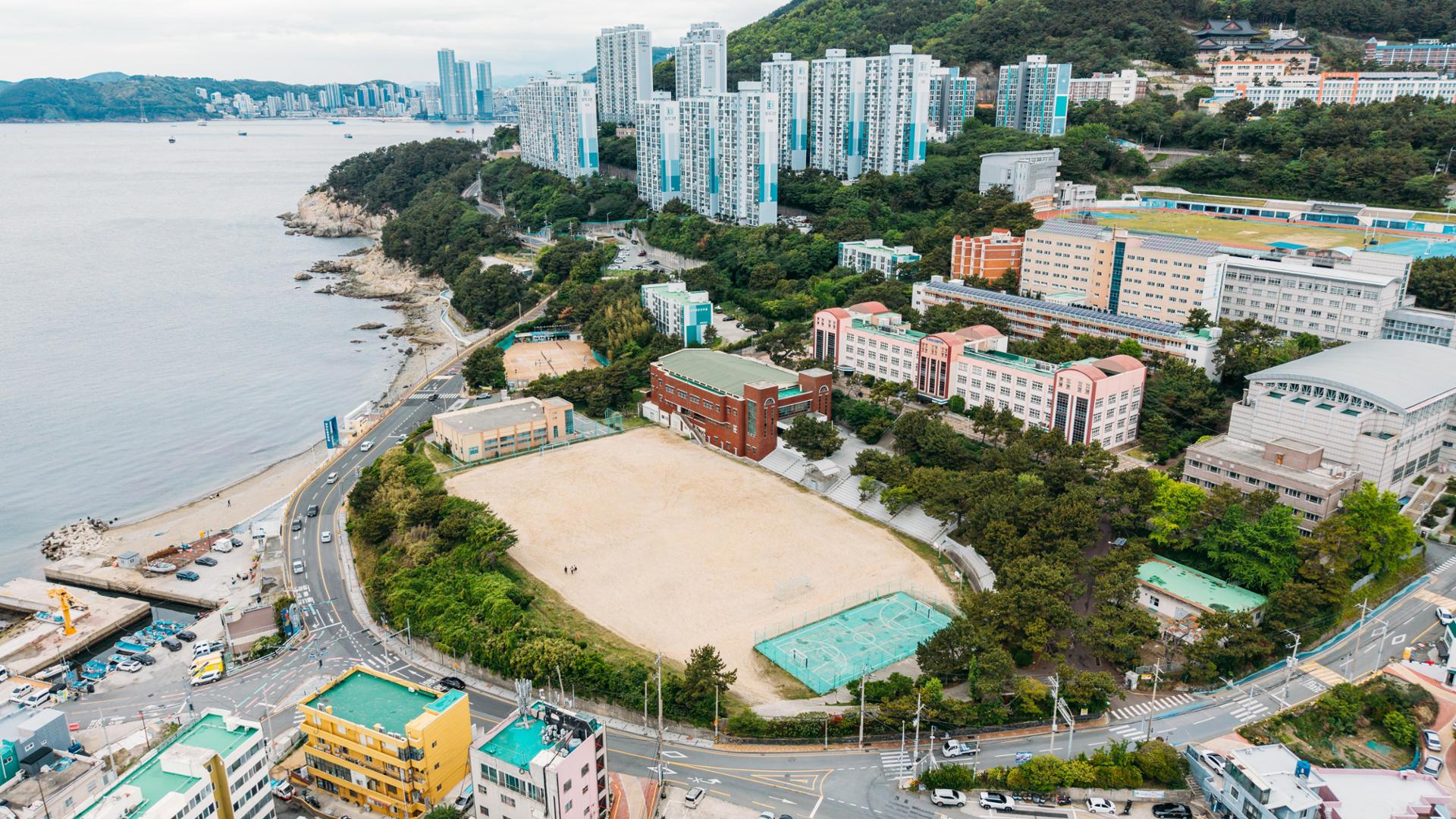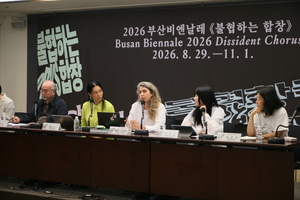
Evelyn Simons, co-artistic director of the 2026 Busan Biennale, speaks during a press conference held Wednesday in Seoul. (Busan Biennale Organizing Committee) The 2026 Busan Biennale will transform the city into a multisensory stage of sound, performance and collective experience under the title "Dissident Chorus," emphasizing coexistence through tension, difference and resonance.Running from Aug. 29 to Nov. 1 across the Busan Museum of Contemporary Art, former Busan Nam High School and Space OneZ, the biennale will feature 44 artists and teams from 23 countries, with additional participants to be announced later.Led by co-artistic directors Evelyn Simons and Amal Khalaf, this year's edition will emphasize live performance, club culture, music and bodily movement, moving beyond the conventional visually centered biennale format, according to the Busan Biennale Organizing Committee on Wednesday."This edition of Busan Biennale is not simply an exhibition about sound, but a rehearsal for other ways of being together," said Simons.“Dissident Chorus” becomes a field of resonances, where bodies and artistic practices gather in a conductorless, unruly chorus. The theme is rooted in the belief that sound — like water — resists containment, erodes borders and carries memory without permission, according to the directors."From work songs that built a nation to club sounds that forge temporary communities, these sonic practices are bound together by a common pulse — the refusal to be silenced," Khalaf said.Among the participating artists are Joshua Serafin, who will premiere a new work co-produced with Kanal-Centre Pompidou; Natasha Tontey, known for blending indigenous mythology with histories of militarism and gender; and Eric Baudelaire, whose research-based practice spans film, photography and installation.Busan Biennale is a major contemporary art exhibition established in the early 1980s that is held every two years. Reflecting Busan’s identity as a coastal and industrial city, the biennale frequently explores themes related to migration, labor, community and urban transformation.The biennale's previous edition in 2024 was held under the theme "Seeing in the Dark," exploring uncertainty, hidden histories and overlooked perspectives while navigating today’s turbulent world, led by co-artistic directors Vera Mey and Philippe Pirotte.
Busan Biennale 2026 explores coexistence through 'Dissident Chorus'
The 2026 Busan Biennale will transform the city into a multisensory stage of sound, performance and collective experience under the title "Dissident Chorus," em
341 words~2 min read