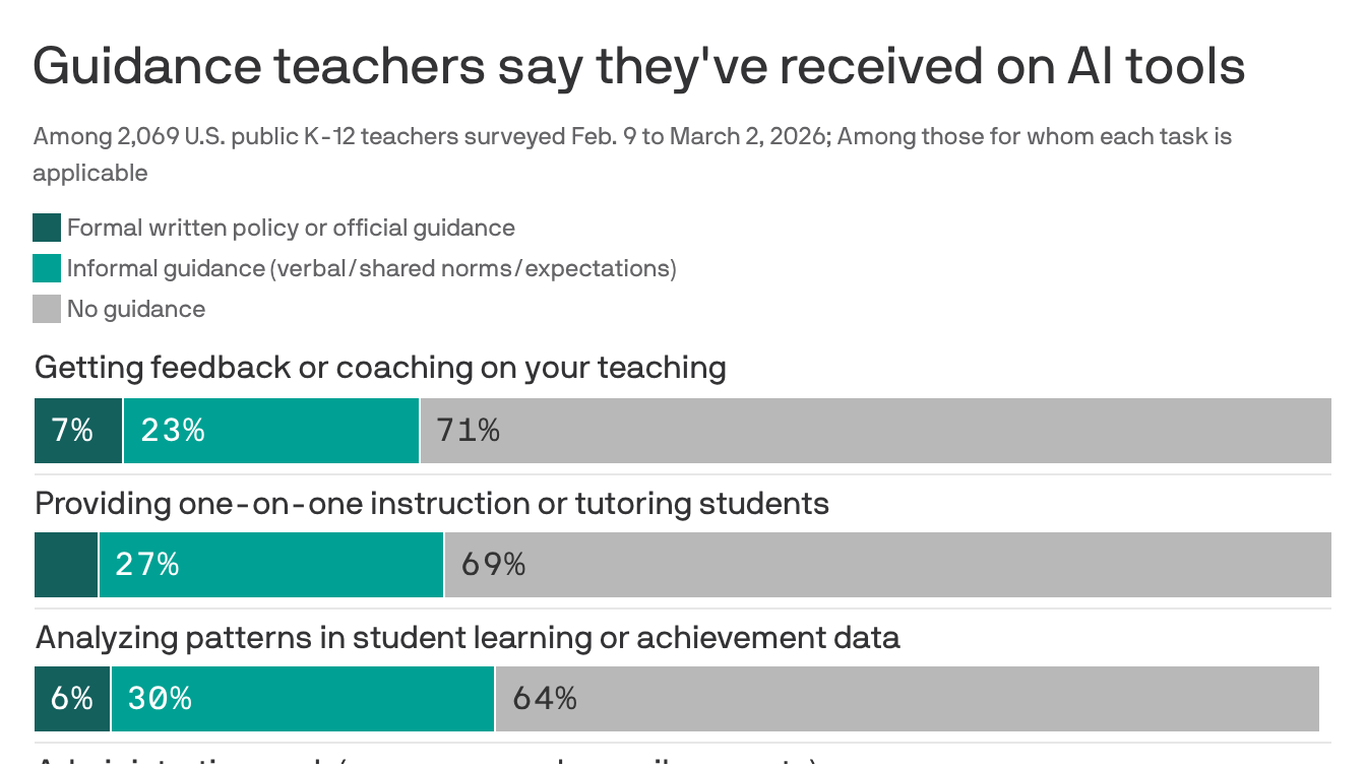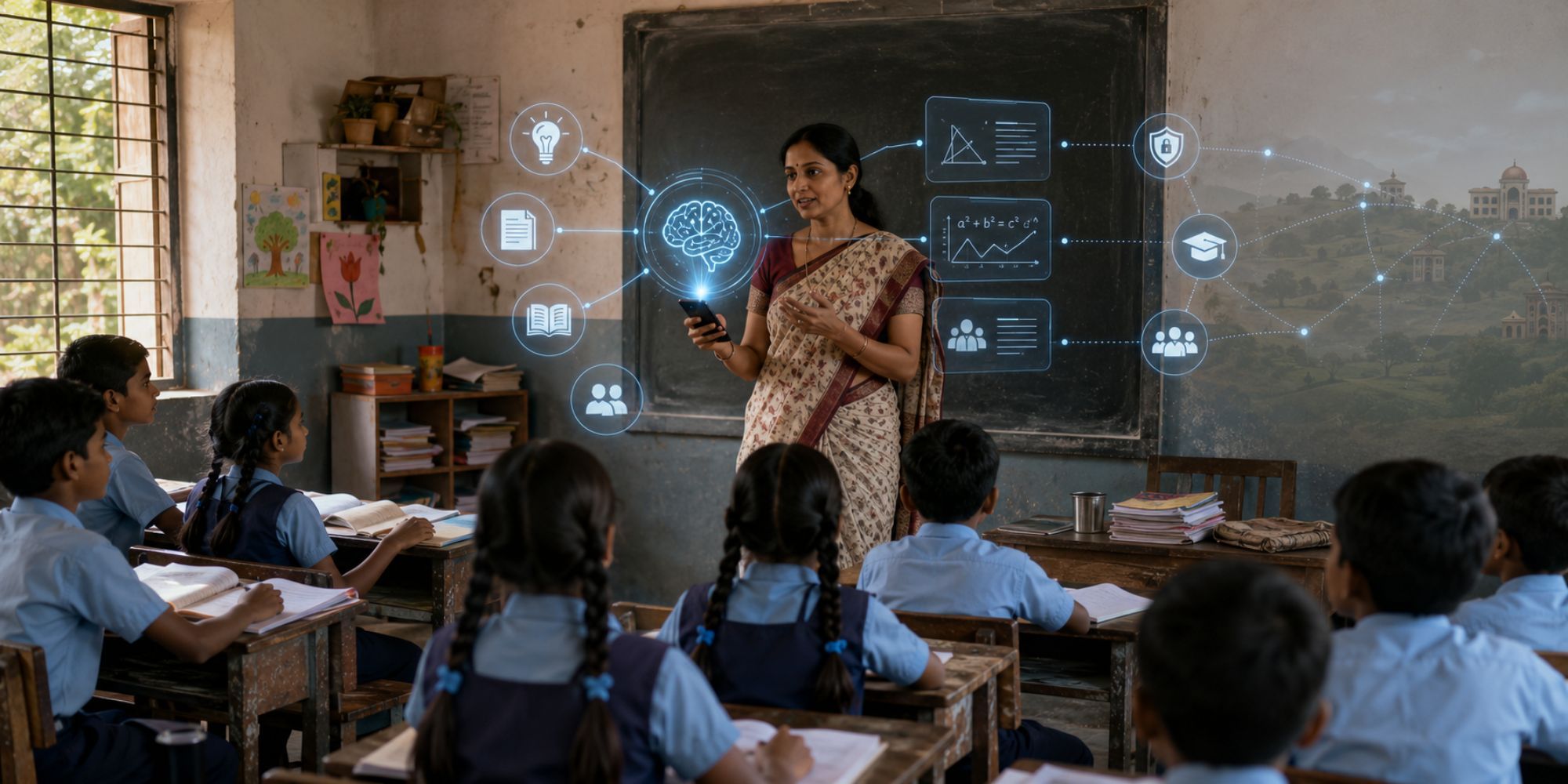
Here is an uncomfortable, if unsurprising, truth: South African children and almost half of teachers are already using AI for schoolwork, teaching and learning — largely without safeguards, guidelines or training.The debate about whether AI belongs in basic education has, in many respects, been overtaken by reality. The question now is what we do about it.Will AI take root by default, widening inequalities we have spent decades trying to address? Or will South Africa shape its role in education while there is still time to do so?Our response has not kept pace with the technology. That needs to change.AI is entering an education system already grappling with poor literacy outcomes, language barriers, learner dropout and pressure on the teaching workforce.It is also entering a deeply unequal system. South African education has long been characterised as two systems in one: a small, well-resourced sector that performs relatively well and a far larger system serving learners with fewer resources and weaker outcomes.Into that divide comes AI — at speed.Inequality risk is immediate Without deliberate intervention, AI is likely to benefit already advantaged learners first. Many schools still lack reliable connectivity, devices and the infrastructure required for digital learning. Yet, better-resourced schools are already experimenting with AI for lesson planning, teacher productivity, personalised learning and research.The danger is not theoretical. Left to market forces and uneven access, AI could simply become another layer of educational inequality.The early idea that AI might somehow solve education’s most entrenched problems has given way to a more useful conversation about where it works, where it does not, and where the risks lie.For teachers, one of its clearest benefits is productivity. UK teachers using AI chatbots for lesson planning have reported a 31% reduction in planning time without compromising quality. In the US, teachers report saving an average of 5.9 hours a week on activities such as lesson planning, grading, feedback, worksheets and rubrics — the equivalent of about six working weeks over a school year. Reducing administrative pressure in this way has implications for teacher wellbeing, retention and the sustainability of the profession. For learners, AI could support personalised learning, special educational needs, multilingual instruction and real-time feedback. Proving that the idea of an on-demand tutor that adapts to a learner’s pace, interests and language is no longer science fiction.But the conditions matter.When children use AI, it must be developmentally appropriate, grounded in sound pedagogy and designed with child safety in mind. Increasingly, concerns are being raised that present forms of AI may undermine independent learning and encourage unproductive use inside and outside the classroom.Safeguarding cannot come laterChild safety remains one of the least developed parts of the AI-in-education debate.The risks include inappropriate use of children’s data, loss of privacy, misinformation and exposure to unsuitable content. Less visible, but no less important, are the possible effects on identity, mental health and a young person’s sense of their own voice. Teenagers are also increasingly turning to AI for emotional support and companionship, despite serious concerns about whether mainstream AI platforms can safely respond to young people experiencing distress.AI chatbots designed to be agreeable (known as sycophancy) can compound the problem. A vulnerable child may receive validation when what they need is appropriate challenge, context or intervention. A chatbot is not a therapist and cannot reliably assess risk in the way a trained professional or loving adult can.Child safety remains one of the least developed parts of the AI-in-education debate.Perhaps the deeper educational question is what happens when AI becomes a shortcut rather than a scaffold for deeper learning. For many young people, it risks becoming what the Center for Universal Education calls a “cognitive surrogate”, doing the work of thinking rather than strengthening it.Adults with established critical-thinking and metacognitive skills may be able to use AI to extend their reasoning. Children are still developing those abilities. If they routinely outsource the struggle involved in writing, analysing, solving and questioning, they may lose precisely the practice that builds intellectual independence.In a country where foundational learning is already fragile, that deserves serious attention.None of this means South Africa should retreat from AI. Used intelligently, it could help teachers prepare lessons, reduce administrative work, support differentiated learning, strengthen African-language instruction and give learners access to feedback and support that many schools cannot currently provide.In a system facing teacher shortages, uneven resources and profound geographical inequality, those possibilities matter.AI will not fix South African education but it could expand what is possible within it.The distinction is important: benefits will not arrive automatically. They depend on deliberate choices about access, training, pedagogy, safety and equity.AI is moving faster than traditional policy processes. While the department of basic education develops structures and guidance for responsible use, teachers and learners are already experimenting with these tools. Conventional policy cycles were simply not designed for technology changing this quickly.South Africa therefore needs updated mechanisms to learn and respond while change is happening — not years afterwards.We have navigated major educational and social shifts before. We have the expertise and networks to confront this one too. AI is already in the classroom. The choice is no longer whether it arrives, but whether we shape what happens next or leave it to chance.• Eadie is director of Human Studios.Business Day
SHIRLEY EADIE | AI did not wait for South Africa’s classrooms to be ready
The technology could become another layer of educational inequality if not timeously dealt with
872 words~4 min read