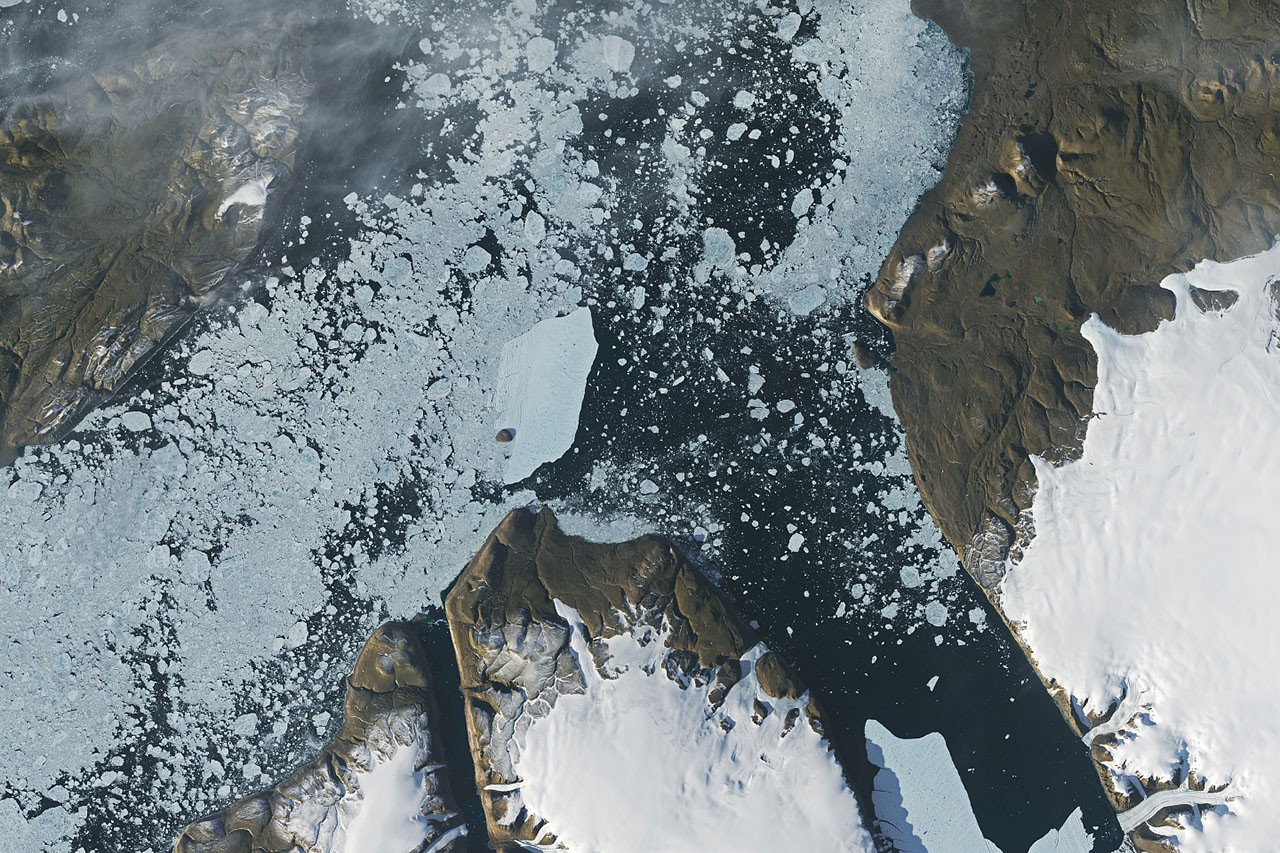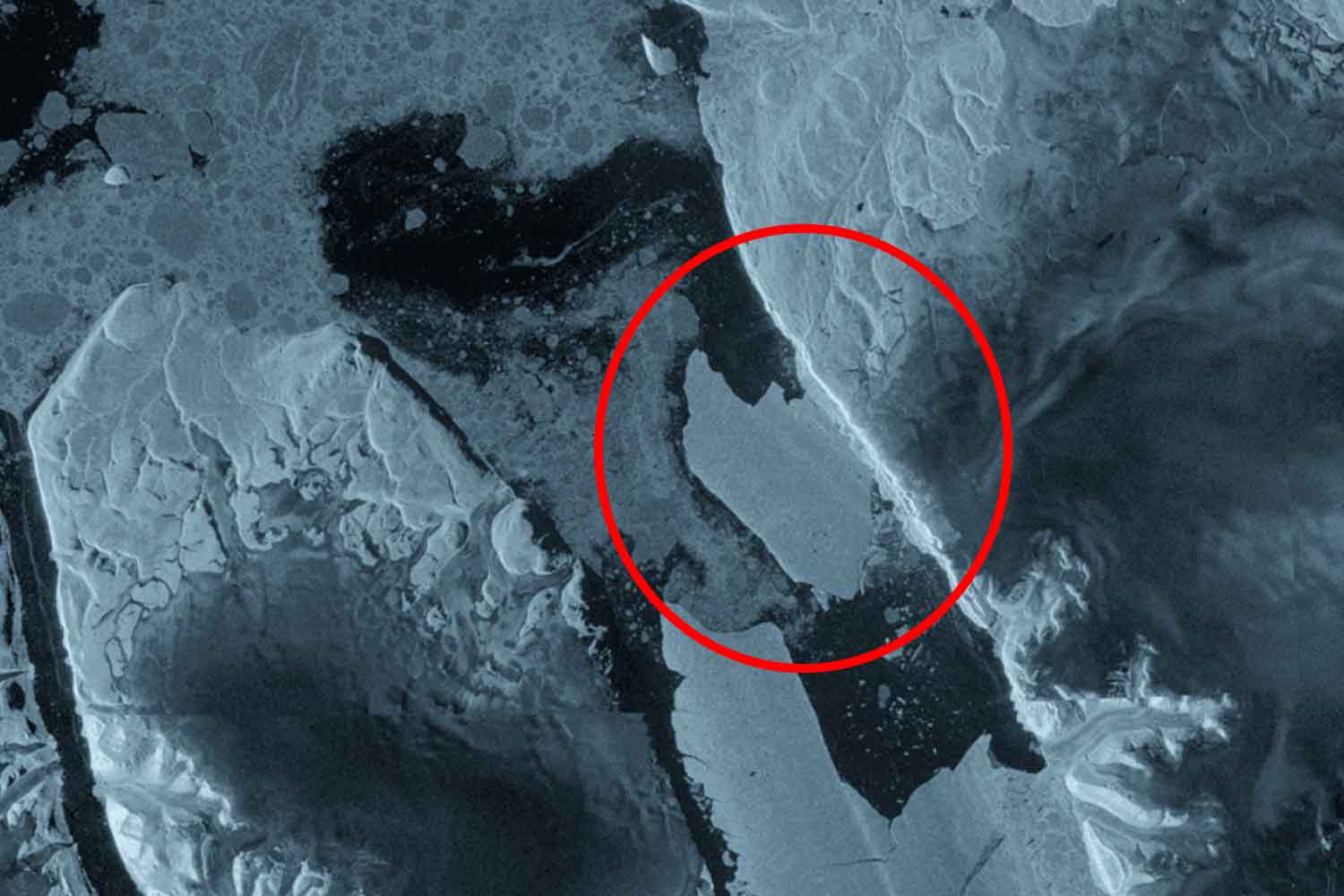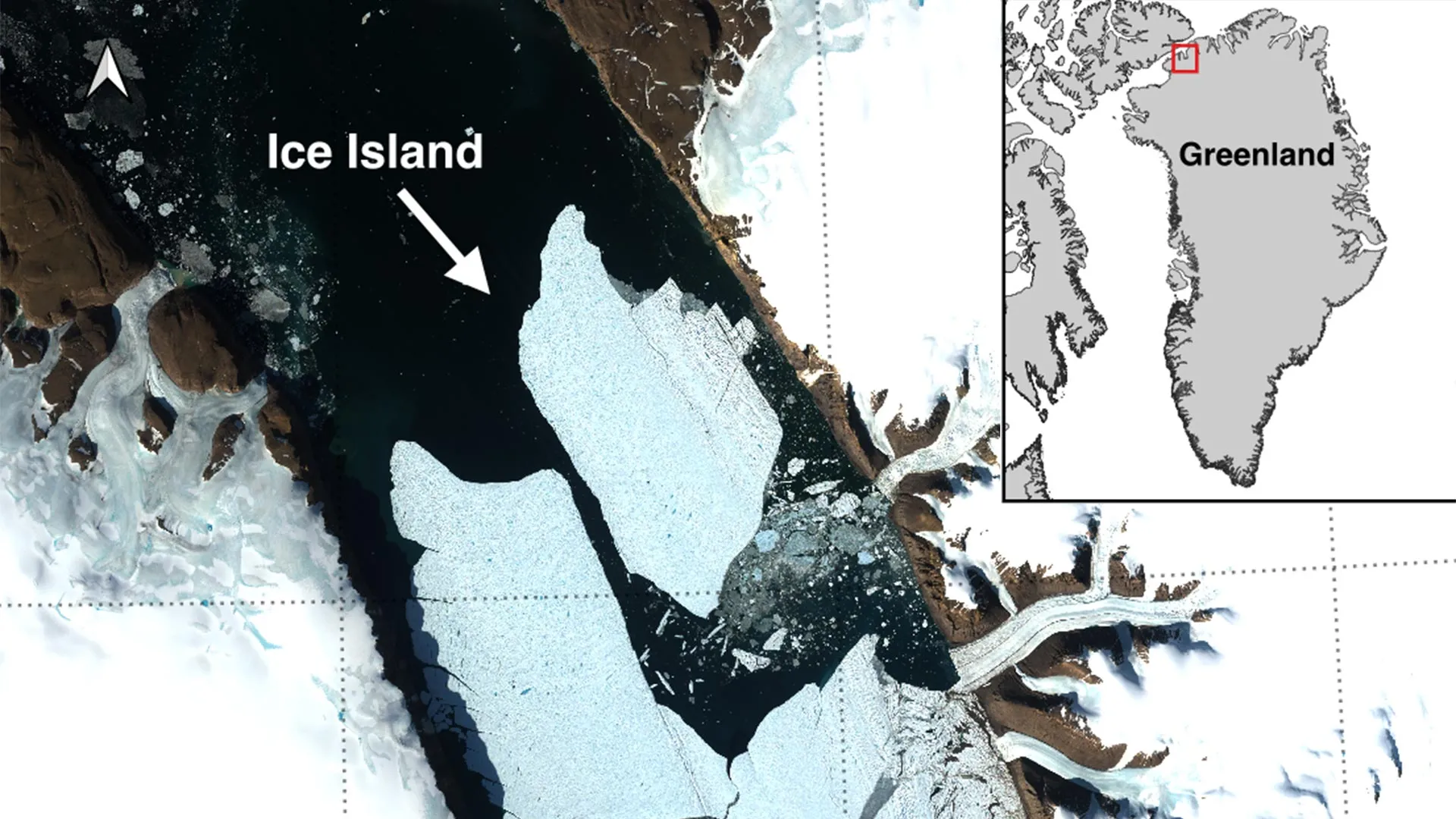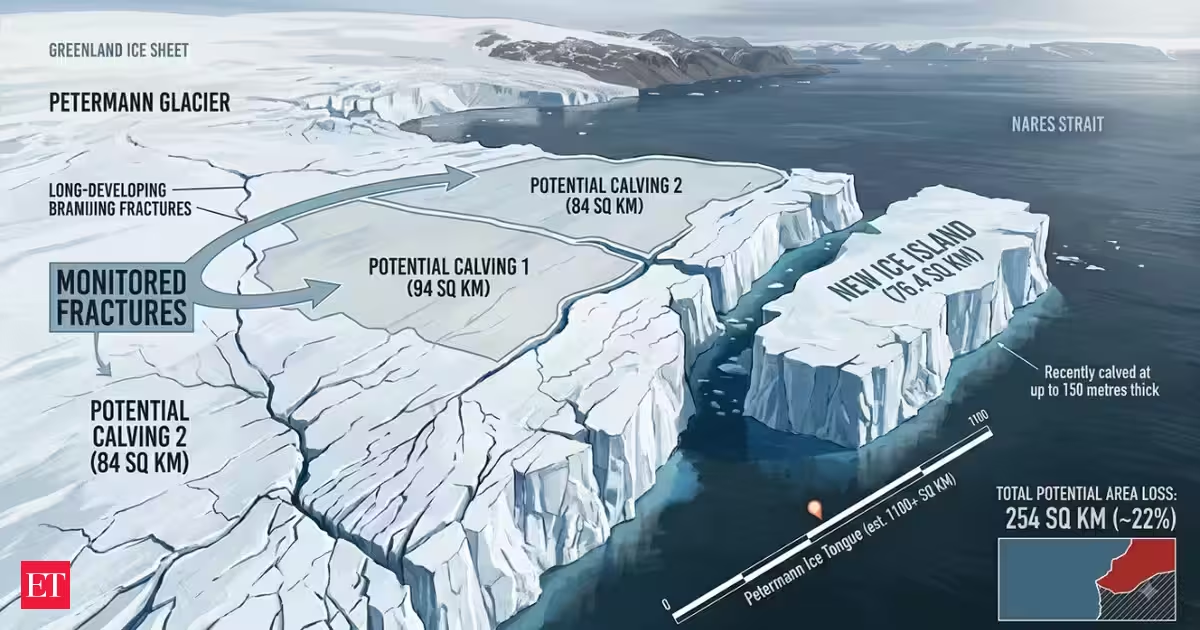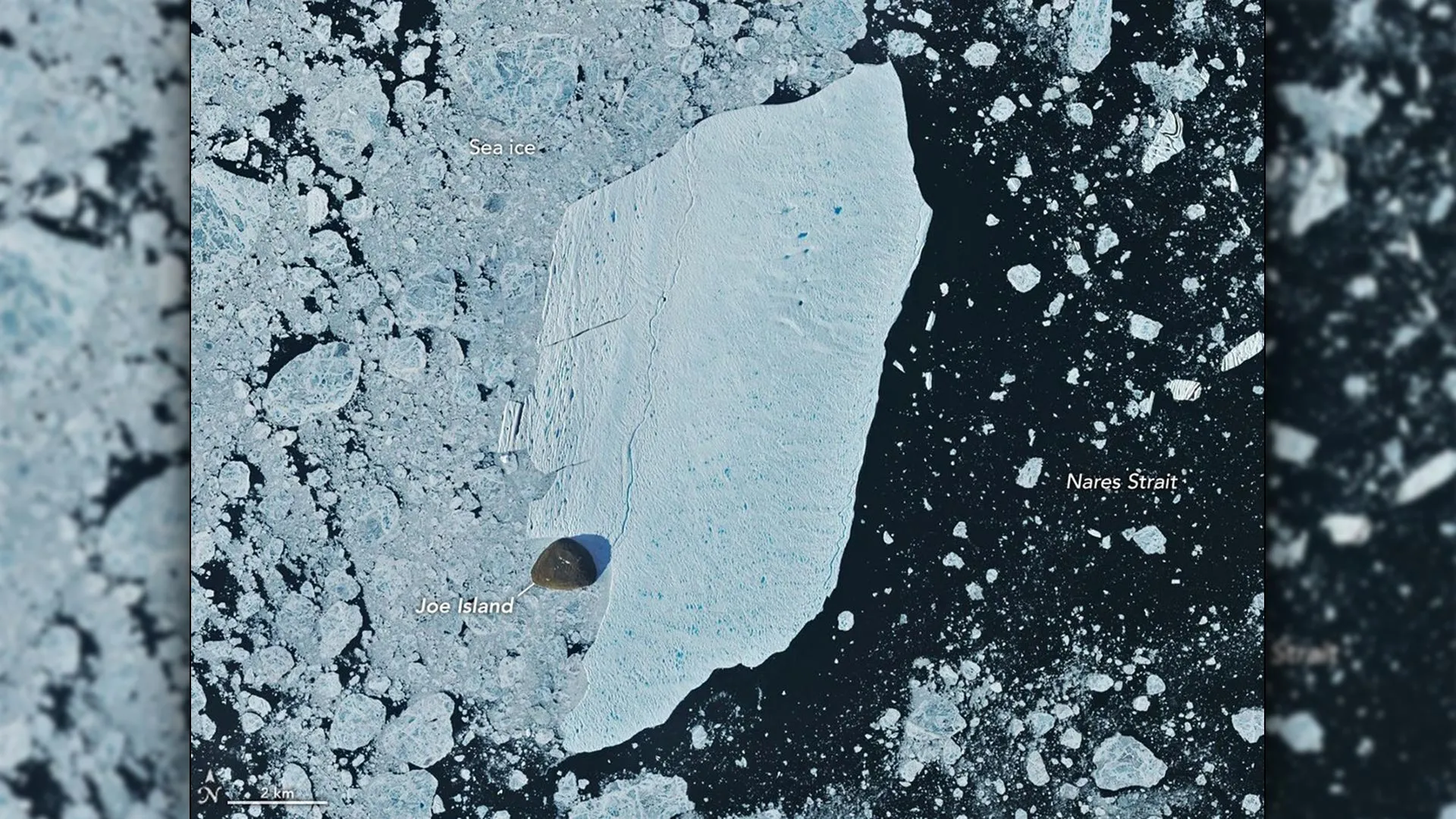
Summer is the busiest time of year for iceberg activity in Greenland's glacier-fed fjords, and 2026 delivered a particularly dramatic example. In August, a huge iceberg broke away from Petermann Glacier on Greenland's northwest coast. About the size of St. Thomas in the U.S. Virgin Islands, it marked the largest calving event from any Arctic glacier since 2020.
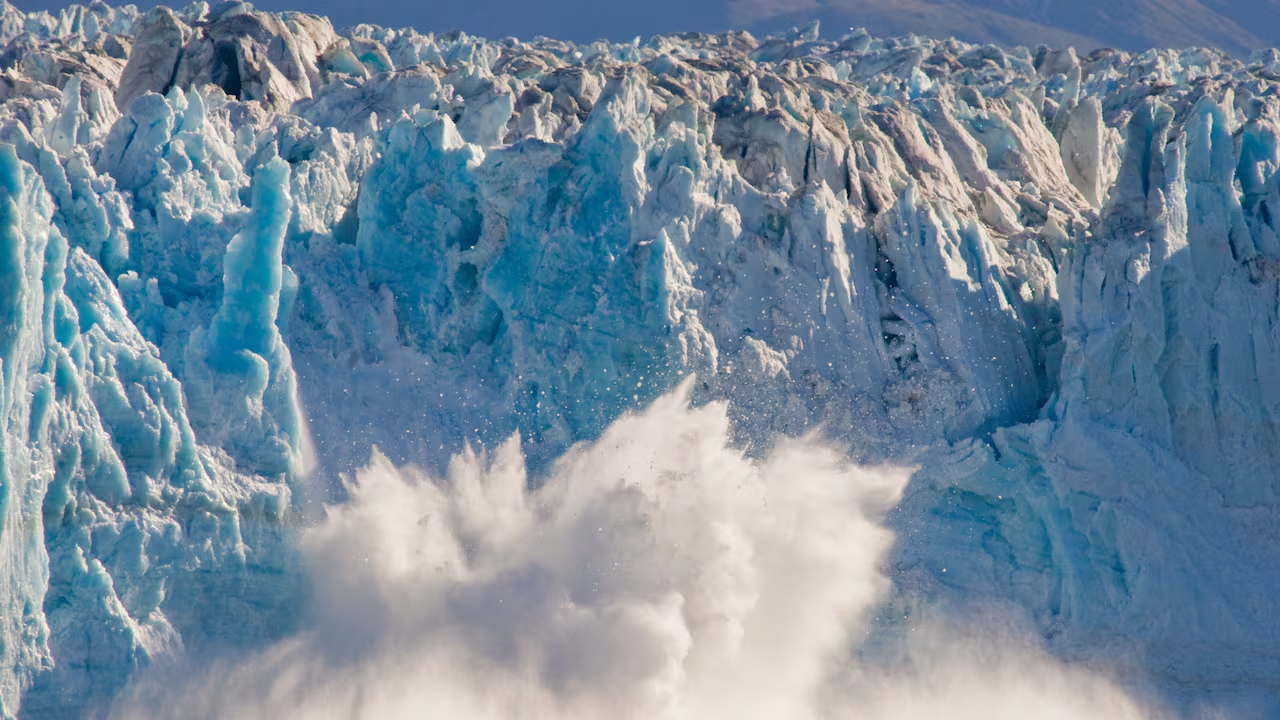
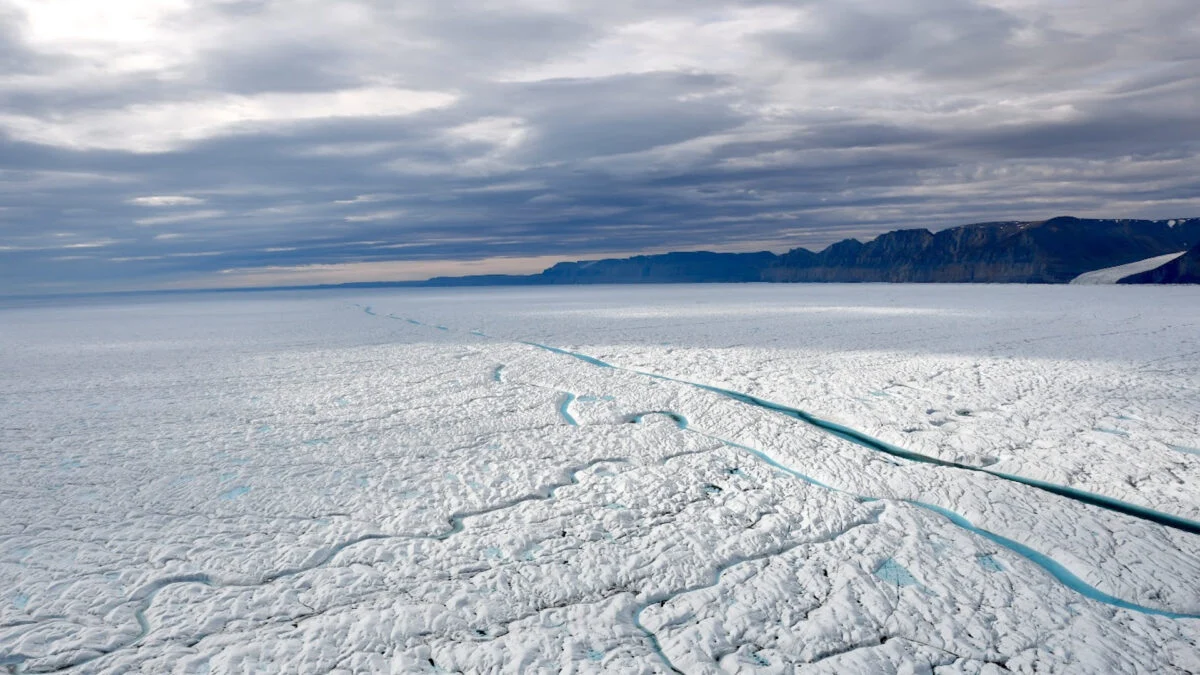
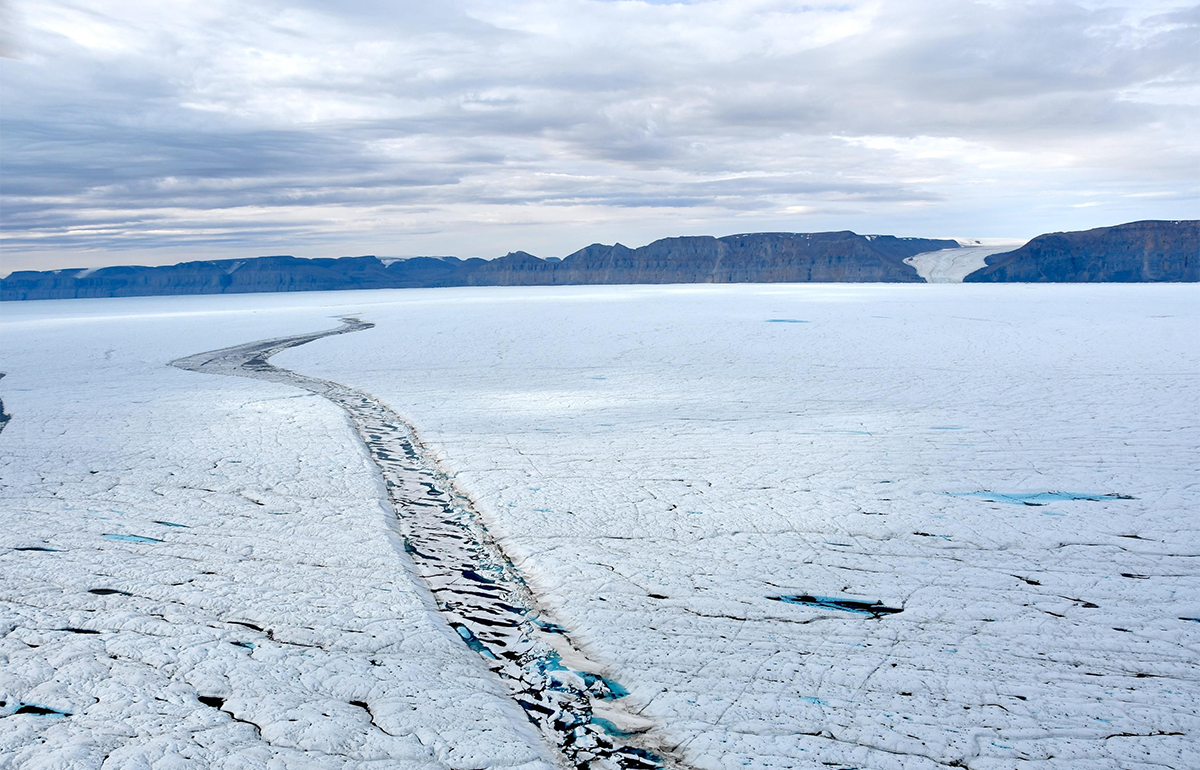
Iceberg calving is a normal part of the life cycle of outlet glaciers, but scientists monitor these events closely for clues about longer-term signs of instability. Petermann is one of Greenland's largest marine-terminating glaciers and helps control the flow of ice from the Greenland Ice Sheet into the ocean. Because of that role, changes in its stability could have implications for sea level rise.
A Giant Ice Island Breaks From Petermann Glacier
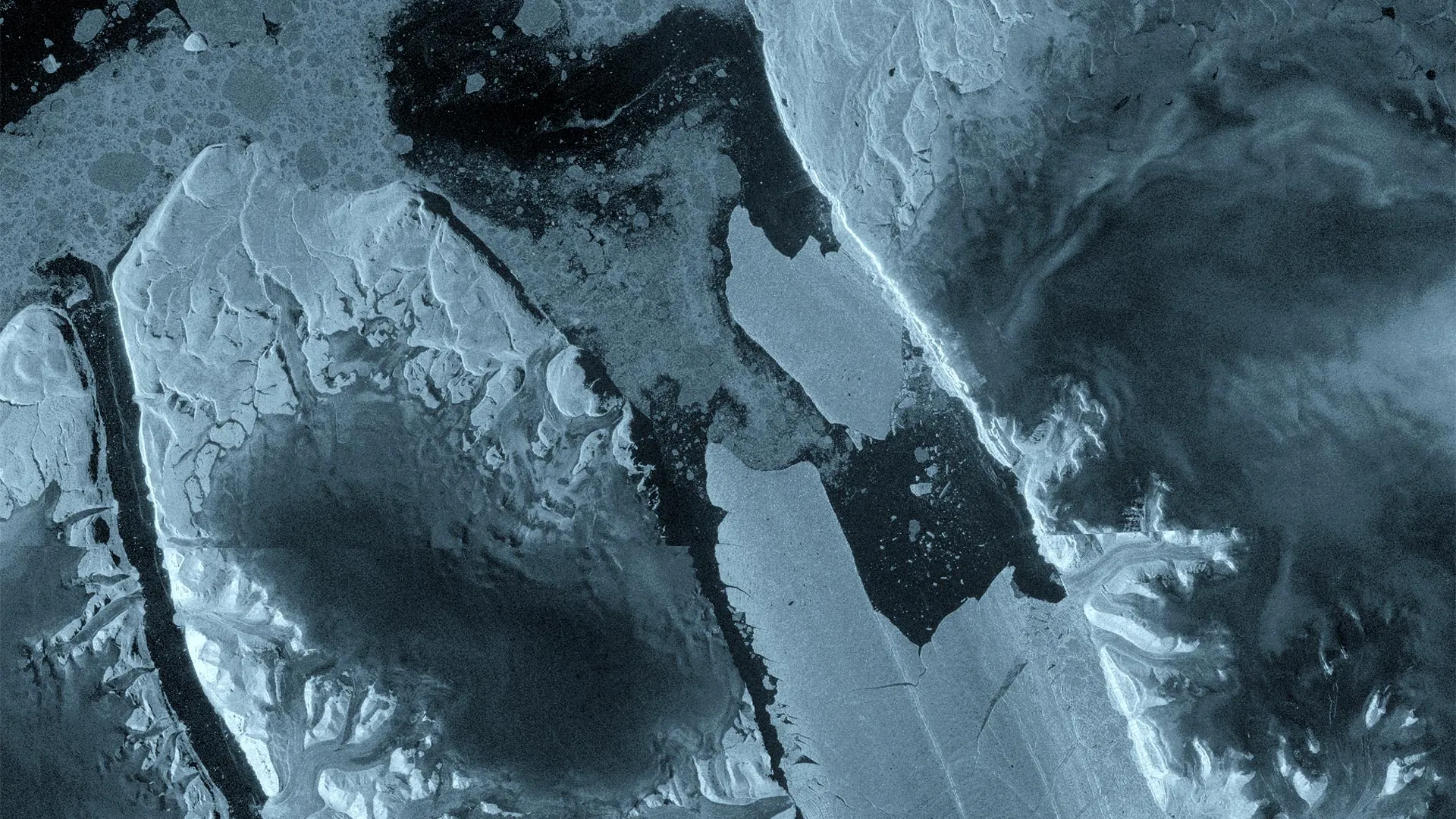
The summer 2026 calving was first identified on August 4 by Adam Garbo, a doctoral student in glaciology at the University of Ottawa, using imagery from the European Space Agency's Sentinel-1 mission. Garbo and an international group of researchers have been relying on remote sensing to monitor Petermann Glacier and follow changes in its floating ice tongue.
According to the team, the large flat-topped iceberg, known as an "ice island," measured just over 76 square kilometers (29 square miles) when it separated from the glacier. That made it the largest iceberg to break from Petermann since the 2012 event, which produced an ice island covering 130 square kilometers. Earlier major calving events occurred in 2008 (31 square kilometers) and 2010 (just over 250 square kilometers).