Story audio is generated using AI
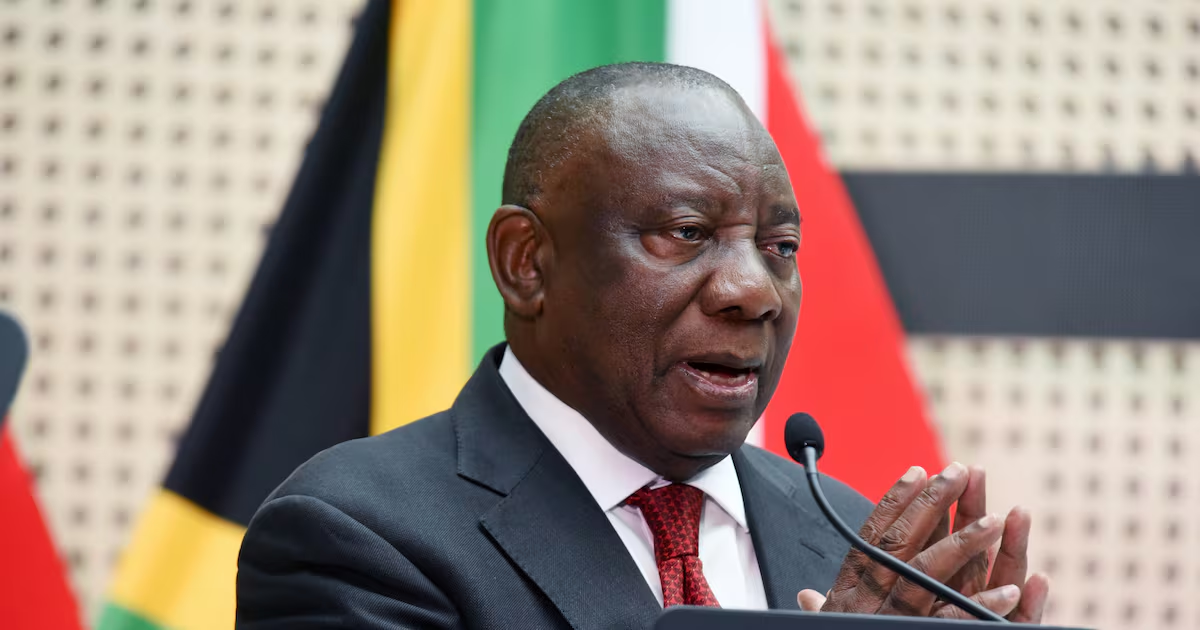
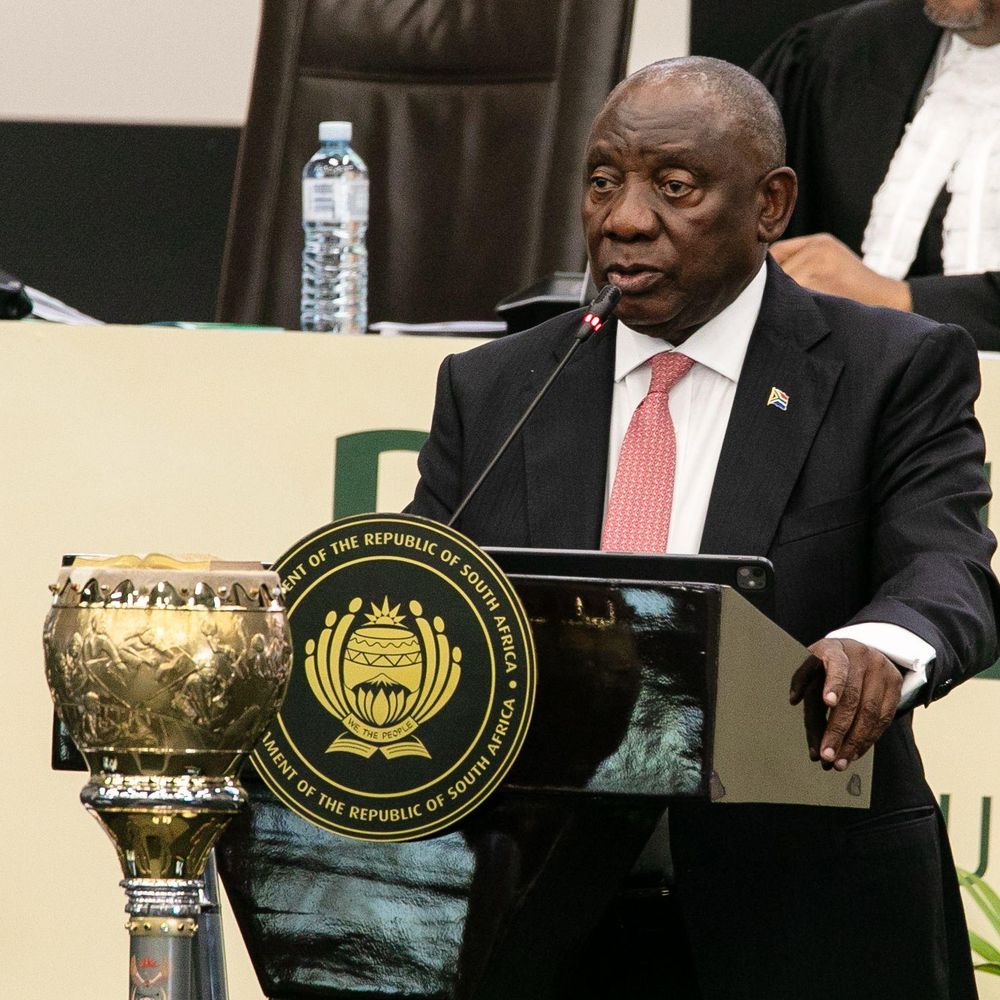
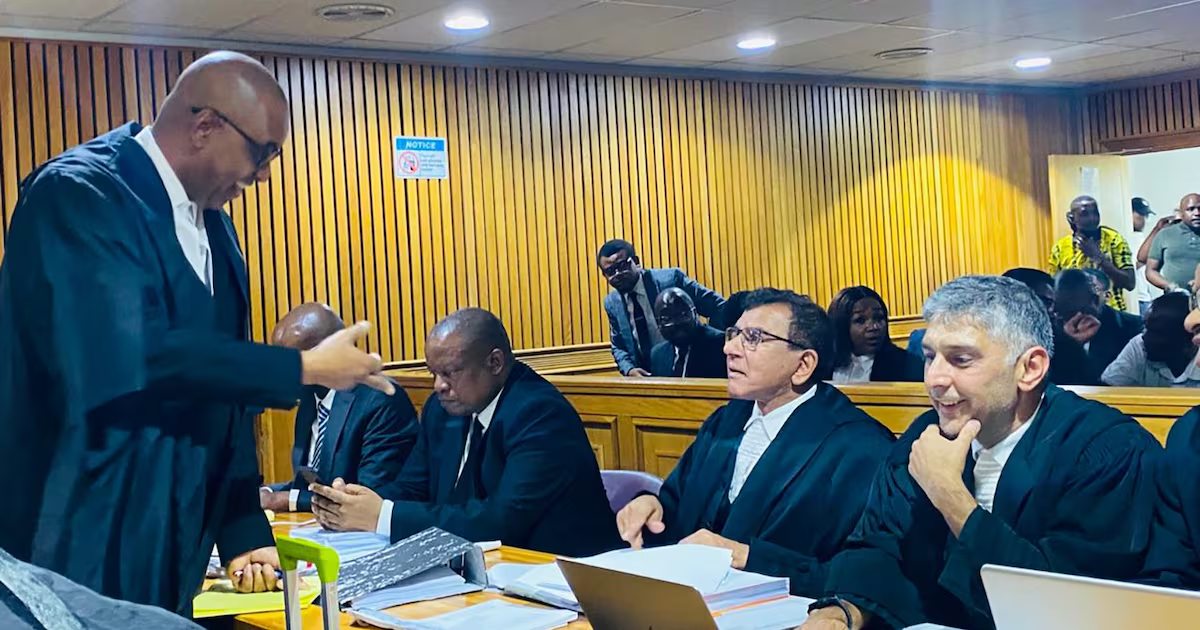
The EFF and MK party have urged the Western Cape High Court to reject President Cyril Ramaphosa’s bid to overturn the section 89 independent panel report, arguing that the review is premature and that stopping the impeachment process would interfere with parliament’s constitutional powers.The submissions were made as the court heard arguments on Thursday from parties opposing Ramaphosa’s application to set aside the report.Advocate Mfesane ka-Siboto, for the EFF, focused on the structure of parliament’s impeachment rules and the meaning of “sufficient evidence”.He argued that the rules must be read as a complete scheme, with the independent panel performing a preliminary filtering role and the impeachment committee conducting a fuller investigation and testing the evidence.A central dispute was the panel’s use of “prima facie”.Ramaphosa’s legal team argues that the panel applied the wrong threshold by treating “sufficient evidence” as equivalent to a prima facie case. Ka-Siboto rejected this, saying “prima facie” in the panel’s report was used to describe the preliminary nature of its assessment rather than the conventional evidential test.Judge President Nolwazi Mabindla-Boqwana questioned whether the report’s wording supported that distinction, pointing to passages where the panel said it understood its mandate to require it to determine whether there was a prima facie case against Ramaphosa.Ka-Siboto argued that the terminology had to be understood in the broader impeachment framework, saying the panel’s use of “prima facie” was effectively intended to mean “preliminary”.Judge Mark Sher suggested there could be a distinction between a prima facie assessment in an adjudicative process and a preliminary assessment in an evidence-gathering process.Ka-Siboto accepted that this could reconcile the panel’s wording with the Constitutional Court’s formulation, though he acknowledged that the report could have been clearer.Judge Ncumisa Mayosi questioned whether the panel had properly considered the impeachment process as a whole, pointing to rule 129A, which requires an impeachment motion to contain a clearly formulated and substantiated charge that prima facie shows serious misconduct or a serious violation.Read: Phala Phala impeachment committee backtracks on its evidence leaderMayosi questioned whether the panel’s interpretation effectively replicated the prima facie threshold already applicable when an impeachment motion is initiated.Ka-Siboto maintained that the panel understood the process as comprising different stages: a preliminary assessment by the panel, a fuller investigation by the impeachment committee and ultimately a debate and vote.He said that “what would have been better does not dislodge rationality”, arguing that the report’s lack of clarity did not necessarily make its decision irrational.The EFF also challenged Ramaphosa’s argument that the panel was intended to act as a “buffer” protecting a president from the reputational consequences of an impeachment inquiry without sufficient evidence.Ka-Siboto argued that the rules did not provide such an absolute shield. He pointed to rule 129I, which allows the National Assembly to proceed with an impeachment inquiry even when the panel finds insufficient evidence.This, he argued, meant that the “absence of sufficient evidence is not an absolute buffer” for a president against further proceedings.The EFF further argued that Ramaphosa’s application was premature because the panel report was only one step in a broader parliamentary process, with the ultimate decision remaining with parliament.Ka-Siboto also defended the panel against the claim that it failed to consider bad faith, relying on paragraph 263, where the panel said the information before it preliminarily established a “deliberate intention not to investigate” the crimes committed at Phala Phala.Mabindla-Boqwana questioned how that finding related to each of the four charges, particularly the one concerning whether Ramaphosa undertook prohibited paid work.Ka-Siboto accepted that paragraph 263 did not expressly make that connection but argued that the panel’s general findings had to be read with its conclusions on the individual charges.On the paid-work charge, he argued that Ramaphosa’s involvement in a commercial farming operation could support the panel’s conclusion that he had engaged in paid work.Disclosure of his interests, he said, did not automatically exempt him from the prohibition on receiving remuneration for other work. Instead, he argued, it was relevant to questions of intention, dishonesty and concealment.The MK party advanced a broader jurisdictional challenge.Advocate Dali Mpofu SC argued that the high court could not interfere because the Constitutional Court had already ordered the section 89 report to be referred to parliament’s impeachment committee.Mpofu said the constitutional court’s May order was binding on the high court and argued that setting aside the report would effectively “unrefer” a report the apex court had ordered to be sent to the committee.He said the Constitutional Court’s order remained binding regardless of whether the high court believed the underlying report was valid, arguing that “a lower court cannot alter a higher court order”.Mpofu also relied on issue estoppel, arguing that the question of whether sufficient evidence existed had already been determined.The judges questioned whether the Constitutional Court had actually determined that sufficient evidence existed, rather than simply giving effect to its amended rules and ordering the report to be referred.Mpofu maintained that the constitutional court’s judgment and order could not be undermined by a subsequent order from a lower court.He also opposed Ramaphosa’s argument that exceptional circumstances justified an immediate review.Judge Sher questioned the evidence linking Ramaphosa personally to events surrounding the investigation in Namibia, including whether a request for discretion by Namibian authorities was made at his behest or by Maj-Gen Wally Rhoode or other officials acting independently.Mpofu argued that this was precisely the type of factual dispute that should be investigated by the impeachment committee.Whether the evidence ultimately established Ramaphosa’s personal involvement, he argued, was a matter for the committee to determine through a fuller process.Mpofu also rejected Ramaphosa’s reliance on humiliation and reputational harm as grounds for stopping the process, arguing that these consequences were inherent in a constitutionally prescribed accountability mechanism and did not, without more, amount to the “grave injustice” required to interrupt it.The judges tested this with a hypothetical scenario in which a panel completely misconceived its mandate and recommended an impeachment inquiry despite there being no evidence against a president.Mpofu accepted that such circumstances could potentially justify judicial intervention but argued that Ramaphosa’s case did not establish that kind of exceptional situation.Business Day