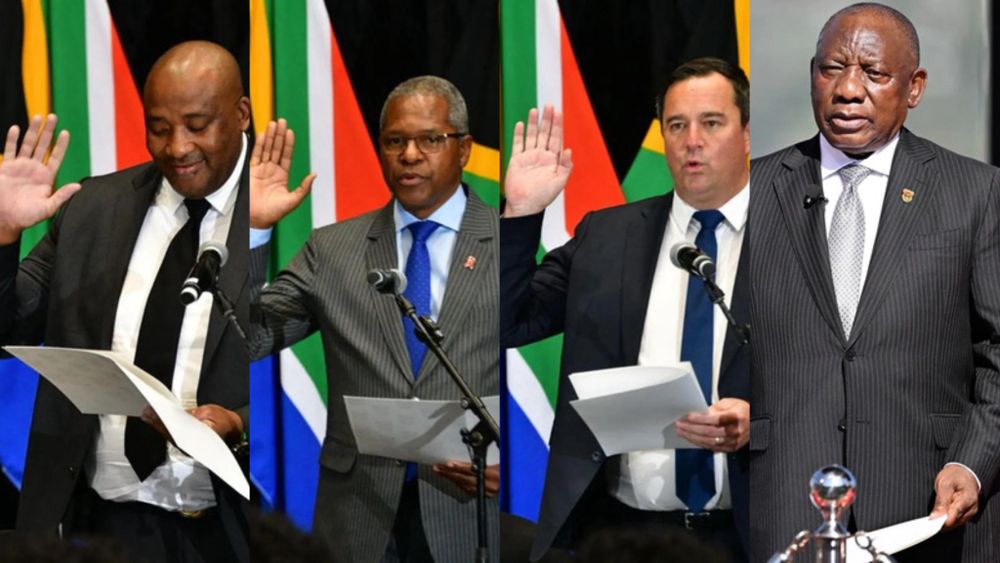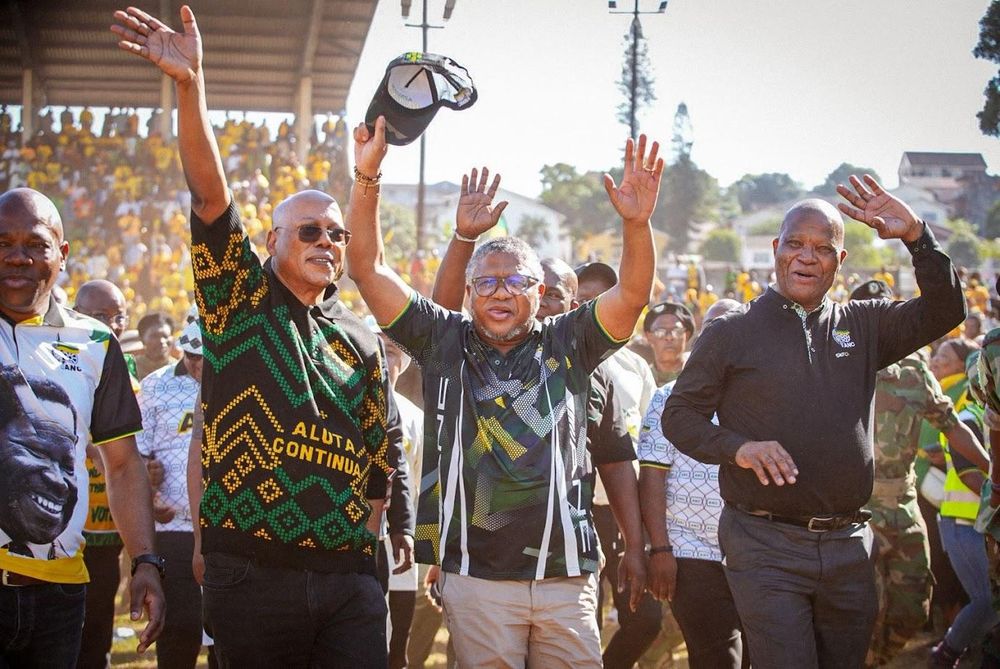
The end of the year will be marked not just by local government elections but also by the midpoint of the government of national unity (GNU). The GNU is approaching an accountability phase, because enough time will soon have passed for voters to make considered judgments about its performance. That makes late 2026 and 2027 a particularly revealing period for coalition stability and positioning ahead of the 2029 national elections. So far, citizens seem to have embraced the idea of coalition government quite readily, while at the same time expressing growing unhappiness with the GNU’s execution of policy. Many political observers have adopted a cynical interpretation of the GNU, viewing it as essentially a coalition between the ANC and DA, which, between them, hold more than enough seats to form a government. The function of the IFP, on this account, is primarily to obscure the true nature of the coalition, while the other seven parties are there mostly to dilute the influence of the DA. But there are also positive interpretations of the role the GNU is performing in the political system. First, it tentatively reaffirms an ideal of societal unity that has been in danger of dissipating under the pressures of economic stagnation, government dysfunction and enduring inequality. A unity once embodied in South African churches and in the ANC itself has dissolved, whereas the GNU reasserts communitarian values that are threatened in today’s polarising and populist times. Second, the GNU holds out the possibility not just of respecting but also of changing the constitution. The ANC, DA and IFP together fall just short of the two-thirds majority needed for constitutional change. By contrast, the GNU parties together command more than 70% of National Assembly seats. Intractable problems have been posed by the growing dysfunction of the local government sphere, not least in the distribution of electricity and water services and the collection of user charges and property taxes. A successor GNU may well be a necessary precondition for constitutional changes that will be needed to resolve these key challenges. Third, the GNU has established a degree of rational economic policy consensus, in large measure through the self-exclusion of the EFF and MK party from participation. The EFF argued that it could not enter the government with parties that opposed large-scale land expropriation without compensation and the nationalisation of mines and large businesses. MK also portrayed the GNU as a grand coalition designed to preserve existing economic power rather than transform it. Fourth, the GNU has brought together the major parties that remain broadly committed to the post-1994 constitutional settlement, while leaving outside the government the two parties ― MK and the EFF ― that have mounted the most sustained challenges to constitutional supremacy. MK’s 2024 manifesto proposed a referendum to scrap the 1996 constitution, which it views as a colonial settlement that gives excessive power to unelected institutions. For its part, the EFF’s manifesto proposed substantial constitutional restructuring, including abolishing the provincial sphere and moving towards a unitary state. More recent discussion documents question constitutional supremacy itself. In all these ways the GNU may have permanently changed the ANC itself. The liberation movement has always enjoyed a decidedly ambivalent relationship with both economic orthodoxy and constitutionalism. Prominent ANC figures have often criticised “neoliberal economics”, constitutional supremacy and judicial power, particularly when financial markets and courts have constrained governments.The GNU is significant because it has pulled the ANC towards a more explicitly constitutionalist and economically orthodox position, even though the parties in the coalition continue to disagree profoundly on specific policy choices.• Prof Butler teaches public policy at the University of Cape Town.
ANTHONY BUTLER | Coalition government reshapes ANC’s constitutional stance
Government of national unity pulls ANC towards a more explicitly constitutionalist and economically orthodox position
604 words~3 min read