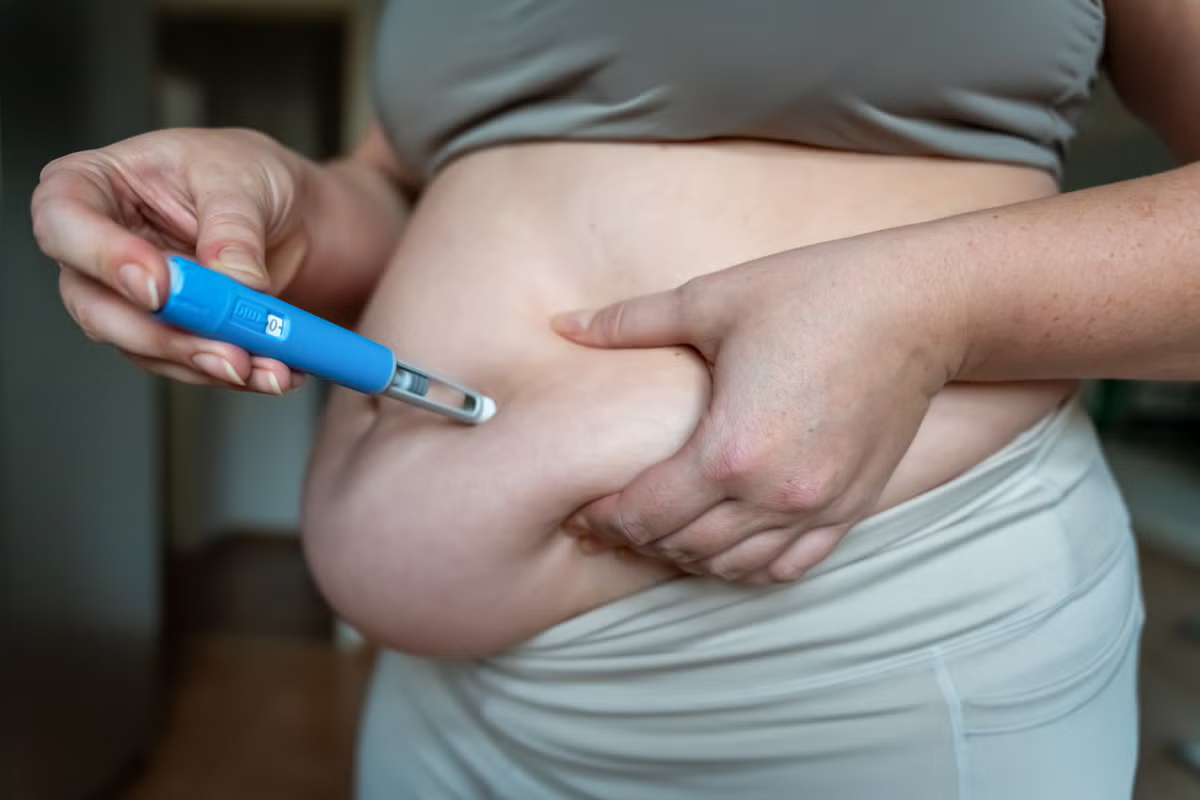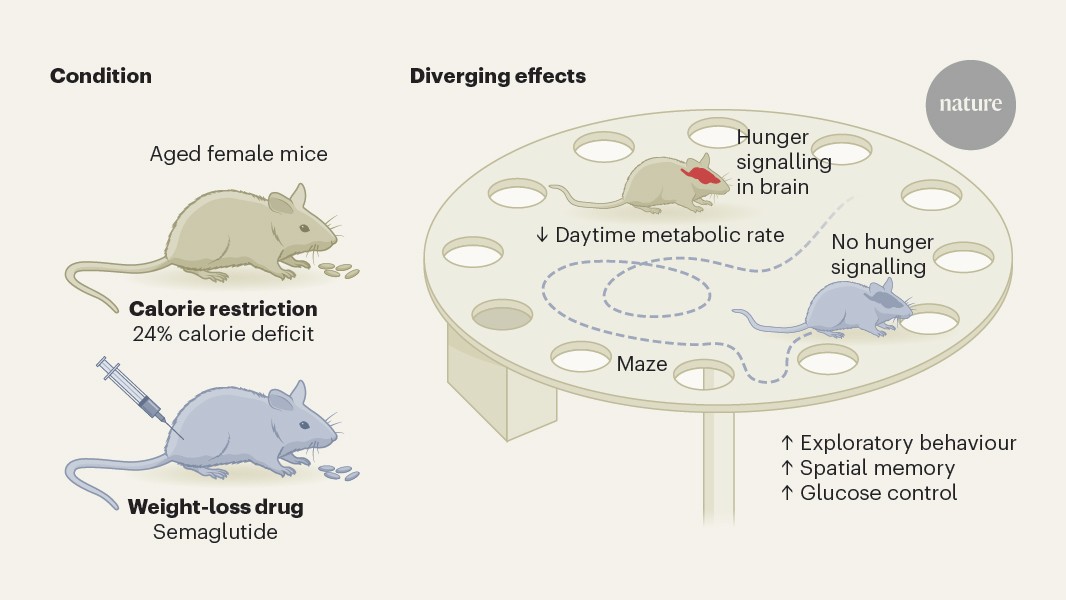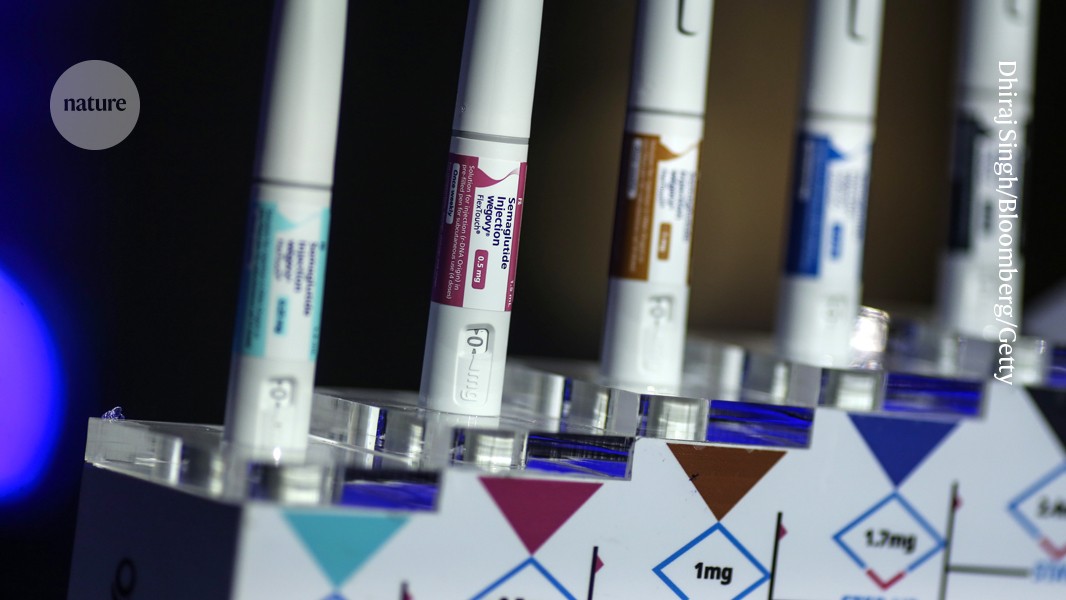
Obesity drugs such as semaglutide (sold as Wegovy) are usually administered by injection.Credit: Dhiraj Singh/Bloomberg/GettyThe list of ailments that blockbuster GLP-1 drugs might treat continues to grow, raising the question of whether they will help with the most inevitable ailment: ageing. A study published in Nature on 2 September1 hints that the answer is yes, reporting that older female mice taking a GLP-1 obesity drug lived longer than did older mice not taking one. The treatment also slowed several biological changes associated with ageing.Do obesity drugs treat addiction? Huge study hints at their promiseThis paper is the latest in a handful of studies2,3 suggesting that GLP-1 medications — which mimic the glucagon-like peptide 1 hormone and are usually prescribed for obesity and type 2 diabetes — might have anti-ageing properties. Most of the evidence so far has been limited to mice, but clinical trials are starting to explore the possibility in humans.In the quest for longevity therapies, GLP-1 drugs “have been on the top of everyone’s list as the most exciting candidates”, says Michael Corley, a scientist who specializes in ageing at the University of California, San Diego.“This is a very rigorous animal study that showed a positive signal,” Corley says. But the findings are still preliminary, and it could take years to prove whether GLP-1 drugs can be prescribed for longevity, he adds.Dieting micePrevious studies have shown that restricting calories is an effective method for extending lifespan in several animals, including mice4. Because GLP-1 drugs activate receptors in the body that trigger reduced food cravings, it’s natural for scientists to ask whether the medications can slow ageing by decreasing calorie intake, says Danica Chen, a biologist at the University of California, Berkeley, who is a co-author of the Nature study.The latest benefit of obesity drugs: boosting testosterone and sperm qualityShe and her colleagues decided to test this hypothesis in 20-month-old healthy female mice, roughly equivalent in age to 60-year-old humans. Animals treated with the GLP-1 drug semaglutide (marketed under the brand names Ozempic and Wegovy), had a median lifespan of 834 days — 12% longer than mice in the control group, which lived for a median of 742 days.Mice that took semaglutide also did better than control animals on tests that evaluated coordination, muscle function and how the body processes sugar. Moreover, when the researchers investigated a set of cellular and molecular changes thought to drive ageing in the body — including inflammation — they found that their effects were dampened in treated mice compared with untreated ones.The mice taking semaglutide during the study self-reduced their calorie intake by 24%. So, to check whether this was the cause of the observed effects, the authors put an extra, untreated group of mice on a diet that matched the calorie-intake level of the GLP-1-treated mice. The two groups showed similar longevity outcomes. However, the GLP-1-treated mice performed better than did those in the diet group in several experiments, including one testing spatial memory, in which animals had to remember the location of the exit to a maze. “That was really a surprise to us,” Chen says.This result suggests that semaglutide has further benefits that are not explained by calorie reduction, she explains. But the driver of those benefits is still unclear.
Can GLP-1 drugs slow ageing? Mouse study shows promise
Older female mice given an anti-obesity medication lived longer and in better health than did mice not taking one.
540 words~2 min read