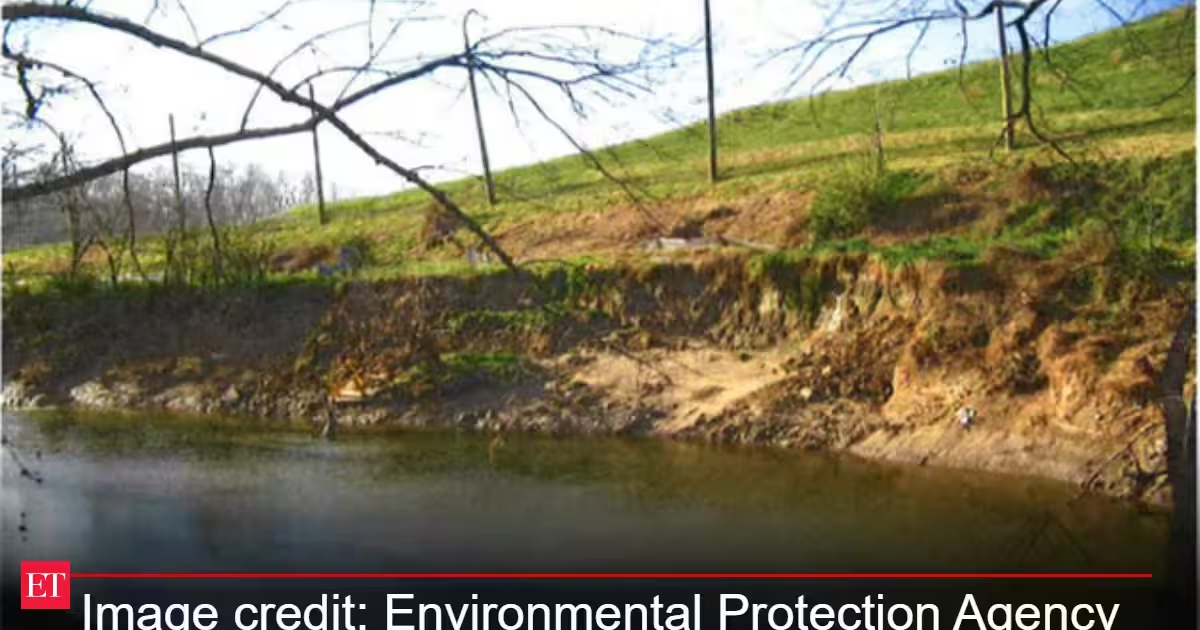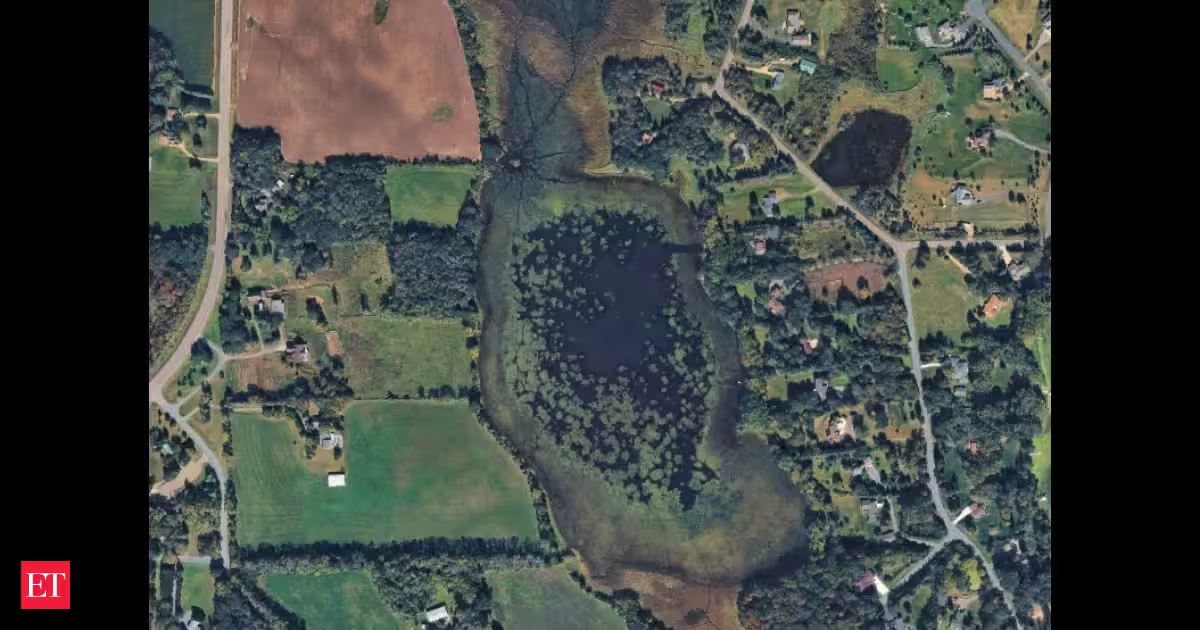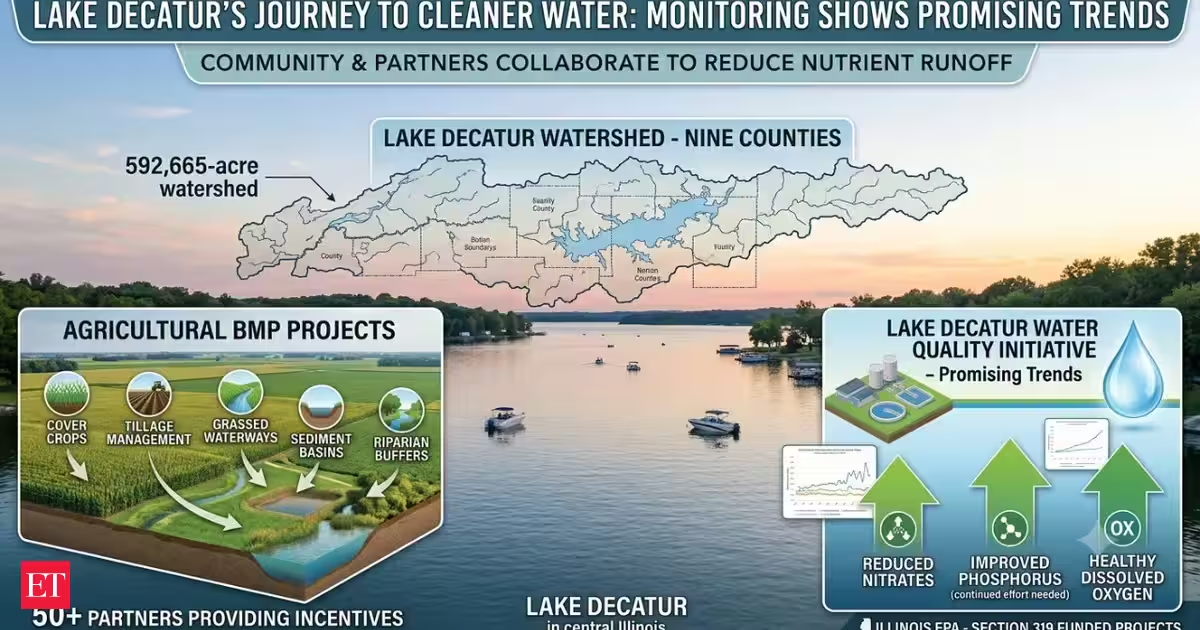
Lake Decatur was added to Illinois' Clean Water Act Section 303(d) list of impaired waters in 1996 for phosphorus and nitrogen pollution caused by agricultural runoff. Twenty-five years later, the City of Decatur expanded its work to reduce sediment and nutrient loading through the Lake Decatur Water Quality Initiative.Monitoring data has since shown promising trends for phosphorus, dissolved oxygen, and nitrogen/nitrates, although continued effort is needed to protect the lake.A vital water source facing pollution challengesLake Decatur is a drinking water source in central Illinois and also provides water for industrial uses and recreation.Its 592,665-acre watershed covers nine counties: Macon, DeWitt, Piatt, McLean, Champaign, Ford, Shelby, Christian and Sangamon. Agriculture is the main land use, with cultivated crops accounting for 80% of the watershed.Nutrient runoff and sediment from agricultural activities and urban development contributed to poor water quality and impairments for nitrogen, phosphorus and pesticides.You Might Also Like:The Illinois State Water Survey estimates that more than 13 million pounds of nitrate loading occurs in the watershed each year. Periodic exceedances in drinking water standards require approximately $200,000 in annual treatment costs for the water utility that provides drinking water to the City of Decatur and the Village of Mt. Zion.Agricultural BMP projects began in 2014In 2014, the Macon County Soil and Water Conservation District received a Section 319(h) grant to install agricultural BMPs at 14 project sites in the Macon and Piatt county portions of the Lake Decatur watershed.The practices included streambank and stream channel stabilization, grassed waterways, grade stabilization structures, cover crops, sediment basins, ponds, permanent vegetative cover, water control structures, water and sediment control basins, terraces, diversions and heavy use area protection.Projects were selected based on their ability to control sediment, nitrates and phosphorus, as well as their proximity to the river and lake.You Might Also Like:Three grants expanded watershed effortsIn 2021, the City of Decatur launched the Lake Decatur Water Quality Initiative as part of an expanded conservation program.Starting that year, the city received funding for three Section 319(h) grants to develop or update watershed-based plans and install priority BMPs.The strategy focused on areas that contribute the most to nutrient and sediment runoff and included practices such as cover crops, tillage management and nutrient management.The initiative also worked with partners to secure grant funding and provide financial incentives for landowners to implement BMPs.The watershed plans helped identify areas where additional practices were installed using a $9.8 million Regional Conservation Partnership Program grant and $16 million in local funding.More than 50 partners joined the effort, offering incentives to farmers who voluntarily adopted cover crops, tillage, and nutrient management practices.Monitoring showed promising trendsMonitoring data collected by the Illinois Environmental Protection Agency's Surface Water Section showed promising trends for phosphorus, dissolved oxygen, and nitrogen/nitrates.New data showed that nitrogen levels did not exceed the threshold for the 2024 assessment cycle, indicating that work in the greater watershed was helping reduce pollutant levels.Phosphorus levels also improved between 2013 and 2022. However, concentrations remained above Illinois' standard for lakes of 0.05 milligrams per litre, meaning phosphorus continues to be listed as an impairment.The Lake Decatur watershed is large and predominantly agricultural, requiring continued efforts to reduce pollutant loadings and protect the improvements in water quality.
In 1996, Illinois listed Lake Decatur for phosphorus and nitrogen pollution. 25 years later, 3 grants helped Decatur expand BMPs and improve water quality in the lake
After 25 years of addressing phosphorus and nitrogen pollution in Lake Decatur, the city implements new BMPs and grants to improve water quality and protect this vital resource.
532 words~2 min read