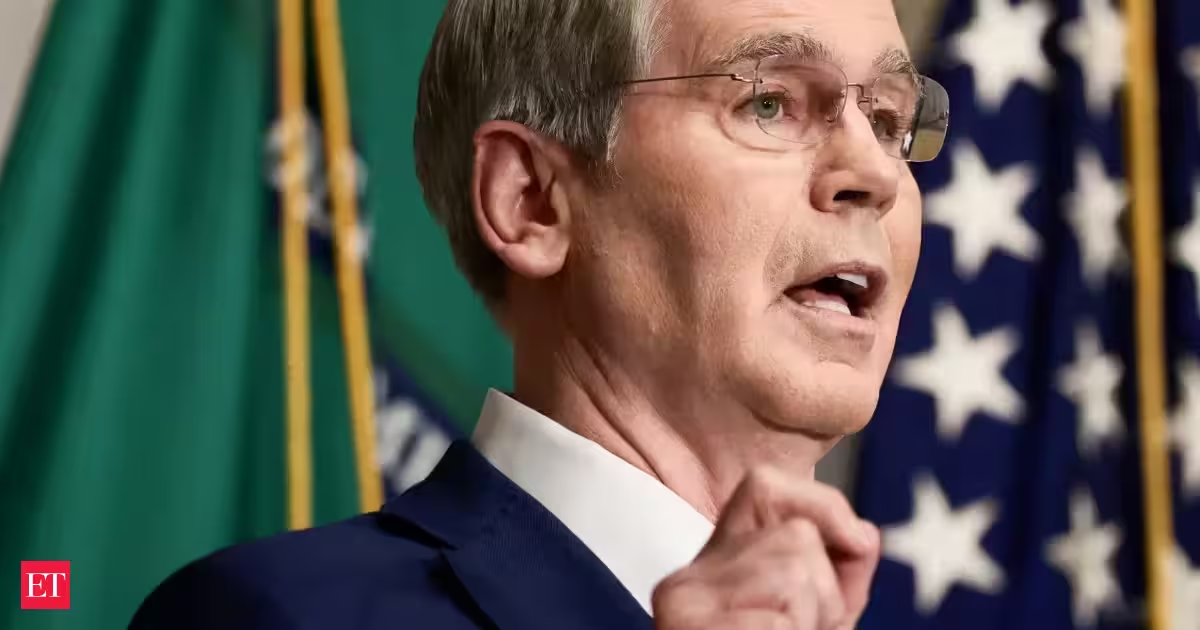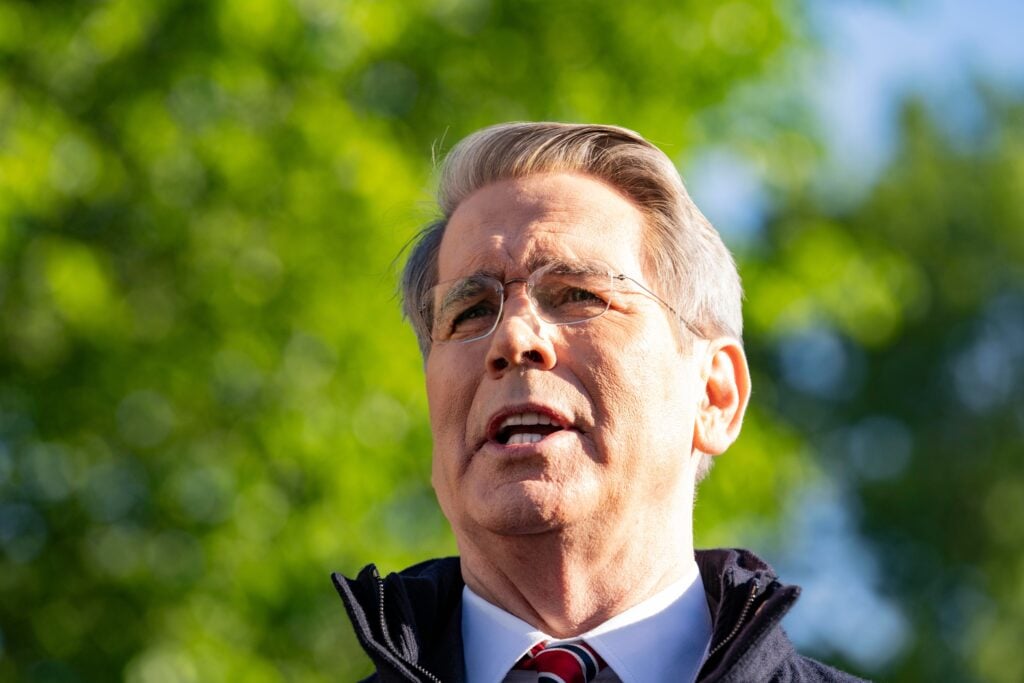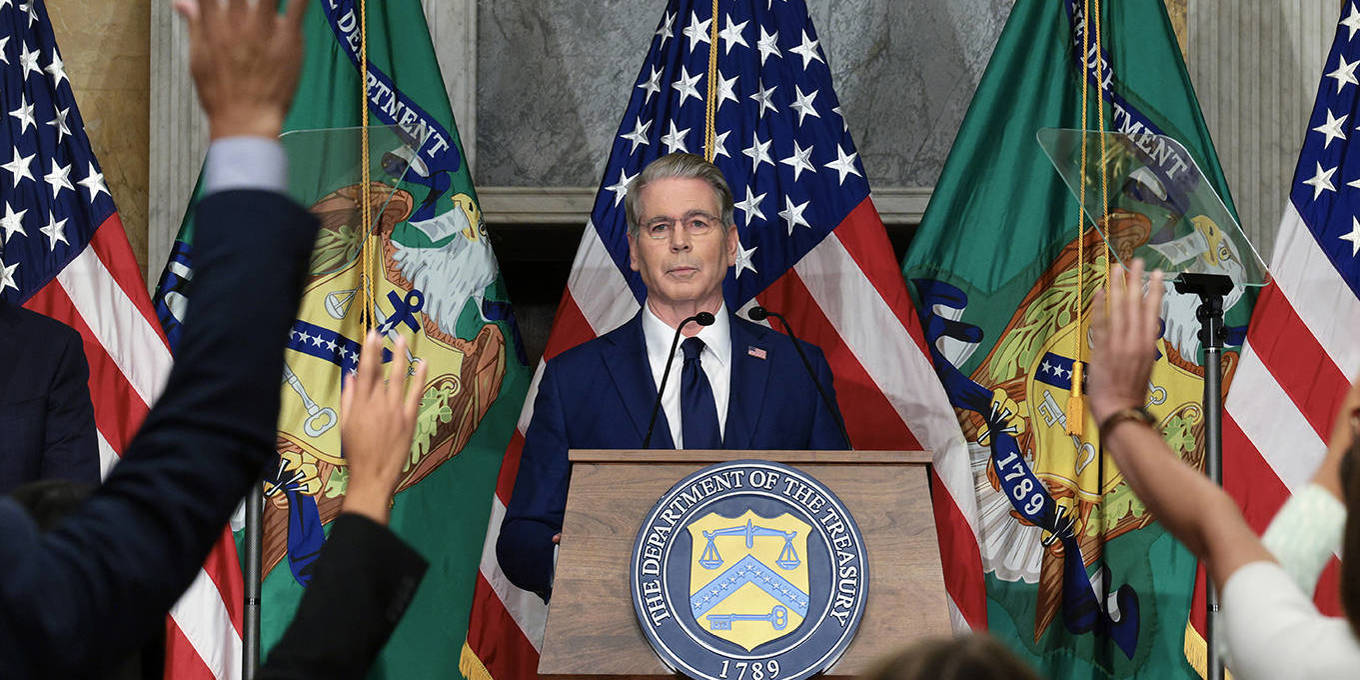
Treasury Secretary Scott Bessent said he thinks economic growth is the way to emerge from the mountain of national debt accumulated by the United States.Bessent, speaking to reporters ahead of the Group of 20 meeting of finance ministers in North Carolina, said that the world is heavily in debt following the financial crisis and the pandemic and expressed optimism that the economy could grow enough to pull its way out of debt, a prospect of which many economists are skeptical.
“Our goal here today is to reiterate that our message of growth,” Bessent said. “The world is awash in debt post-[global financial crisis], post-COVID, and the only way for us to get out of this is to grow our way out of this.”“I’m confident that a lot of the leaders are very receptive to this,” he added ahead of the gathering of finance ministers.Earlier this month, the U.S. national debt hit $40 trillion, sending yields on long-term Treasury securities to multiyear highs.Fiscal hawks argue that, absent other changes, such as spending cuts or raising taxes, increased economic growth would be insufficient to get the government on a sound fiscal footing.During his Monday remarks to reporters, Bessent also cast some of the blame for the current situation on the Biden administration.“I say sometimes that I feel like an emergency room doctor, and the economy is the patient, and the American people were backed over by the Biden Mack truck,” Bessent said. “We have stabilized the patient, and now we’re in the healing portion, and real incomes are increasing.”In an interview later on Monday morning with CNBC, Bessent also expressed hopes that artificial intelligence will help drive some of that growth — a view that many AI optimists have shared.“We keep hearing about, ‘Oh, this AI build-out, the financing for that is creating a crowding problem.’ Well, what it is creating is a productivity boom that we are going to see on the other side of that, so whether it’s in three or six months, we are creating productivity that will be, I suspect, disinflationary,” Bessent said.Notably, the treasury secretary also mentioned plans for some sort of “fiscal consolidation package” that will be announced down the road. He said he has been working on it alongside Russell Vought, director of the U.S. Office of Management and Budget.“As I said last week, two weeks ago, that we are also working, Russ Vought and I are working, on a fiscal consolidation package that we’ll be talking about more in the coming weeks or months,” Bessent said.The Washington Examiner has previously reached out to both the White House and the Treasury Department about such a plan.Some sort of plan would likely be welcome to investors who are anxious about the growing debt and deficits. It’s unclear what that plan might look like, and whether it would include raising revenues.And most fiscal hawks and many economists argue that growing GDP to dig out of the debt hole is not a feasible solution and that a fiscal crisis looms if the government doesn’t enact reforms to lower spending or raise revenues.GRIM $40 TRILLION DEBT MILESTONE RAISES QUESTIONS ABOUT FISCAL COMMISSIONBrett Loper, the executive vice president for policy at the Peter G. Peterson Foundation, a nonprofit organization focused on reducing federal deficits, told the Washington Examiner that, to grow the U.S. out of its debt over the next decade, the economy would have to experience gangbusters 4.3% growth every single year.According to the group’s modeling, the economy has never matched that 4.3% pace for a sustained period. For instance, last year the economy grew at 2.1%, and the year before, GDP expanded at a 2.8% pace.