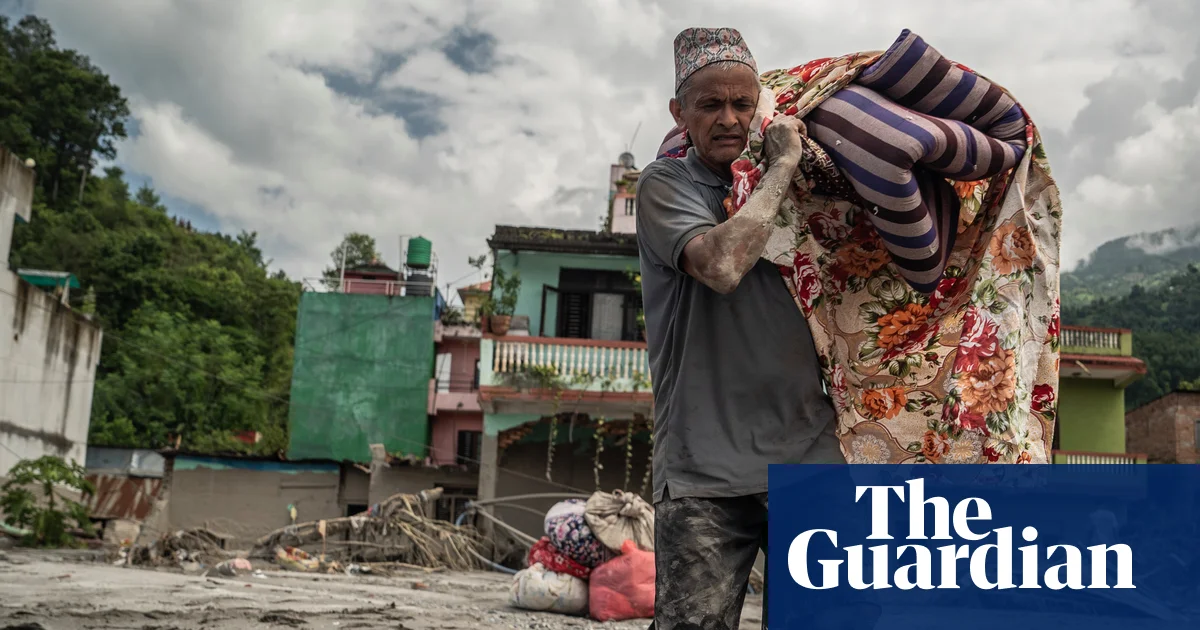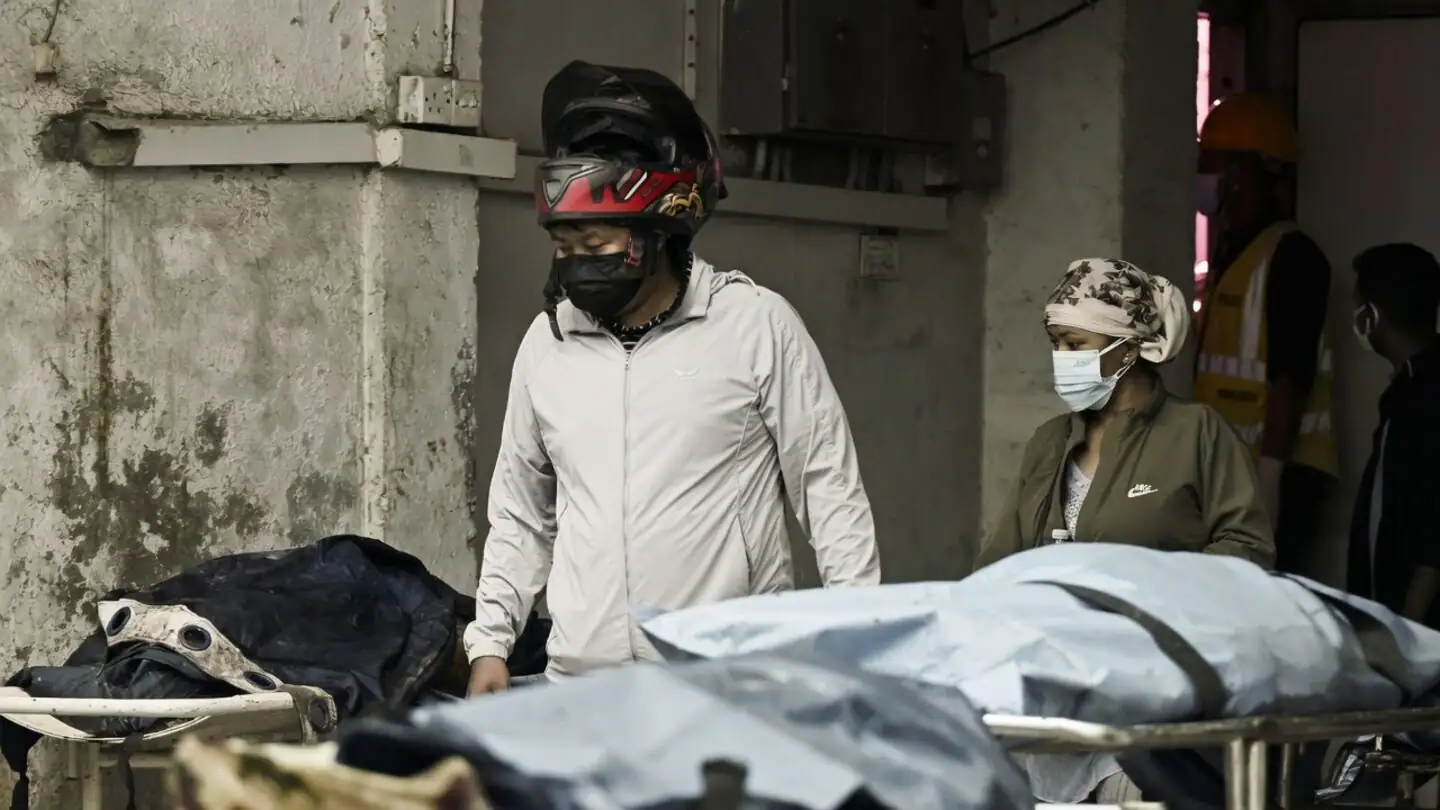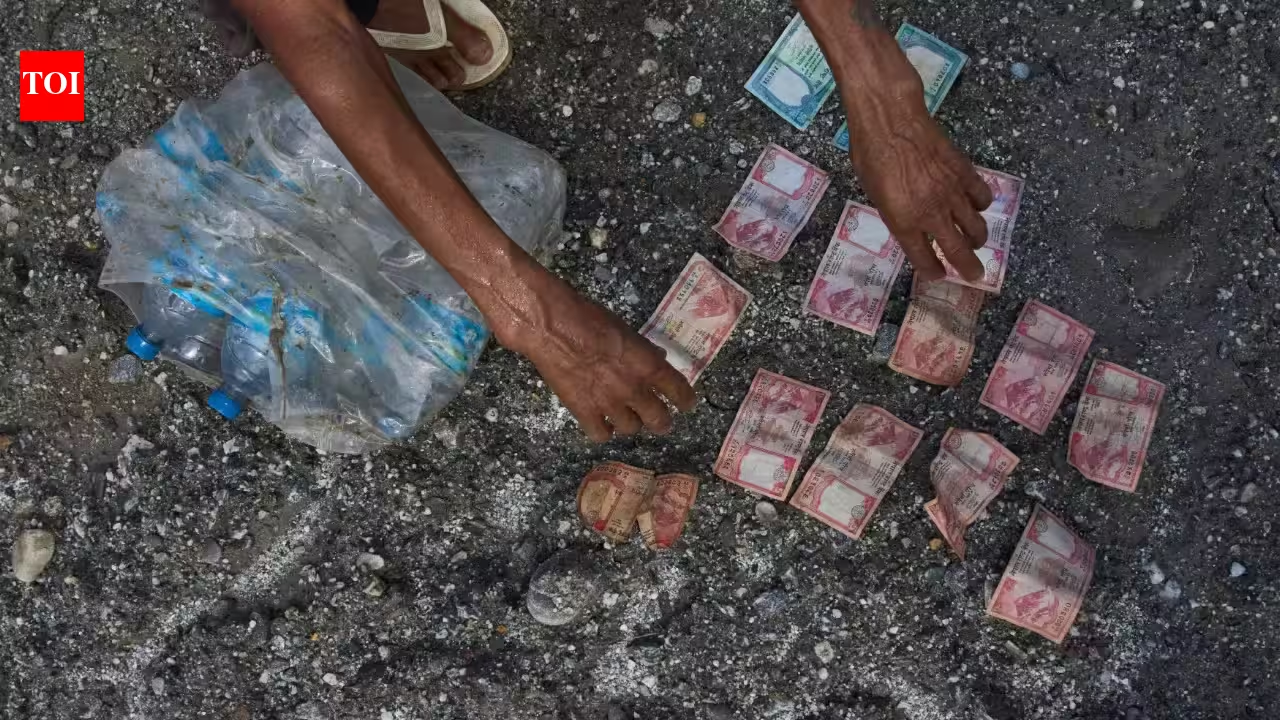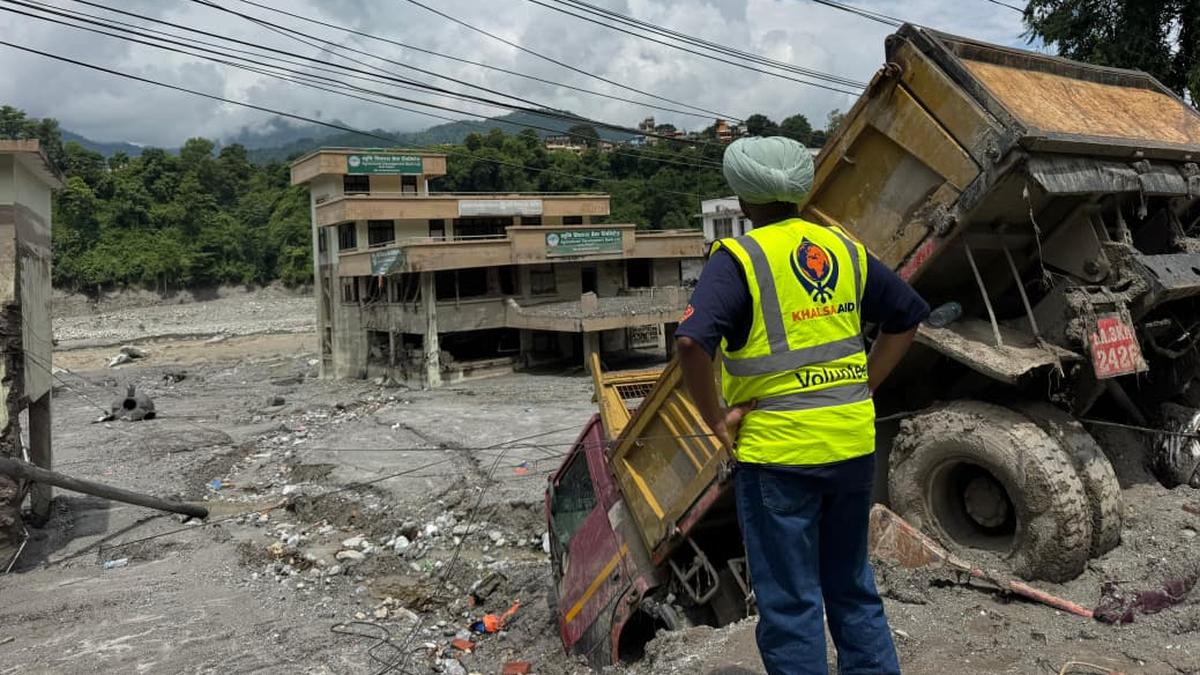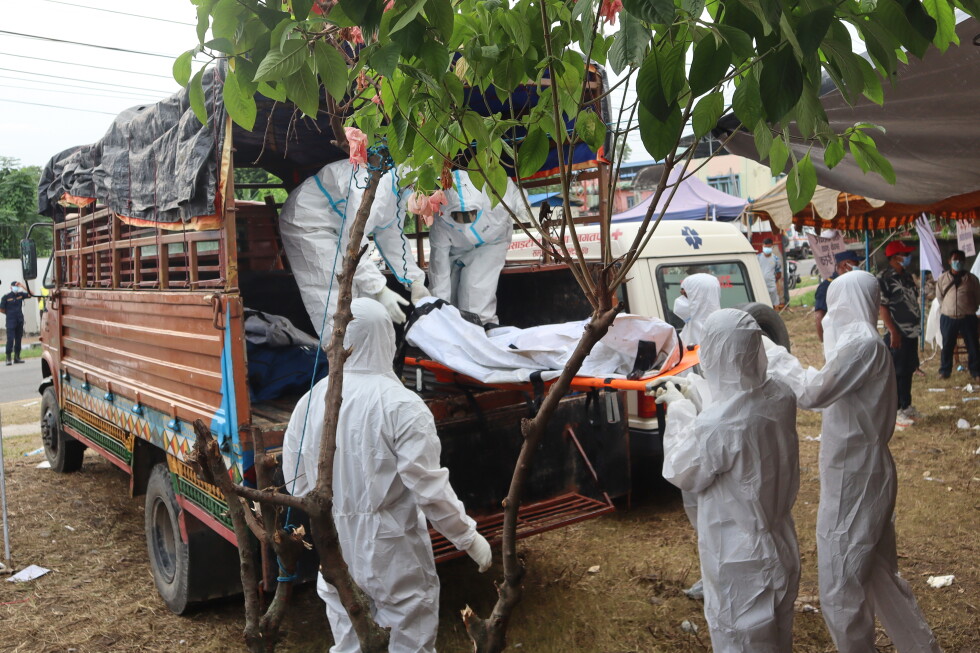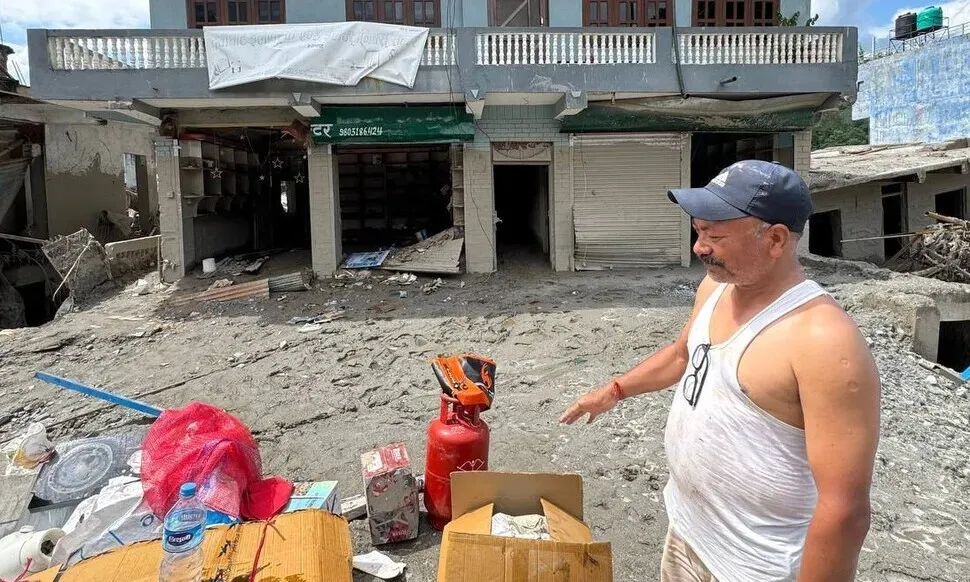
Dipak Chitrakar boxes up what remains of his electronics shop in Devighat, a village in Nepal that was hit by major flooding and mudslides, on Aug. 30, 2026. (Jeong Bong-bi/Hankyoreh)
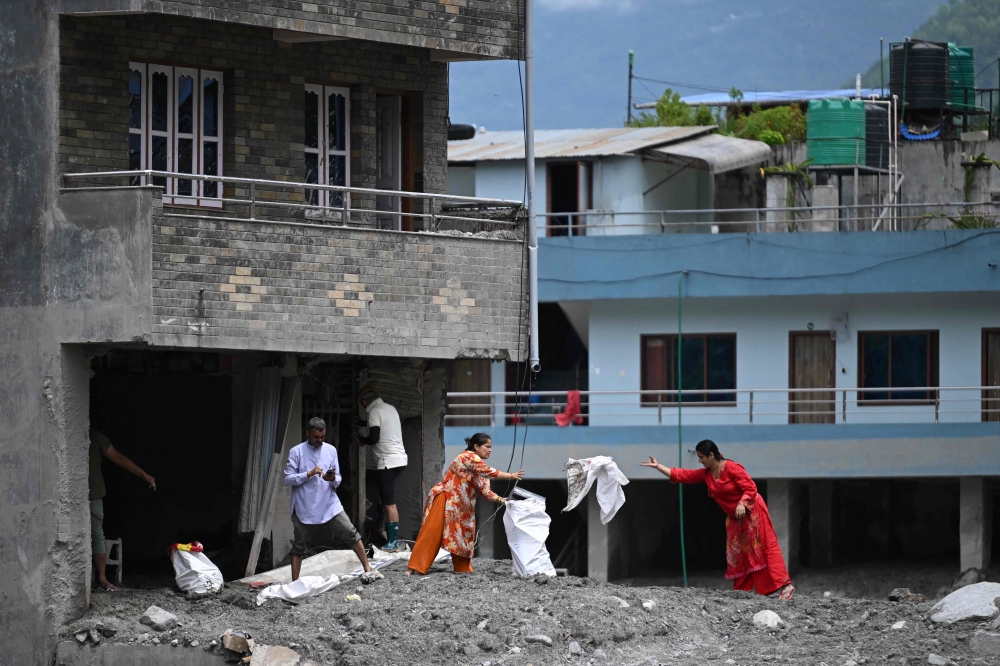
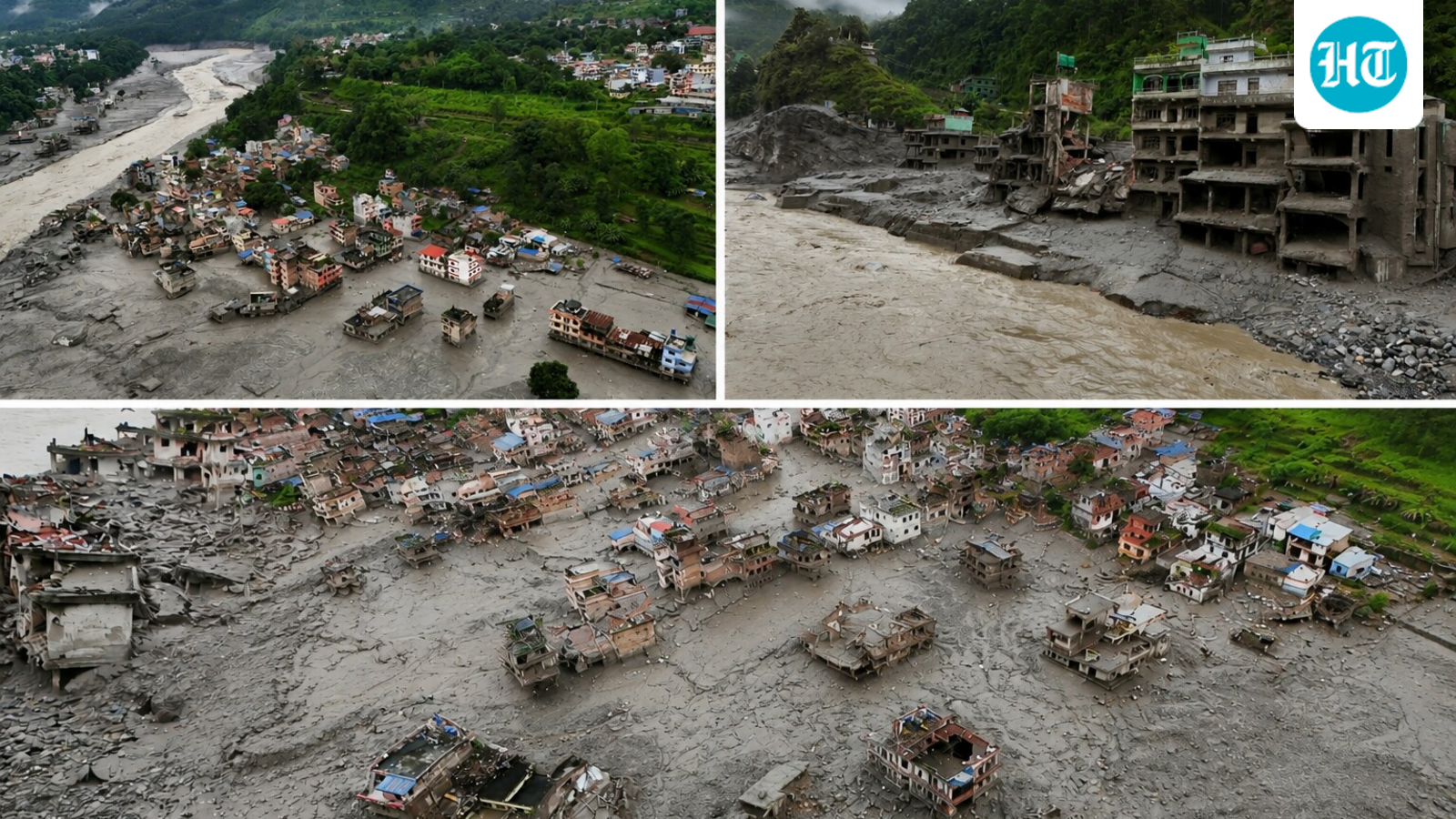
A muddy torrent dozens of meters wide roars by, sweeping sediment and debris downstream in the turbid flow.From the Nepali capital of Kathmandu, it takes three hours along a treacherous mountain road to reach Dhunge Bazaar, in the municipality of Bidur, in Nuwakot District. When I enter the town on Sunday, the first thing that strikes me — even more than the horrific sight — is the overpowering sound. The dull roar of the Trishuli River, which once cradled the town, bears witness to the flooding that swept everything away a few days ago.Dunghe Bazaar — around 20 kilometers south of the construction site of the Upper Trishuli-1 (UT-1) hydropower plant, where nine Koreans remain unaccounted for — has become a ghost town submerged in a vast swamp.A two-story house abutting the river is lodged in sludge so deep the first floor cannot be seen. At first glance, the sludge looks solid. But when I try walking on it, my feet are sucked down until the mud comes to my knees. I’m only able to extricate myself with the help of some nearby policemen.“The muck is so thick that there’s a risk of getting sucked down. We’re sending away locals who were hoping to recover some of their household goods,” said Ayushman Kuinkel, a volunteer and a member of the Nepal Scouts.Conditions are even worse in the village of Devighat, about six or seven kilometers south along the Trishuli River. At the entrance to the village, a terrible stench assaults my nostrils. Most of the two-story houses here are half-buried in the mud, while the streets are strewn with broken branches, pale-white steel bars and shattered stonework.