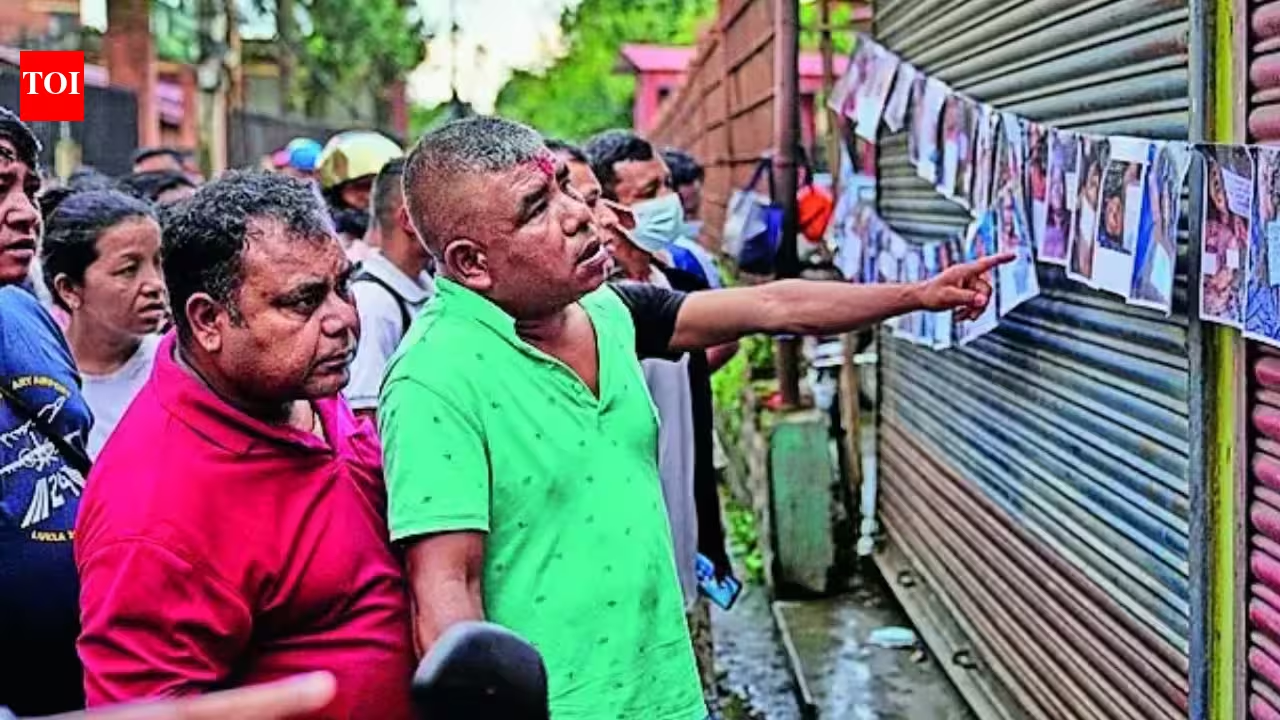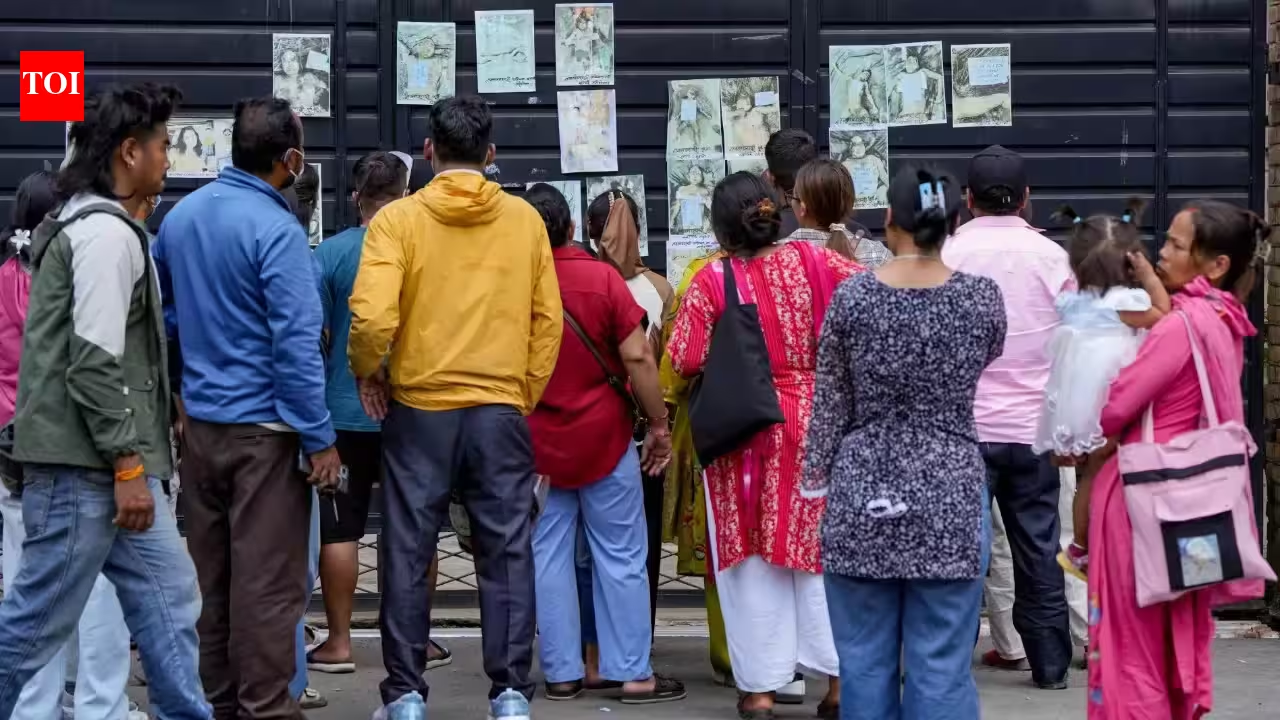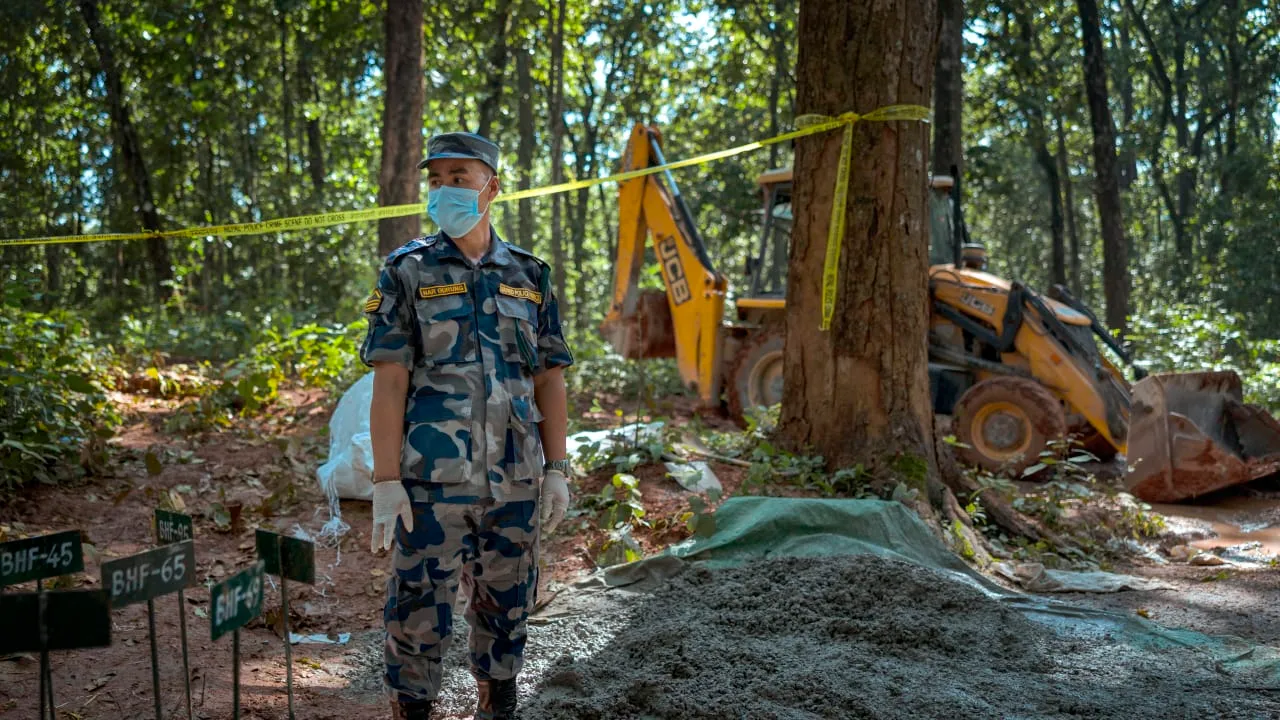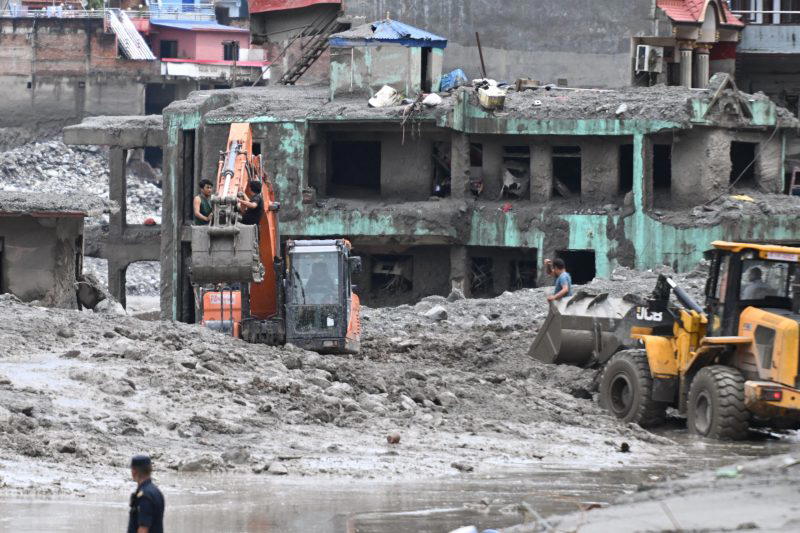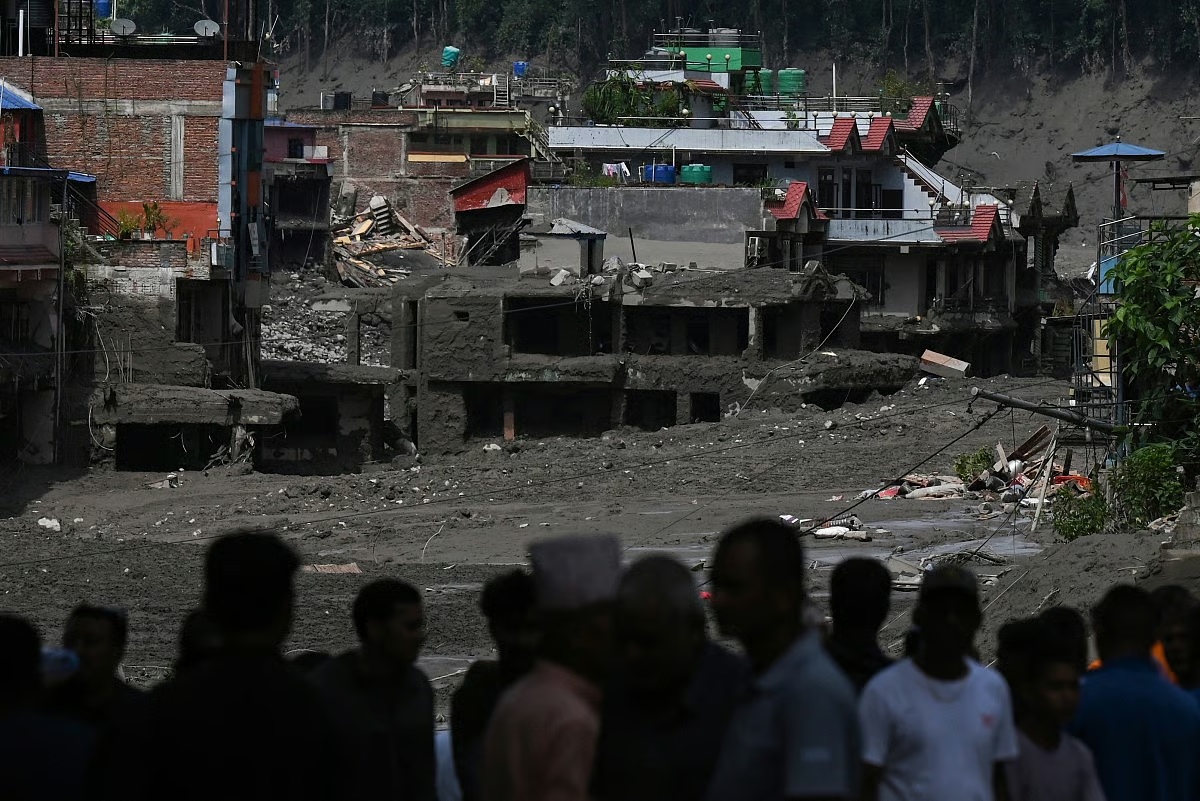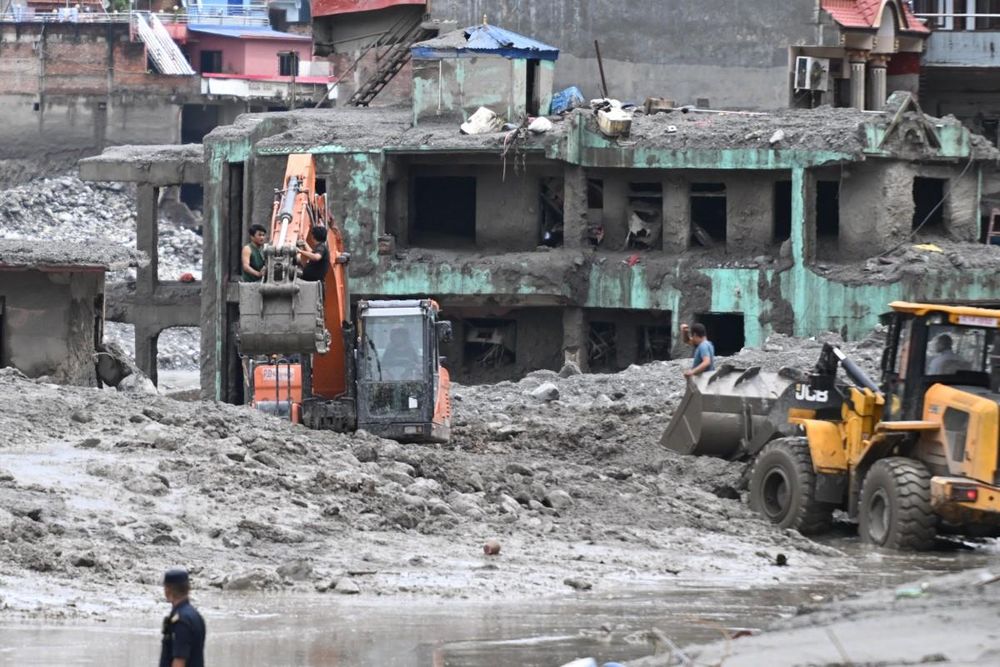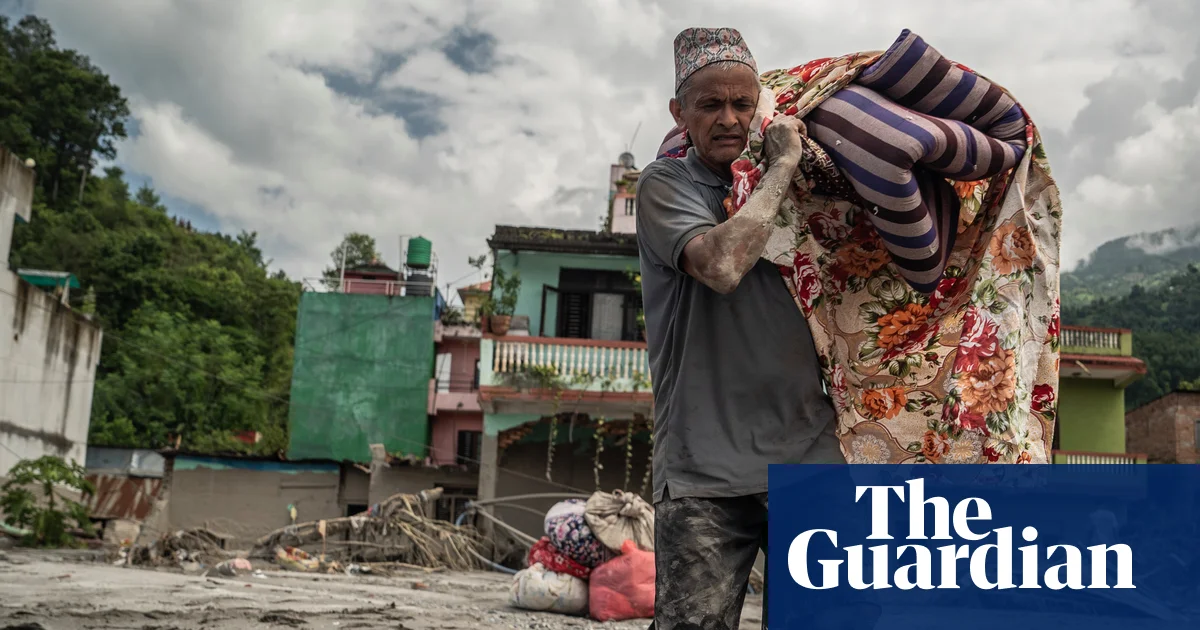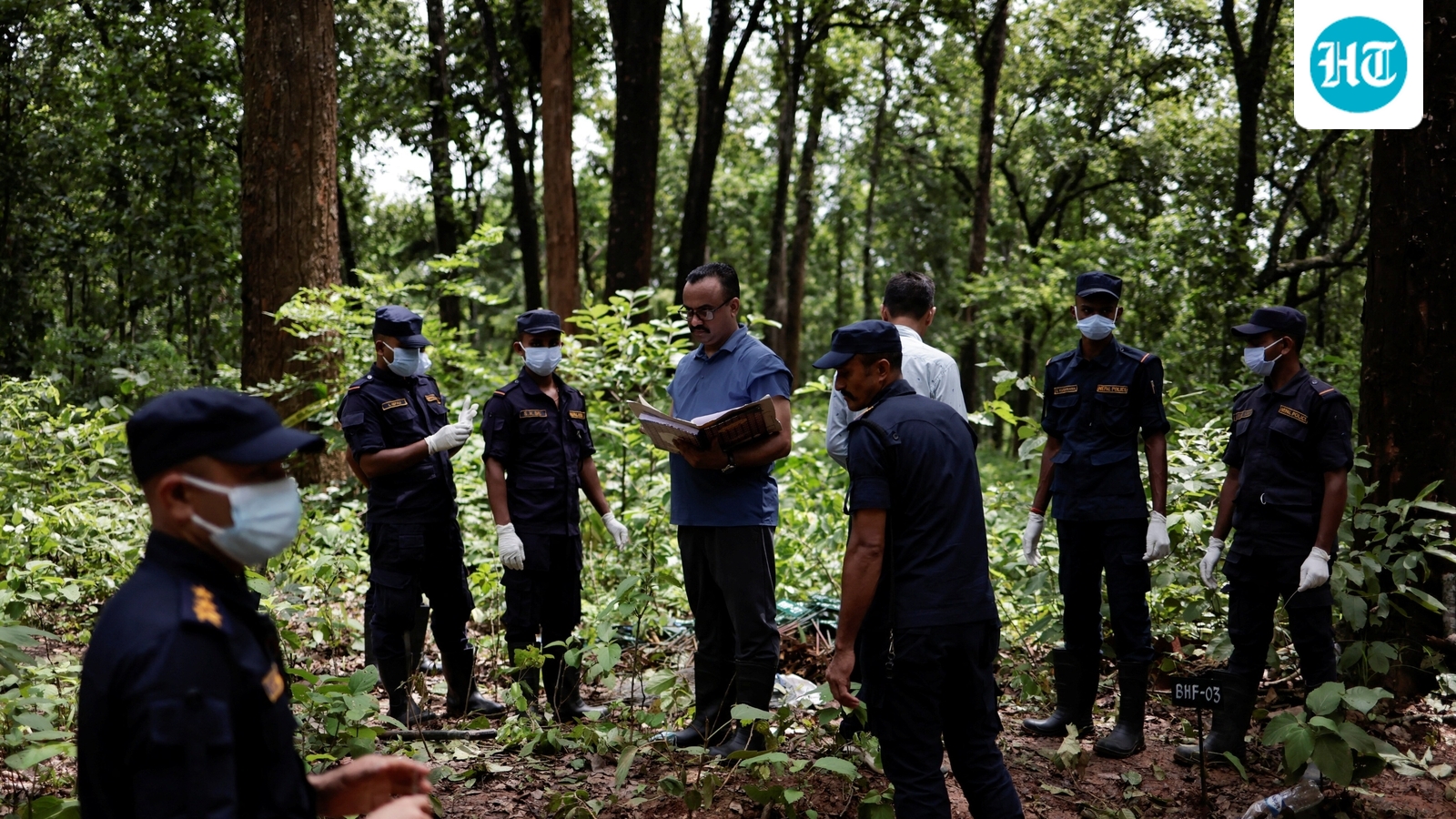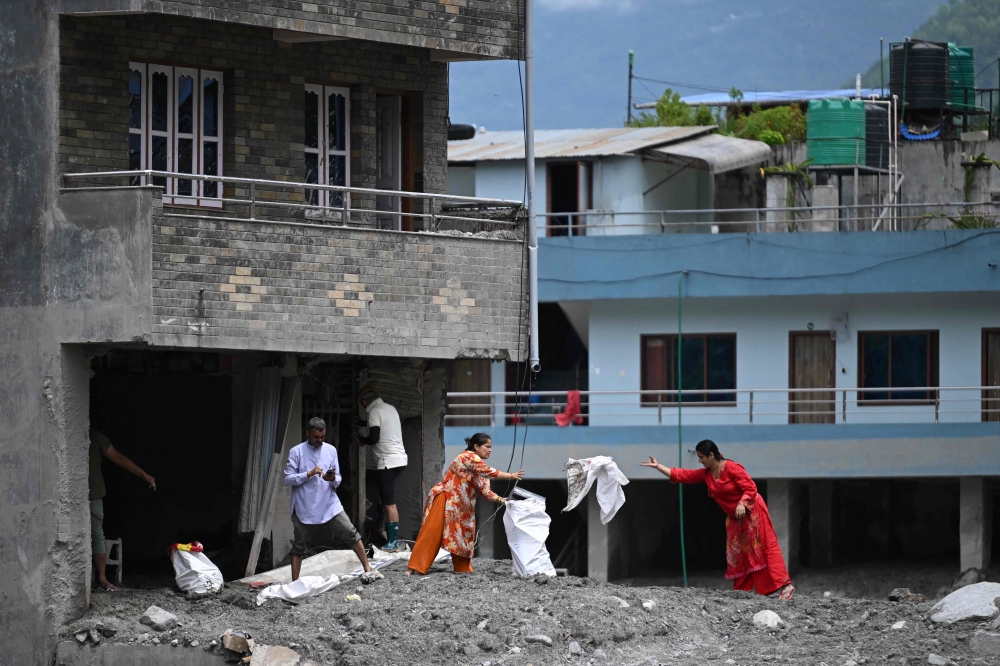
Residents salvage belongings in the aftermath of flash floods at Trishuli Center in Nepal's Nuwakot district on August 30, 2026. Rescuers in Nepal and China battled through leg-sucking mud, as well as the threat of rising rivers and a newly formed lake, on August 30 to search for thousands missing after a deadly wall of water and debris swept through the Himalayas, engulfing entire villages. — AFP pic First Published: Sunday, 30 Aug 2026 8:18 PM MYT BHÂRATPUR (Nepal), Aug 30 — Distraught families in Nepal watched grisly images of mangled corpses on a screen today, seeking to identify relatives as overflowing morgues forced authorities to begin burying flood victims.In a building next to a makeshift morgue in Bharatpur, Shobha Adhikary emerged from the crowd after scanning the LED screen.She told a local coordinator she believed the 37th image — showing the pale, swollen face of a man lying on a pebbled riverbed — was her childhood best friend.“It looks like him, for sure,” she said, showing coordinators a photograph of a smiling, middle-aged man.“My husband and I are best friends with Rajkumar and his wife Geeta,” she said. Geeta has also been missing since a lethal wall of water and debris ripped through the Nepal-China border on Wednesday.Nepal’s disaster agency said today it had recovered more than 750 bodies, with at least 2,500 people missing.Hundreds of bodies were swept downstream, and the tolls continue to rise.Bharatpur is close to the Indian border — roughly 160 kilometres downstream of the epicentre of the disaster which the US Geological Survey said was caused by a glacial collapse.More than 250 bodies have been recovered in the southern district of Chitwan. Only nine have been identified by relatives. A woman (right) stands atop her house covered in mud in the aftermath of flash floods at Baireni in Nepal's Dhading district on August 30, 2026. The number of people missing in the catastrophic flood that sliced through the border area between Nepal and Tibet exceeded 3,000 on August 30, as rescuers scoured deep, leg-sucking mud for survivors. — AFP pic ‘Number-tagged’ Grieving relatives alternated between watching intently and closing their eyes, overwhelmed by the grim exercise.“My brother’s wife is missing,” Vinod Kumar Basnet said.“My brother died of Covid during the pandemic, and their kids are waiting at home for their mother. If I see her body, I can at least tell them she is not coming back.”The morgue at the local hospital in Bharatpur is equipped to hold only a couple dozen bodies.Authorities have been forced to store corpses at a temporary holding centre — the air-conditioned offices of the district commerce association.But without proper freezing facilities, it is only a short-term arrangement.“Many of the bodies were starting to badly decompose, and there was an unbearable stench in the whole area,” said Rudra Adhikary, a member of the district Red Cross committee.“So they were buried after collection of DNA.”Some 90 bodies were buried in shallow graves yesterday, district authorities said in a statement.An AFP correspondent saw workers digging dozens more graves today in a forest clearing on the outskirts of the town.The dead are traditionally cremated on funeral pyres in Hindu-majority Nepal, and the burials are viewed as long-term storage until families can retrieve them.“The depth of the graves is 1.5 metres; the bodies are 40 centimetres apart from each other,” Adhikary said.“Each body is being number-tagged and wrapped in a plastic bag before burial.”DNA records Foreign Secretary Amrit Bahadur Rai told reporters on Sunday the burials followed international protocols, adding that Nepal needed “more than a thousand” freezer units to store bodies.Examining the pictures, volunteers said the only way to accurately identify people was through a DNA match — which would require a family member to provide a sample.With many corpses badly disfigured, volunteers said several families had claimed the same body.In some cases, families who initially identified a body from the screen withdrew their claims after seeing it in person, said Devendra Poudel, a local Red Cross volunteer.“Yesterday, we had a case where two families said one of the dead bodies was their relative,” Poudel said.“But when we showed them the body, one of the women realised it wasn’t her husband because there was a tattoo on the arm.”Some bodies are so disfigured, Poudel added, “that often it is difficult to say if it’s a man or woman”.“Tattoos, rings and earrings are the only way to really identify.” — AFP
Grisly search for missing as Nepal morgues overflow, burials begin
BHÂRATPUR (Nepal), Aug 30 — Distraught families in Nepal watched grisly images of mangled corpses on a screen today, seeking to identify relatives as overflowing morgues forced...
738 words~3 min read