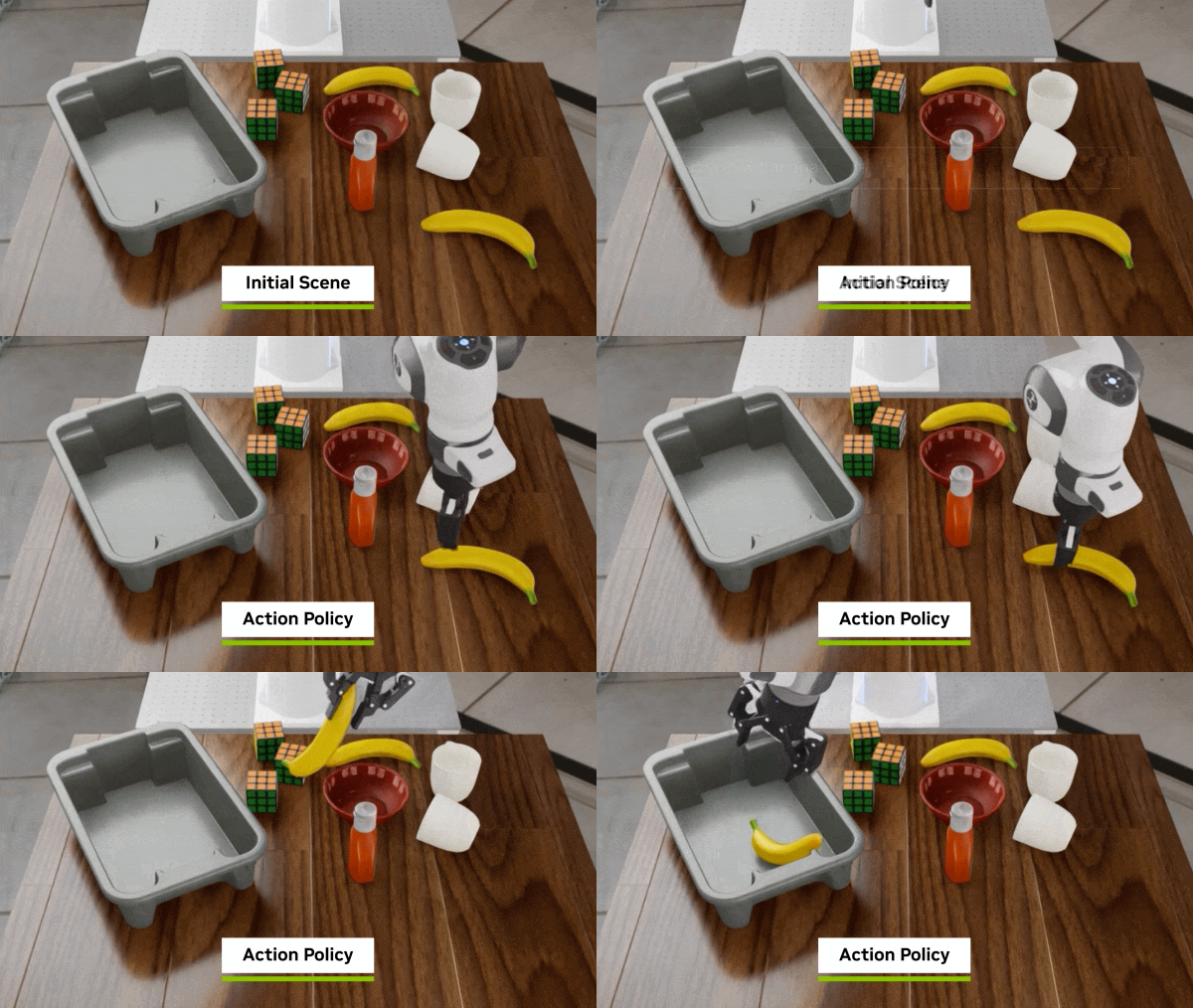
Vision-language-action (VLA) models are becoming one of the most exciting directions in robotics. The idea is simple but powerful: use a vision-language model (VLM) to connect what a robot sees with a language instruction, then enable it to take actions in the physical world. However, the field faces a fundamental challenge.
The current VLA field is advancing rapidly, but it is also becoming increasingly fragmented. Different papers use different backbones, different policy heads, different action representations, different training strategies, and different evaluation setups. Despite widespread reports of strong results, one fundamental question remains difficult to answer:
What actually makes a VLA model strong? Or more broadly, what actually makes a robotics foundation model strong?
This is exactly what we seek to answer with VLANeXt. Instead of proposing another increasingly complex architecture, we returned to the basics. Starting from a simple RT-2/OpenVLA-style baseline (RT-2 is commonly recognized as the origin of the VLA line of work), we systematically explored the VLA design space and distilled a practical recipe for building strong VLA models. These experiments formed the basis of our ICML paper: VLANeXt: Recipes for Building Strong VLA Models.