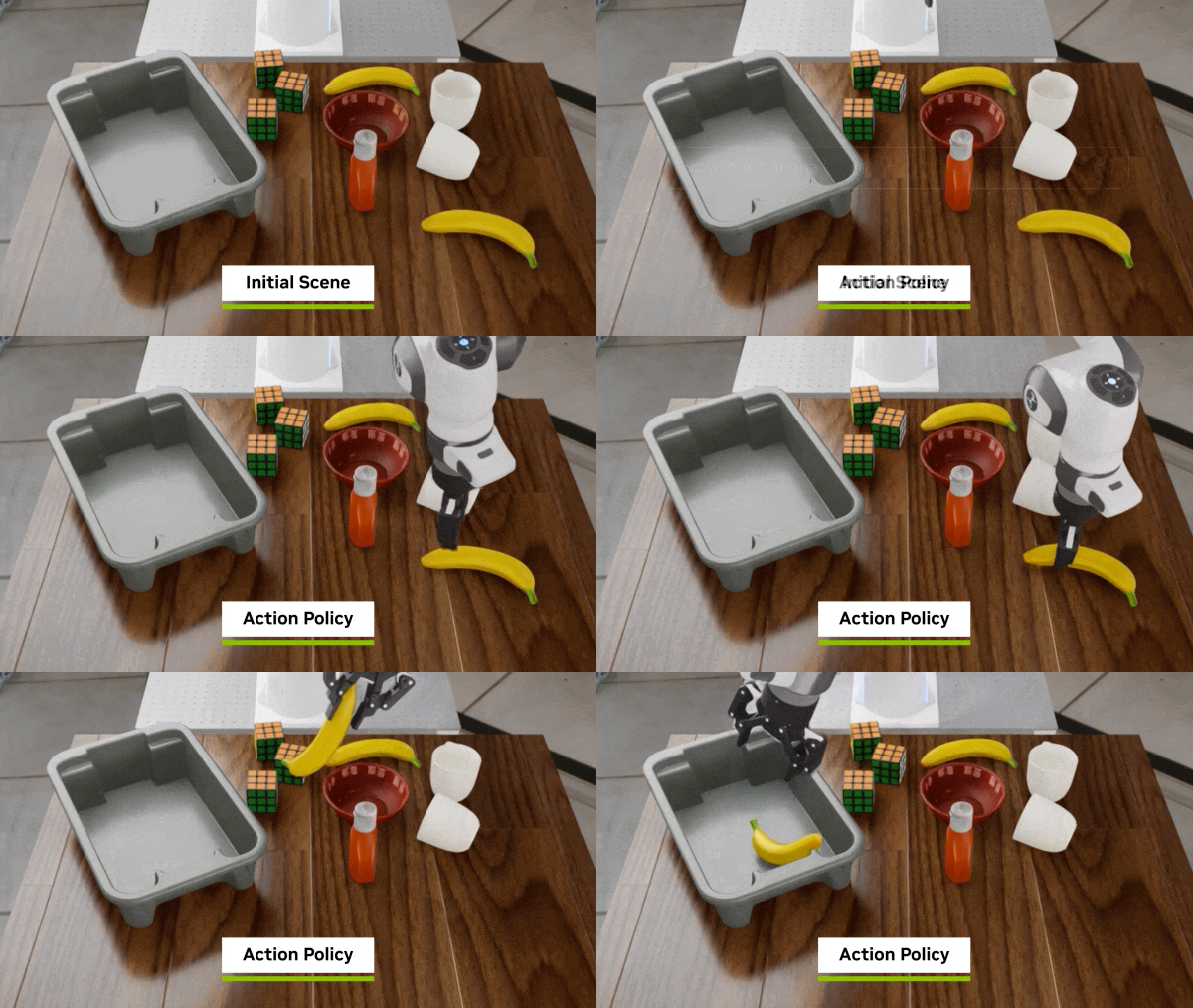
A central challenge in robotics is building policies that generalize beyond the demonstrations they’re trained on. A policy that succeeds in a training scene often fails when object shapes, positions, or lighting change. Generalizing to these new conditions requires the policy to understand the tasks underlying physics, not just mimic the demonstrations. This ability comes from the backbone it’s built on.
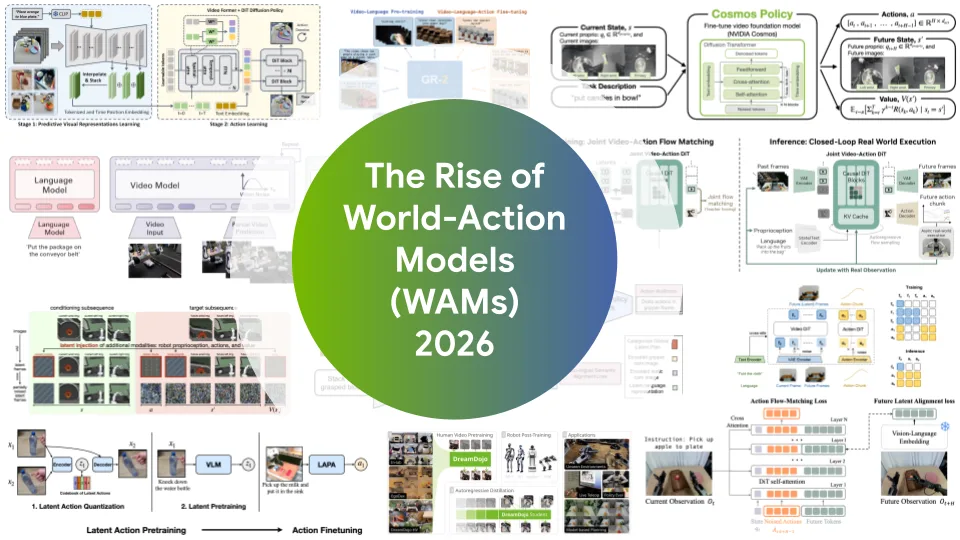
The standard way to build a language-conditioned robot policy is to add an action module to a pretrained vision-language model (VLM), producing a vision-language-action (VLA) model. This approach has carried generalist manipulation a long way. But a VLM backbone learns to describe the world, not predict how it evolves. That missing dynamics model is exactly what a robot needs when a task depends on anticipating how a scene will change. A growing line of research replaces the language backbone with a video world model, producing world action model (WAM). NVIDIA researcher Jim Fan explored this shift in his Robotics’ End Game talk—an idea later summarized as “VLAs are dead, long live World Action Models.”
This post explores how post-training can turn WAMs into specialized robot policy, how WAMs compare to VLAs, and why the open NVIDIA Cosmos 3 world model provides a strong foundation for building WAMs.