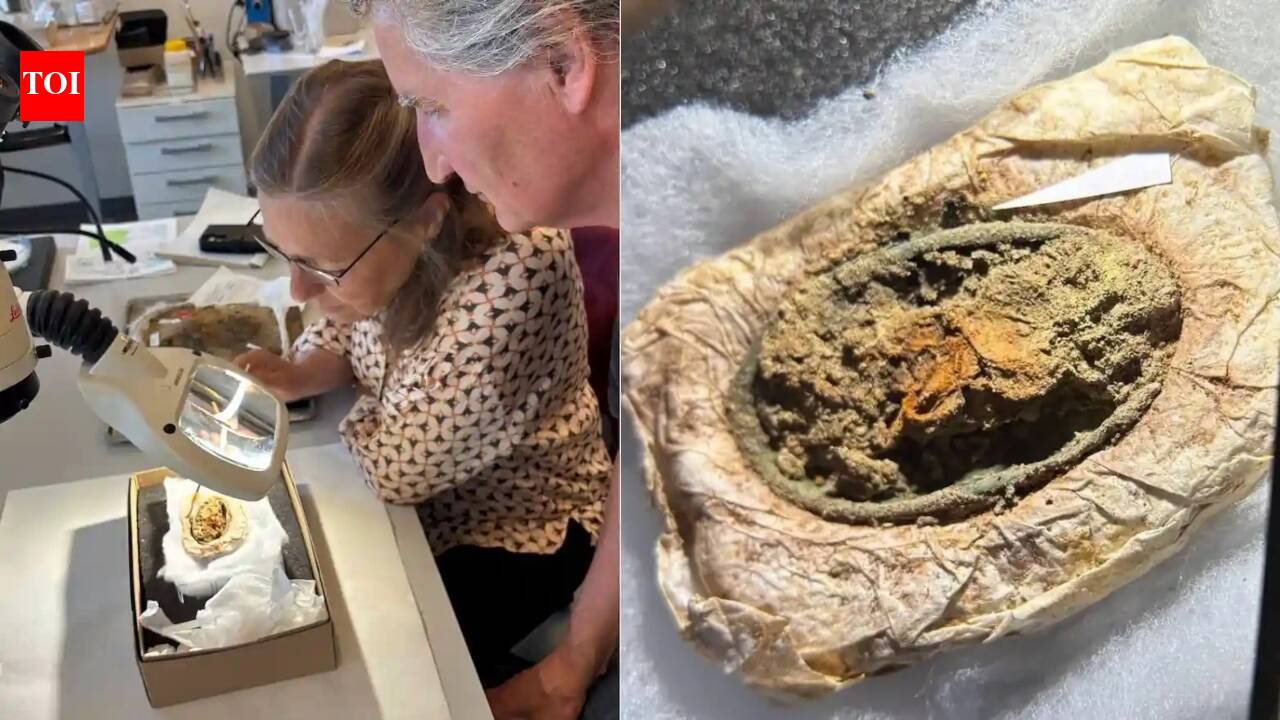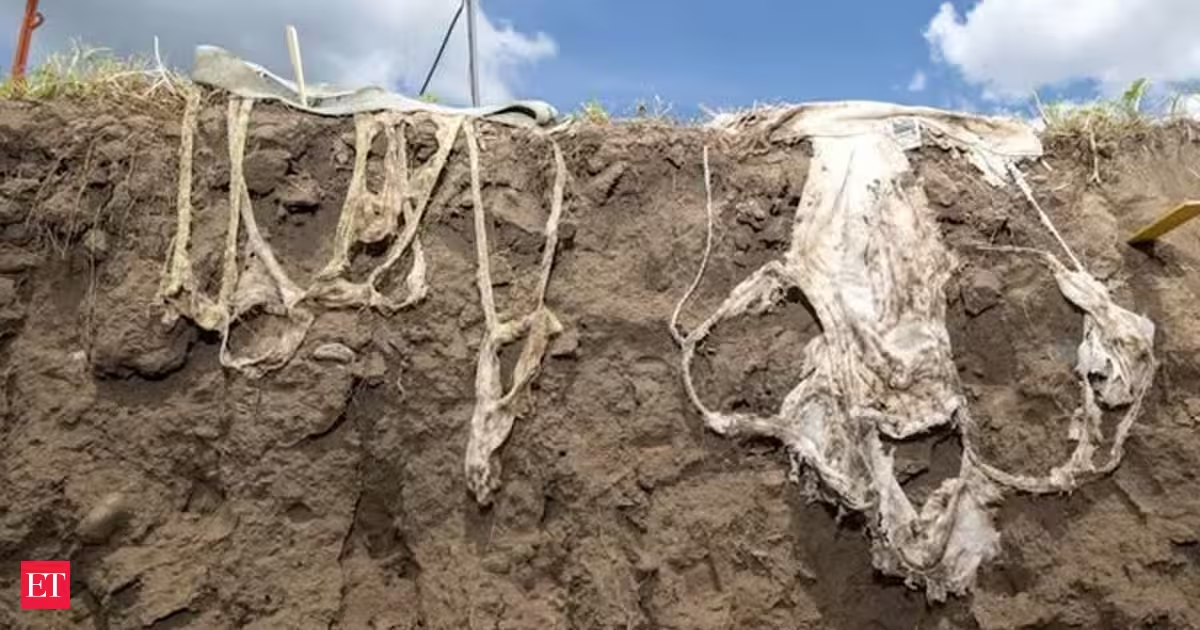
What can a pair of buried cotton underwear reveal about the soil beneath your feet? More than you might expect. In an unusual citizen-science project in Switzerland, about 1,000 volunteers buried cotton underwear in gardens, fields, meadows, forests and other locations. After two months, they dug up the underwear, photographed it and sent it to researchers along with soil samples. The goal was not to create a bizarre scientific stunt. Researchers wanted a simple way to measure biological activity in soil. As soil organisms break down natural fibers, the amount of decomposition can provide clues about what is happening underground. The project, called 'Proof by Underpants', also helped scientists create a large-scale picture of soil life across Switzerland.WHY BURY UNDERWEAR IN THE FIRST PLACE?The idea behind the experiment is surprisingly straightforward. Cotton is a natural material that can be broken down by organisms living in soil. When bacteria, fungi and other soil organisms are active, they help decompose the fabric. Researchers from the University of Zurich and the federal research institute 'Agroscope' launched the 'Proof by Underpants' citizen-science project in 2021. Around 1,000 participants buried underwear at roughly 1,000 locations across Switzerland. In total, volunteers buried more than 2,000 pairs of cotton underwear, along with 12,000 tea bags, as part of the wider research effort. After two months underground, participants retrieved the underwear, photographed it and sent it to researchers with soil samples. The researchers could then compare how much of the cotton had disappeared in different environments.WHAT DID THE BURIED UNDERPANTS REVEAL?The results showed that soil activity varied considerably depending on where the underwear was buried. Private gardens recorded the fastest decomposition. Researchers also found that these soils contained high amounts of organic matter, which can provide favorable conditions for organisms such as earthworms, fungi and bacteria. Lawns, on the other hand, showed the lowest level of soil-organism activity. Agricultural fields and meadows fell somewhere between gardens and lawns. The researchers found that land use had the strongest influence on how quickly the underwear decomposed. That makes the underwear more than a conversation starter. The rate at which cotton disappears can serve as a simple indicator of biological activity underground. Still, faster decomposition does not automatically mean that a particular ecosystem is healthier in every sense. The researchers noted that very high nutrient levels can sometimes indicate an imbalance, particularly in near-natural environments.WHAT DOES THIS MEAN FOR SOIL HEALTH?Soil is far more than dirt. It supports plants, stores water and carbon, cycles nutrients and provides a habitat for an enormous amount of life. Researchers estimate that more than half of global biodiversity exists below the surface. The underwear experiment gave scientists and members of the public a visual way to understand this hidden ecosystem. The study also demonstrated the value of citizen science. Conducting research across about 1,000 locations would have been difficult without public participation. Around 240 citizen scientists were listed as co-authors of the resulting publication, according to ScienceDaily. The researchers now suggest that an 'underwear index' could help make soil processes easier for the public to understand. "Our results show that how soil is managed can significantly affect both soil life and soil quality," says co-study leader and UZH professor of agroecology Marcel van der Heijden as quoted by the outlet. "Healthy, biologically active soil is crucial for fertility, nutrient cycling and many other ecosystem services."The bigger lesson is simple: what happens to a pair of cotton underpants underground can provide a glimpse into the busy world beneath our feet. It is an unusual test, but it highlights an important point - healthy, living soil depends on a complex community of organisms that quietly keep ecosystems functioning.
Why did scientists ask 1,000 people to bury their underwear? What the buried 'underpants' could reveal about soil - The unusual science of measuring soil health
The decomposition of cotton underwear has unveiled notable differences in soil biological activity throughout Switzerland. Private gardens displayed the most rapid decomposition rates, highlighting the presence of abundant organic matter and active microorganisms. Conversely, lawns showed minimal organism activity, with agricultural fields and meadows falling in a moderate range. This study emphasizes how land use significantly affects underwear breakdown, offering a unique approach to revealing hidden soil ecosystems.
611 words~3 min read