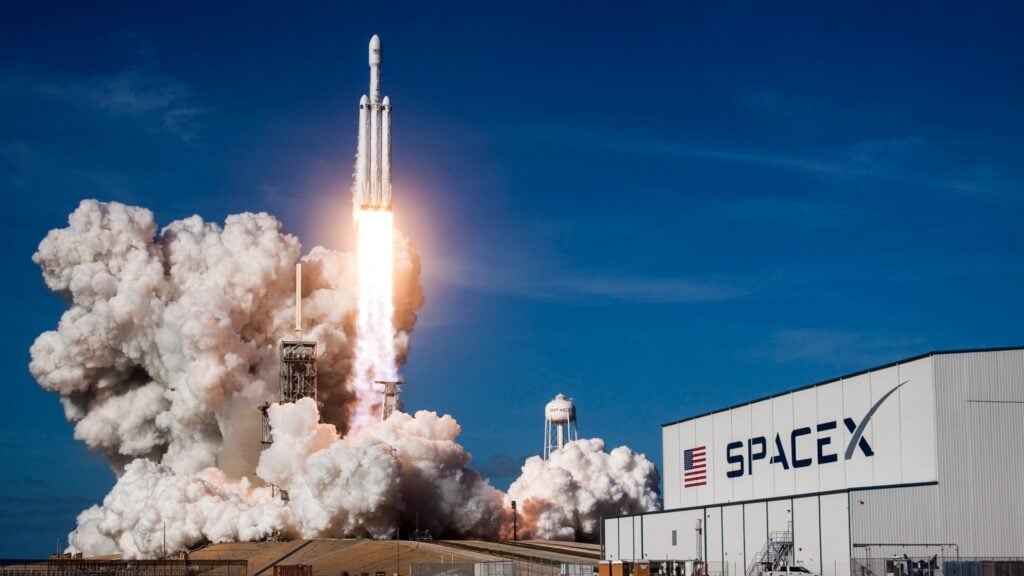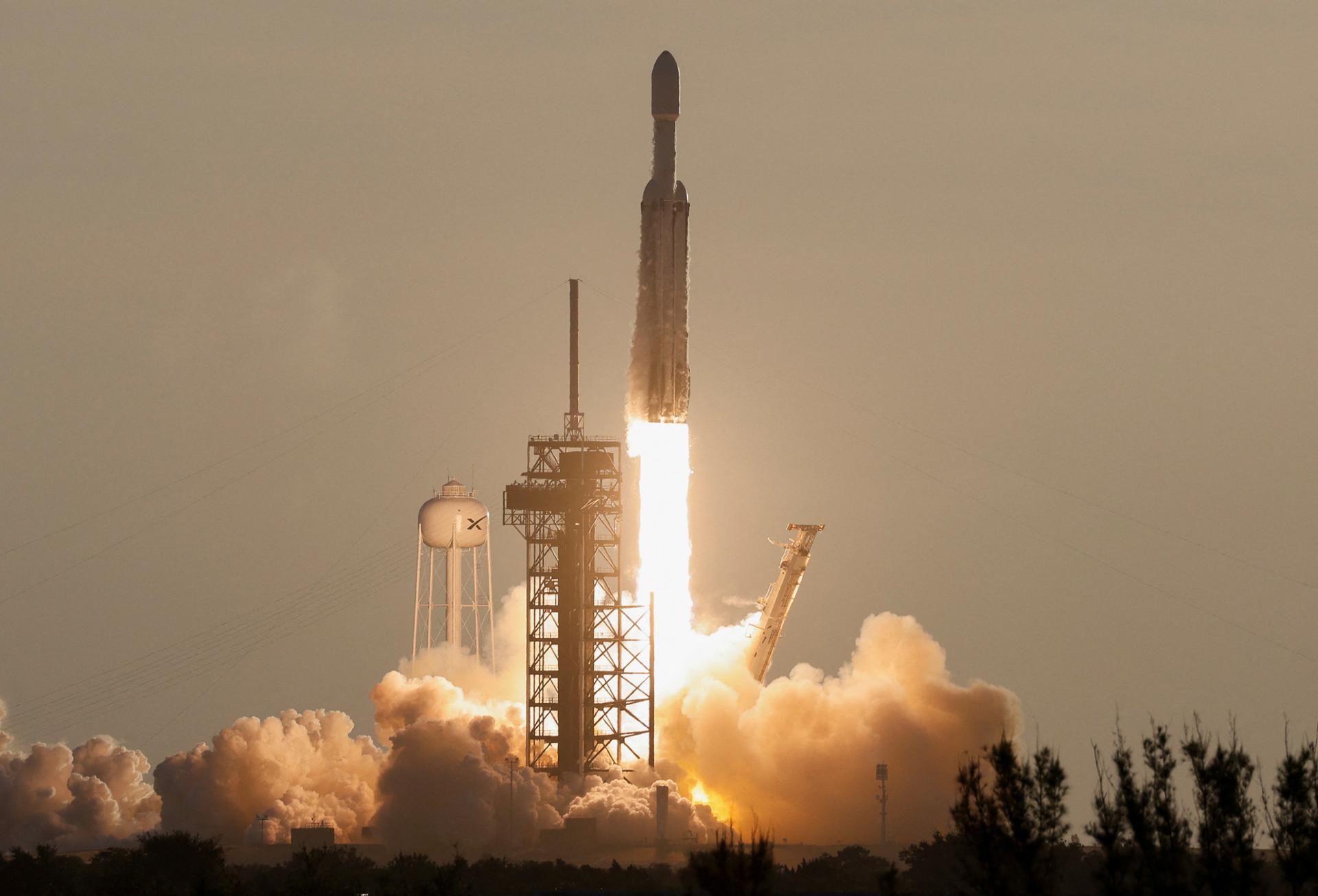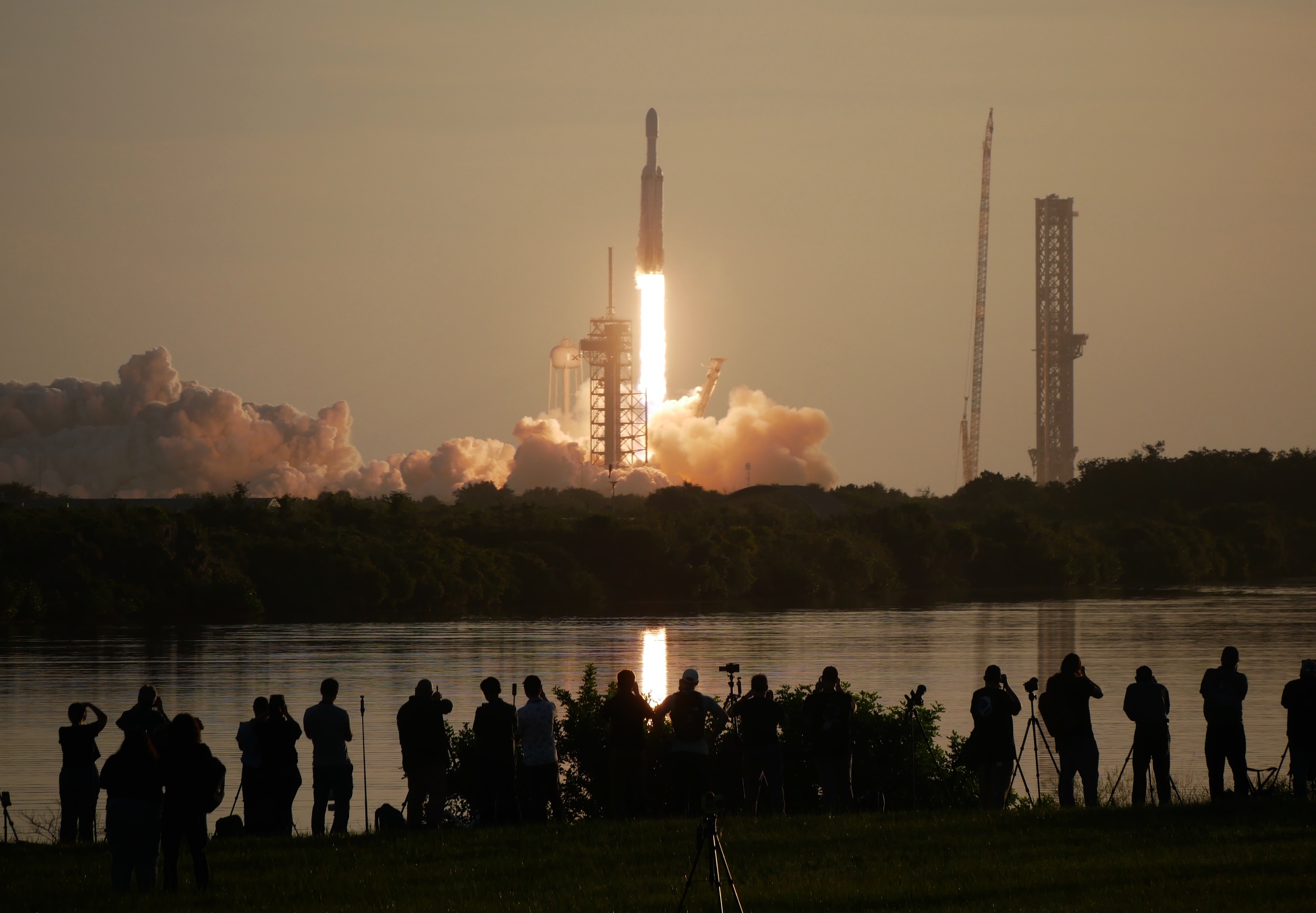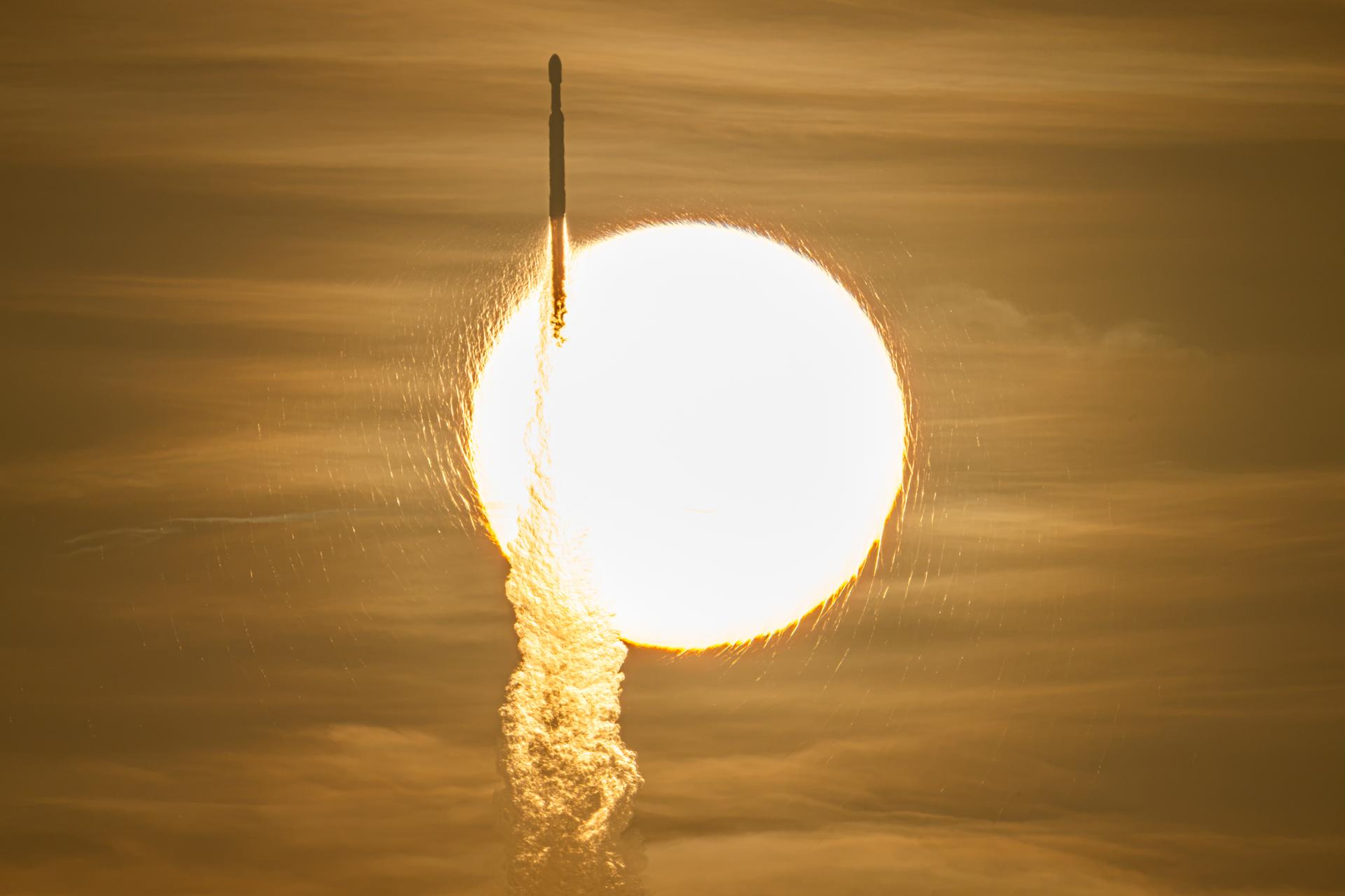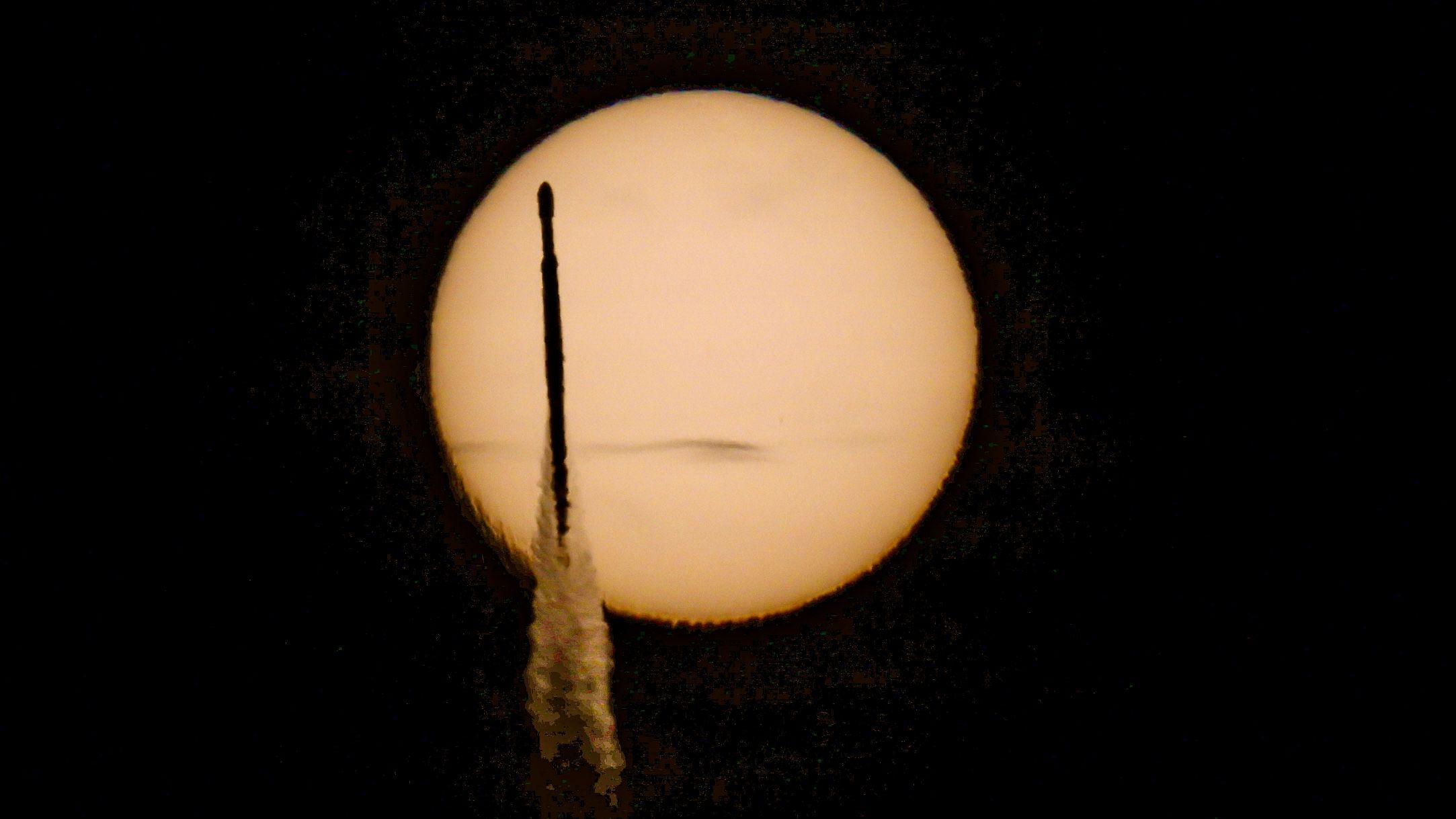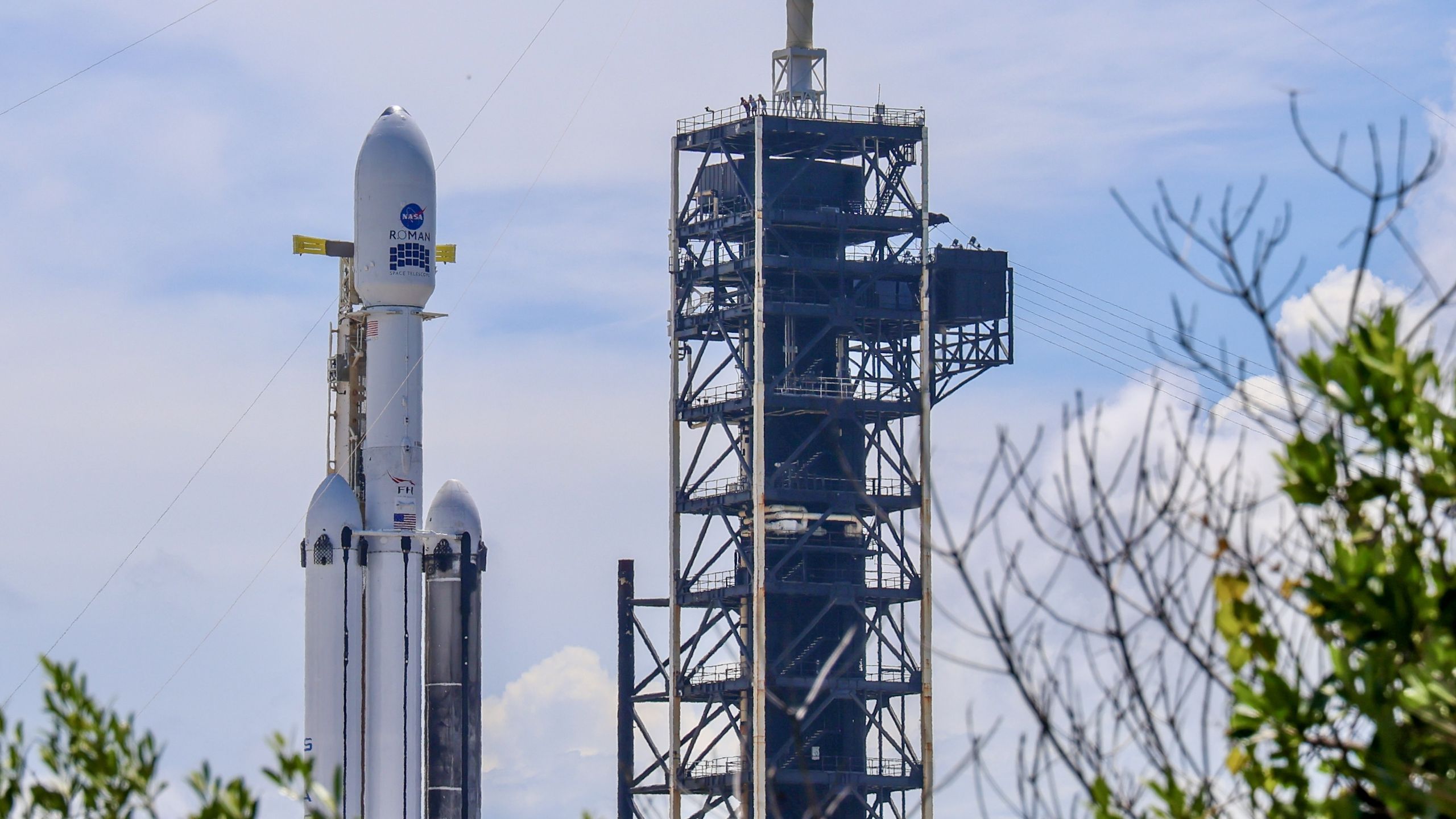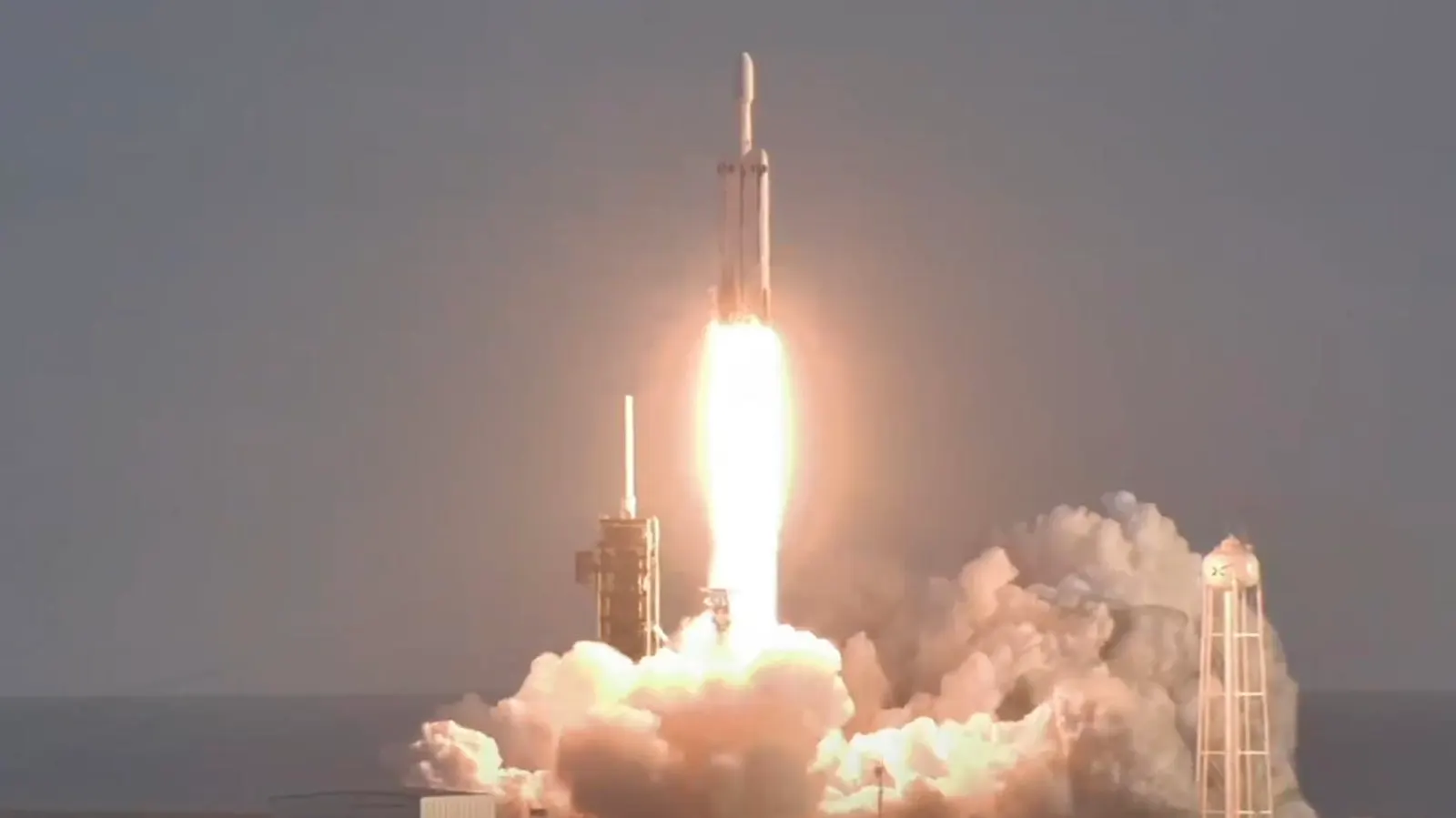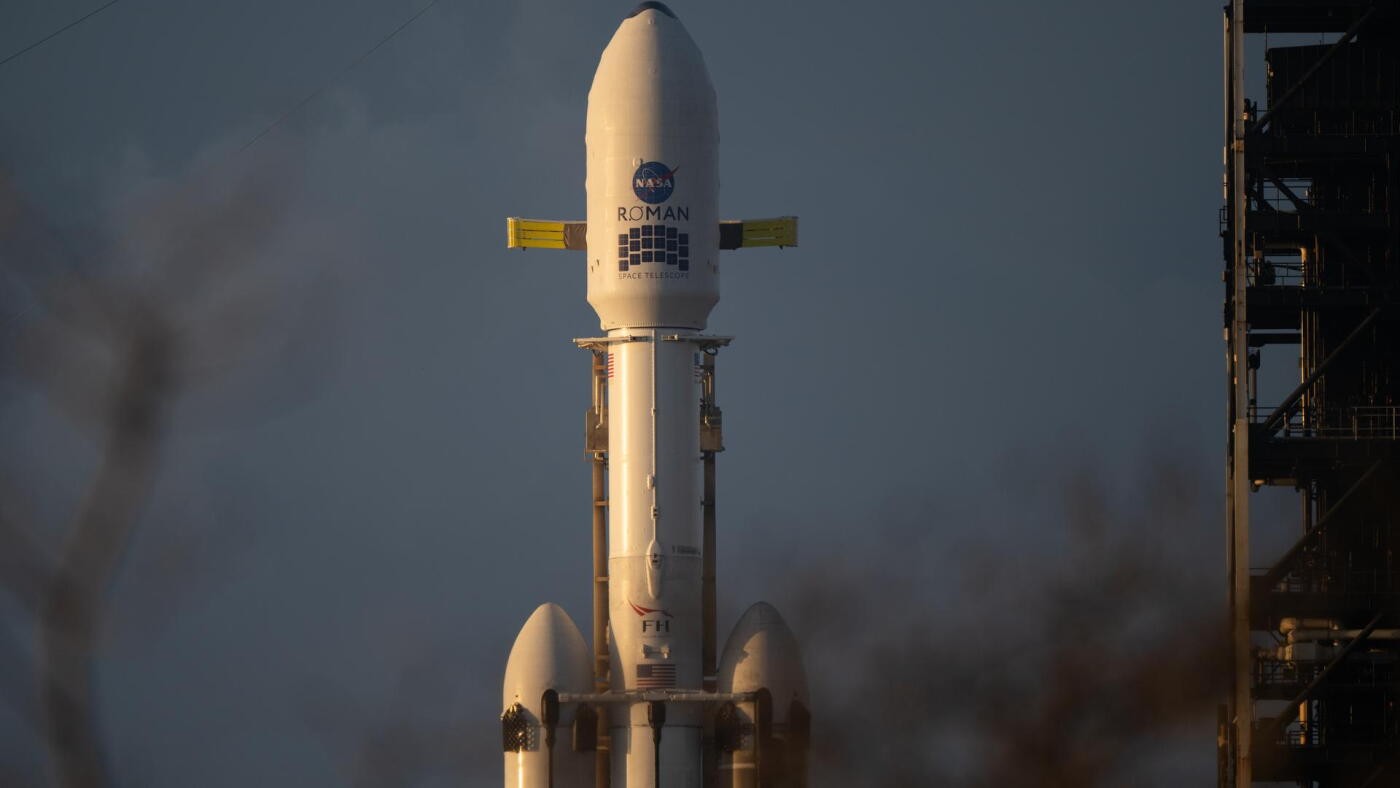
Perched on top of SpaceX’s powerful Falcon Heavy rocket, NASA’s Nancy Grace Roman Space Telescope lifted off at 7:26 a.m. local time from Cape Canaveral, Florida.
| Photo Credit:
Antranik Tavitian
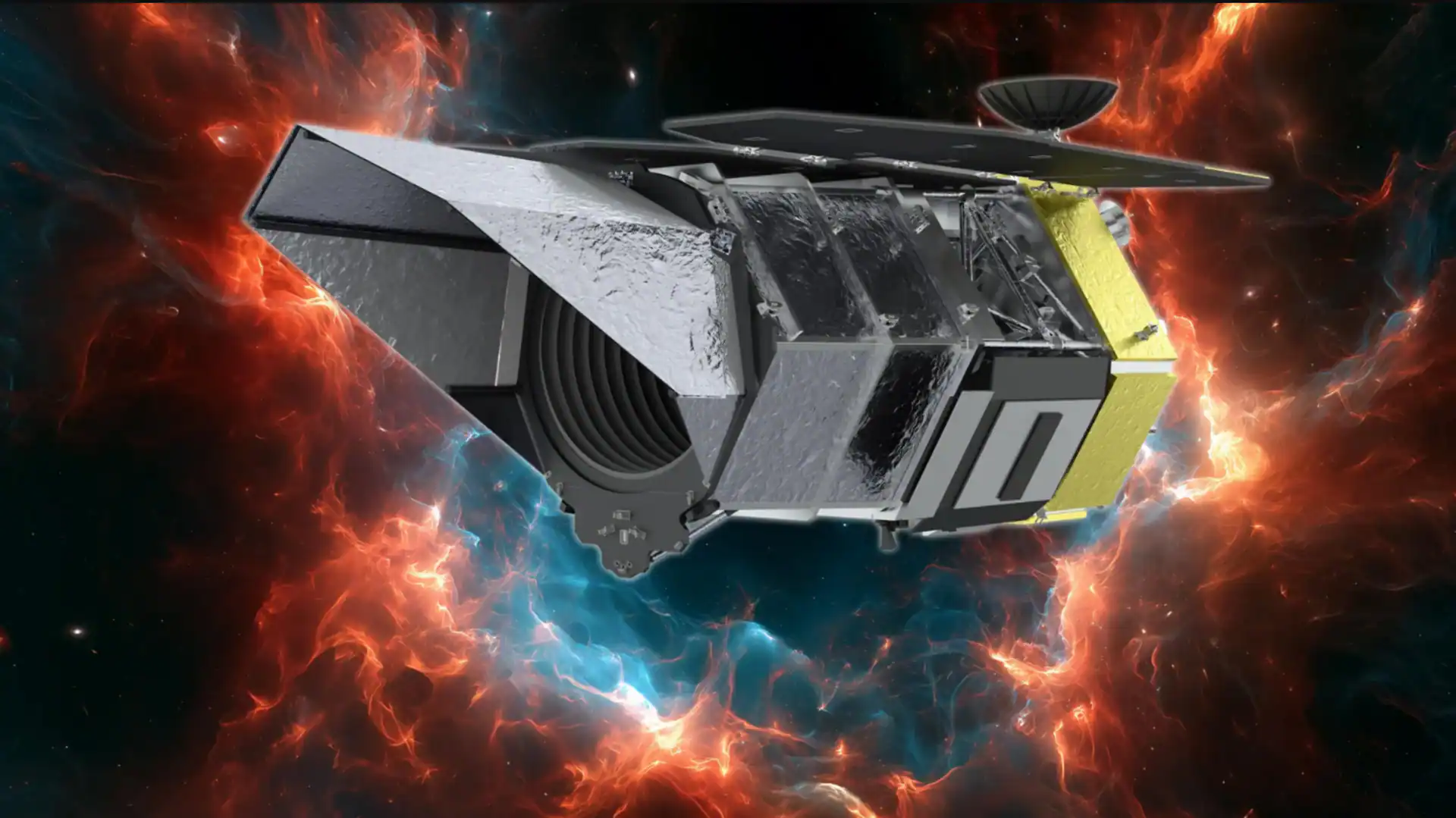
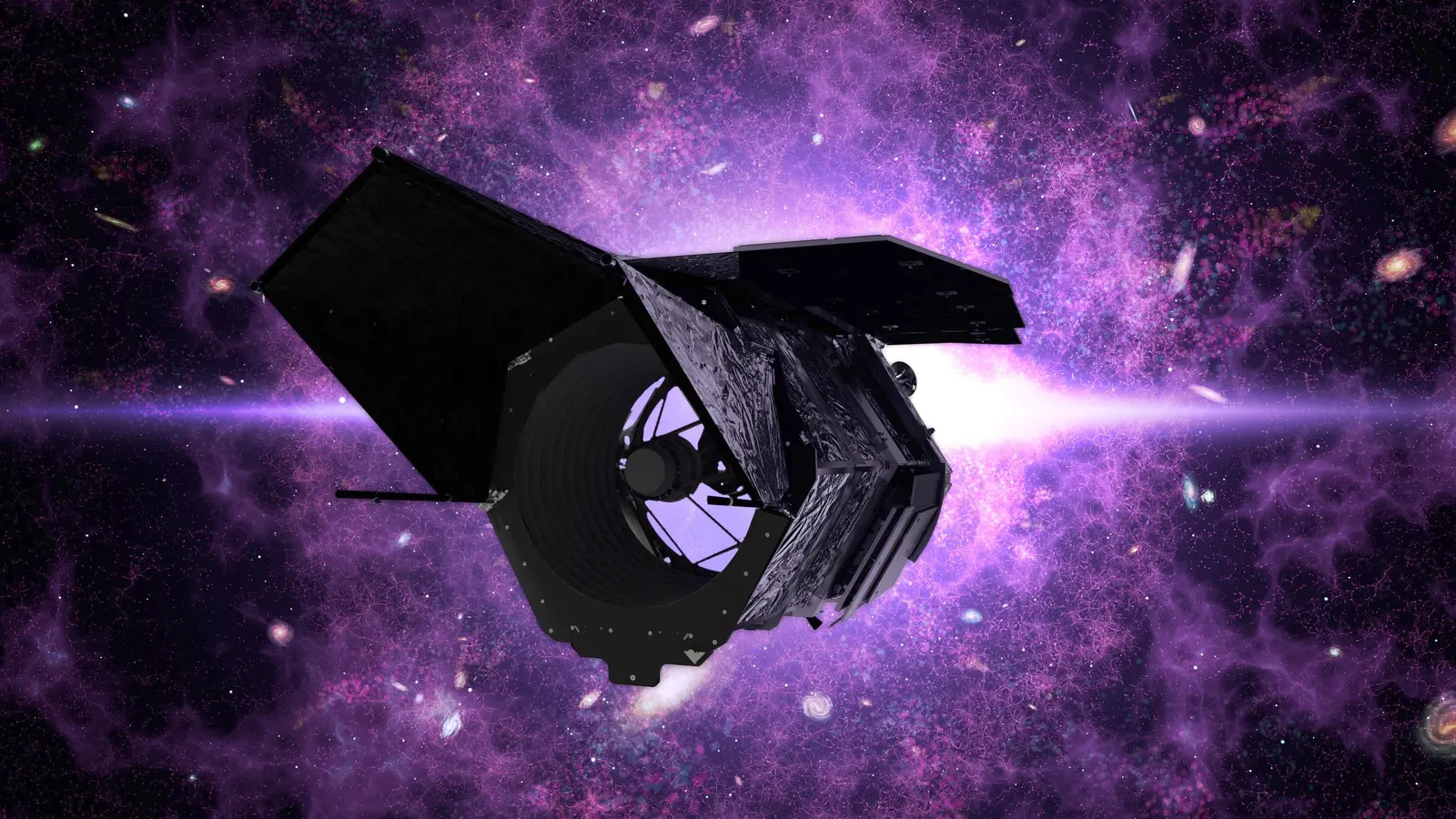
NASA’s $4.3 billion telescope launched to space on Sunday, marking the beginning of a five- to 10-year mission designed to observe the universe’s most exotic phenomena.Perched on top of SpaceX’s powerful Falcon Heavy rocket, NASA’s Nancy Grace Roman Space Telescope lifted off at 7:26 a.m. local time from Cape Canaveral, Florida. The launch puts the spacecraft on course to reach its final destination, an orbit roughly 1 million miles from Earth, where the spacecraft will begin observations of the sky as early as December.Roman is designed specifically to hunt for some of the most perplexing and mysterious forces in the universe. Notably, it’ll be studying dark matter and dark energy, a type of material and power thought to permeate the cosmos, but that scientists have not been able to see directly. Roman will attempt to catalogue how dark matter and dark energy are shaping distant stars and galaxies, as well as help scientists answer fundamental questions about how our universe is expanding.“There might be something fundamentally missing from physics as we understand physics, and so Roman has the potential to shed light on that,” Kristen McQuinn, head of the Nancy Grace Roman Space Telescope mission office at the Space Telescope Science Institute, said before the launch. “It has the ability to measure this dark energy, this mysterious force, back to the very beginning of the universe.”The spacecraft is also especially equipped to hunt for exoplanets — planets that are orbiting other stars outside of our solar system. Scientists hope Roman will be able to find other planets that resemble our Earth, in the hope of determining if life might be able to survive elsewhere.Roman’s namesake is the American astronomer Nancy Grace Roman, who is often dubbed the “Mother of Hubble,” in reference to the Hubble Space Telescope that’s been in orbit around Earth since 1990. Roman was NASA’s first chief astronomer and also the agency’s first female executive. The Roman telescope has a mirror similar in size to Hubble’s for collecting light, but the new spacecraft sports an impressive new wide field camera that will allow Roman to see a field of view that’s 100 times larger than what Hubble can see. The spacecraft is also able to scan the sky more quickly than its predecessor telescopes.“It can map the sky about 1,000 times faster than Hubble can,” McQuinn said. “Or if you flip that in other ways, every 10 months we’ll be getting the equivalent of roughly 1,000 years of Hubble data.”And unlike Hubble, Roman will primarily gather images in the infrared, a type of light that we cannot see but can detect as heat. NASA’s powerful James Webb Space Telescope also collects infrared light. Roman also has a unique new instrument called a coronagraph that is designed to block the light of stars, allowing the spacecraft to potentially image the very faint exoplanets that may be orbiting nearby.Roman will spend the next months traveling out to its destination, while deploying some of its instruments. Scientists and the telescope’s operators will also spend the next three months making sure the spacecraft’s various instruments work properly before moving into science operations at the end of the year.If all goes to plan, the first images collected by Roman should arrive in 2027.The telescope has had a long and winding road to reach the launchpad. First conceived in the early 2010s, the concept for Roman went through years of study of development. The cost of the project grew beyond the originally planned scope, prompting NASA to find ways to reduce the budget and complexity. And at one point in 2018, the first Trump administration attempted to cancel the mission, though that effort stalled at Congress.In 2025, an early version of President Donald Trump’s budget request had also provided no funds for the mission, but the final budget request did include money for the project.Published on August 30, 2026