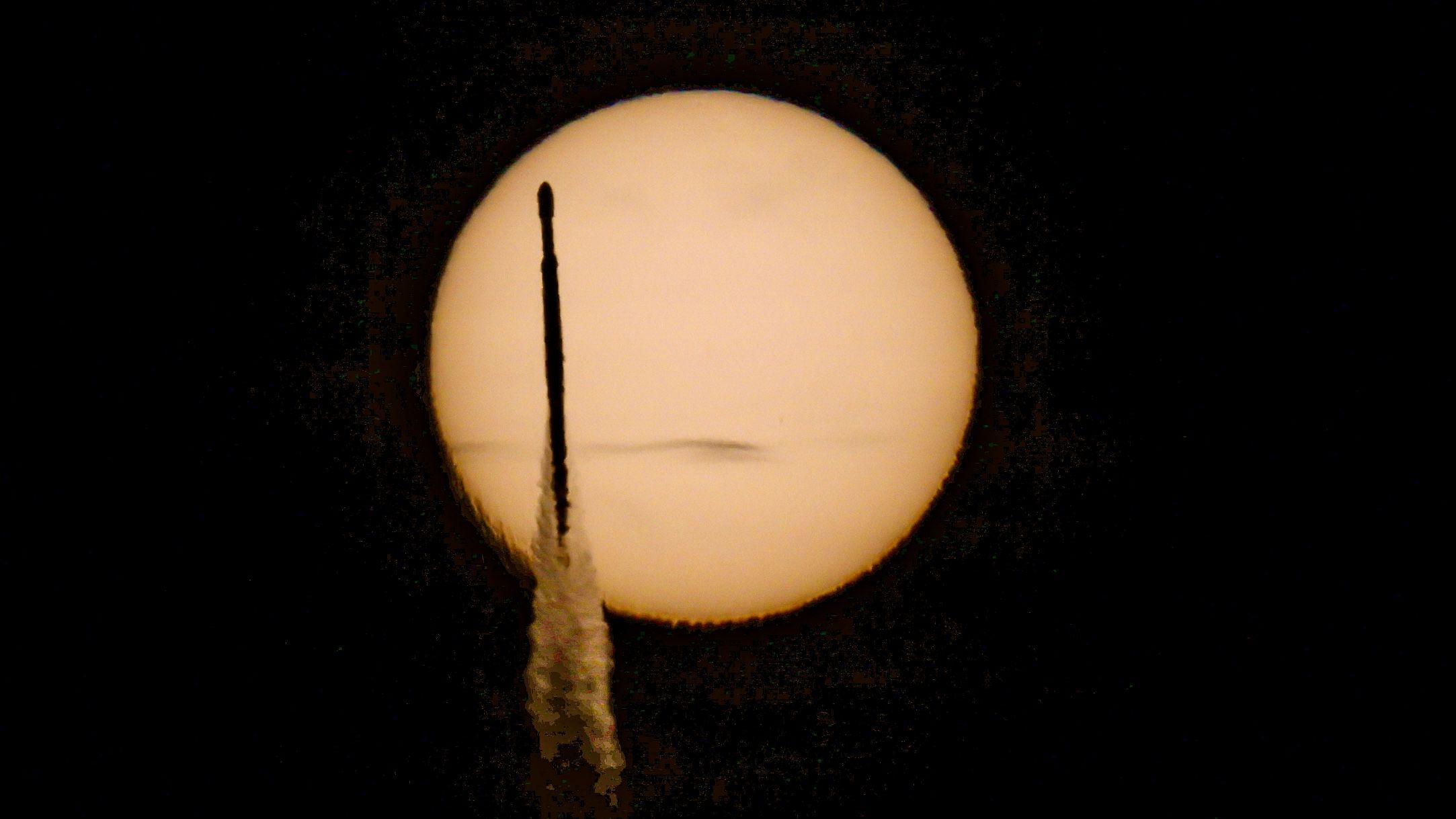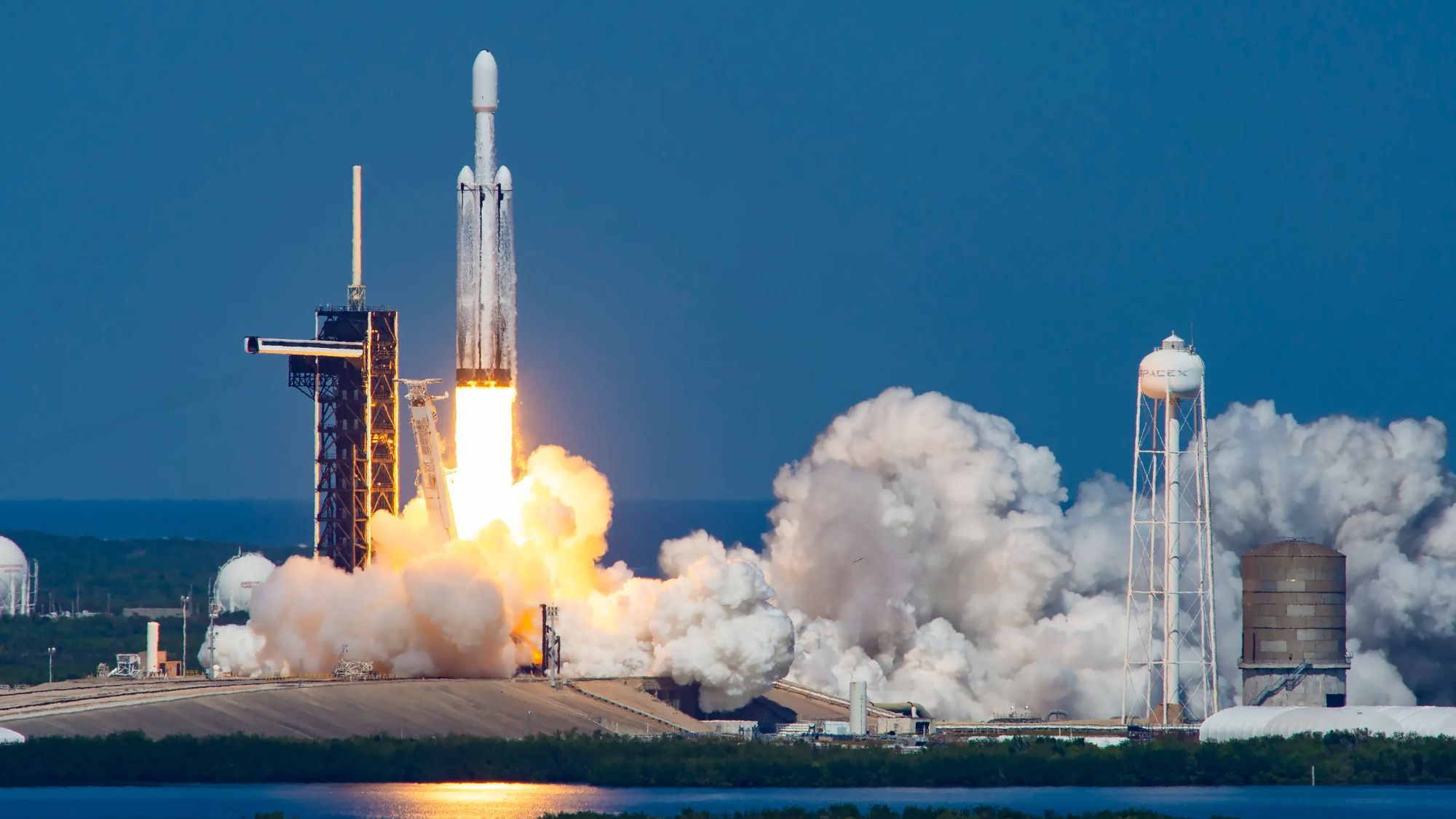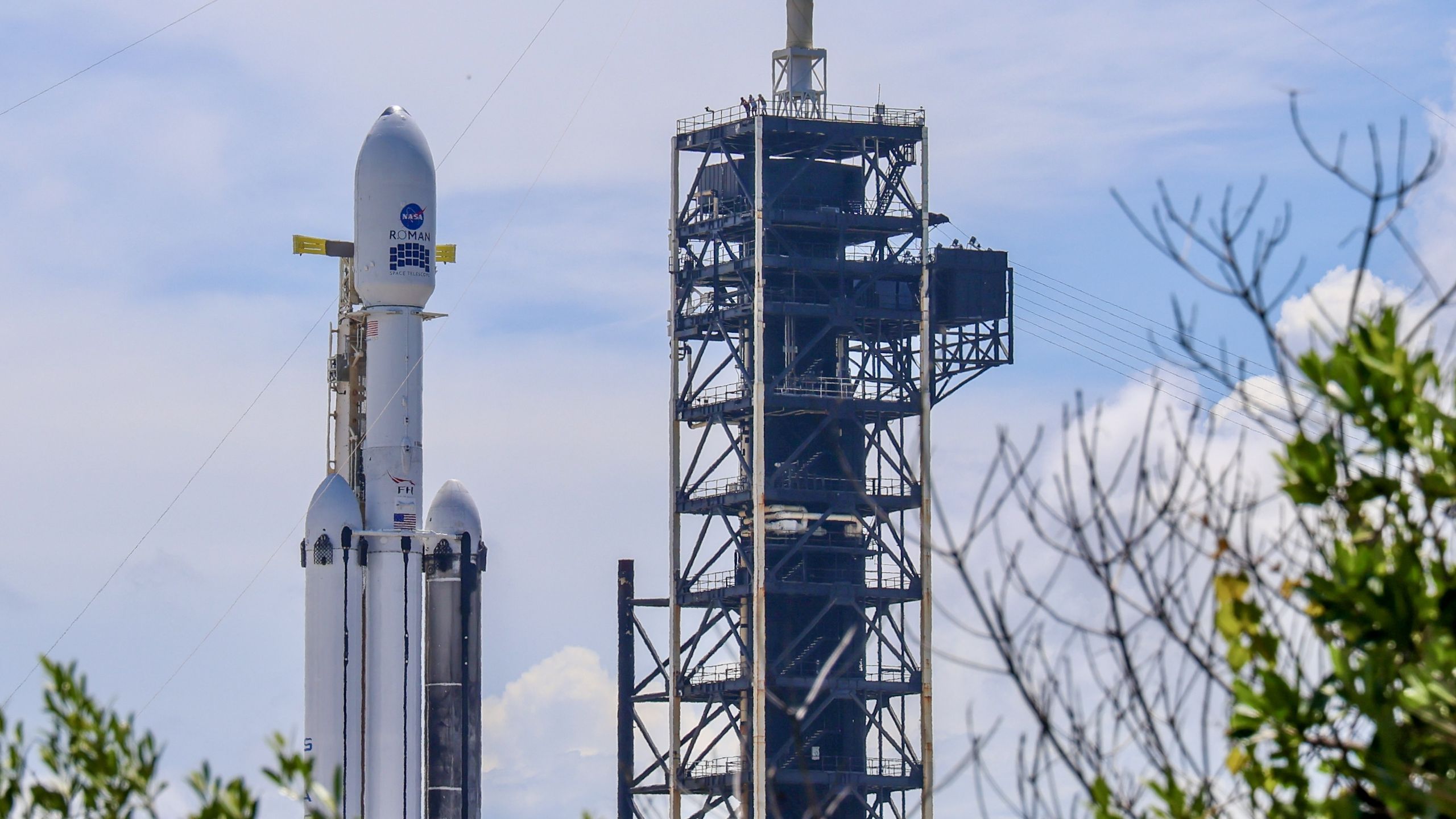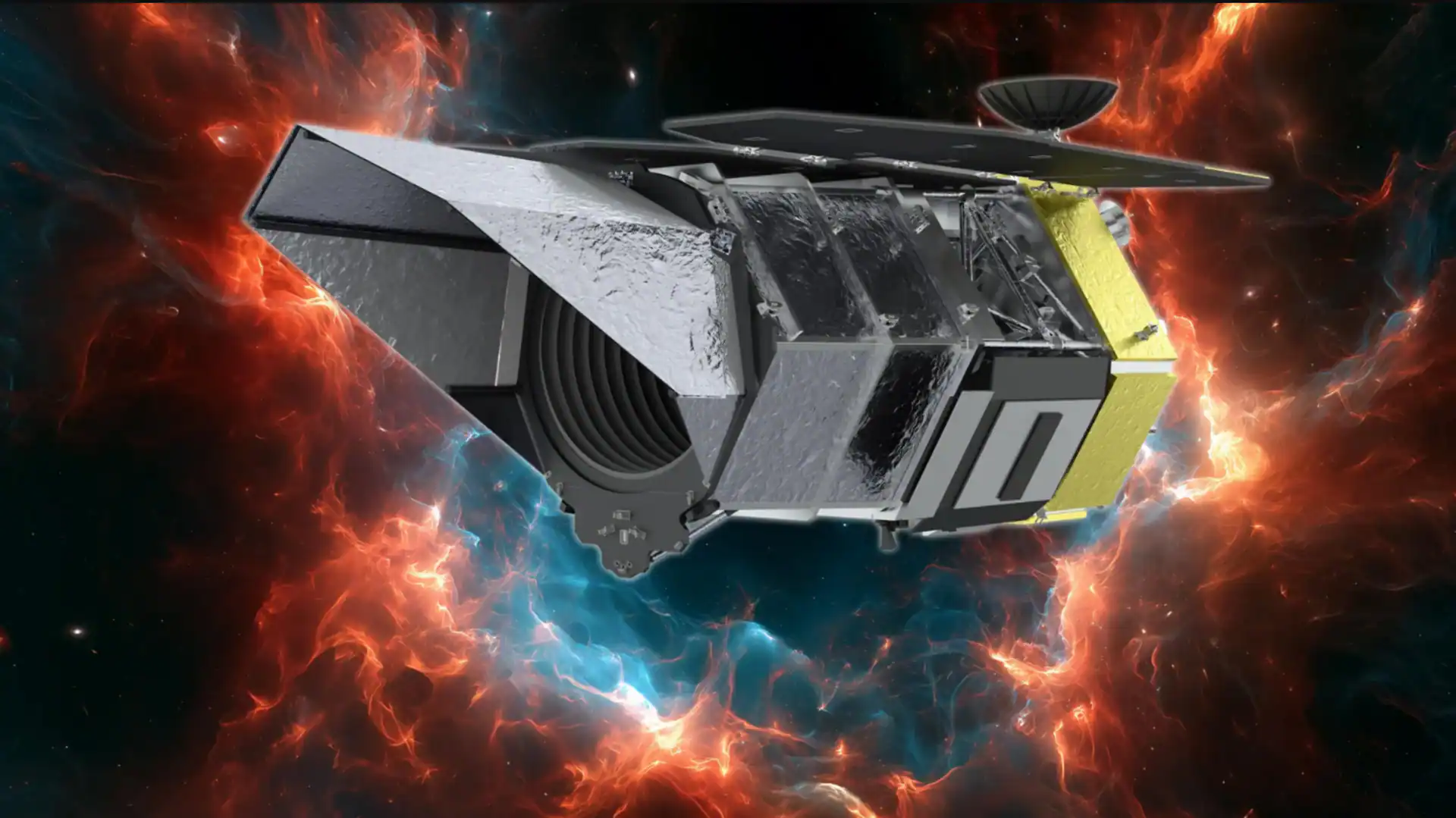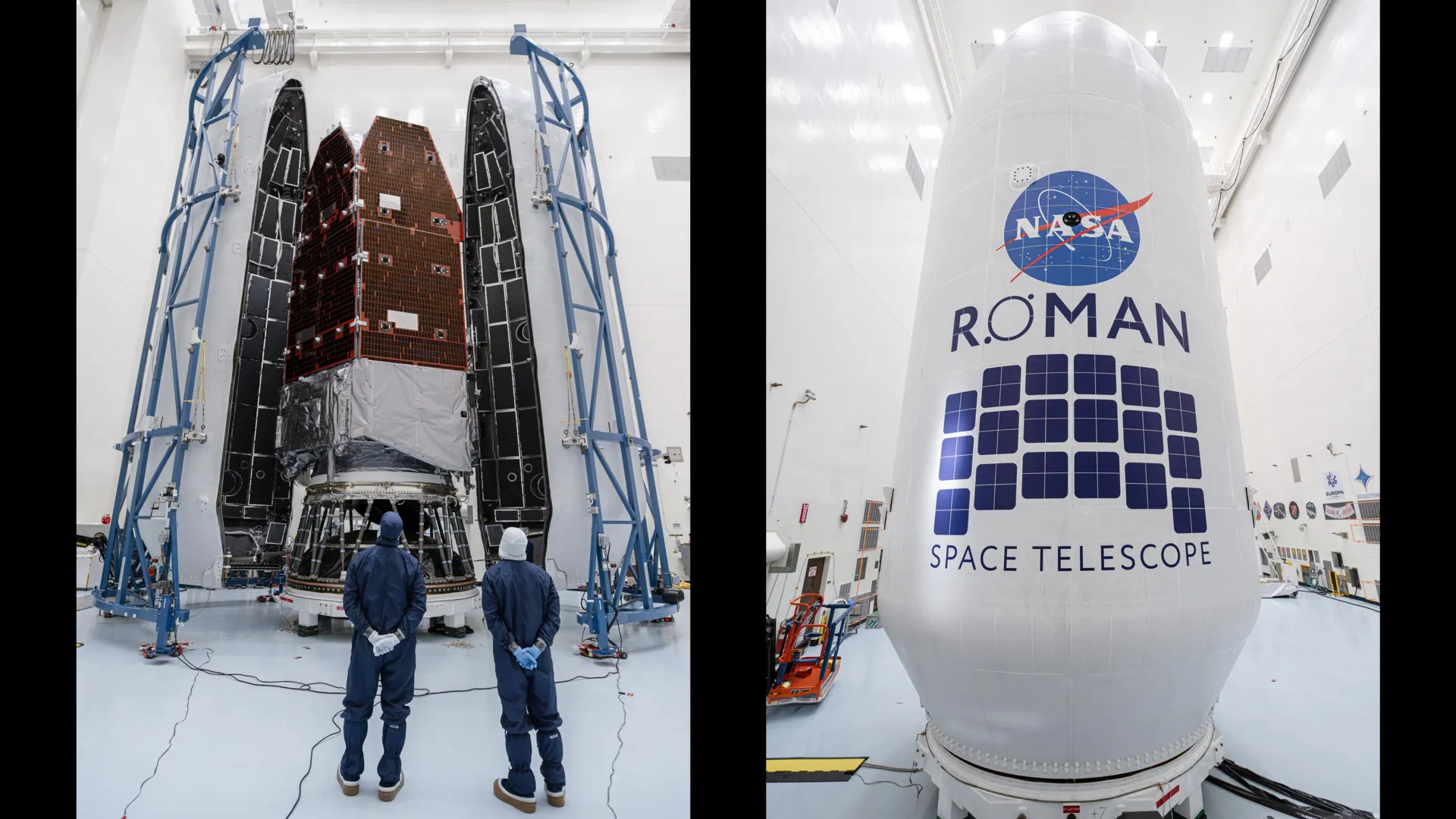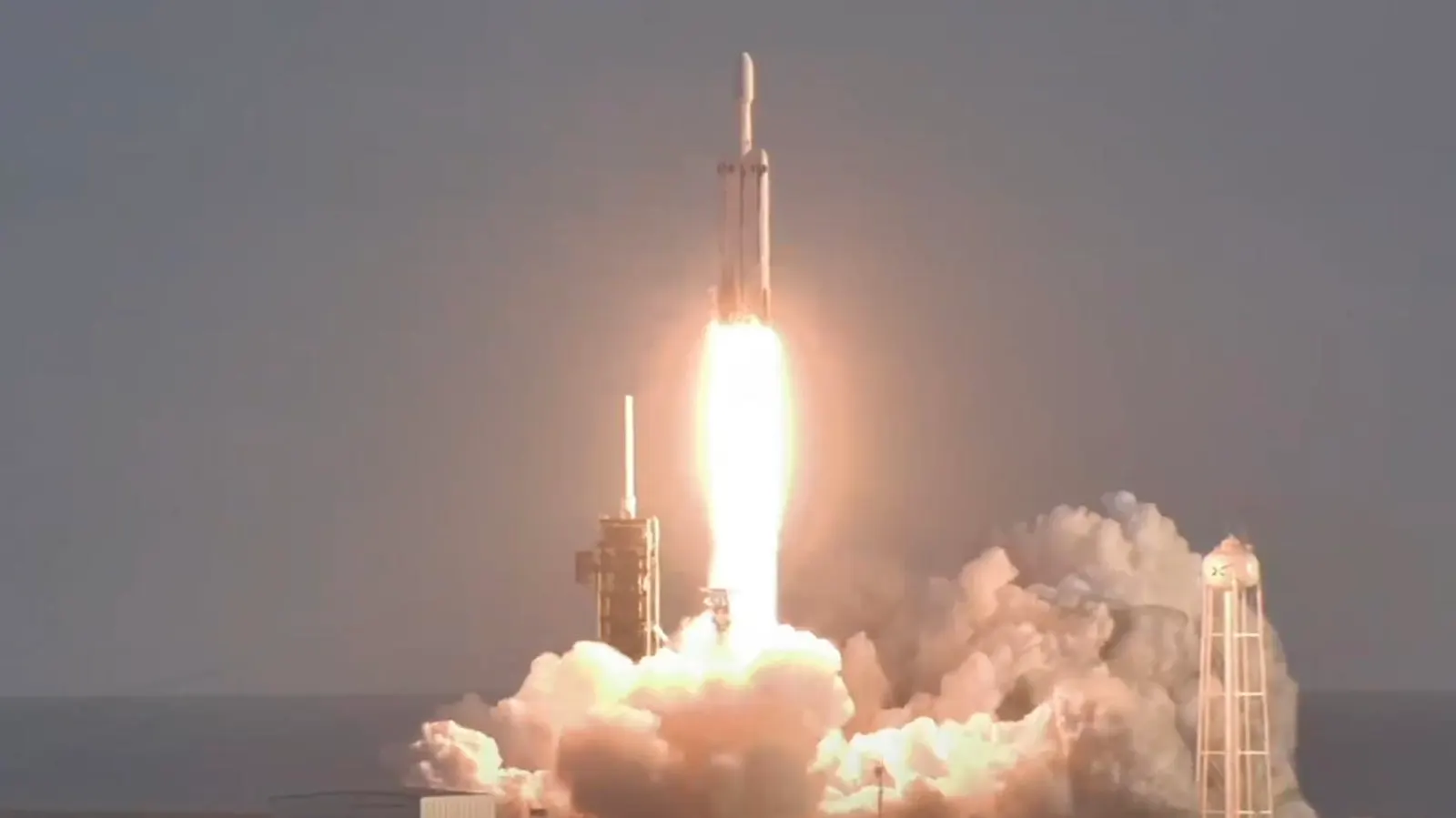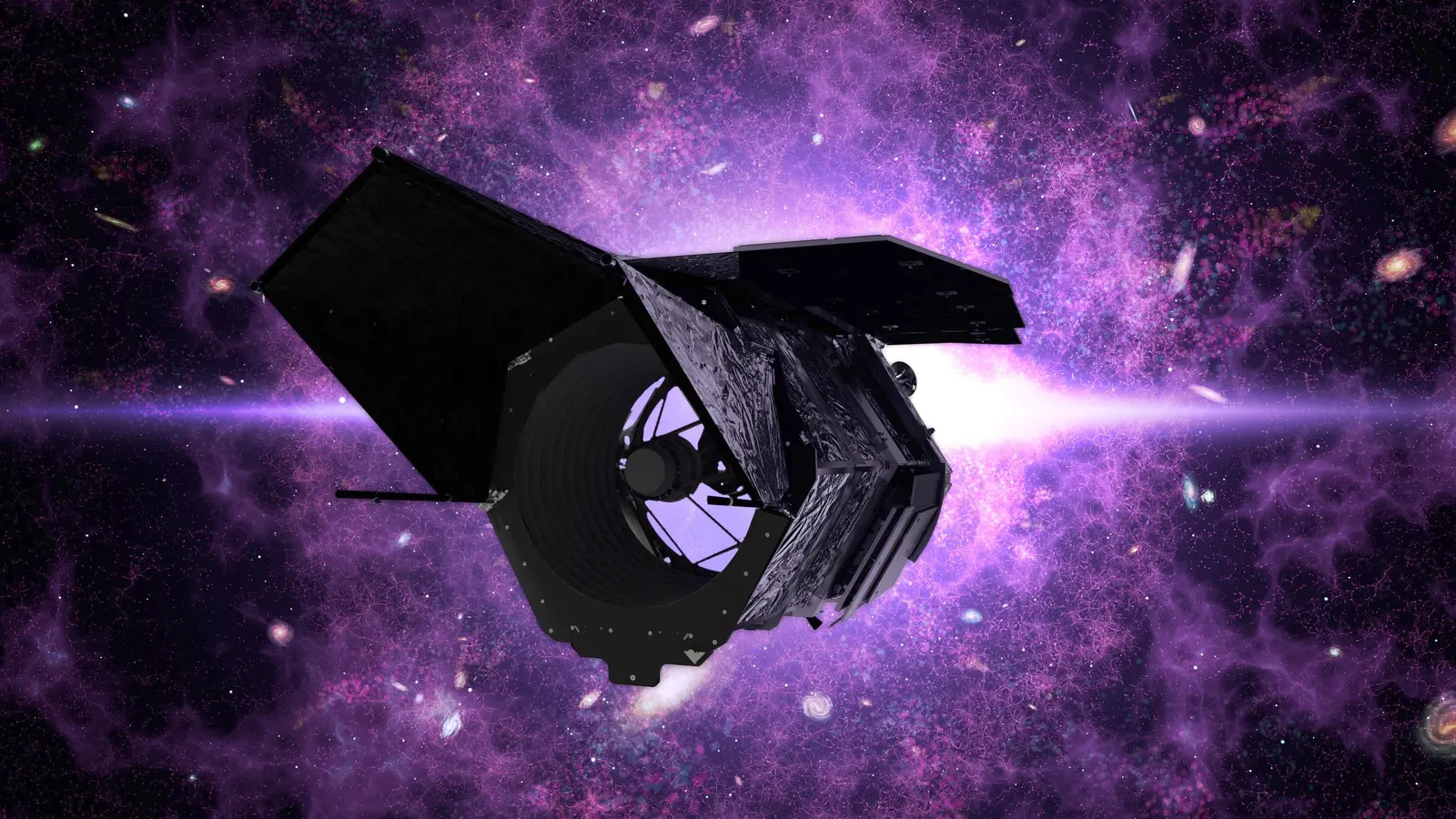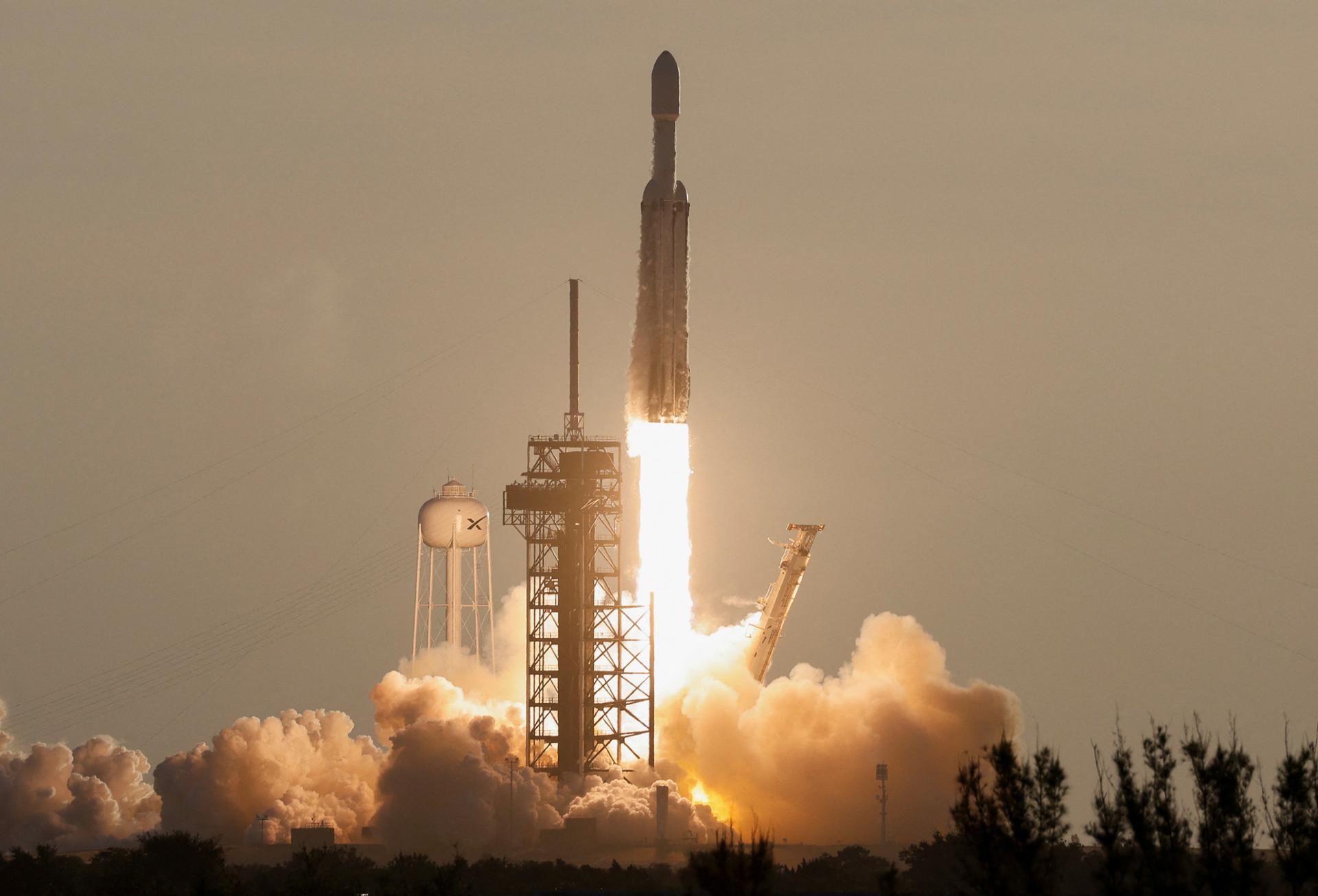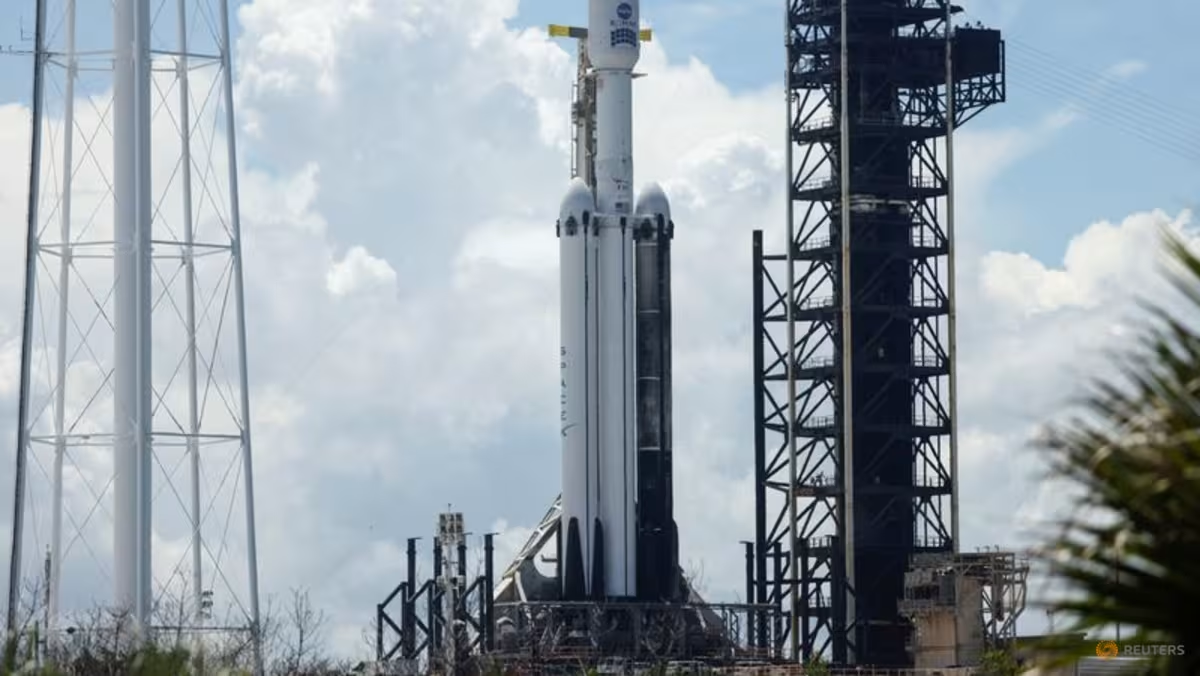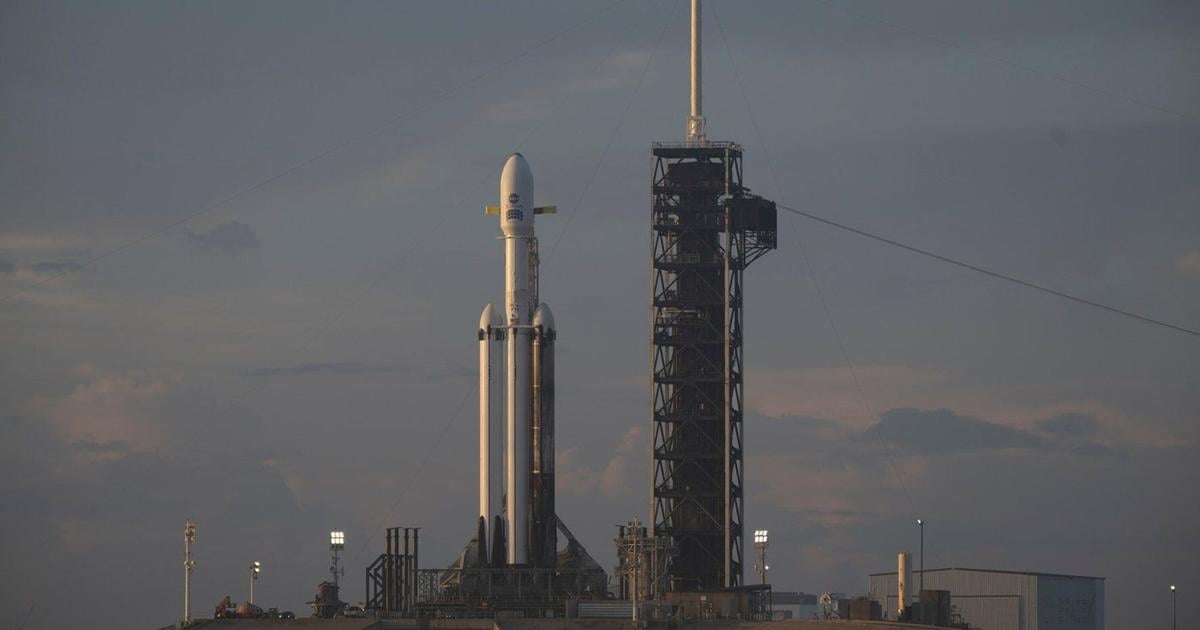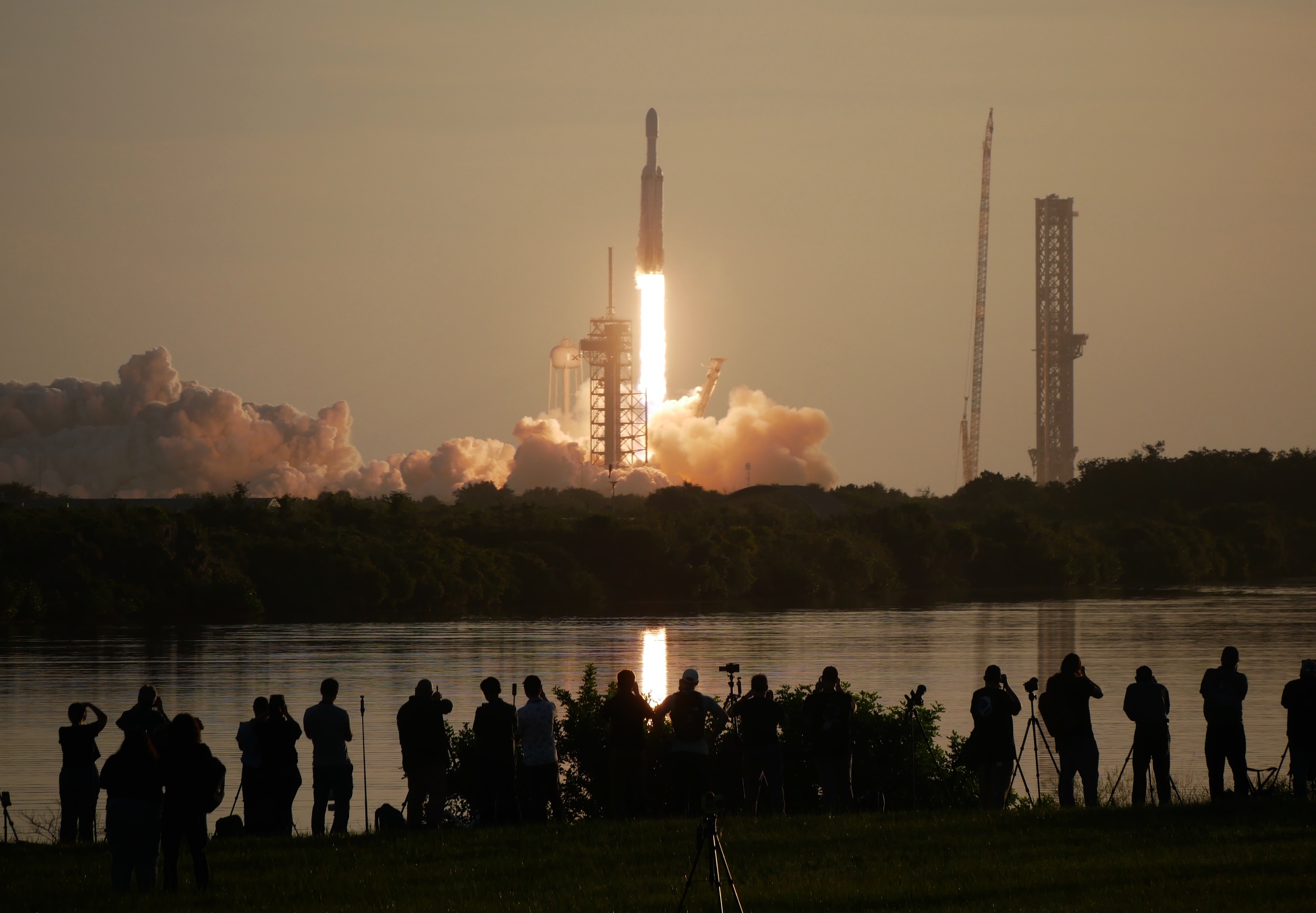
KENNEDY SPACE CENTER, Fla. — A Falcon Heavy launched NASA’s newest flagship telescope Aug. 30 on a mission to study the nature of the universe and discover thousands of exoplanets.
A SpaceX Falcon Heavy lifted off from Kennedy Space Center’s Launch Complex 39A at 7:26 a.m. Eastern. The rocket’s payload, the Nancy Grace Roman Space Telescope, deployed from the upper stage 31 minutes later. The rocket’s two side boosters landed at separate pads at Cape Canaveral Space Force Station, while the central booster was expended.
This was the 13th launch of the Falcon Heavy, dating back to its debut in 2018. It was the third NASA mission for the rocket, after the launch of the Psyche asteroid mission in October 2023 and the Europa Clipper mission to Jupiter a year later.
Roman will spend the next 100 days traveling to the Earth-sun L-2 Lagrange point, 1.5 million kilometers from Earth. During that journey, engineers will be commissioning the 9,200-kilogram spacecraft and its instruments.
That work will begin within an hour of deployment, with deployment of the spacecraft’s solar arrays and sunshield. A course-correction burn is planned a day after launch and a second three days later, but Jackie Townsend, Roman’s project manager, said at an Aug. 29 briefing that, depending on the accuracy of the launch, the first maneuver could be reduced and the second skipped entirely.