Story audio is generated using AI
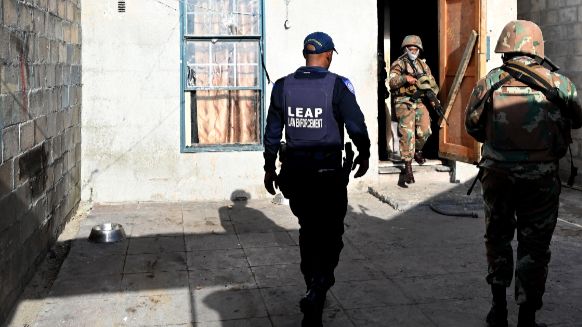
The Western Cape recorded a third consecutive quarterly decline in murders, but the latest crime statistics have done little to change the province’s position as an outlier in South Africa’s broader downward trend in killings.Murders in the Western Cape fell by 6.7%, from 1,148 between April and June 2025 to 1,071 during the same period this year. The province’s murder rate, however, remained 13.9 per 100,000 people, well above the national rate of 8.5.The decline is encouraging, but independent crime experts cautioned that it is too early to describe it as a sustained turnaround.Over the longer-term, the Western Cape has proved more resistant to the national decline in murder than any other province. Provincial murder figures supplied by independent crime researcher David Bruce show that murders in the Western Cape increased from 4,150 in 2022/2023 to 4,544 in 2023/2024 before declining to 4,369 in 2024/2025. They then increased slightly to 4,448 in 2025/2026.By contrast, national murders declined from 27,494 in 2022/2023 to 23,096 in 2025/2026, a reduction of 16%. Over the same period, KwaZulu-Natal recorded a 32% decline, Limpopo 24% and the Eastern Cape 15%.The figures underline why Bruce described the Western Cape as an exception to the broader national trend. While murders have declined substantially in other provinces, the Western Cape’s murder numbers have remained comparatively resilient, with previous declines followed by renewed increases.“Certainly not as yet, but one would like to think it marks a shift,” Bruce said of the latest reduction.Institute for Security Studies senior researcher Anine Kriegler said the latest figures were increasingly difficult to dismiss as simply one good quarter. Looking at rolling 12-month figures, murders in the Western Cape peaked at about 4,715 in the year to June 2024 and have since fallen to about 4,370, a reduction of roughly 7%.However, she said the decline had not followed a straight line and should be regarded as an emerging trend rather than a lasting turnaround.The provincial government has pointed to targeted policing and violence-prevention interventions as possible contributors to the latest improvement. Police oversight and community safety MEC Anroux Marais said murders in the province’s six law enforcement advancement programme (Leap) priority areas fell by 17%, from 329 to 273, compared with the overall provincial decline of 6.7%.Murders declined in all six areas, including by 33% in Gugulethu and 24% in Delft.Marais said the figures provided encouraging evidence that sustained visible policing and targeted deployments could contribute to improved safety outcomes, though she cautioned against attributing the decline to Leap alone.Kriegler similarly said the statistics could not establish what had caused the decline. A number of interventions were taking place simultaneously, including SAPS operations, Leap deployments and violence prevention programmes, while murder was also declining nationally.The most persistent feature of the Western Cape’s violence problem remains its concentration in a relatively small number of communities.About 44% of murders in the province during the latest quarter were recorded in just 10 police precincts, according to Kriegler. Mfuleni, Nyanga, Delft, Philippi East and Harare recorded the highest numbers.Mfuleni recorded the highest number of murders during the quarter, with 73 killings, an increase of 1.4%, despite a decline in several other major crime categories.Bruce said the Western Cape’s murder problem was particularly concentrated in the Cape Town metro, unlike other provinces where killings were more widely distributed across urban and rural areas.He said competition between gangs and the intensity of criminal markets in the metro could be part of the explanation, with the drug trade potentially creating lucrative incentives for criminal activity and violence.The latest SAPS figures underline the role of gangs and firearms in the province’s lethal violence. Of the 760 murder dockets in which police had sufficient information to identify the likely circumstances, 217, or 29%, were classified as gang-related.The Western Cape also accounted for 139 of the 307 murders nationally classified as retaliation, revenge or punishment.Illegal firearms remain another central concern. Firearms were used in 663 of the 991 Western Cape murder cases analysed by SAPS, or 66.9%.Marais said the continued circulation of illegal firearms was central to understanding the severity of violence in the province and warned against interpreting a decline in firearm detections as evidence that fewer illegal weapons were in circulation.The latest figures therefore offer a measure of hope for a province that has remained stubbornly resistant to South Africa’s broader decline in murder. But experts say the real test will be whether the improvement continues and reaches the small number of Cape Town communities that continue to carry a disproportionate burden of lethal violence.The numbers may be moving in the right direction, but the underlying geography of the Western Cape’s violence problem remains largely unchanged.Business Day