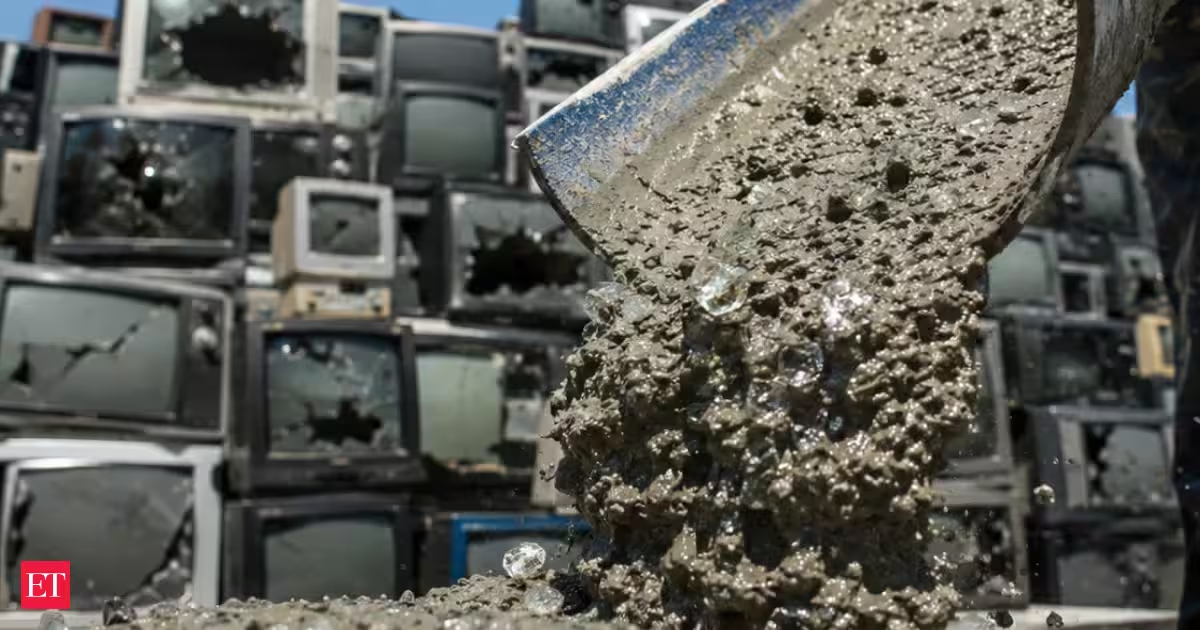
Miami researchers tested concrete that replaced sand with leaded CRT glass; a biopolymer helped limit lead leaching before durability damage raised concernsSynopsisResearchers explored using toxic CRT glass in concrete mixtures. This hazardous waste contains significant amounts of lead, posing environmental risks. A biopolymer additive effectively trapped the lead within the concrete. Durability tests revealed some damage, but lead leaching remained manageable. This research offers a potential solution for electronic waste disposal.Millions of dead TVs, one unexpected second life (representative image). Image Credits: ChatGPTThere are millions of old computers and TVs in storage right now. Most of us probably never think about where they end up. These older monitors use CRT technology, and their glass contains lead. A fix for this problem was examined in a 2013 doctoral dissertation from the University of Miami titled ‘Concrete Durability and Environmental Performance of Mixtures Containing Recycled Hazardous Waste Aggregates,’ where Diego F. Romero experimented with mixing this lead glass into concrete.How scientists turned toxic glass into concreteFlat screens took over years ago, but the old CRT sets didn’t just go away. The US Environmental Protection Agency says CRT glass usually contains enough lead to be considered hazardous waste. That is when the glass is discarded. EPA records also show an old TV or monitor can hold nearly four pounds of lead. Lead can damage a child’s brain development. That’s why researchers examined concrete as a new use for this glass. Processed CRT glass is similar in size to sand. According to the work done by Romero, CRT glass substituted between 5% and 30% of the sand in a standard concrete mix, which is a very high percentage in a standard mix. The aim was simple: to recycle old electronics rather than dispose of them in landfills. The main concern was whether lead in the glass would leach over time from rain or groundwater.The ingredient that trapped the leadResearchers added a special ingredient to prevent the lead from leaching out. The dissertation says the additive was an organic biopolymer made from guar gum and boric acid. Guar gum is a thickening agent from a plant. Household products already have trace amounts of boric acid in them. This mixture, the study explains, bound the lead to the cement. That prevented it from being washed away. The results looked promising. The dissertation reports that, under the initial lab testing conditions, this biopolymer helped keep lead leachate below the U.S. government's drinking-water limits, though later durability tests showed leaching increased once the concrete was damaged by freeze-thaw cycles. The study also mentions that the concrete strength stayed near a normal mix. So the glass did not appear to weaken the concrete.The process: glass in, lead trapped, leachate tested against US drinking-water limits (representative image). Image Credits: ChatGPTWhat durability tests revealedGood lab results are only part of the story. Real concrete has to last for years. So the team looked for signs of aging, freeze-thaw damage, and a reaction known as alkali-silica reaction, or ASR. ASR takes place when glass interacts with cement and induces cracks. Here, Romero's data show, some damage did show up. Little cracks appeared and the surface flaked. Stiffness was reduced. These problems reduce concrete strength and durability. But the study finds one surprise. No definite relation between ASR cracks and lead leaks could be verified. Here’s why the test liquid reached its limit too quickly to follow the pattern.Freeze-thaw damage told a clearer story. The dissertation reports that surface damage caused by freeze-thaw cycles resulted in a real increase in lead leaching, but the study found that a mathematical model could still provide useful estimates. The model is based on Fick’s Second Law of Diffusion. Despite the damage, a method developed by Crank still produced conservative estimates of lead release.The catch researchers want you to knowThe lab test used up to 30% CRT glass, but Romero's final advice was more careful. It suggested limiting real-world use to about 10 percent CRT glass. This lower number meets the durability criteria for ASR and the safety criteria for lead leaching. The dissertation also developed a broader framework. It gives researchers, regulators, and engineers a framework for managing those trade-offs. A separate academic review supports this conservative approach. The review, ‘Properties of Cement-Based Materials Containing Cathode-Ray Tube (CRT) Glass Waste as Fine Aggregates—A Review,’ published in the journal Sustainability, analyzed 61 studies of CRT glass in concrete and cement. It points out that lead leakage remains a constant concern in the field.Why this matters for usIt does not mean streets will be paved with old TVs, but it does show a tested option for an e-waste problem. Millions of toxic screens are sitting in storage, with few safe options for disposal. Studies such as Romero’s dissertation offer recycling programs a useful starting point. It could help turn a toxic waste product into a useful building material. This only works if you follow the correct glass ratio and safety checks closely. That’s real progress for a generation that has grown used to watching e-waste pile up.Read More News on(Catch all the US News, UK News, Canada News, International Breaking News Events, and Latest News Updates on The Economic Times.) Download The Economic Times News App to get Daily International News Updates....moreless
Miami researchers tested concrete that replaced sand with leaded CRT glass; a biopolymer helped limit lead leaching before durability damage raised concerns
Miami researchers explore innovative ways to recycle hazardous CRT glass into concrete, promoting environmental protection while maintaining concrete durability and safety. Discover the potential of using up to 10% CRT glass in concrete to address e-waste issues and lead leaching concerns.
874 words~4 min read