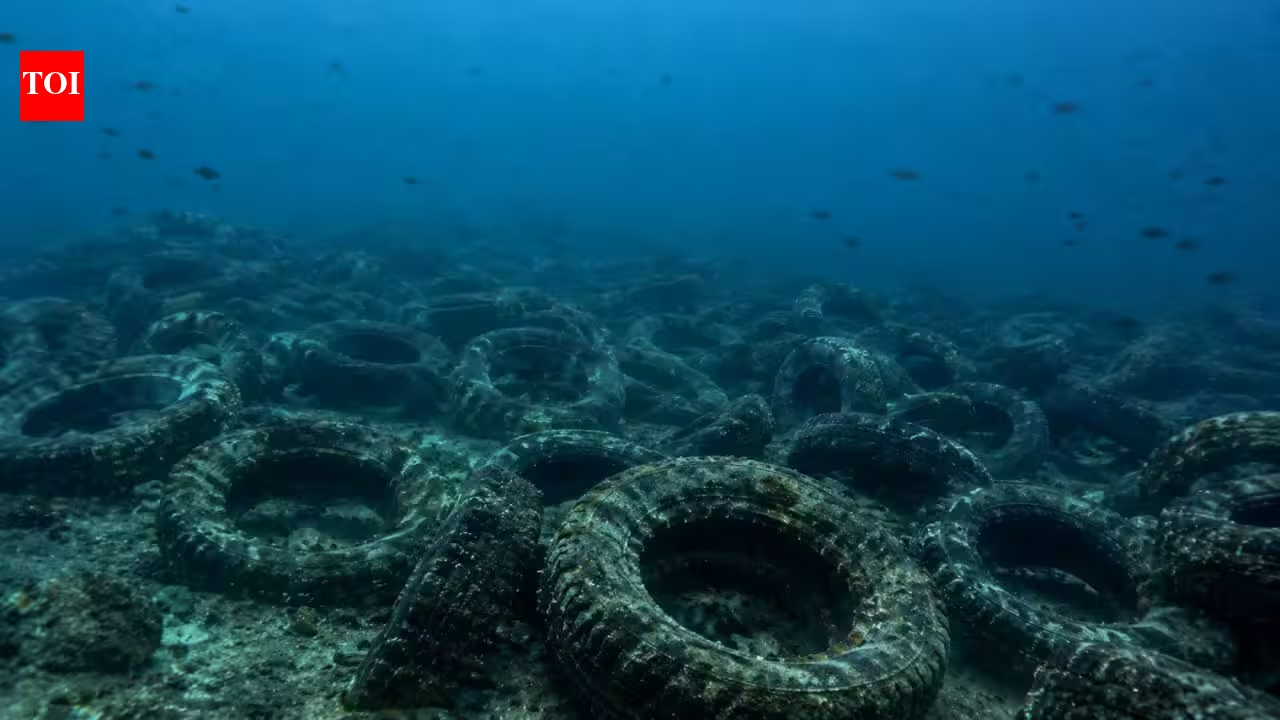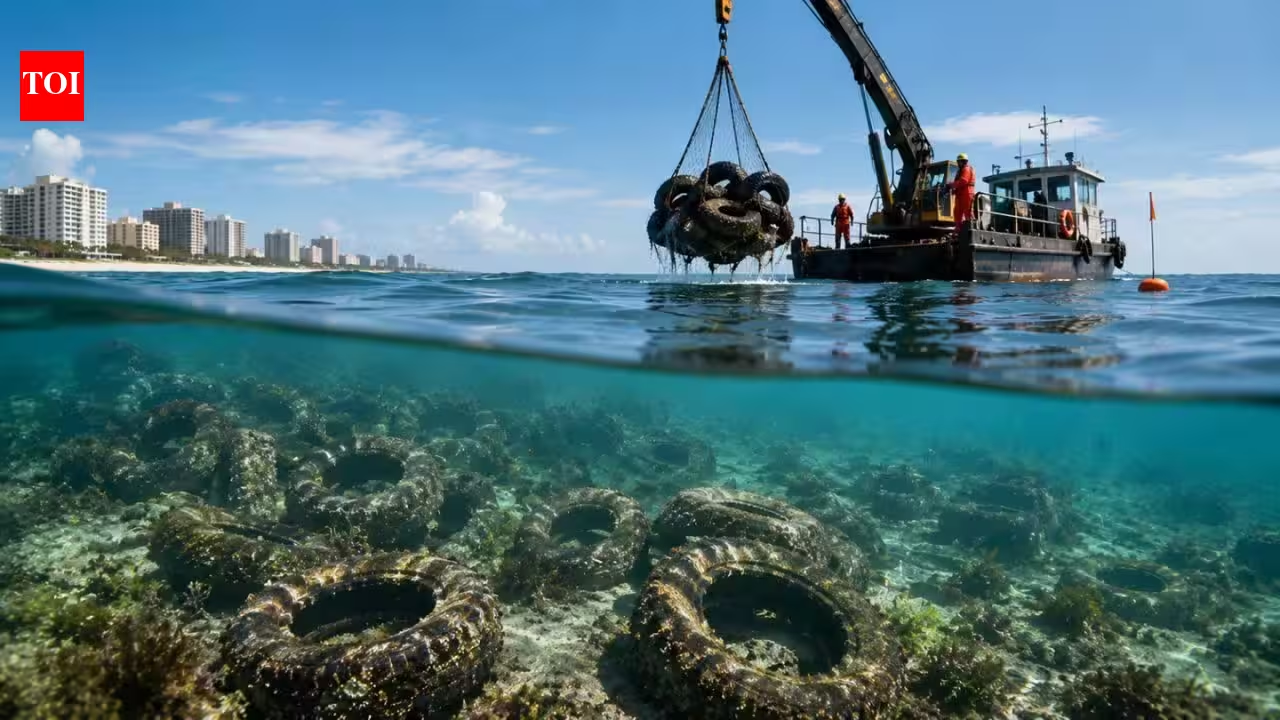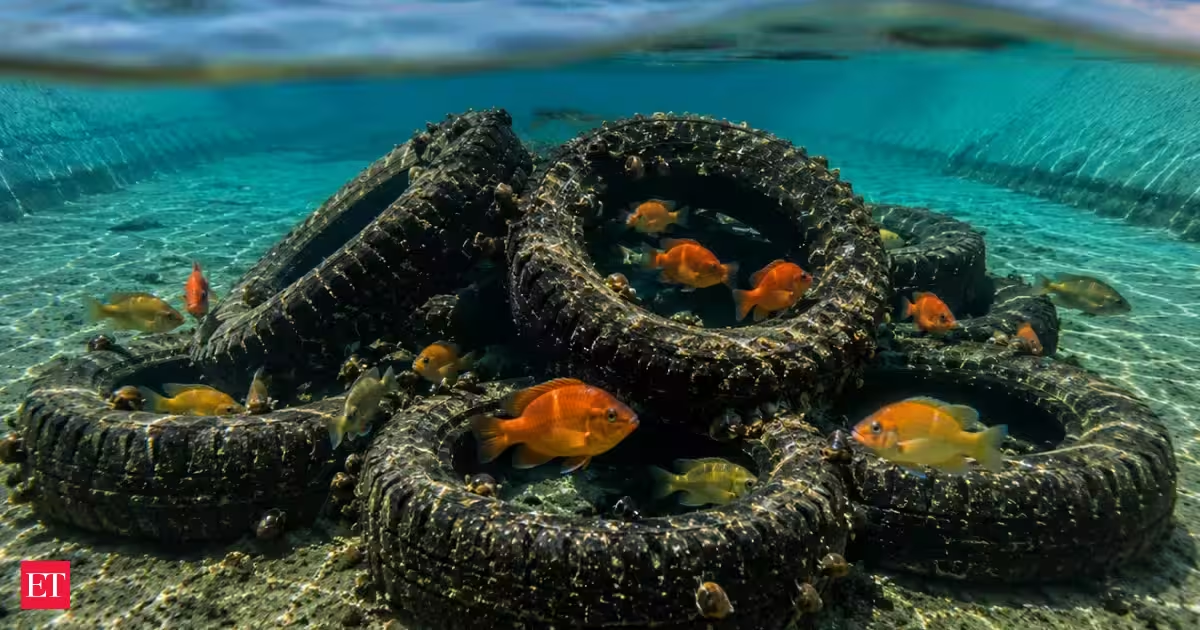
Concrete canals may look clean and efficient, but for fish and aquatic insects, they can be nearly lifeless. In a 1994 study titled ‘Evaluation of tire reefs for enhancing aquatic communities in concrete-lined canals’ by researchers Gordon Mueller and Charles Liston, a strange fix for this problem was tested: old tires. The team deposited low, flat tire structures along the floor of two concrete canals in the American Southwest. The results were striking: the invertebrate population near the tire reefs tripled, and fish populations were 20 times greater than in bare stretches of canal.Why concrete canals are bad news for wildlifeWater moves fast in canals. Many old earthen canals in the dry Southwest were lined with concrete in the 20th century to prevent water from soaking into the ground and being wasted. This helped conserve water, but it hurt the creatures that lived in the waterways. Concrete walls are smooth and uniform. This means there is little place for insects, mollusks, or fish to hide or reproduce. Water flows much faster along a smooth concrete surface than over the rough natural surfaces of a streambed. Fast water flow washes away the food sources, eggs, and slow-moving invertebrates. Previous field studies carried out on the Coachella Canal in California showed exactly this pattern. A 1989 survey by USGS researchers found that after concrete lining, fish species diversity and biomass were both lower than in earlier, unlined stretches of the same canal, and fish density was also down in most, but not all, of the comparisons. So by the early 1990s, scientists faced a stark dilemma: how to preserve the water-saving benefits of concrete canals while still providing a home for aquatic life to survive?The Coachella Canal in California, one of two canal systems where researchers tested tire reefs to restore aquatic life. Image Credits: USGSOld tires, new purposeThe answer, as it turned out, was recycling. Mueller and Liston placed low-profile reefs made of old tires along the bottom of two canals: the Coachella Canal in California and the Hayden-Rhodes Aqueduct in Arizona. The reefs were small in size and sat low in the bottom of the canal, out of the way of water and canal operations. The tires broke the smooth concrete surface. They made little pockets of slower water, tiny crevices, rough textures. That’s just what invertebrates like insect larvae and small crustaceans need to attach to a surface and grow. Fish follow the invertebrates because these small creatures are a major part of their diet.The numbers tell the storyWhen researchers compared canal sections with tire reefs to plain, reef-free sections, the difference was hard to ignore. Invertebrate densities were three times higher around the reefs. Fish densities were twenty times higher. These findings led to the recommendation of tire reefs as an effective method to enhance aquatic life in concrete-lined canals.Other canal studies from the same research team add further support. A few years later, Gordon Mueller examined fish community establishment in the Hayden-Rhodes and Salt-Gila aqueducts during the first four years of operation, in a 1996 study titled 'Establishment of a fish community in the Hayden-Rhodes and Salt-Gila aqueducts, Arizona.' The study found larval fish densities increased sharply downstream, corroborating diver observations of actual fish spawning in the canal system, and not just surviving there.Why this small fix matters todayThis story is not only about tires; it’s a story about a simple, low-tech solution to a practical problem. Across the world, cities and farmlands are laced with millions of miles of canals, drains, and concrete waterways. Most of these are constructed only for water flow, without consideration for the life they may support. The tire reef study does not prove that all concrete canals can be fixed so easily. It studied only two canal systems in a particular climate, and the findings could differ elsewhere, but it does hint that tiny, simple interventions can make a real difference to local ecosystems. It offers a lesson for cities as they continue to grow and alter natural waterways.The bigger pictureWater infrastructure and wildlife can coexist. This decades-old study is a reminder that even the most engineered human-made spaces can harbor pockets of life, if we take the trouble to make room for it. In this case, that space came from a pile of old tires at the bottom of a canal.
A 1994 study placed tire reefs in concrete canals in California and Arizona; invertebrate densities tripled, and fish densities rose 20-fold near reefs
Discover how old tires are used to enhance aquatic ecosystems in concrete canals, tripling invertebrate populations and increasing fish densities dramatically. Learn about the innovative study that showcases a low-tech solution for urban waterways.
721 words~3 min read