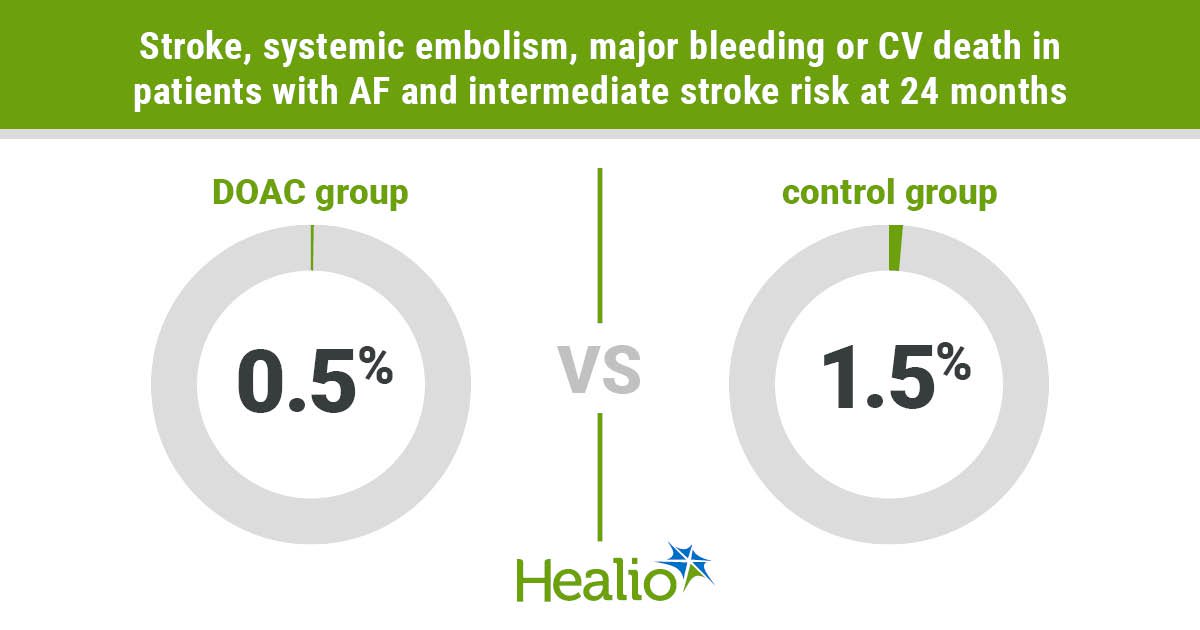
Oral anticoagulant therapy lowered the risk of adverse clinical events compared with no anticoagulation in patients with atrial fibrillation at intermediate stroke risk, according to results from the SINGLE-AF trial presented in a Hot Line session at ESC Congress 2026 and published simultaneously in the New England Journal of Medicine.
Patients with atrial fibrillation (AF) are at increased risk of stroke. ESC Guidelines recommend oral anticoagulants for patients with AF at high risk of stroke with a Class I recommendation. The guidelines also suggest that oral anticoagulants should be considered in patients at intermediate risk, with a Class IIa recommendation.
Principal investigator of the SINGLE-AF trial Boyoung Joung from Yonsei University, Seoul, South Korea, said, "Evidence from observational studies with anticoagulants, particularly vitamin K antagonists, remains conflicting in those at intermediate risk. SINGLE-AF was conducted to provide the first evidence from a randomized trial on whether newer direct oral anticoagulants (DOACs) are beneficial in patients with AF at intermediate risk of stroke."
SINGLE-AF was an open-label trial conducted at 18 centers in South Korea. A total of 1,803 individuals with AF and an intermediate risk of stroke (defined as a CHA2DS2-VASc score of 1 in men or 2 in women) were randomized (1:1) to receive DOAC therapy (apixaban 5 mg twice daily or rivaroxaban 20 mg once daily) or no anticoagulation.