An investigational factor XIa inhibitor did not reduce the risk of recurrent cardiovascular (CV) events in patients with a recent acute coronary syndrome (ACS) event on top of antiplatelet therapy, although there was no increase in the risk for major bleeding with treatment, according to the LIBREXIA ACS trial.
The phase III results showed that for the primary efficacy outcome -- a composite of CV death, myocardial infarction, or ischemic stroke evaluated in a time-to-event analysis -- one of these events occurred in 384 patients (5.4%) in the milvexian group and 365 patients (5.1%) in the placebo group (HR 1.05, 95% CI 0.91-1.21, P=0.50) after a median follow up of 12.2 months.
LIBREXIA ACS was presented at the European Society of Cardiology (ESC) Congress in Munich, Germany. The results were published simultaneously in the New England Journal of Medicine.
Milvexian's developer suspended LIBREXIA ACS in November 2025, and issued an update disclosing that, based on an interim analysis, the trial was "unlikely to meet the primary efficacy endpoint." The data and safety monitoring board (DSMB) recommended halting the trial for futility, according to the update.
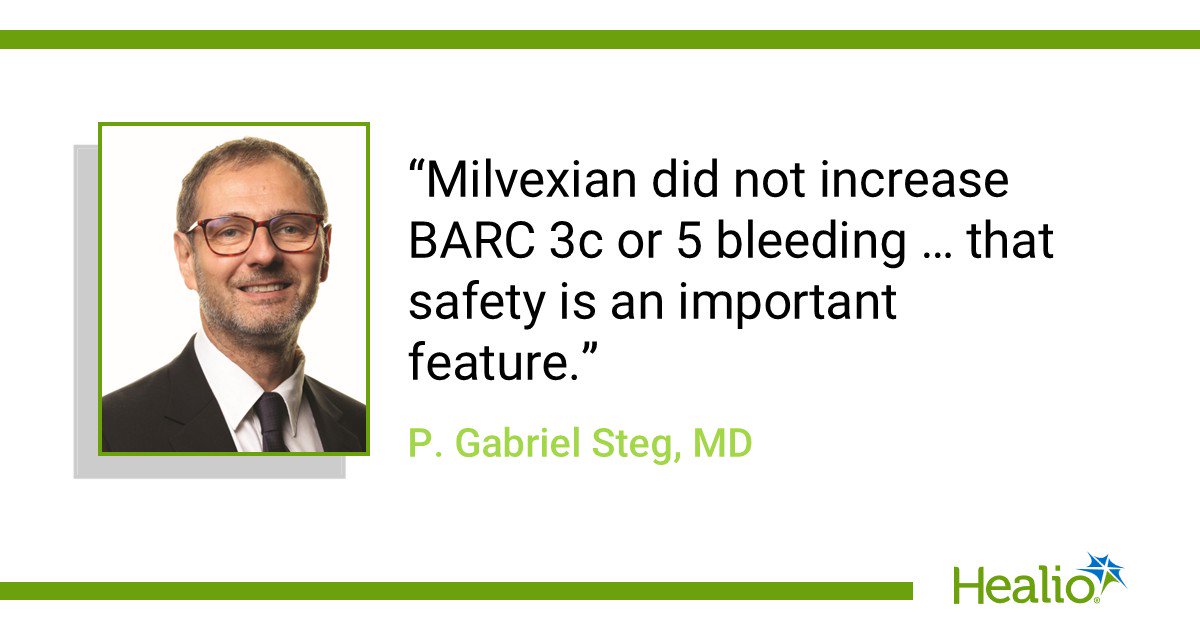
But study author P. Gabriel Steg, MD, of Bichat-Claude Bernard Hospital and Paris Diderot University, emphasized that there was some "good news:" Milvexian did not increase the primary safety outcome, Bleeding Academic Research Consortium (BARC) type 3c or 5 bleeding indicating intracranial or intraocular bleeding that compromises vision or fatal bleeding, or any other measures of major bleeding in the trial.