Emerging randomized data favored oral anticoagulation for lower-risk patients with atrial fibrillation (Afib), researchers found.
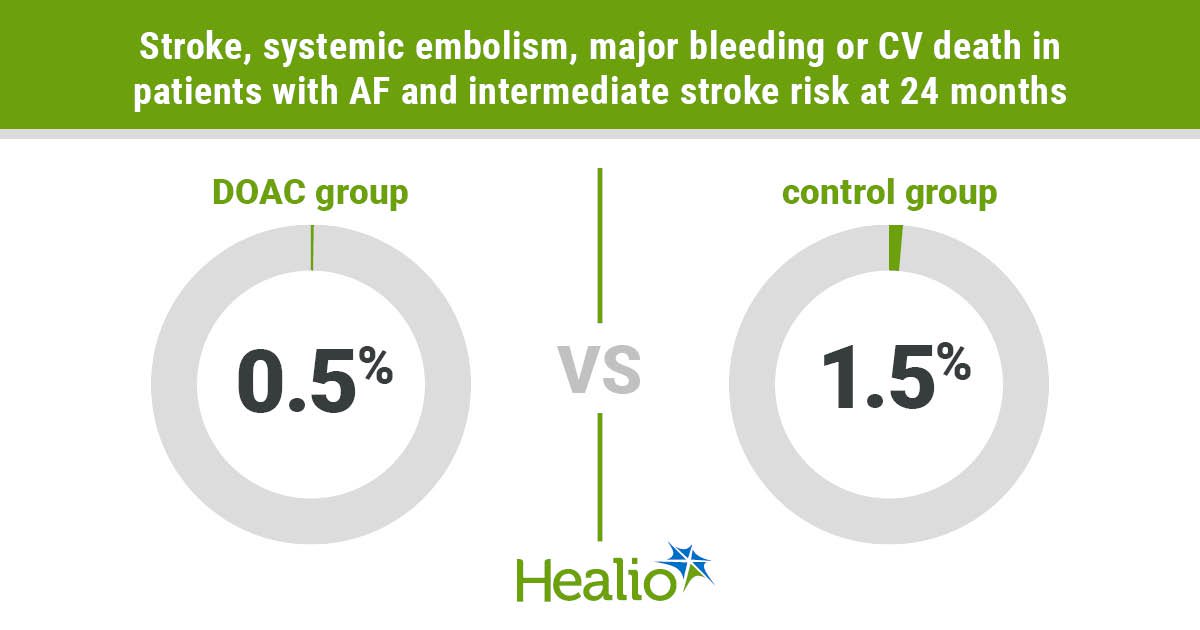
Among patients with Afib and one thromboembolic risk factor in the SINGLE-AF trial, direct oral anticoagulant (DOAC) therapy reduced the risk of composite cardiovascular events at 24 months compared with no anticoagulation (0.5% vs 1.5%, HR 0.31, 95% CI 0.10-0.94).
SINGLE-AF is thus the first randomized trial to support a clinical benefit to DOAC therapy in these patients, according to Boyoung Joung, MD, of Yonsei University College of Medicine in Seoul, Korea, speaking at the European Society of Cardiology meeting held this year in Munich, Germany.
However, the study logged very few primary endpoint events -- with an annual stroke incidence of just 0.6% without anticoagulation and 0.15% with DOACs -- leading authors to suspect that the results may overestimate the true magnitude of benefit from DOACs in the intermediate-risk setting.
The low event rates also made for inconclusive results regarding the individual components of the primary endpoint:Stroke leaned toward a numerical benefit: 0.3% with DOACs vs 1.1% without (HR 0.30, 95% CI 0.08-1.08).Systemic embolism (0 vs 0.1%) and major bleeding (0.3% vs 0.5%) appeared at similar rates between DOAC and control groups.No deaths from cardiovascular causes occurred in either group.