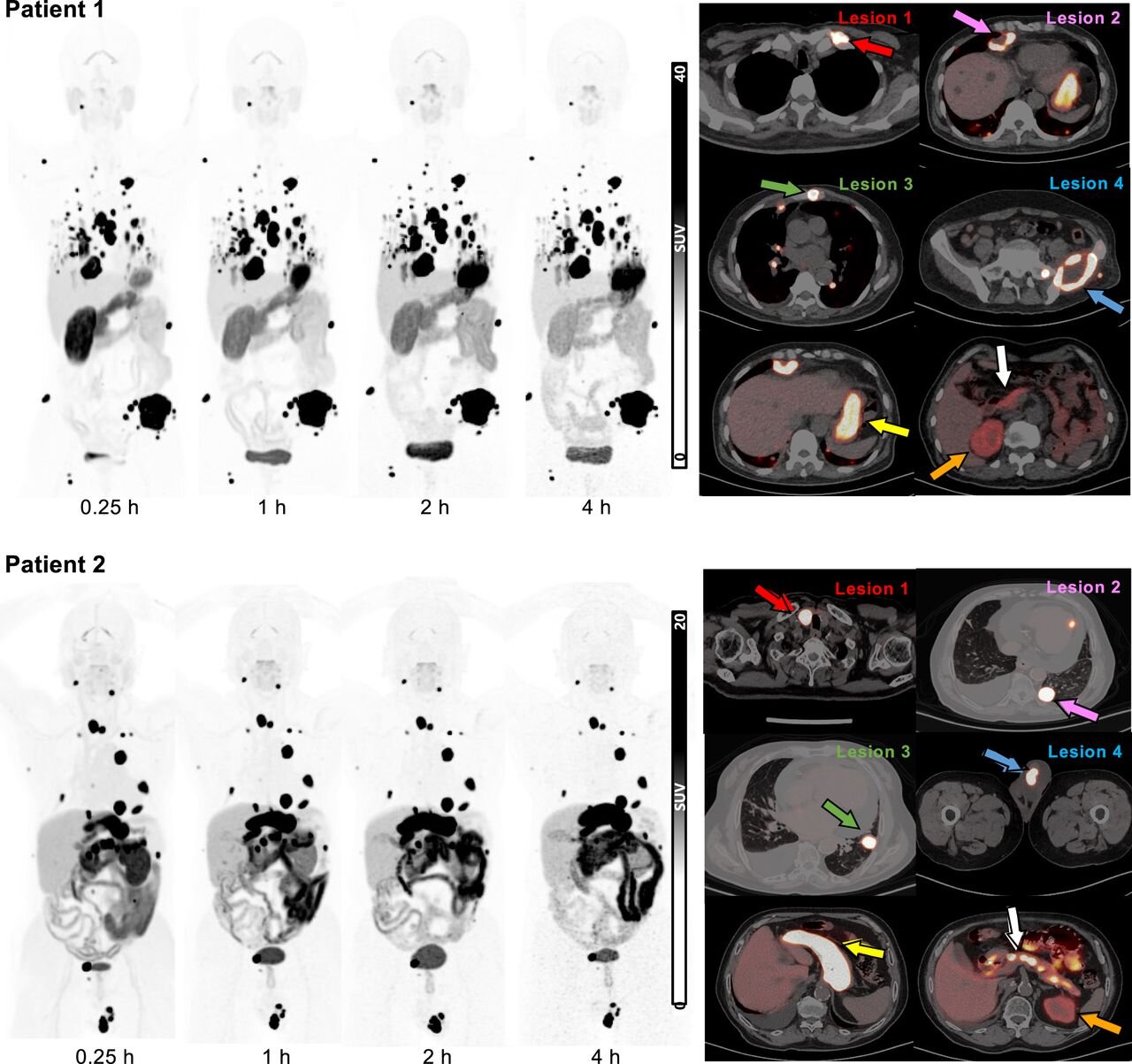
Serial whole-body maximum-intensity projections over time and representative transaxial images at one hour postinjection of 68Ga-NYM096. Credit: Image created by Wenjia Zhu, Li Huo, et al., Department of Nuclear Medicine, Peking Union Medical College Hospital, Beijing, China.
A newly developed radiotheranostic pair, 68Ga/177Lu-NYM096, can identify tumors and effectively deliver targeted radiotherapy to patients with metastatic clear cell renal cell carcinoma (ccRCC). Using a small-molecule compound, the new approach helps mitigate toxicity issues common with treatment, offering a safe and feasible strategy for those with end-stage disease. This research was published in the September issue of The Journal of Nuclear Medicine.
ccRCC is the most common subtype of renal cancer, accounting for approximately 70% to 80% of all cases. Many patients have unresectable or metastatic disease upon initial diagnosis or develop advanced-stage disease after initial localized treatment. While immunotherapy-based combination therapies have emerged as effective treatment strategies, a notable proportion of patients don't respond to therapy or experience significant toxicities.
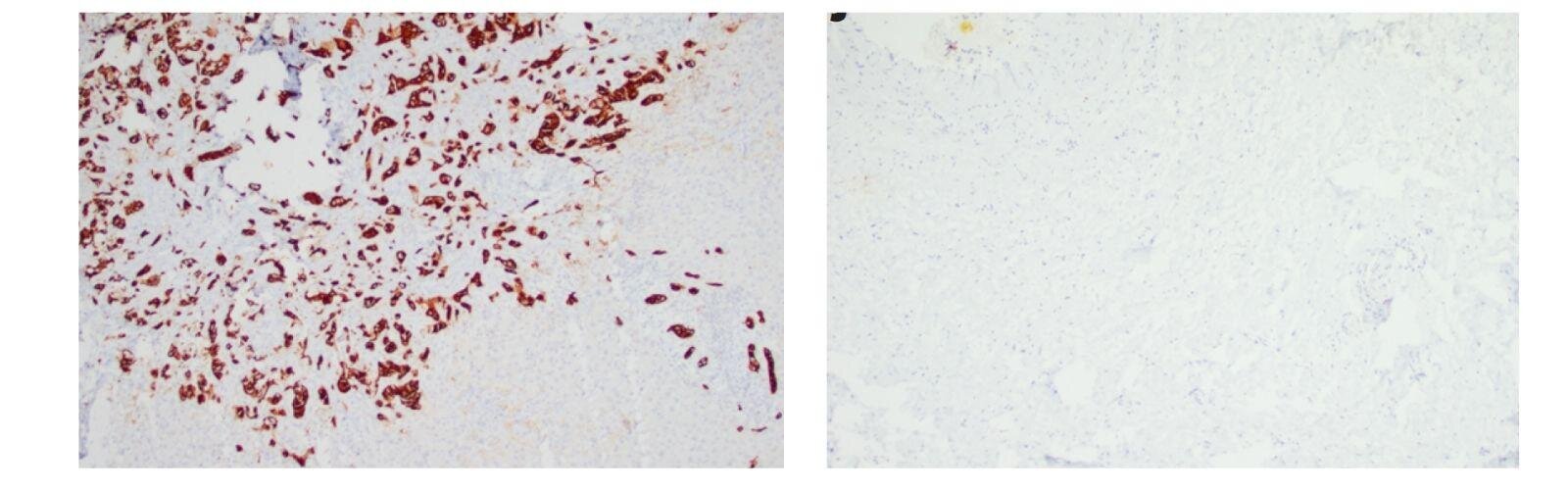
"My colleagues and I developed a new generation of small-molecule compounds that target the carbonic anhydrase IX (CAIX) enzyme, which is overexpressed in ccRCC," said Wenjia Zhu, MD, associate professor in the Department of Nuclear Medicine at Peking Union Medical College Hospital in Beijing, China. "These compounds allow for radiolabeling with both diagnostic and therapeutic radioisotopes to deliver treatment to patients more precisely—and safely."