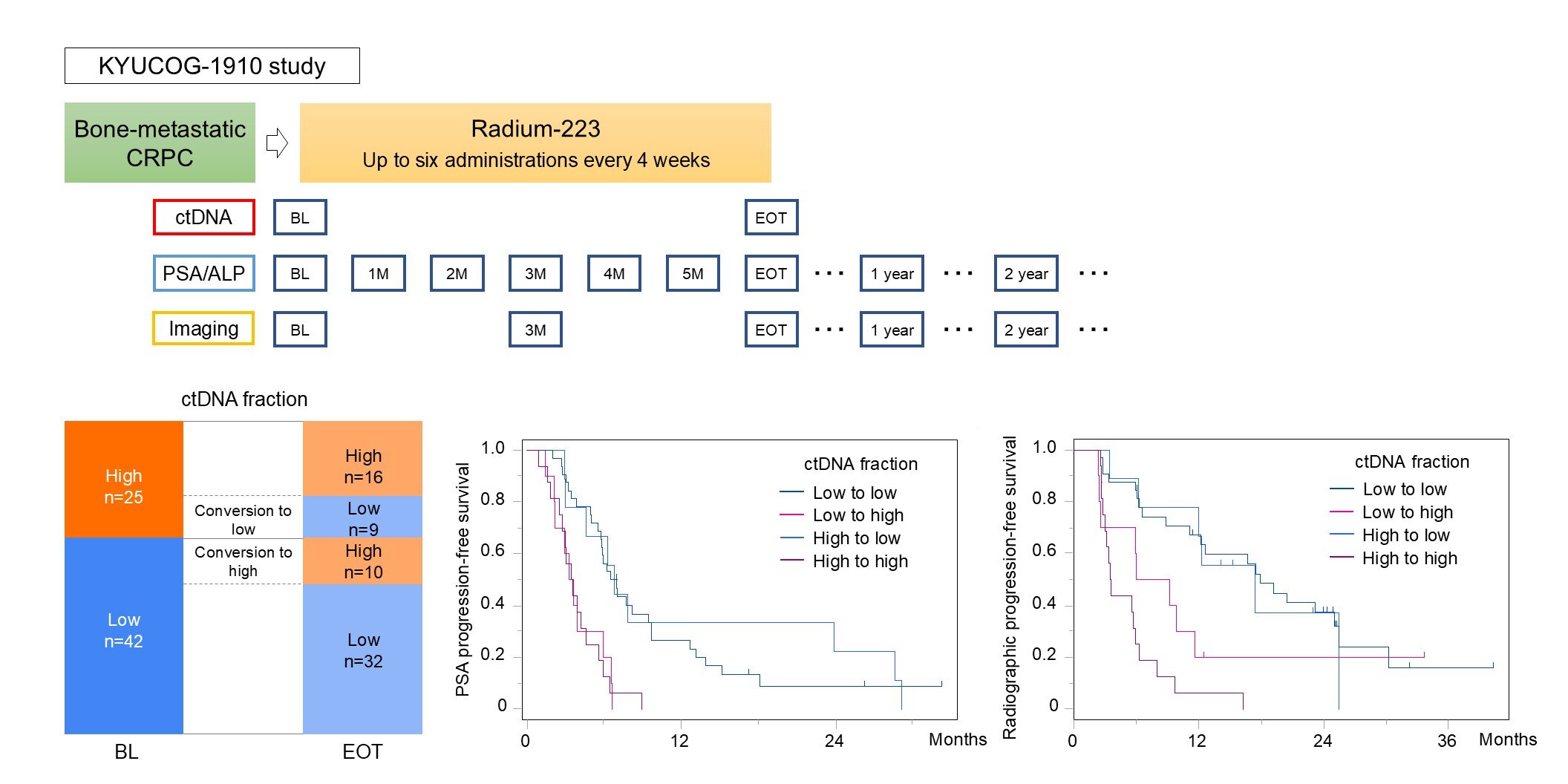
Graphical Abstract: Changes in circulating tumor DNA during 223Ra treatment reflect disease course in patients with bone-metastatic castration-resistant prostate cancer. Credit: Masaki Shiota et al., Kyushu University, Fukuoka, Japan.
A noninvasive DNA blood test can identify patients with metastatic castration-resistant prostate cancer (mCRPC) who are most likely to benefit from 223Ra radiopharmaceutical therapy and monitor their progress throughout treatment, according to new research published in the July issue of The Journal of Nuclear Medicine. Incorporating this approach to DNA profiling into clinical practice has the potential to refine patient selection, enable early detection of treatment resistance and optimize personalized management for patients with prostate cancer.
223Ra dichloride is a bone-targeted radiopharmaceutical therapy shown to improve overall survival and quality of life in patients with mCRPC. However, clinical outcomes with 223Ra vary among patients, and no reliable biomarker has been established to predict or monitor treatment response. As such, there remains an unmet need for robust prognostic and monitoring biomarkers in patients receiving 223Ra.
"Circulating tumor DNA (ctDNA) testing—a simple blood test—has emerged as a promising approach to advance precision oncology," said Masaki Shiota, MD, Ph.D., associate professor in the Department of Urology in the Graduate School of Medical Sciences at Kyushu University in Fukuoka, Japan. "Compared with tumor biopsies, ctDNA can be collected less invasively and repeatedly, providing a real-time genomic snapshot of the tumor and its heterogeneity that could provide valuable information in the context of 223Ra therapy."