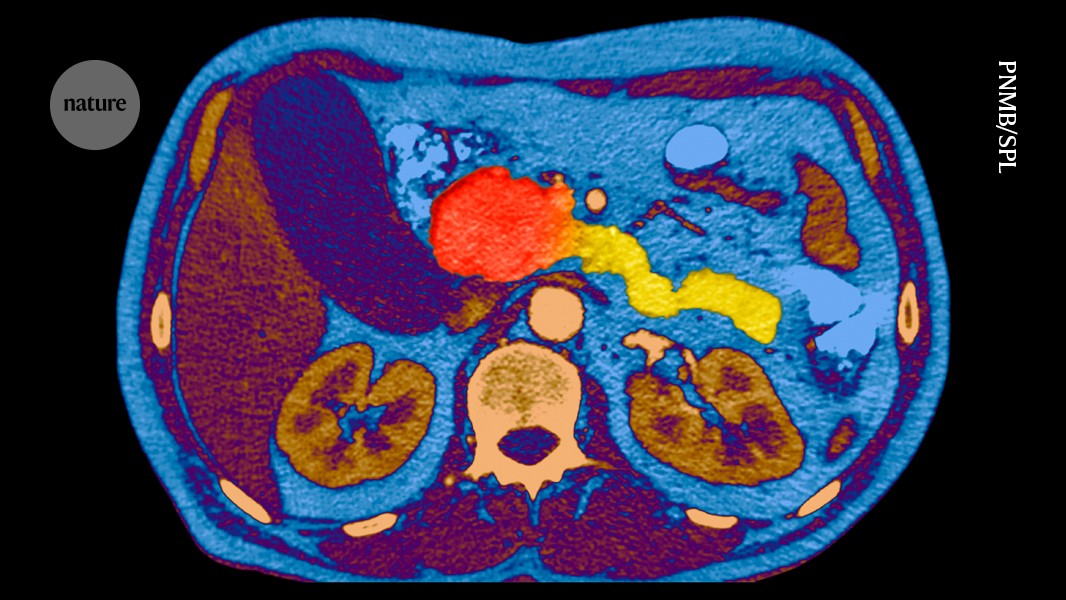
An exceptional responder to the clinical trial with metastatic pancreatic adenocarcinoma at diagnosis (left) had such a positive response to the combination therapy shrinking his tumor that he was able to undergo surgery to remove any remaining cancer cells (right). He remains cancer-free for more than three years. Credit: Columbia University
Results from an early-stage clinical trial, published in Nature Communications, showed encouraging outcomes among patients with newly diagnosed cancer whose tumors had spread to distant organs. Most strikingly, one patient experienced a pathologic complete response—meaning no viable cancer cells could be found—and remains cancer-free for more than two years without further treatment. These findings offer an important signal that a new approach may be able to overcome one of the disease's greatest challenges: its resistance to immunotherapy.
"We desperately need new tools in our arsenal," said Gulam Manji, MD, PhD, a medical oncologist specializing in pancreatic cancer and lead investigator of the trial. "Immunotherapy has transformed treatment for many other cancers, but so far, we haven't seen that same success in pancreatic cancer."
Breaking through pancreatic cancer's defenses