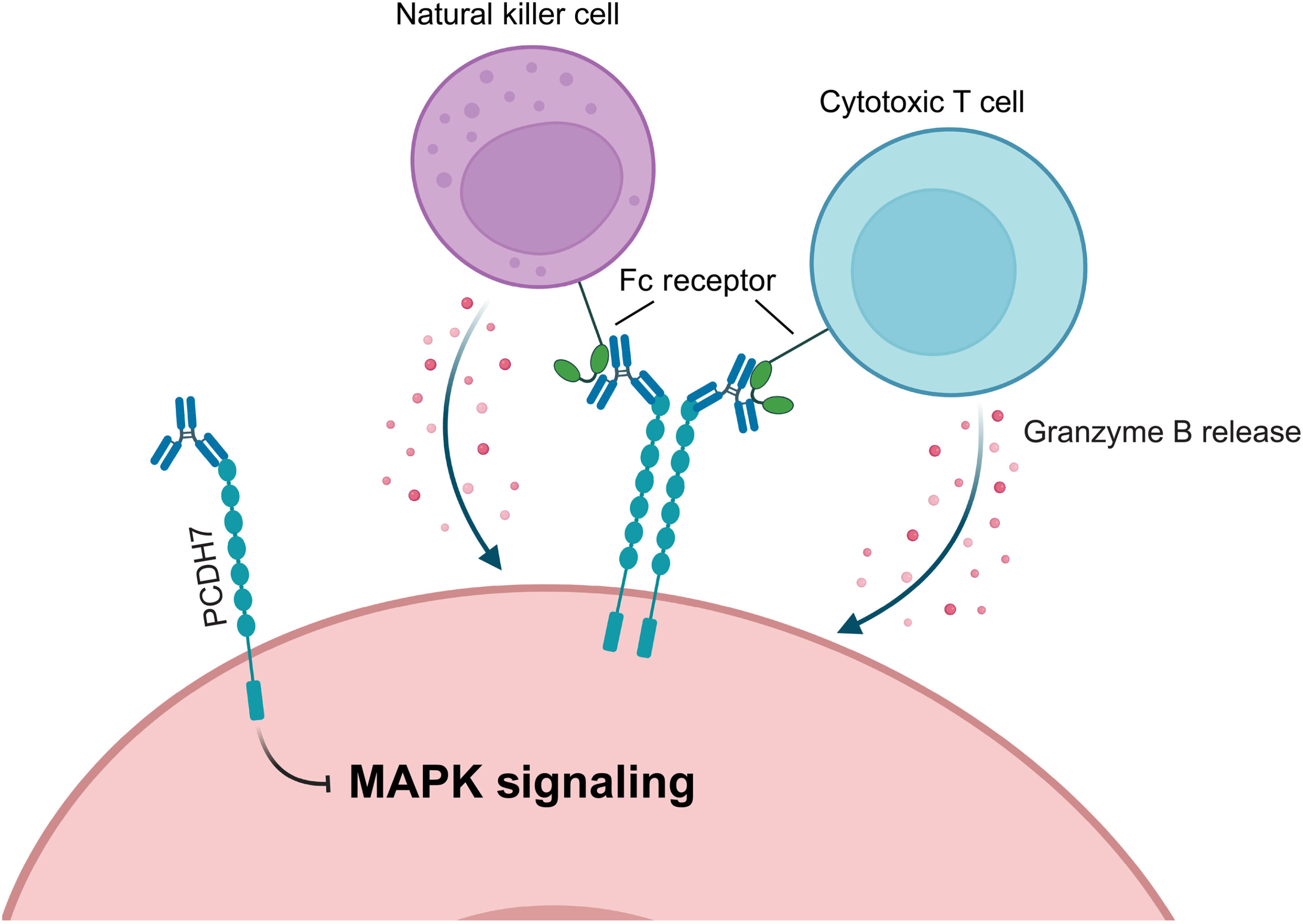
Model of PCDH7 mAb7–mediated tumor inhibition. Credit: Science Advances (2026). DOI: 10.1126/sciadv.aeb0794
An experimental antibody treatment that binds to a protein known as PCDH7 shrank tumors in preclinical models of non-small cell lung cancer (NSCLC), including those resistant to a targeted therapy, a study led by UT Southwestern Medical Center researchers showed. The findings, published in Science Advances, could eventually lead to a new class of drugs to treat NSCLC and potentially other cancers.
"Overcoming resistance to molecularly targeted therapies is a critical unmet need for lung cancer patients. We are excited that these antibodies may open another therapeutic avenue for lung cancer, especially for patients whose cancers have become resistant to KRAS inhibitors," said Kathryn O'Donnell, Ph.D., associate professor of molecular biology and a member of the Harold C. Simmons Comprehensive Cancer Center at UT Southwestern. O'Donnell co-led the study with first author Nicole Novaresi, Ph.D., a postdoctoral researcher in the O'Donnell Lab, and collaborators at the University of Texas Health Science Center at Houston.
NSCLC accounts for about 85% of lung cancer cases in the U.S. and is the leading cause of cancer-related deaths. The O'Donnell Lab focuses on identifying and characterizing proteins on the surface of NSCLC and other cancer cells because of their potential as therapeutic targets. In 2017, O'Donnell and her colleagues identified PCDH7 as a driver of NSCLC, especially in tumors with mutations in a gene called KRAS. Found in about 25% of NSCLC cases, these mutations cause uncontrolled cell proliferation that propels tumor growth.