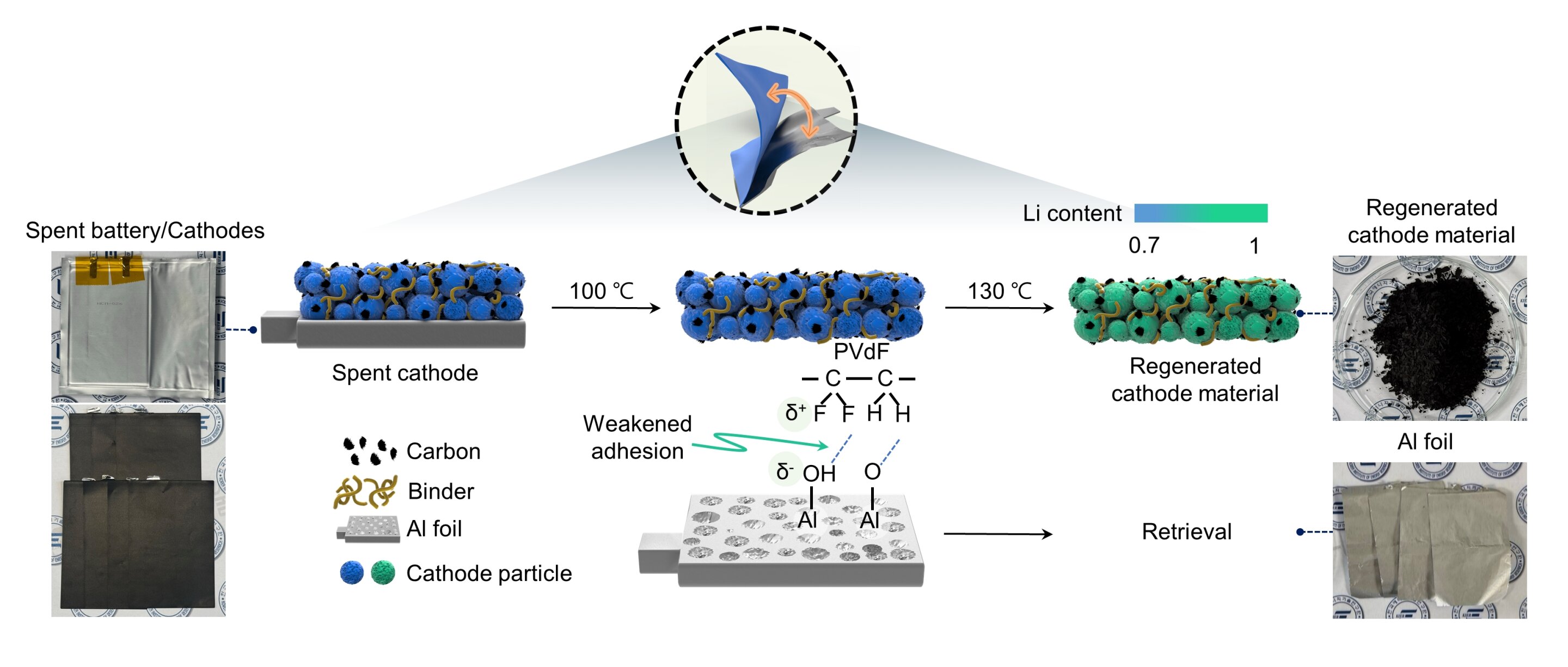
Schematic illustration of the process developed by the research team. Credit: Korea Institute of Energy Research
As the adoption of electric vehicles (EVs) continues to grow, the disposal of spent EV batteries is emerging as a major social and environmental challenge. Wastewater generated during conventional battery recycling processes can contain high concentrations of heavy metals, posing risks of soil and groundwater contamination.
Cathode materials, which play a key role in determining battery capacity, also contain significant amounts of costly critical metals such as cobalt, whose extraction can cause environmental damage. As a result, direct recycling technologies for spent batteries, which can preserve the existing structure of battery materials while recovering valuable resources, are gaining increasing attention.
Against this backdrop, a research team led by Dr. Jung-Je Woo of the Gwangju Clean Energy Research Center at the Korea Institute of Energy Research (KIER) has developed a technology that completely separates current collectors, one of the major technical challenges in the direct recycling of spent batteries. The team also succeeded in simultaneously regenerating spent cathode materials to a performance level comparable to that of pristine materials.