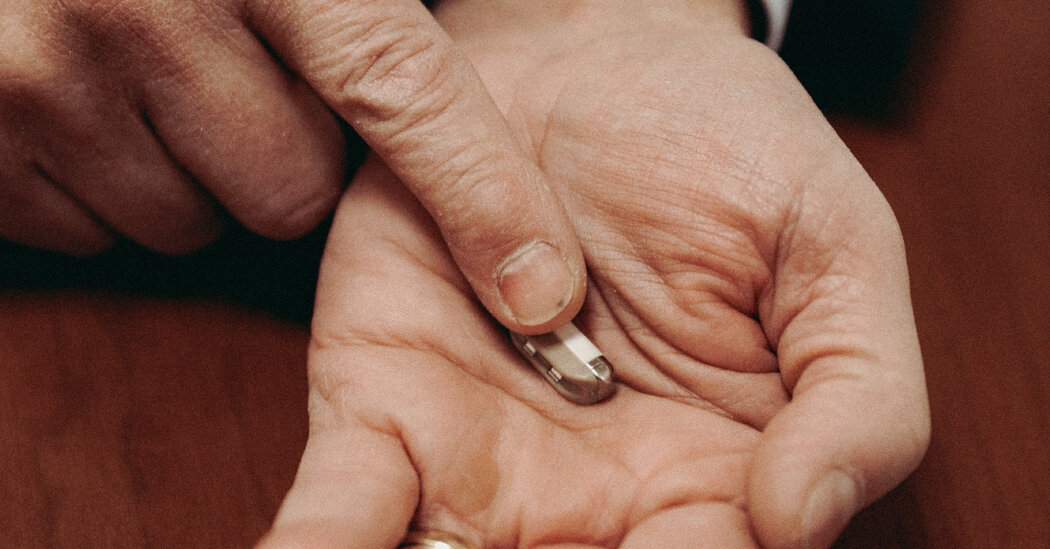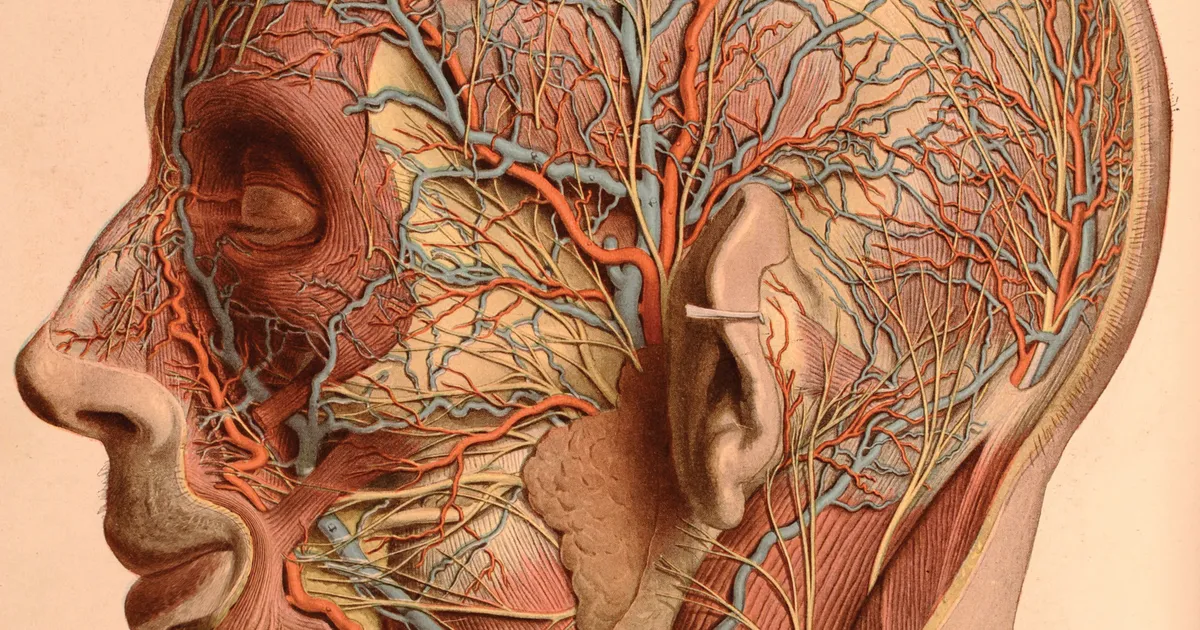
Implants that stimulate the body's longest cranial nerve are already treating epilepsy, depression and rheumatoid arthritis. Scientists are now testing whether they can also combat cancer-related wasting, obesity and PTSD. Meanwhile, can an ice bath or an ear massage do the trick?When Kevin Tracey was five years old and his mother was 29, she was diagnosed with brain cancer. His memory of the last time he saw her is poignant. He was riding with his two younger brothers in the back seat of the family car as they accompanied their mother to the hospital. Throughout the drive, he stared at her black hair cascading over the back of the front seat, just beyond his reach. For five days, his father was unable to tell the children that their mother had died.A few days later, Kevin sat on the lap of his grandfather, a pediatrician. He asked why his grandfather's friend, a surgeon named Dr. German, couldn't remove the tumor from his mother's brain. His grandfather explained that it wasn't possible."Somebody should do something about that," Tracey recalls telling his grandfather in an interview with Haaretz. "And he said to me, 'Well, maybe you will.'"Sure enough, Tracey grew up to become a neurosurgeon. Later, after another tragedy in which a toddler died in his arms, he began researching inflammation. Eventually, those two worlds converged in his work on the vagus nerve, the source of his current renown.Humans have two vagus nerves, one on the right and one on the left, but for convenience, we'll refer to them as a single nerve. Extending from the brainstem to the abdominal cavity, the vagus is the longest nerve originating in the skull. It's best known for its dominant role in the parasympathetic nervous system, which is responsible for rest and digestion. The vagus helps regulate breathing and heart rate and serves as a central communication channel between the brain and the rest of the body.Communication flows in both directions, but not equally. Of the vagus nerve's 200,000 fibers, 80 percent carry information from the body to the brain, while only 20 percent transmit signals in the opposite direction."The brain listens to the body through the vagus nerve and then talks back," Tracey writes in his 2025 book, "The Great Nerve: The New Science of the Vagus Nerve and How to Harness Its Healing Reflexes.""At a time of intense interest in every conceivable relaxation technique, it's no surprise that the vagus nerve has become the focus of both hope and obsession.""We have a calming button in our body," Dr. Liat Yakir, a molecular geneticist, announced on Facebook last April. Her guest on a podcast (where else?) was Noa Sztern Lifshitz, a biofeedback therapist and Chinese medicine practitioner. Lifshitz said that massaging the ear, where one of the vagus nerve's many branches is located, has become a family ritual before difficult conversations."We have a saying in our house," she says. "'Massage your ear, then talk to me.'"Kevin Tracey, a pioneering researcher who developed a vagus nerve stimulator. The device "can replace drugs that cost $100,000 a year," he says. Credit: Northwell HealthKevin Tracey, a pioneering researcher who developed a vagus nerve stimulator. The device "can replace drugs that cost $100,000 a year," he says. Credit: Northwell HealthIce bath enthusiasts and yoga instructors claim that regularly stimulating the vagus nerve through their practices can prevent Alzheimer's disease, treat autoimmune disorders and, of course, improve mood and overall well-being.So what's true about the vagus nerve, and what's fiction? There's no doubt that it's essential to health. If both vagus nerves are cut in the neck, you die. But that doesn't mean every form of vagus nerve stimulation has dramatic effects. Still, there's already strong evidence, as well as FDA approval, for some treatments that stimulate the vagus nerve using a small electrical device implanted in the chest. Many other intriguing studies are exploring noninvasive stimulation through the ear, neck and other places in the body.In his new book, Tracey attempts to separate the facts from the half-truths and outlandish claims surrounding the nerve. It's worth noting that he co-founded a company that manufactures implantable vagus nerve stimulation devices. He says he is no longer involved in the company's management and now serves as an outside consultant. However, in a 2023 article he wrote that he remained a shareholder in the company. That said, many highly respected scientists help commercialize their discoveries, and Tracey's reputation as a researcher is difficult to dispute. With 144,000 citations in the scientific literature, he's a major figure in the field.The research path that led Tracey to the vagus nerve was as winding as the nerve itself. His first scientific breakthrough appeared, at least initially, to have nothing to do with it. A toddler named Janice, who had been about to leave the hospital, suddenly died in his arms. Tracey wanted to understand what causes the body to unleash a deadly cytokine storm. Working with his colleagues, he discovered an innovative way to treat excessive inflammation. Their work helped pave the way for biologic drugs, which treat autoimmune diseases by suppressing the immune system.In the 1990s, Tracey and his colleagues studied an anti-inflammatory molecule they had developed and named CNI-1493. By chance, they discovered that injecting a small amount of the substance into the brains of mice reduced inflammation throughout their bodies. But how could the brain affect the immune system?Tracey notes that the two systems were once considered so completely unrelated that an old joke held that neuroscience students could skip lectures on the immune system, while immunology students could skip lectures on the nervous system."The nervous system and the immune system were thought to be firewalled: separate, no communication between them," he writes in the book.The answer was the vagus nerve. When Tracey and his colleagues severed it, the drug stopped working. They later discovered that electrically stimulating a rat's vagus nerve was enough to prevent an inflammatory cytokine storm from developing.This and subsequent research suggested that the vagus nerve acts as a "brake pedal" through which the brain regulates the immune system. Tracey, one of the pioneers behind innovative anti-inflammatory drugs, thus became an advocate for a different way of treating the same inflammation at another level. Instead of giving patients drugs that suppress immune system activity, doctors could use a nerve to "pluck the strings" of the immune system and regulate its response.In July 2025, the FDA approved a device implanted in the neck on the vagus nerve to treat rheumatoid arthritis. The device was developed by SetPoint Medical, the company Tracey co-founded. Rheumatoid arthritis affects more than 1 million Americans and 1 percent of Israel's population. "It's being used in some patients to replace drugs that cost $100,000 and have 'black box' warnings, which means you can die from them," Tracey says.Tracey points out that he was among the first to develop these drugs, but that didn't make him an unquestioning advocate for them. In an interview with CNN, he said that evidence is accumulating for the success of treating this type of inflammation with a vagus nerve stimulator the size of a multivitamin and with few side effects. The possibilities, he suggested, are limitless."Imagine if we can stop inflammation in its tracks or stop inflammation from ever contributing to the onset of cancer or heart disease," he told CNN. "What would that do to the health span of (people on) the planet Earth?""We use ice baths and ear acupuncture, which also affect the vagus nerve. Ancient systems of healing, as well as much of the conventional treatment given to people with PTSD, work through the vagus nerve." Credit: Michele Ursi/Shutterstock"We use ice baths and ear acupuncture, which also affect the vagus nerve. Ancient systems of healing, as well as much of the conventional treatment given to people with PTSD, work through the vagus nerve." Credit: Michele Ursi/ShutterstockI went to Eli, an alternative medicine practitioner, to rent a device that electrically stimulates the vagus nerve. It's essentially a TENS unit, which delivers rhythmic electrical pulses and is often used to provide mild pain relief for women in labor and people with chronic pain. This particular device comes with an electrode that can be attached to the ear. Eli rented it to me for 250 shekels a month."There's been a lot of demand lately for vagus nerve stimulation," he said. "But I don't care what people say. I care about the research. I check PubMed."He asked why I wanted to use the device. I told him I wanted to improve my mood. "It's scientifically proven to do that," he declared.To Eli's credit, his claims are relatively modest and his prices reasonable. Another Israeli business advertises an ear-mounted vagus nerve stimulator online for no less than 2,990 shekels, promising relief from a range of conditions, including autism.I couldn't resist trying it right away. On my way home, I sat down on the grass in a park, moistened the electrodes, attached them to my ear and neck as Eli had demonstrated, and switched on the device. With wires dangling from my body and a small square device that looked like either an old telephone or an improvised bomb, I tried to appear casual. So I had a clip attached to my ear and another flat, damp electrode pressed against the back of my head. So what? Haven't you seen stranger things in Tel Aviv?Anyone who wants to recreate the sensation can try putting an electrified clothespin on their ear. "Do it for 15 to 20 minutes a day," Eli advised. When the session finally ended, I breathed a sigh of relief. I can't say the device had no effect. It produced a strange, not entirely pleasant sense of calm, along with intense fatigue. Tracey writes that when he and his colleagues tested a similar device on themselves, most of them felt as if they'd had a facial massage. I can relate.If I'd kept at it long enough, perhaps I would have experienced more dramatic results. What made me uneasy was uncertainty about the proper placement of the electrodes. Eli recommended one spot on the ear, while Tracey prefers another. It turns out that the anatomy of the outer ear is a world unto itself.During an intimate exchange with the free version of Gemini, the chatbot expressed concern about the placement of the second electrode on my neck. I might electrocute my brain, it warned. When I asked Eli about this, he sent me screenshots of his own conversation with Gemini (he has a paid subscription), which strongly supported the instructions he'd given me. "You did exactly, but exactly, the right thing," the chatbot told him. "The configuration you created is perfect."Ultimately, I decided that I have only one nervous system and should probably stop experimenting with it. After a week of diligent use, morning and evening, I quit.My failure doesn't mean the method is worthless. Vagus nerve stimulation through the ear, when administered according to a structured protocol, is the subject of numerous studies, some of which have produced highly promising results.Tracey describes, for example, a clinical trial that he and his colleagues conducted involving adolescents and young adults ages 10 to 21 with inflammatory bowel diseases such as Crohn's disease and colitis, children with nephrotic syndrome (a type of kidney disease) and adults with lupus. He's careful to point out that the findings come from small studies. The treatment can be recommended to patients only after the results have been replicated in large, high-quality studies.The problem with the ear device is that vagus nerve stimulation requires patience, determination and persistence, in some cases for more than a year. As I discovered, that isn't easy when the decision to continue is entirely up to you."It's a solution that sounds good on paper," says Dr. Firas Fahoum, a neurologist who, until recently, directed the Epilepsy and EEG Unit at Tel Aviv Medical Center. "But in practice, it's difficult to implement. People can't manage to wear the external stimulator for hours. At night, it doesn't stay in place. It moves. With an internal stimulator, you can deliver electricity for as much as 60 percent of the day. When something is implanted in your body, it works. You don't have to think about it."In the interest of full disclosure, Fahoum notes that, in addition to being a physician and researcher, he lectures worldwide on behalf of LivaNova, a medical device company that manufactures vagus simulators.Direct vagus nerve stimulation using an implanted device is a more conventional medical procedure. Prof. Ido Strauss, director of the Functional Neurosurgery Unit at Tel Aviv Medical Center, says that in his experience, implanted vagus nerve stimulators can improve both epilepsy and depression."The main side effects are sore throat and hoarseness, which usually subside within two to three weeks," he says. "There's less than a 1 percent risk of permanent damage to the voice."Another problem is that doctors can't predict who will benefit from the treatment."We implanted stimulators in about 20 patients with treatment-resistant depression who had exhausted every other option and had experienced repeated hospitalizations and suicide attempts," Strauss says. "About 12 of them improved. For the people it helped, the results were amazing."A study published last month in the International Journal of Neuropsychopharmacology produced similar results. It included 214 men and women with major depressive disorder who had tried an average of 13 different medications and treatments.Improvement took time. After one year, depression had decreased in only 44 percent of the patients. After two years, the proportion who had improved rose to 54 percent, and one-fifth of the participants had improved enough that they were no longer classified as depressed. Strauss notes that the treatment is approved in Israel but hasn't yet been included in the government-covered package of healthcare services. Patients can obtain it through an exceptions committee.Fahoum, like other doctors who implant vagus nerve stimulators in patients with epilepsy, has observed an intriguing phenomenon. Even when the device doesn't reduce their seizures, patients often ask to keep it."I had a patient whose stimulator didn't help her epilepsy," he recalls. "After five to seven years, the battery runs out and has to be replaced. She said she wanted it replaced, not removed, because it significantly improved her mood."It isn't entirely clear why implanted vagus nerve stimulators affect mood."The stimulator is a gateway to the brain," Fahoum says. One possibility is that the current stimulates the production of norepinephrine in the brainstem, though that remains uncertain. What's better understood is how an implanted vagus nerve stimulator affects inflammation. Tracey lights up when he talks about it.According to Tracey, just one minute of stimulation a day is enough to set off a chain reaction that keeps the spleen active for hours and changes the behavior of white blood cells."White blood cells can be in attack mode, or they can be in tissue-repair mode," he says. "The stimulation pushes the white blood cells from attack mode into repair mode. It's like pushing a snowball down a hill."Tracey takes great satisfaction in having transformed his laboratory discoveries into technology that actually helps people. In his study stands a walking stick wrapped with a ribbon, a gift from a patient named Kelly Owens.As a teenager, Owens suffered from Crohn's disease and arthritis. She was treated with powerful steroids that provided little relief. Her joints were so swollen that she couldn't apply deodorant without help, and she had difficulty walking. Twelve days after a vagus nerve stimulator was implanted in her body, she was running again. She no longer needed either the medication or the walking stick she'd relied on since adolescence.Tracey says some of his colleagues were excited by Owens' story, while others dismissed her recovery as a placebo effect. He argues that a placebo effect can't last nearly 10 years. The FDA approval granted last summer, together with studies explaining the underlying mechanisms, strengthens the case that the treatment truly works – at least for some patients.Research into the vagus nerve is expanding. Prof. Ayelet Erez, an expert in cancer genetics and metabolism who currently serves as dean of the medical school at the Weizmann Institute of Science, and her colleague Dr. Xiling Shen, a researcher at the University of Texas MD Anderson Cancer Center, came to study the vagus nerve while trying to understand why cancer patients lose so much weight and become so weak.The condition is called cachexia. It affects most patients with advanced cancer and is responsible for about one-third of cancer deaths."When the muscles begin to break down, patients can't get out of a chair by themselves. They need help, they become thin, and everyone can see that they have cancer," Erez explains. "Another problem is that cachexia causes patients to stop responding to cancer drugs. The drugs aren't broken down in the liver, so they can become toxic."In a groundbreaking study led Dr. Aliesha Garrett of Shen's laboratory at MD Anderson and Dr. Naama Darzi of Erez's laboratory at the Weizmann Institute, and published in Cell in late 2025, the researchers discovered that the inflammatory response to cancer in mice activates the vagus nerve in a way that places the liver under stress."We're talking about cancers that aren't in the liver," Erez clarifies. "Breast cancer, pancreatic cancer and lung cancer, with no metastases. The liver shouldn't have been involved at all."The cancer effectively programs the liver to open up the body's "buffet," supplying the tumor with far more nourishment than it needs. In doing so, it also hastens the death of its host.Ice bath enthusiasts and yoga instructors claim that regularly stimulating the vagus nerve through their practices can prevent Alzheimer's disease, treat autoimmune disorders and improve mood and overall well-being. Credit: Josep Suria / Shutterstock .comIce bath enthusiasts and yoga instructors claim that regularly stimulating the vagus nerve through their practices can prevent Alzheimer's disease, treat autoimmune disorders and improve mood and overall well-being. Credit: Josep Suria / Shutterstock .comErez points to another study, published in Science in late July, which found that a particular type of lung cancer can directly hijack the branch of the vagus nerve serving the lungs to produce the same result: cachexia.Both that study and the research conducted by Garrett, Darzi and their colleagues found that intervening in vagus nerve activity through various methods stopped cachexia. Shen is now launching a clinical trial involving a small device attached to the neck. Using a low-frequency electrical current, the device targets the vagus nerve and prevents the cancer from sending its destructive "instructions" to the liver. The approach has already worked in mice, and Shen is now investigating whether it can also prevent fatal cachexia in people with pancreatic cancer."If we disrupt these vagus nerve signals," Erez concludes, "muscle and fat break down less, and appetite returns."In his book, Tracey describes another study aimed at treating the opposite problem: obesity. He writes that after "a significant line of evidence" indicated that weight loss drugs such as Ozempic stimulate the vagus nerve, he conducted an experiment at the Feinstein Institutes, where he serves as CEO. The researchers fed mice a Western diet high in fat and sugar, then stimulated the vagus nerve near the liver with ultrasound for two minutes a day. The results, published in Scientific Reports, included weight loss, fewer metabolic disorders and less inflammation."This is a window into a future where focused ultrasound via a safe, noninvasive device could treat obesity," Tracey writes.Another study, planned by Dr. Keren Doenyas-Barak, director of the PTSD Unit at Shamir Medical Center, is expected to investigate whether stimulating the vagus nerve with an implanted device can help people with post-traumatic stress disorder, both with their psychological symptoms and with the arthritis that affects many of them."We know that people with post-traumatic stress disorder have increased sympathetic nervous system activity, reduced vagus nerve activity and higher rates of autoimmune disease. These are all established facts. We're trying to connect the dots," Doenyas-Barak says."We already use vagus nerve stimulation extensively in treating post-traumatic stress disorder. We just don't call it that. We tell patients to swim, which is the most effective breathing exercise there is. We use ice baths and ear acupuncture, which also affect the vagus nerve. Ancient systems of healing, as well as much of the conventional treatment given to people with post-traumatic stress disorder, work through the vagus nerve."The challenge is determining exactly how activities like these affect the nerve. Saying that you practice breathing exercises to stimulate the vagus is a little like saying that you blink to stimulate the brain. In both cases, activity will register. Something will happen. But will that something be beneficial?Tracey laughs when he hears the question. He's well aware of the complexity. According to him, there's very strong evidence that vagus nerve stimulation reduces inflammation and improves mood. It's also clear that activities that lower the heart rate, such as ice baths and breathing exercises, activate the vagus nerve. But their effects are less targeted than those of direct stimulation with an implanted device, making it difficult to determine precisely what's happening.Even so, Tracey practices these techniques himself and believes he benefits from them.Every other day, he ends his shower with two to three minutes of cold water. He lives on the East Coast of the United States, so the water gets extremely cold, especially in winter. He follows this routine because he believes there's a reasonable chance that cold exposure suppresses inflammation. Suppressing inflammation, in turn, may also inhibit heart disease, Alzheimer's disease, obesity, diabetes and cancer."Every time I finish the cold shower, I smile," he adds. "I'll keep doing this thing that makes me smile."For similar reasons, based on research into inflammation and feelings of happiness, Tracey also meditates and practices breathing exercises. His regular breathing routine is simple. He inhales through his nose for three seconds, taking one long breath followed by two short sniffs. He then exhales through pursed lips for six seconds and repeats the cycle.One of the studies he cites was conducted at Stanford University. It found that after practicing cyclical breathing with added sighs, participants' heart rates decreased, their production of inflammatory proteins declined and their heart rate variability increased."Heart rate variability is a well-established measure for predicting the prognosis of almost any disease," Doenyas-Barak notes. "It offers a window into the activity of the vagus nerve."The vagus can be viewed as nothing more than a wire, a fiber-rich cable that allows the brain and body to communicate. But growing evidence suggests that in many cases, perhaps most, our experiences originate in the body rather than the mind. This large nerve, which carries far more information upward than downward, receives the news before we consciously do.A wave of recent studies shows that bodily signals traveling through the vagus nerve influence our judgment, memory, self-perception, perception of the world and mood. The nerve carries a vast stream of information about pressure, temperature, acidity, blood sugar levels, zinc and the activity of gut bacteria.A recent study demonstrated this effect in rhesus macaques. The animals were given drugs that increased activity in the body's sympathetic nervous system, which governs the fight-or-flight response, without directly affecting the brain. The drugs altered how the monkeys made decisions under stress and made them more impatient.In other words, impatience, and presumably patience as well, doesn't reside solely in the mind. The spirit moves through the entire body. There's no true separation.The word vagus means "wanderer" in Latin. But as Tracey writes, the nerve knows exactly where it's going and what it's doing. Now it's our turn to understand it.
Nerve stimulation could fight depression and inflammation. Too good to be true?
Implants that stimulate the body's longest cranial nerve are already treating epilepsy, depression and rheumatoid arthritis. Scientists are now testing whether they can also combat cancer-related wasting, obesity and PTSD. Meanwhile, can an ice bath or an ear massage do the trick?
3,922 words~18 min read