Running Java and other JVM-based workloads in Kubernetes has long presented an infrastructure sizing challenge. During initialization, JVM applications require substantial CPU capacity to perform class loading, bytecode verification, framework dependency injection, and Just-In-Time (JIT) compilation. Once this initialization phase finishes, steady-state CPU consumption frequently drops by 50% to 80%.
To avoid slow startups and ensure new Pods pass readiness probes quickly, platform teams have historically over-provisioned CPU requests permanently. This compromise introduces persistent CPU waste—unutilized allocations that inflate infrastructure spend and degrade workload packing density on worker nodes.
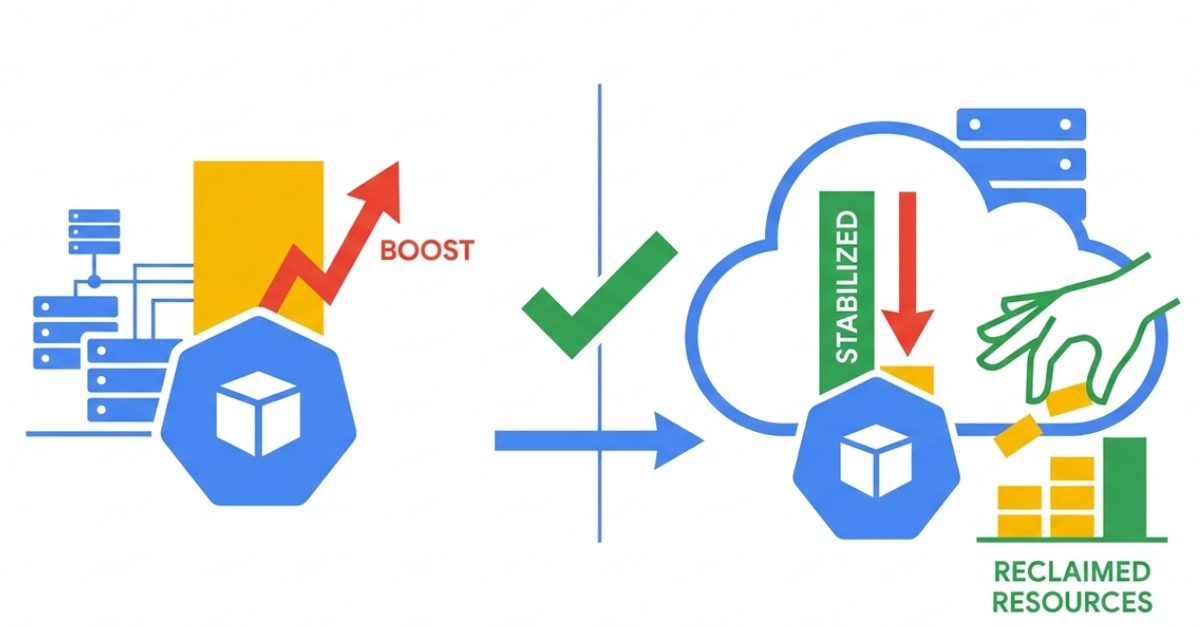
To resolve this trade-off, the GKE team launched the Public Preview of VerticalPodAutoscaler (VPA) CPU Startup Boost. Available on GKE clusters running version 1.36.0-gke.4447000 or newer in the Rapid Channel, this feature provides up to 2x faster startup latency while dynamically reclaiming CPU capacity once the application stabilizes.
In this article, I will explain how CPU startup boost operates under the hood, how it leverages Kubernetes In-Place Pod Resize (IPPR), and how to configure it effectively for your clusters.