(Image credit: Hirevue/Shutterstock/Tom’s Guide)
In a world where the job market is reliably unreliable and unemployed individuals are left to wait for months at a time for any sort of upward mobility, AI has emerged as a new element in the hiring process.Job applicants are sprucing up their resumes and cover letters with the assistance of AI tools, which some say is leading to an upsurge in look-alike submissions that make it difficult to distinguish between the right candidates. Making sure you stand out from the rest of the pack that uses AI to polish the credentials that make up their work history and introductory letter could make a world of difference in this day and age.To get a better understanding of how AI has had a major impact on the job hunting process, what must be done to make one’s application catch a hiring manager’s eye and the biggest mistakes to avoid when using AI to apply for jobs, we spoke to Mike Hudy, Chief Science Officer at Hirevue.Chances are, Hudy’s tips may help you gain more insight into how you should be using AI to land your dream job.AI's impact on the job application system and what it takes to stand out
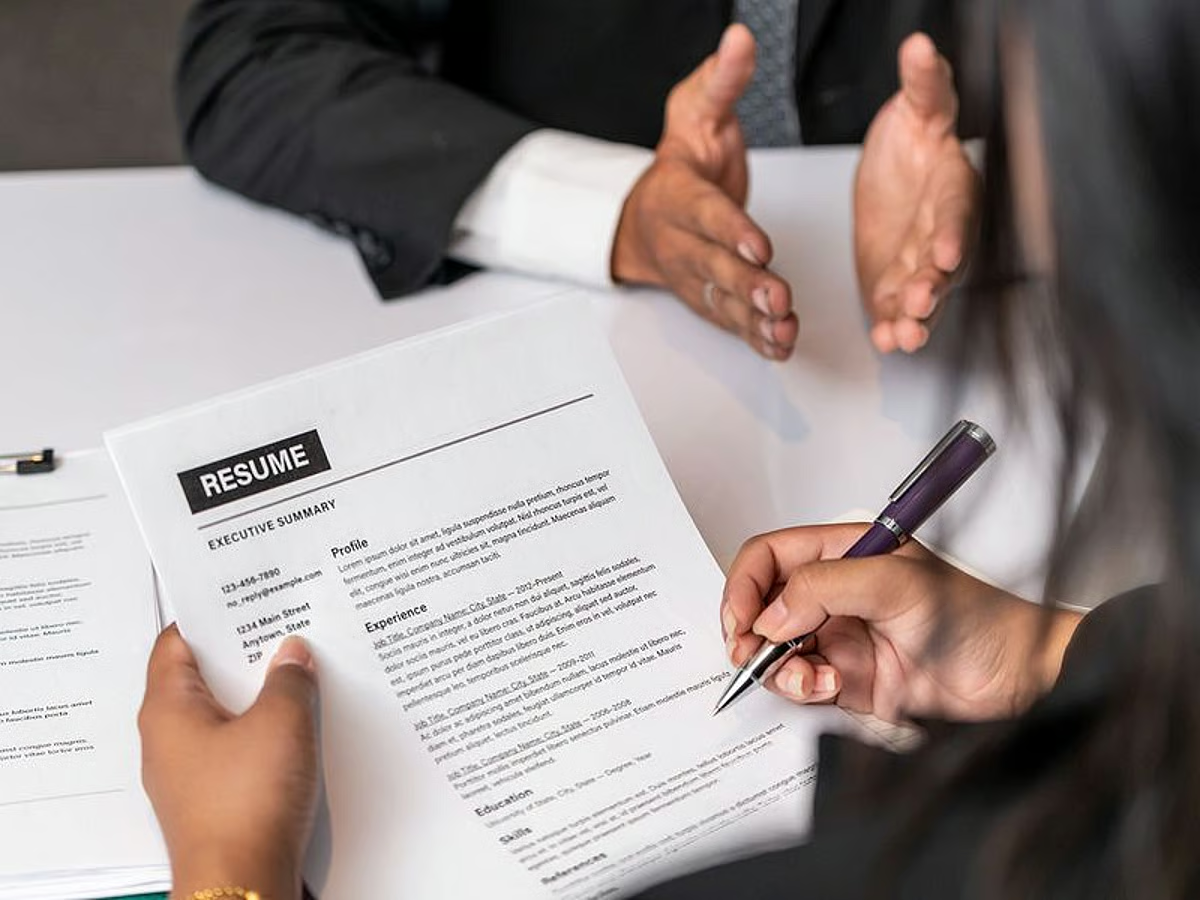
(Image credit: Shutterstock)What do you think is the main difference between an “AI-assisted” resume and an “AI-generated” one?The difference is whether AI is helping a candidate communicate their experience or effectively inventing the communication for them. An AI-assisted resume starts with the candidate’s real skills, accomplishments and experiences, then uses AI to make that information clearer, more concise or better aligned with the language of a role. That’s not fundamentally different from asking a career coach or trusted colleague to review your resume.An AI-generated resume can cross a line when the technology begins supplying experiences, skills or accomplishments that the candidate cannot substantiate. The issue isn’t whether AI touched the resume but rather whether the resume remains an accurate representation of the person behind it.As AI makes it easier for everyone to produce polished applications, employers will increasingly need to validate skills rather than treating the quality of a resume as evidence of capability.What is the biggest mistake job seekers make when using AI to apply for jobs? The biggest mistake is trying to use AI to game the hiring process.AI can help candidates prepare and communicate more effectively, but it shouldn’t be used to manufacture the appearance of qualifications. Hiring technology grounded in hiring science is designed to evaluate job-related skills and behaviors, not simply reward keyword stuffing or an overly polished script.And even if someone manages to optimize their way through an initial screen, eventually there has to be evidence behind the application. A structured interview, skills assessment, or conversation with a hiring manager creates opportunities to demonstrate what you actually know and can do.The better use of AI is preparation, not performance: use it to identify relevant experiences, sharpen your thinking and communicate your skills more clearly.If job candidates are using AI to optimize their applications and employers are using AI to screen them, who has the advantage right now?I don’t think either side ultimately benefits from turning hiring into an AI-versus-AI race.Hirevue’s 2026 Global AI in Hiring Report shows how quickly AI has become embedded on both sides of the process. Seventy-one percent of candidates report using AI for resumes and 64% for cover letters. Meanwhile, 77% of HR teams report using AI regularly, including 43% for resume screening and 40% for candidate communications.The more interesting consequence is that the traditional resume is becoming a weaker signal. When nearly everyone can produce a polished application, it becomes harder to distinguish candidates based on presentation alone. That increases the value of structured interviews, validated assessments and other skills-based approaches that provide evidence of what someone can actually do.So the advantage increasingly goes not to whoever has the better AI, but to hiring processes that can separate presentation from capability. AI can help employers manage enormous applicant pools efficiently, but final hiring accountability should remain human, supported by job-relevant, validated evidence in the form of direct skill measurement.