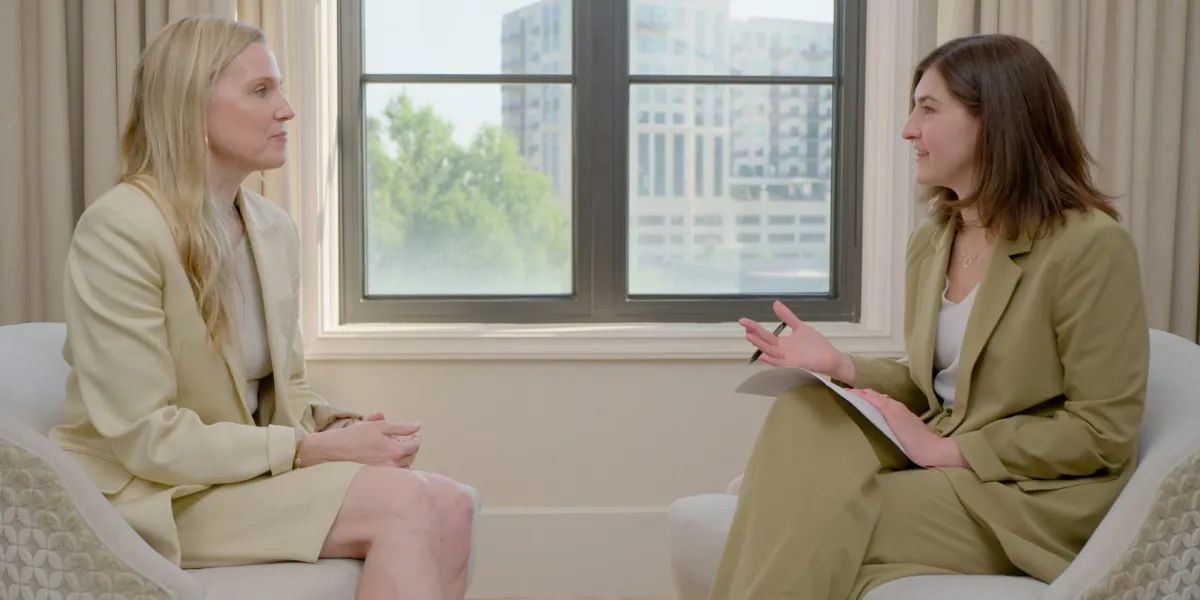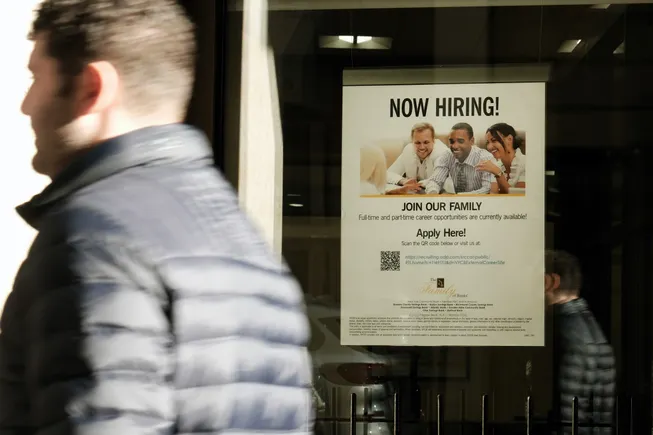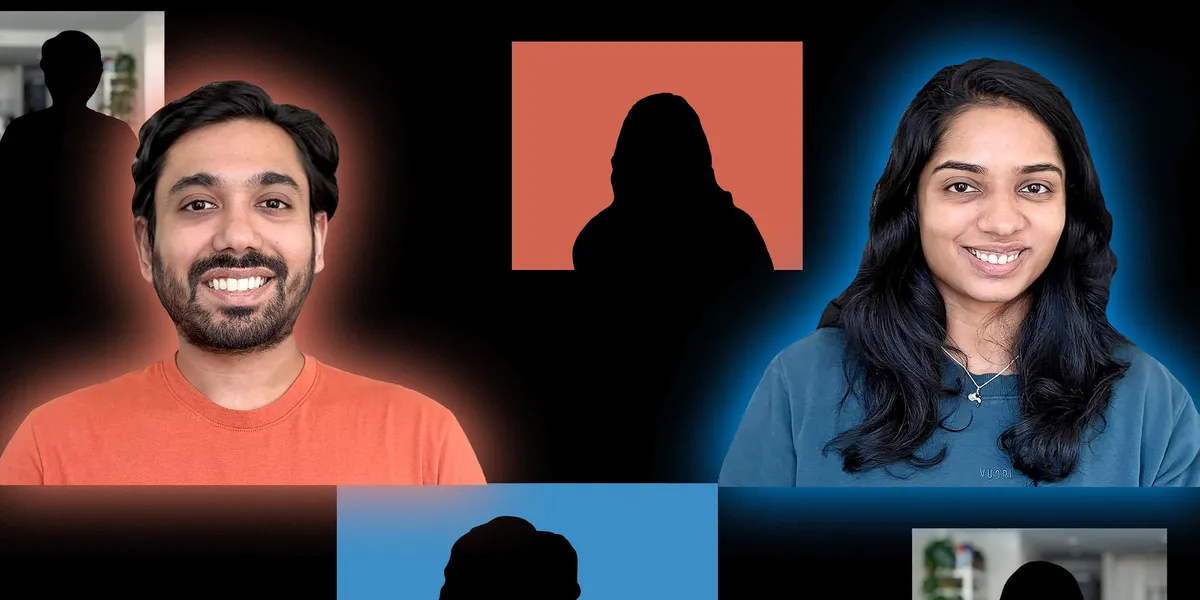
When AI can write the resume, screen the resume, and conduct interviews using avatars, what place does the human fill?gettyA recruiter opens their dashboard to 1,000 job applications.An underwhelming 900…written with AI. An AI screens them. Another AI agent schedules interviews. Another AI conducts interviews. Candidates prepare using ChatGPT, AI resume builders, and AI job search tools. And somewhere in the middle, the human is engineered out. Who’s actually keeping humanity alive in the hiring process? The AI Vs. AI Hiring ProblemEvery time I have conversations with job seekers and with recruiters and hiring managers, they all tell me the same story. They’re tired of AI slop. They’re tired of seeing the human automated out. Recruitment has become an AI arms race; and to add insult to injury, the very reason the job market is flooded (especially in tech and professional services sectors) is because of layoffs attributed to AI. But the data shows that it’s not one party to blame. Both sides carry the weight of this paradox. Candidates Over-Rely On AI In The Job SearchOn the candidate side, they are flooding the job market with AI-generated resumes, forcing employers to decry ChatGPT in job applications altogether or to express explicit guidelines for how AI tools are used throughout the application and hiring process. And because many candidates are using AI almost thoughtlessly, their actions lead to application inflation and actually delays the hiring process. Employer surveys reveal that AI resumes actually sabotage and slow down the hiring process, according to 67% of hiring managers, especially when the output is left as is, without thought or human judgement. Daniel Chait, CEO of Greenhouse, told me that in his view, the resume is dead. He claims it’s the weakest signal in hiring, rewarding keyword tricks, formatting hacks, and now AI-written content, while telling you almost nothing about whether someone can actually do the job. LinkedIn also found that U.S. applications per job have doubled since 2022. HireVue's 2026 report noted that almost three in four candidates now use AI to create resumes. Employers Run The Risk With AI In HiringBut here’s what I find really intriguing: while a sizeable proportion of hiring managers say using AI is a red flag, 77% of HR teams regularly use AI in their hiring process. And 93% of recruiters plan to double down on AI usage this year, per LinkedIn. And yet, only a mere 41% of hiring teams fully trust AI. Beyond the resume-sifting stage, the impact has extended to interviews. An estimated 63% of candidates have experienced an AI interview, the ATS software provider Greenhouse notes. While this can be useful for initial stage interviews and might have positive and calming effects for some who may find the interview process daunting when confronted with a real human, about 38% of candidates have walked away from a hiring process because AI interviews have damaged their candidate experience.Researchers Confirm The Fallacy Of The AI Arms Race In HiringOn the other side, new academic research suggests that while many companies advocate for human-in-the-loop judgement in recruitment from the hiring and recruiter perspective, the opposite is actually happening, and these results can prove fatal. “While recruiters believe they have final authority across the recruiting pipeline, Gen AI has become an invisible architect that shapes the foundational building blocks of information used for evaluation, from defining a job to determining good interview performances,” academic research from assistant professor of computer science Rosanna Bellini (NYU Tandon School of Engineering) and her co-researchers Sajel Surati and Emily Black noted in a recent paper. “The decision of whether or not to adopt was also often outside recruiters’ control, with many feeling compelled to adopt Gen AI due to calls to integrate AI from higher-ups in their business, to combat applicant use of AI, and the individual need to boost productivity,” the research continued. “Despite a seemingly seismic shift in how recruiting happens, participants only reported marginal efficiency gains. Such gains came at the high cost of recruiter deskilling, a trend that jeopardizes the meaningful oversight of decision-making.”This combination of factors resulting in an AI arms race on both sides of the recruitment market leads directly to a breakdown in trust, transparency, the candidate experience, and quality hires that get eliminated from the system--either from generic slop reducing a candidate’s resume to empty cliches and exaggerated nothingness, or from ATS systems filter out “red flags” like employment gaps.So, what’s the practical solution here?Over-automation in hiring can lead to a breakdown of trust and credibility gettyAI Or Not? It’s Yes And NoAI has its upsides.For job seekers, especially those who’ve been laid off, it offers a quick and efficient solution to the soul-wrenching drudgery that is job-hunting. I even advocate for using it for specific aspects of a job-seeker’s workflow.And for recruiters and hiring teams, it reduces the noise of application influx and makes the workload more manageable, providing clarity on which candidates deserve to progress to the next step.But whether you’re on the job-hunting side or the role-filling side, clear boundaries need to be drawn as to where AI can be effective, and where it is not; where AI must be used, and where the human should be allowed to take over and shine.As an example, Adecco’s CEO Denis Machuel shared with me on my recent podcast episode that within his recruitment firm, their approach to AI is fundamentally human-first. The staffing firm uses it to automate the admin away from the recruiter, so that they are empowered and have the mental space and time to actually connect with the candidates behind the applications.And if you’re looking for work, there are ways to use it to enhance and bring out your voice and experiences, rather than inventing fake ones or completely hiding it. Perhaps this is best illustrated by AI-native employers such as Anthropic, for instance, who make clear what their AI boundaries are as relate to candidate usage of AI:At Anthropic, we use Claude every day, so we’re looking for candidates who excel at collaborating with AI.Here's when and how to use Claude (or other AI tools) when applying to and interviewing with Anthropic. Where it makes sense, we invite you to use Claude to show us more of you: your unique perspective, skills, and experiences.When applying (resume and application questions) Please create your first draft yourself, then use Claude to refine it. We want to see your real experience, but Claude can polish how you communicate about your work.Example prompt: “Please review my resume and the job description. Identify the experiences I should highlight in my application responses that align most with the job requirements.”During take-home assessments Complete these without Claude unless we indicate otherwise. We’d like to assess your unique skills and strengths. We'll be clear when AI is allowed (example: "You may use Claude for this coding challenge").Preparing for interviews Use Claude to research Anthropic, practice your answers, and prepare questions for us.Example prompt: “Create a study guide for interviewing for this job. Outline key topics I should review, including AI safety concepts, Anthropic's research focus, and typical technical or behavioral questions I might encounter.”During live interviews This is all you–no AI assistance unless we indicate otherwise. We’re curious to see how you think through problems in real time. If you require any accommodations for your interviews, please let your recruiter know early in the process.Remember, if you can replace your voice and experiences with a bot, you can easily be replaced or laid off (again). And if you over-automate the hiring process as a a hiring manager or recruiter, you kill your employer branding and lose the best of your talent pool. Because somewhere in all of the rush to accelerate AI adoption, the humanity of the workplace is an afterthought.
Hiring Is Now AI Vs AI. What Happens When Humans Are Engineered Out?
Hiring has turned into an AI arms race. What happens when algorithms hire algorithms? Here's what it means for the future of work.
1,295 words~6 min read