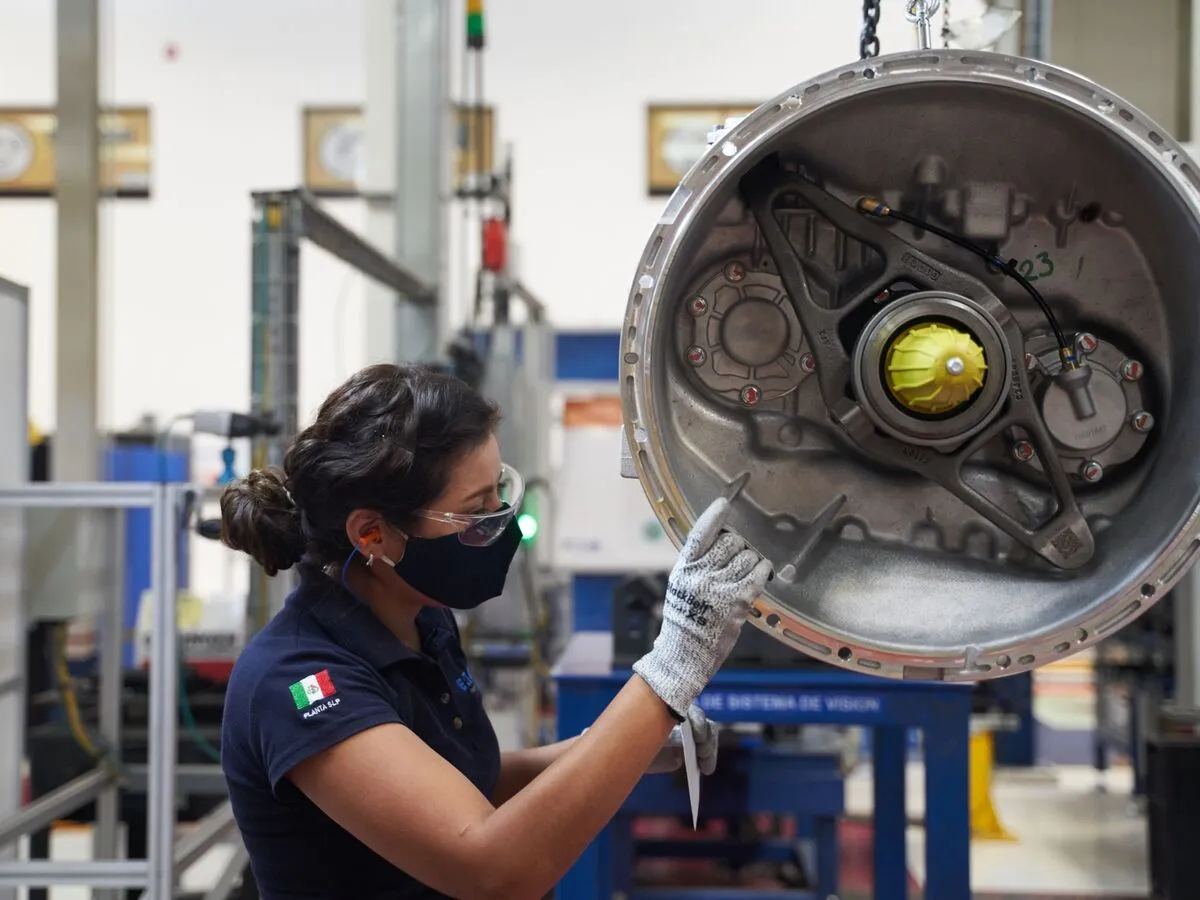
Skip to Content News Archives Economy Energy Oil & Gas Renewables Electric Vehicles Mining Commodities Agriculture Real Estate Mortgages Mortgage Rates Finance Banking Insurance Fintech Cryptocurrency Work Wealth Smart Money Wealth Management Investor Personal Finance Family Finance Retirement Taxes High Net Worth FP Comment Executive Women Puzzmo Newsletters Financial Times Business Essentials More Innovation Information Technology FP500 Podcasts Small Business Lives Told Tails Told Shopping Financial Post Store Obituaries Place a Notice Advertising Advertising With Us Advertising Solutions Postmedia Ad Manager Sponsorship Requests Classifieds Place a Classifieds ad Working Profile Settings My Subscriptions My Offers Newsletters Customer Service FAQ News Economy Energy Mining Real Estate Finance Work Wealth Investor FP Comment Executive Women Puzzmo Newsletters Financial Times Business Essentials HomeFP CommentTerence Corcoran: In auto trade, Mexico is the new CanadaWill Canada therefore become the new Australia and pull support for the flagging sector?Last updated 1 hour ago A worker wearing a protective mask assembles truck transmissions at the Eaton Corp. manufacturing facility in San Luis Potosi, Mexico. Photo by Mauricio Palos/Bloomberg filesIn 2017, the year Australia’s production of motor vehicles came to a permanent halt, Canadian labour economist Jim Stanford optimistically concluded that there were good reasons to believe that Canada’s auto industry would not follow the same road to nowhere.Subscribe now to read the latest news in your city and across Canada.Exclusive articles from Barbara Shecter, Joe O'Connor, Gabriel Friedman, and others.Daily content from Financial Times, the world's leading global business publication.Unlimited online access to read articles from Financial Post, National Post and 15 news sites across Canada with one account.National Post ePaper, an electronic replica of the print edition to view on any device, share and comment on.Daily puzzles, including the New York Times Crossword.Subscribe now to read the latest news in your city and across Canada.Exclusive articles from Barbara Shecter, Joe O'Connor, Gabriel Friedman and others.Daily content from Financial Times, the world's leading global business publication.Unlimited online access to read articles from Financial Post, National Post and 15 news sites across Canada with one account.National Post ePaper, an electronic replica of the print edition to view on any device, share and comment on.Daily puzzles, including the New York Times Crossword.Create an account or sign in to continue with your reading experience.Access articles from across Canada with one account.Share your thoughts and join the conversation in the comments.Enjoy additional articles per month.Get email updates from your favourite authors.Create an account or sign in to continue with your reading experience.Access articles from across Canada with one accountShare your thoughts and join the conversation in the commentsEnjoy additional articles per monthGet email updates from your favourite authorsSign In or Create an AccountorStanford, then with McMaster University, had good reasons for optimism which he reviewed in detail in an academic paper — When an Auto Industry Disappears: Australia’s Experience and Lessons for Canada — published by the Canadian Public Policy journal. One of his statistical points was to compare Canadian and Australian auto production per capita. In 2015, Canada’s auto industry produced six cars for every 100 residents, while Australia had declined to less than one car per 100 residents, down from a peak of four vehicles decades earlier. It was an indication that Canada was in a stronger production situation.Another reason for Stanford’s confidence in the future of Canadian auto production was summarized in the abstract to his paper: “The Canadian industry enjoys several structural advantages compared with Australia, chief among them its large and bilateral trade relationship with the United States. These advantages suggest that the Canadian industry has a better prognosis.”Get the latest headlines, breaking news and columns.By signing up you consent to receive the above newsletter from Postmedia Network Inc.A welcome email is on its way. If you don't see it, please check your junk folder.The next issue of Top Stories will soon be in your inbox.We encountered an issue signing you up. Please try againWith that bilateral relationship now in apparent crisis, the chances are rising that the Canadian industry could follow the Australian experience, by necessity if not by choice. The shutdown of all Aussie vehicle production in 2017 followed a decline track similar to that now being experienced by Canada.The downward production trend experienced in Australia can be found in Canada today using one of the same datapoints used by Stanford in 2017. Vehicle production per capita in Canada, as high as 10 per 100 population in 2000, is today down to 3.2 vehicles. The drop follows the trajectory of overall annual Canadian vehicle output, which has fallen dramatically from more than three million in 1999 to 1.2 million in 2025, a decline of more than 60 per cent (see graph).In dollar value, Canada’s total auto industry contributes between $16 billion and $19 billion to the economy, or less than one per cent of GDP. By comparison, the oil and gas industry contributes more than seven per cent to GDP.When Australia faced comparable rates of decline in the early years of this century despite decades of trade protection and subsidies, the decision was made in 2013 by then Liberal Prime Minister Tony Abbott to stop government support for the auto industry. “The government’s role is not to prop up private business,” he famously said. That would be news in Ottawa.As a result, no autos are produced in Australia today, although the country continues to be a hot market for vehicles, especially electric vehicles imported from China and other nations.While Australia disappeared from the auto market and Canada’s role declined, it’s another story in Mexico. In 1997, Mexico produced about 1.3 million vehicles, about the same number produced in Canada last year. Since then, thanks in major part to trade deals with the United States and lower labour costs, Mexico’s production of motor vehicles soared to 4.2 million in 2024 and held at 4.1 million in 2025 (see graph).That’s only part of the Mexican auto story. According to a Wall Street Journal graphic and other statistics, passenger vehicles account for only about 20 per cent of Mexico’s auto industry. During the first half of this year, Mexico exported US$80 billion in auto vehicles and parts to the United States, while Canada exported only about $24 billion in autos and parts. Mexico’s rise, widely predicted back in 2013, continues this year, despite Trump’s 25 per cent tariff on the non-U.S. content of auto imports. The breakdown in Canada’s trade negotiations could open an opportunity for Mexico to make gains in its current trade talks with the United States.The continental trade crisis now taking place only adds to the negative trends Canada’s auto industry has faced over the past two decades. It is also likely that complex trade talk interactions could rattle the industry well into 2027.That Canada could — or should — become the new Australia is a possibility not to be ignored, even by Jim Stanford. Join the Conversation This website uses cookies to personalize your content (including ads), and allows us to analyze our traffic. Read more about cookies here. By continuing to use our site, you agree to our Terms of Use and Privacy Policy.
Terence Corcoran: In auto trade, Mexico is the new Canada
Terence Corcoran: Will Canada therefore become the new Australia and pull support for the flagging sector? Read on.
1,182 words~5 min read