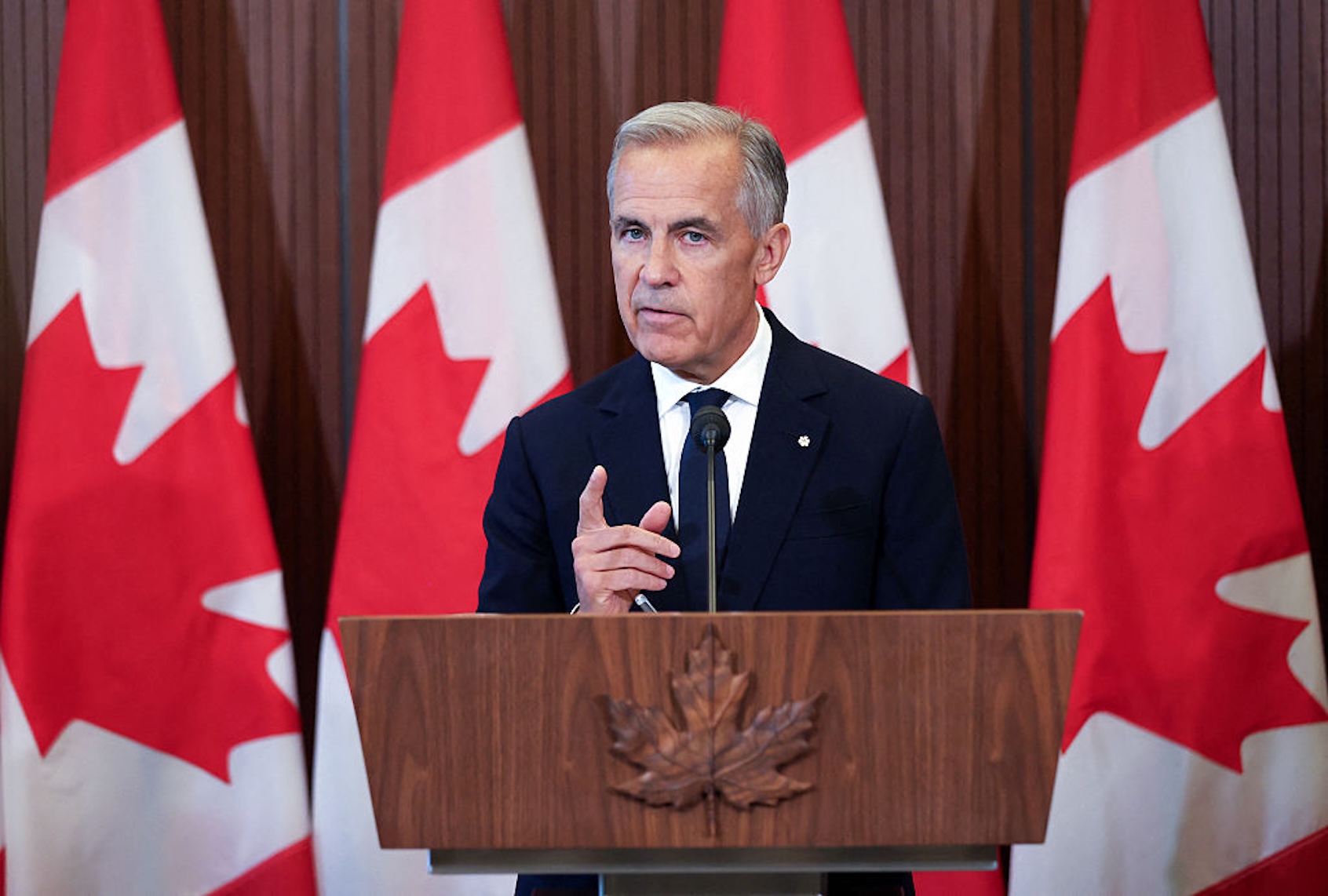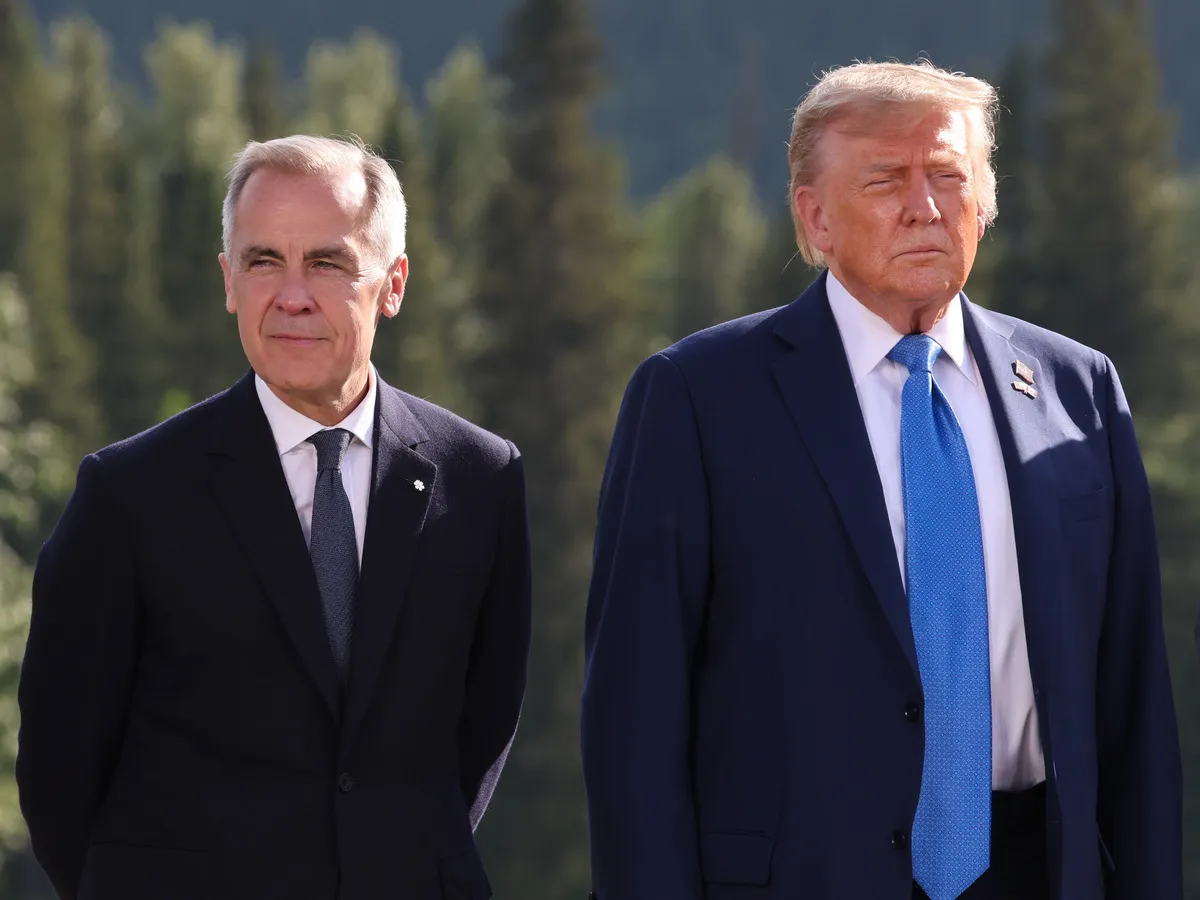
Skip to Content News Archives Economy Energy Oil & Gas Renewables Electric Vehicles Mining Commodities Agriculture Real Estate Mortgages Mortgage Rates Finance Banking Insurance Fintech Cryptocurrency Work Wealth Smart Money Wealth Management Investor Personal Finance Family Finance Retirement Taxes High Net Worth FP Comment Executive Women Puzzmo Newsletters Financial Times Business Essentials More Innovation Information Technology FP500 Podcasts Small Business Lives Told Tails Told Shopping Financial Post Store Obituaries Place a Notice Advertising Advertising With Us Advertising Solutions Postmedia Ad Manager Sponsorship Requests Classifieds Place a Classifieds ad Working Profile Settings My Subscriptions My Offers Newsletters Customer Service FAQ News Economy Energy Mining Real Estate Finance Work Wealth Investor FP Comment Executive Women Puzzmo Newsletters Financial Times Business Essentials HomeFP CommentTerence Corcoran: The Trump-Carney trade war against market capitalismWhen governments decide where and when to build and investLast updated 1 hour ago Neither Trump nor Carney believe in free markets. It’s a new world order in which trade and subsidy battles are the never-ending norm that cannot lead to trade peace. Photo by Gavin Young/PostmediaThe apparent unravelling of the Canada-United States trade relationship should make it clear that it is time to face reality: Under President Donald Trump, the promising era of freer trade is over and this is the beginning of a new post-capitalism economic order.Subscribe now to read the latest news in your city and across Canada.Exclusive articles from Barbara Shecter, Joe O'Connor, Gabriel Friedman, and others.Daily content from Financial Times, the world's leading global business publication.Unlimited online access to read articles from Financial Post, National Post and 15 news sites across Canada with one account.National Post ePaper, an electronic replica of the print edition to view on any device, share and comment on.Daily puzzles, including the New York Times Crossword.Subscribe now to read the latest news in your city and across Canada.Exclusive articles from Barbara Shecter, Joe O'Connor, Gabriel Friedman and others.Daily content from Financial Times, the world's leading global business publication.Unlimited online access to read articles from Financial Post, National Post and 15 news sites across Canada with one account.National Post ePaper, an electronic replica of the print edition to view on any device, share and comment on.Daily puzzles, including the New York Times Crossword.Create an account or sign in to continue with your reading experience.Access articles from across Canada with one account.Share your thoughts and join the conversation in the comments.Enjoy additional articles per month.Get email updates from your favourite authors.Create an account or sign in to continue with your reading experience.Access articles from across Canada with one accountShare your thoughts and join the conversation in the commentsEnjoy additional articles per monthGet email updates from your favourite authorsSign In or Create an AccountorAs I watched news coverage of the Canada-U.S. trade talks over the past week, there was always one good reason to believe that they would crash and burn. As far back as August 2025, news reports announced that Trade Minister Dominic LeBlanc had held “constructive” talks with U.S. Commerce Secretary Howard Lutnick. The question then and now is: How is it possible to hold constructive trade negotiations with a hardline anti-free trader who in the past has said Canada has been “feeding off of us for decades.”Last October Lutnick reportedly said “car assembly is going to be in America and there is nothing Canada can do about it.” Over the past week, Lutnick hovered in the background of media reports on the talks, a red light that should have alerted all to the likely breakdown of negotiations.Get the latest headlines, breaking news and columns.By signing up you consent to receive the above newsletter from Postmedia Network Inc.A welcome email is on its way. If you don't see it, please check your junk folder.The next issue of Top Stories will soon be in your inbox.We encountered an issue signing you up. Please try againCanada responded with a new tariff threat to expand the trade war. Then along came Trump with another trade bomb, a 50 per cent tariff on all Canadian cars and trucks. And then Carney on Tuesday launched 1,000 tariff drones to knock out $27.6 billion in U.S. imports. On both sides of the border, the tariff wars are being waged by governments that should not be attempting to use trade, tariffs and other tactics to shape corporate market decisions.Case in point: The faceoff over heavy-duty trucks produced in Canada. Canada is said to have backed down on the new tariff deal in part because Lutnick and Trump want to maintain a 25 per cent tariff on heavy-duty trucks, including the Ford F-series to be produced at Ford’s Oakville, Ont., plant and the Silverado at GM’s plant in Oshawa. If Trump were to impose tariffs on F-350s and Silverados, he would be using government force to compete with Ottawa and the provinces for auto plants. Trump wants their production moved to the U.S., while Carney wants to keep the plants operating in Canada using his own anti-market strategies. General Motors, for example, has received $500 million in federal and provincial subsidies for the Silverado plant that Trump wants to hit with tariffs and move to the States.The ideas underlying these anti-market interventions are shared by coteries of political and economic figures who argue that the government and not the market should determine and even control economic investment decisions. Each nation should have its own essential industries determined by politicians, not market decisions by investors and corporations. Auto tariffs “are bringing auto manufacturing home” to America, said Lutnick last week.That achievement, such as it is, has hit the U.S. auto industry with an estimated US$35 billion in tariff costs since 2025. Lucas Malinowski, CEO of Global Automakers of Canada, estimates tariffs and trade disruptions have added $110 billion in costs to North America’s auto industry over the past year and a half.We’ve seen it all before in Canada, which depended on tariffs for most of the past century to force U.S. auto companies to build plants in Ontario and Quebec. The results were high costs and lack of choice for consumers. Much of the Canadian auto industry was established after tariff walls were taken down by the 1965 Canada-U.S. Auto Pact and the 1992 North American Free Trade Agreement (NAFTA).Trump, Lutnick and their band of anti-marketers hated NAFTA and its 2018 successor, the Canada-United States-Mexico Agreement (CUSMA), even though Trump agreed to CUSMA. The trade deals provided opportunities for private investment decision-making and increased continental trade, lowered prices and boosted efficiency.The overarching question is whether Canada could actually retain an auto production sector under greater free trade without costly government interventions and/or tariffs. Reasons for doubt are everywhere, including the fact that Ottawa and Ontario are already rigging the market by providing major subsidies to rescue the industry. Last February Carney announced his “new industrial strategy” for the sector, including $3 billion “from the Strategic Response Fund and up to $100 million from the Regional Tariff Response Initiative to help the auto industry adapt, grow, and diversify to new markets.”This is the new world order of competing state economics to replace market economics. Canada doles out taxpayer cash to compete against Trump’s tariffs. It’s an economic system that can only become destructive of trade and investment over the short and long term.In Canada’s case, the future of its auto industry should be left to a free-trade market rather than a state-managed market — as argued by Carleton University’s Christopher Worswick. True free trade in automobiles, he wrote recently, would benefit Canadian consumers by letting “the free market and capitalism run their course,” even if it meant letting the Canadian auto sector fade away.But that’s not the way of the world these days. From the Group of Seven nations to Trump and Carney, the objective is to build back the state and put an end to free markets and capitalism. That’s the underlying ferment behind the current trade war.Neither Trump nor Carney believes in free markets. It’s a new world order in which trade and subsidy battles are the never-ending norm that cannot lead to trade peace. Canadians may cheer Carney’s response to Trump’s anti-marketism, but they are ignoring Carney’s own anti-market strategies. Join the Conversation This website uses cookies to personalize your content (including ads), and allows us to analyze our traffic. Read more about cookies here. By continuing to use our site, you agree to our Terms of Use and Privacy Policy.
Terence Corcoran: The Trump-Carney trade war against market capitalism
Canadians may cheer Carney’s response to Trump’s anti-marketism, but they are ignoring Carney’s own anti-market strategies. Read here now
1,400 words~6 min read