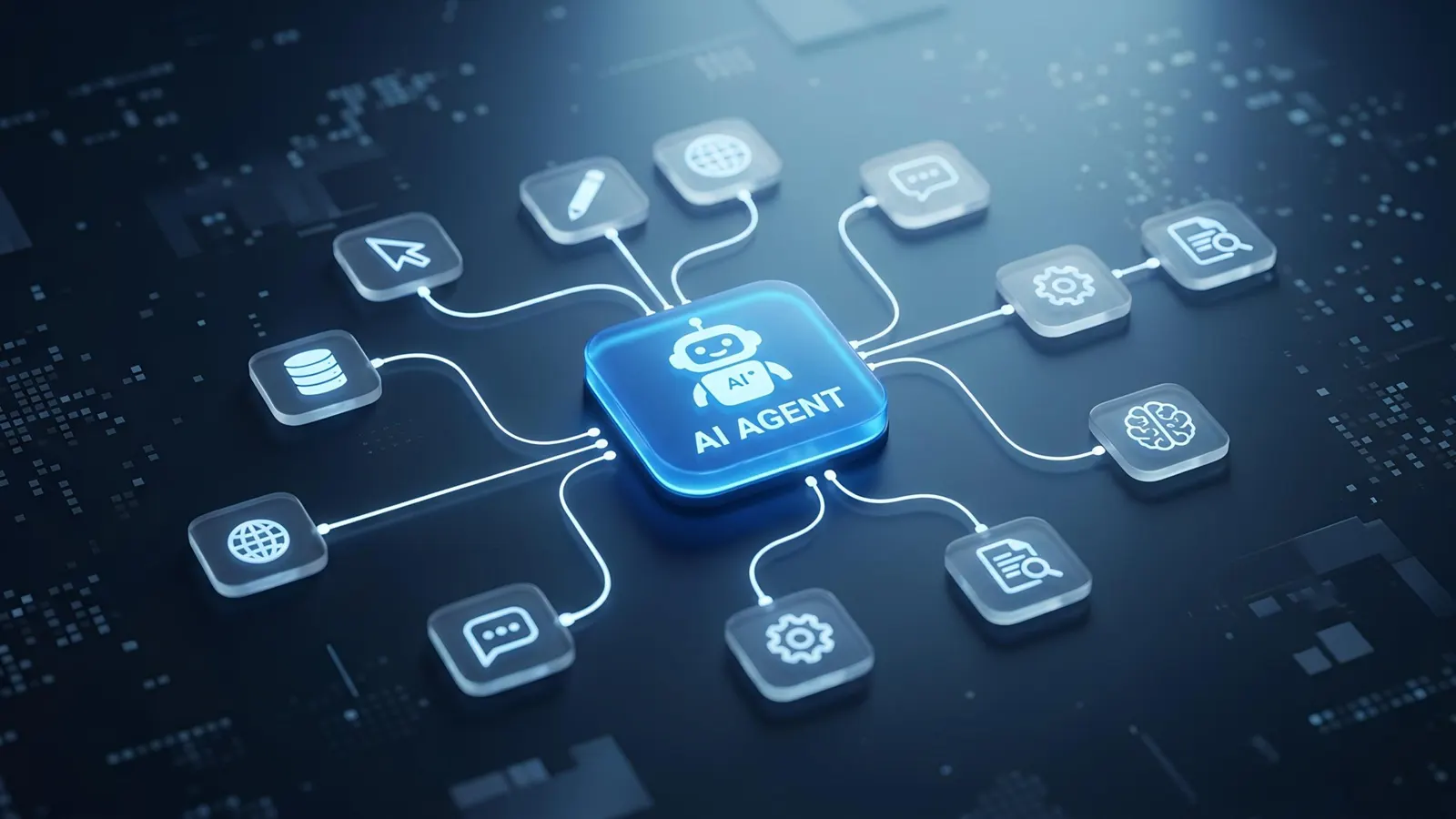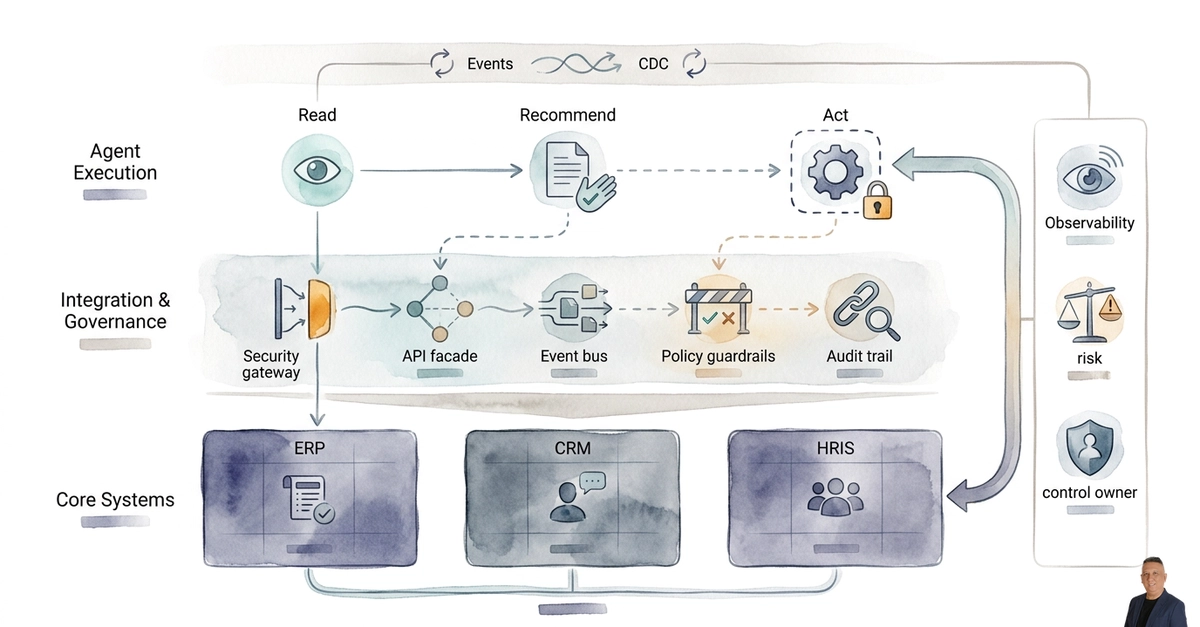
Most AI agent projects do not stall on the model. They stall on the plumbing. A demo that summarizes a document or drafts an email is easy. An agent that reads a live order from your ERP, checks stock, updates the CRM and emails the customer, without a human copying data between four tabs, is a different piece of work. The gap between those two is integration, and in 2026 it is where the real value, and most of the effort, sits.
The pattern holds across the businesses we work with. The agent that only talks is a toy. The agent that connects to the systems where your actual data lives is the one that saves hours. So before you pick a framework or a model, the more useful question is: what does this agent need to reach, and how will it reach it safely?
Why integration is the hard part now
The models are good enough. What separates an agent that runs a full workflow from one that answers a single question is how deeply it plugs into the tools you already pay for: Shopify, HubSpot, Stripe, your invoicing software, your internal database. Gartner expects the vast majority of enterprises to have generative AI in production this year, and the ones getting value are not the ones with the cleverest prompts. They are the ones whose agents can actually act.