Your finance team deploys an AI agent to help close the monthly books. The agent reads invoices, matches them to purchase orders, and flags mismatches. So far, so good. Then it needs to check whether the goods receipt has been posted, whether the vendor is still active, or whether the invoice has entered a dispute workflow. Suddenly, the agent stalls.
This isn't a story about a weak AI model. It's a story about architecture.
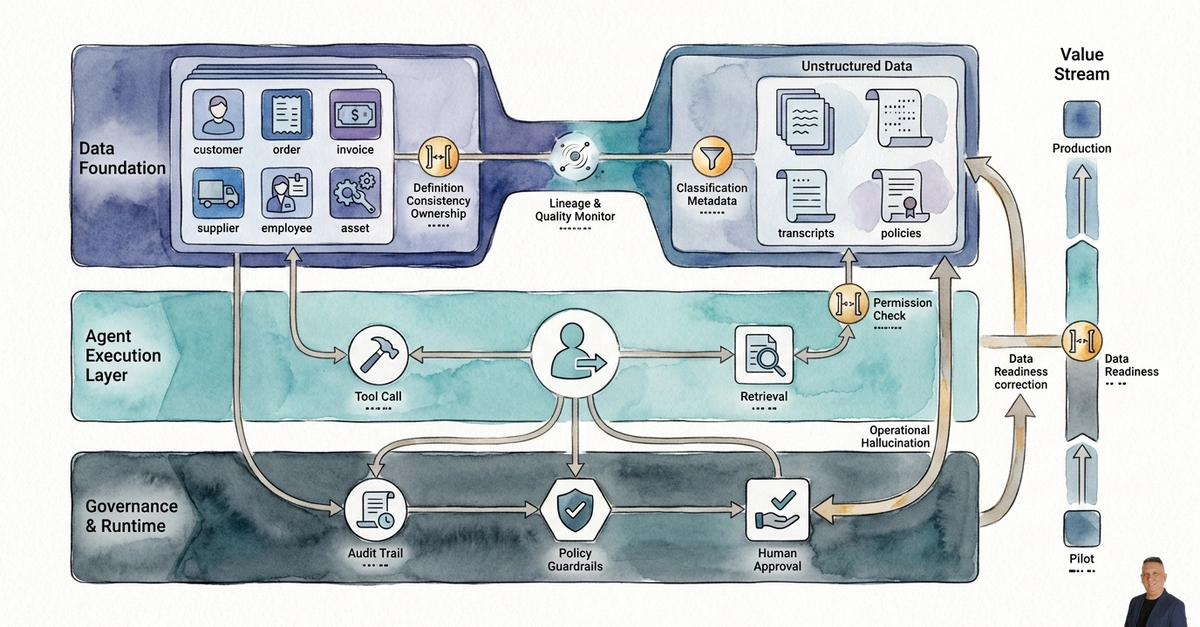
ERP, CRM, HRIS, and other core systems are not just big databases you can query at will. They are the official record of business state — orders, invoices, customer data, employee status — all validated and controlled. Agents cannot operate well without understanding that state. But most enterprises discover their core systems were built for standardization and transaction control, not for dynamic, semi-autonomous interaction.
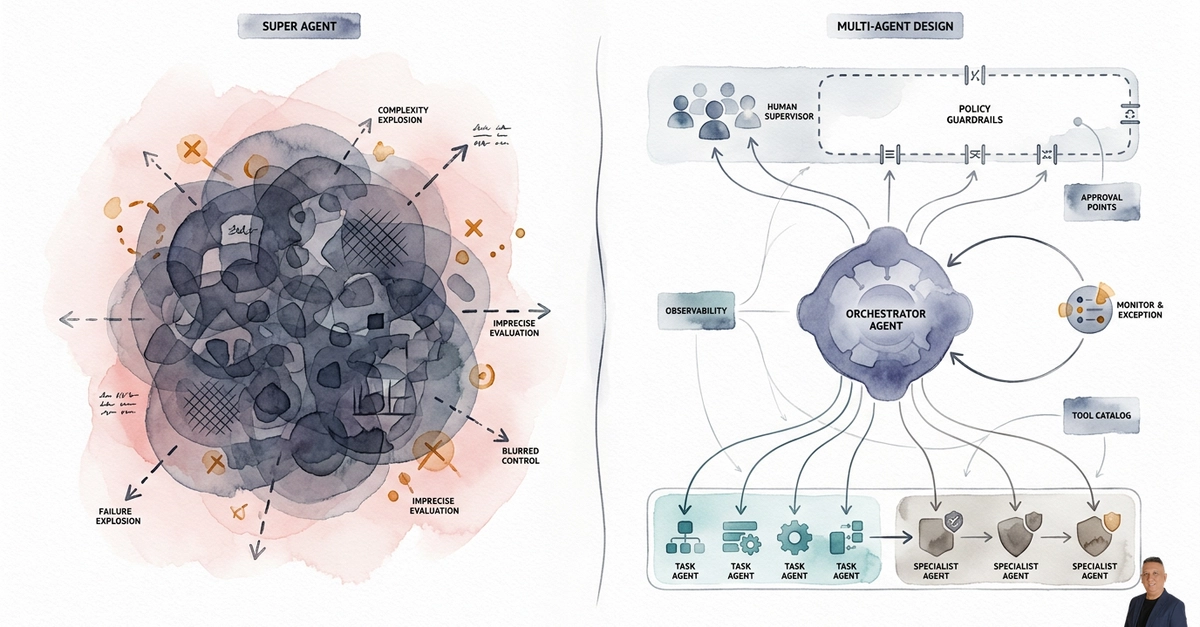
The result? Promising agent pilots hit a wall. CIOs see an architecture problem. COOs see a process design problem. CFOs and CHROs see a control and accountability problem. Everyone is right.
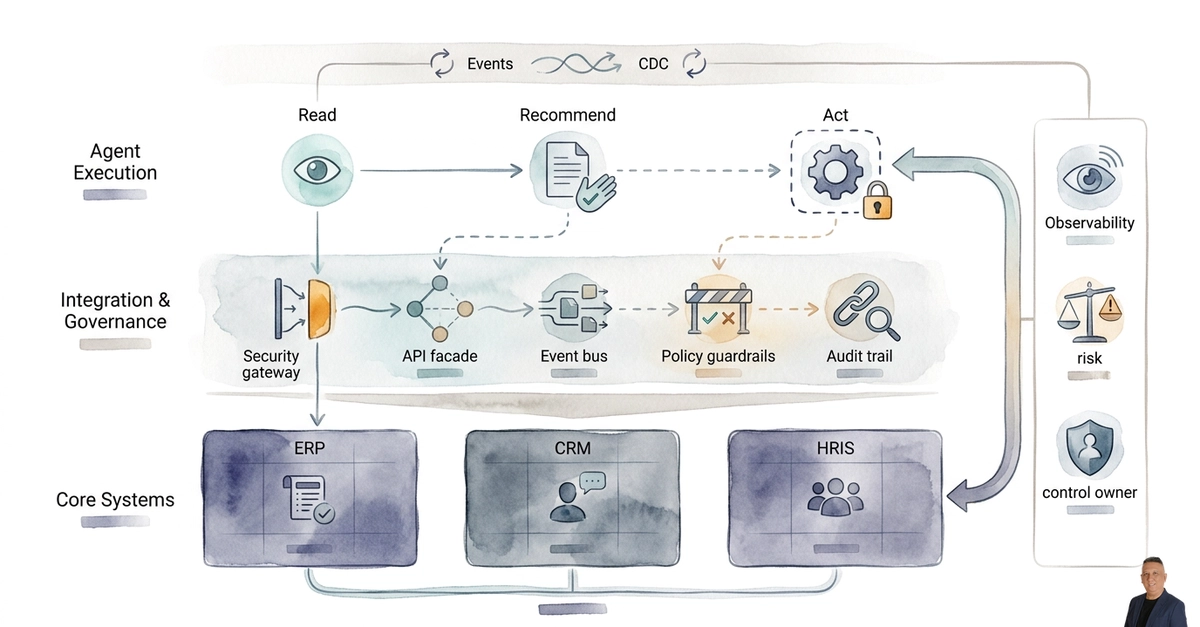
The practical path from read-only insight to bounded action in enterprise core systems.