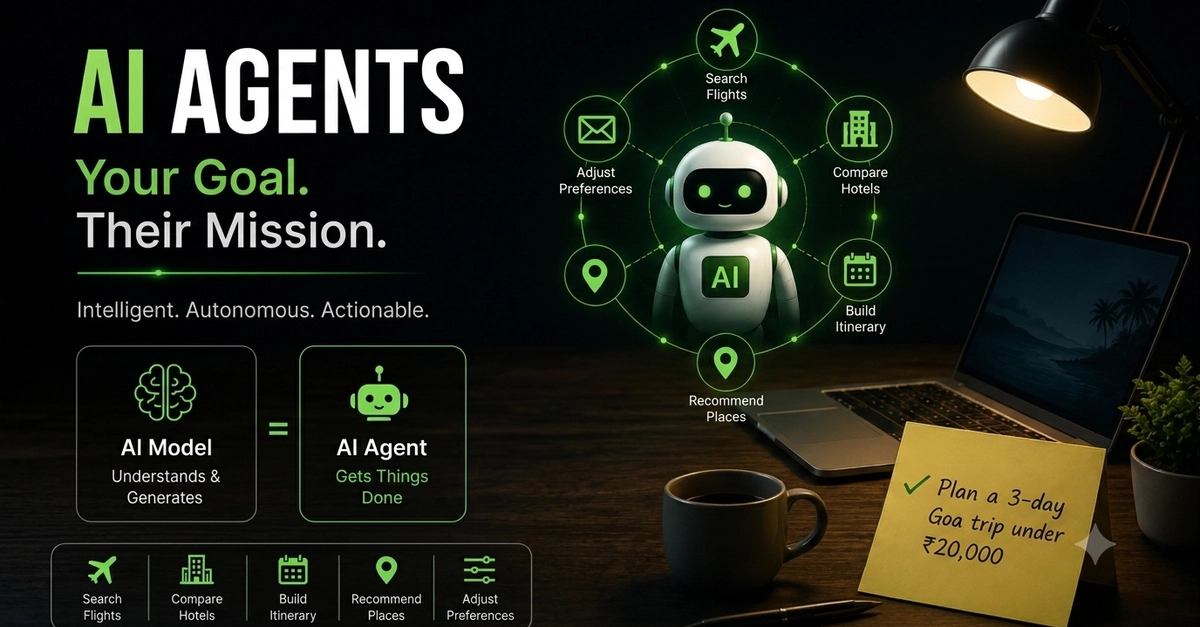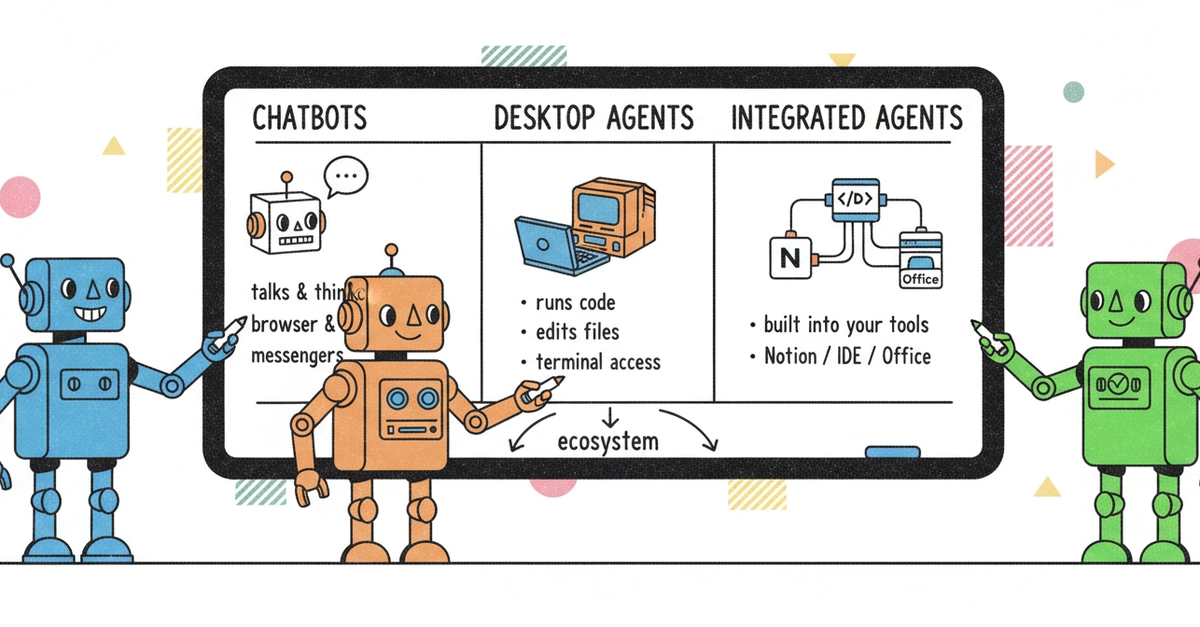
Artificial intelligence is moving beyond chatbots that answer questions and generate content. The next phase of the AI race is about agents that can take instructions, access information and complete tasks on behalf of users. But there is a problem: being able to reason through a task does not necessarily mean an AI agent can complete it.An agent asked to follow up with a customer, for example, may need to access a CRM, check previous conversations, retrieve order information, send an email and update another business application. The model may know what needs to happen, but the software around it needs to let the agent actually do it.That is making integration one of the less visible but increasingly important challenges in the AI industry. “Every company building AI-powered features today faces a constraint: their AI agent is only as capable as the data it can access,” Anand Chaudhary, Principal Engineer at Paragon, has said.AI is moving from answers to actionsThe first wave of generative AI was largely about producing information. Users could ask a chatbot a question, generate a report, summarise a document or draft an email. AI agents are expected to go a step further.Instead of explaining how a task should be completed, an agent could potentially perform much of the work itself. It could retrieve information, make decisions based on available context and take action across different software applications. That creates a new test for AI systems.A model may be able to understand a user's request, but it also needs access to the right data, permission to use it and tools that allow it to act. Without those connections, an intelligent agent can still end up being little more than a sophisticated chatbot.The data problem hiding behind AI agentsBusinesses already have large amounts of data, but that information is rarely stored in one place. Customer records can sit inside CRM platforms. Financial information may be held in accounting software. Employee details can be spread across HR systems, while emails, calendars, support tickets and internal databases all live in separate applications.The data exists. The challenge is getting AI systems to use it. Anand Chaudhary described this as a key constraint for AI-powered products, pointing to situations in which a sales tool may lack a customer's complete CRM history or a support agent may not have access to current product-usage information. In both cases, the missing information can affect the quality of the AI's output.This means companies building AI products increasingly have to think about the infrastructure between the model and the data it needs.Integration is an old problem with a new urgencyThe integration challenge is not unique to AI. SaaS companies have spent years connecting their products to other business applications. Every new connection can require engineering work, authentication, API management, testing and ongoing maintenance.But AI agents could dramatically increase the importance of these connections because they are expected to interact with software dynamically rather than simply move information from one system to another.Chaudhary points out that a single integration can take weeks to build, while 10 can consume an entire quarter, even before the maintenance and scaling costs over the life of those integrations are considered. For a growing software company, that can become a significant engineering burden.Developers may find themselves spending time maintaining connectors and dealing with changes to third-party APIs rather than building the company's core product.An AI agent is only as useful as what it can doThis creates a distinction between AI that can reason and AI that can execute. Consider a simple instruction: “Find customers who have not purchased in six months and send them a personalised offer.”The AI may be able to determine the right steps. But completing the task could require access to a customer database, purchase history, a CRM, an email platform and perhaps a system that generates or approves discounts.Every connection becomes part of the agent's ability to complete the job. That is why integration is shifting from a back-end engineering concern into an important product capability. If an AI application cannot access the information it needs or cannot safely take action in another system, its intelligence has limited practical value.Reliability could become the next hurdleEven when integrations exist, getting them to work reliably is another challenge. External APIs can impose rate limits. Networks can fail. Third-party services can go offline. Authentication credentials can expire. An API can also change, potentially breaking an existing workflow.AI agents introduce another layer of complexity because they may operate across several systems while attempting to complete a single task. A failure midway through the process raises difficult questions: Did the previous action succeed? Should the agent try again? Could retrying create a duplicate transaction? Can the workflow resume from where it stopped?These issues matter much more when an AI agent is handling real business processes rather than simply generating text. “Reliability isn't a phase at the end. Design it into the system from day one,” Chaudhary said.For enterprise customers, reliability also has to extend to security and control. Businesses need to know what information an agent can access, what actions it is permitted to take and what record is left behind when an automated decision is made.The infrastructure layer is becoming more importantThe rise of AI agents could therefore create demand for a new layer of infrastructure connecting models with existing business software. Traditional integrations are often designed around specific triggers and actions. AI agents require something broader. They may need access to a user's data as context and the ability to invoke tools when a particular task requires them. That means integration platforms are increasingly being positioned as infrastructure for AI products rather than simply connectors between SaaS applications.Bigger models will not solve everythingThe AI industry continues to compete on model quality, reasoning, speed, and cost. Those advances remain important, particularly as agents become more capable of handling complex tasks. But better intelligence alone may not solve the practical problems of deploying AI inside businesses.Experts say a model can understand a customer's complaint but still needs access to the customer's account. It can identify a problem with an order but needs permission to issue a refund. It can prepare a sales plan but requires connections to CRM and analytics systems to execute it. In other words, the model is only one part of the system. The rest is infrastructure.The next AI race could be about executionThis could change how the AI market is judged. The next important question may not simply be which company has the smartest model. It could be which AI systems can reliably interact with the complicated software environments that businesses already depend on.That puts integration, data access, permissions and reliability at the centre of the agentic AI story. The AI industry has spent years trying to make machines more intelligent. Now it has to make those machines useful. And that may prove to be a different kind of challenge.(Inputs from TOI)
AI agents are getting smarter. But can they actually get work done?
The AI race is moving beyond chatbots towards agents that can access data, use software and complete tasks. But smarter models alone may not be enough. AI agents need reliable integrations with CRMs, databases, email platforms and other business systems to turn reasoning into action.
TL;DRAI
AI agents fail without data integration. They must access CRM, databases, and enterprise systems—turning integration from backend work into core product capability. Tech leaders investing in agent infrastructure and API connectors now gain competitive advantage; reliability and control define market winners.
1,152 words~5 min read