Solana’s first-ever binding on-chain governance vote passed. The network’s economic model is set to change. And the CEO of Helius, one of Solana’s most prominent infrastructure providers, used the occasion to question whether Kraken understands basic math.
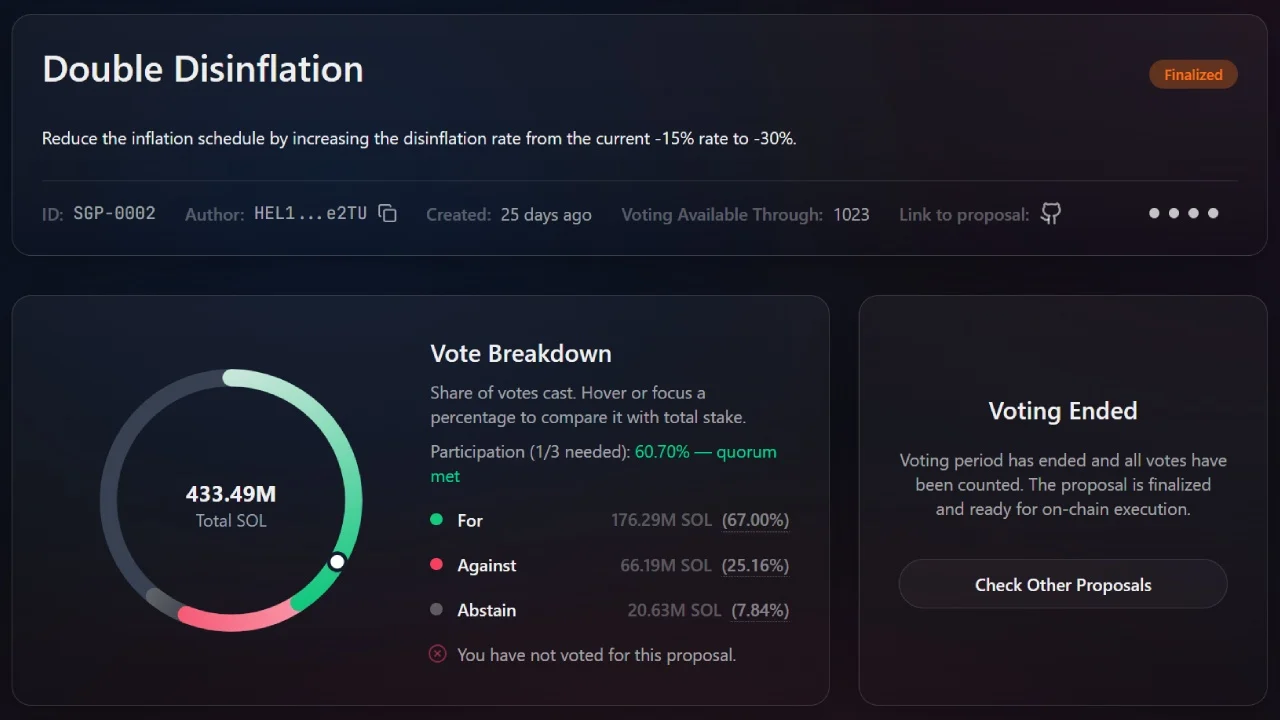
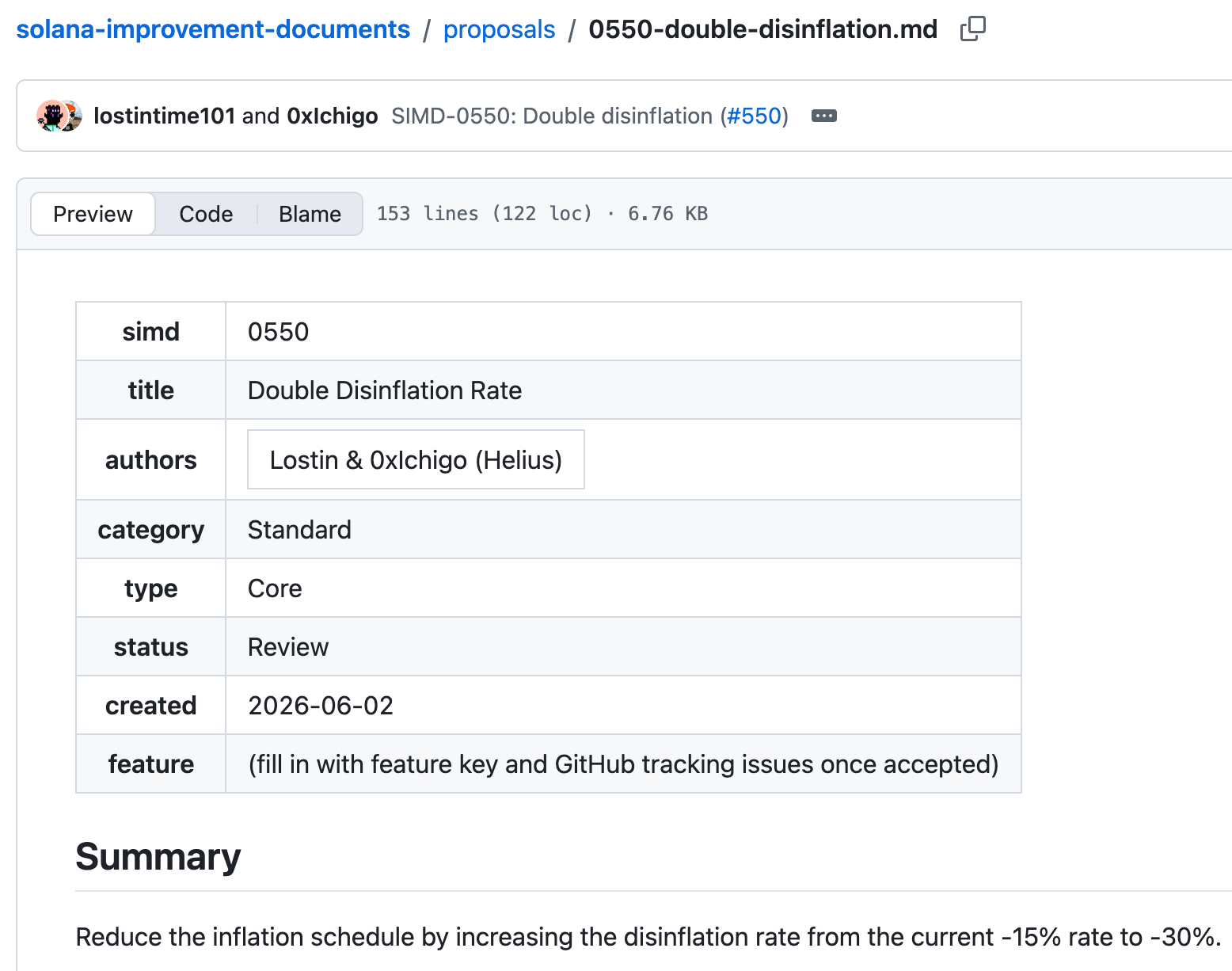
The drama centers on SIMD-0550, a proposal to double Solana’s annual disinflation rate from 15% to 30%. That single change, if it sounds dry, carries real weight: Helius estimates it would shave roughly 18.9 million SOL from projected issuance over the next six years, a supply cut worth approximately $1.5 billion at current prices.
What the vote actually decided
Solana’s inflation model works like a slow bleed. The network starts with a relatively high issuance rate, then reduces it by a fixed percentage each year until it hits a long-run terminal rate. SIMD-0550 proposes exactly that acceleration, moving the annual reduction from 15% to 30%. The practical effect is that fewer new SOL tokens enter circulation each year than would have under the old schedule, compressing total supply over the medium term.
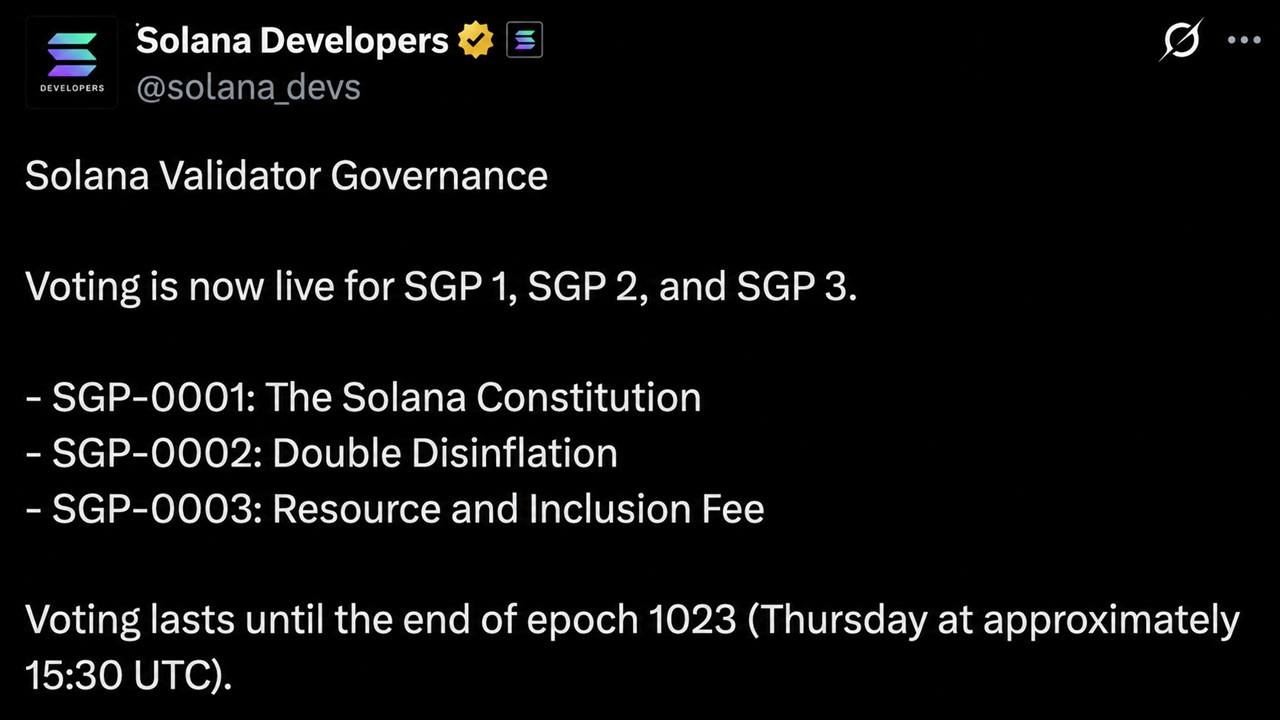
The proposal cleared the required two-thirds majority threshold as part of Solana’s inaugural binding governance cycle, which began in August 2026. Two additional proposals passed alongside it, one involving a fee-burn mechanism and another establishing a broader constitutional framework for the network. Epoch 1023, closing around August 27, 2026, marked the end of the voting window.