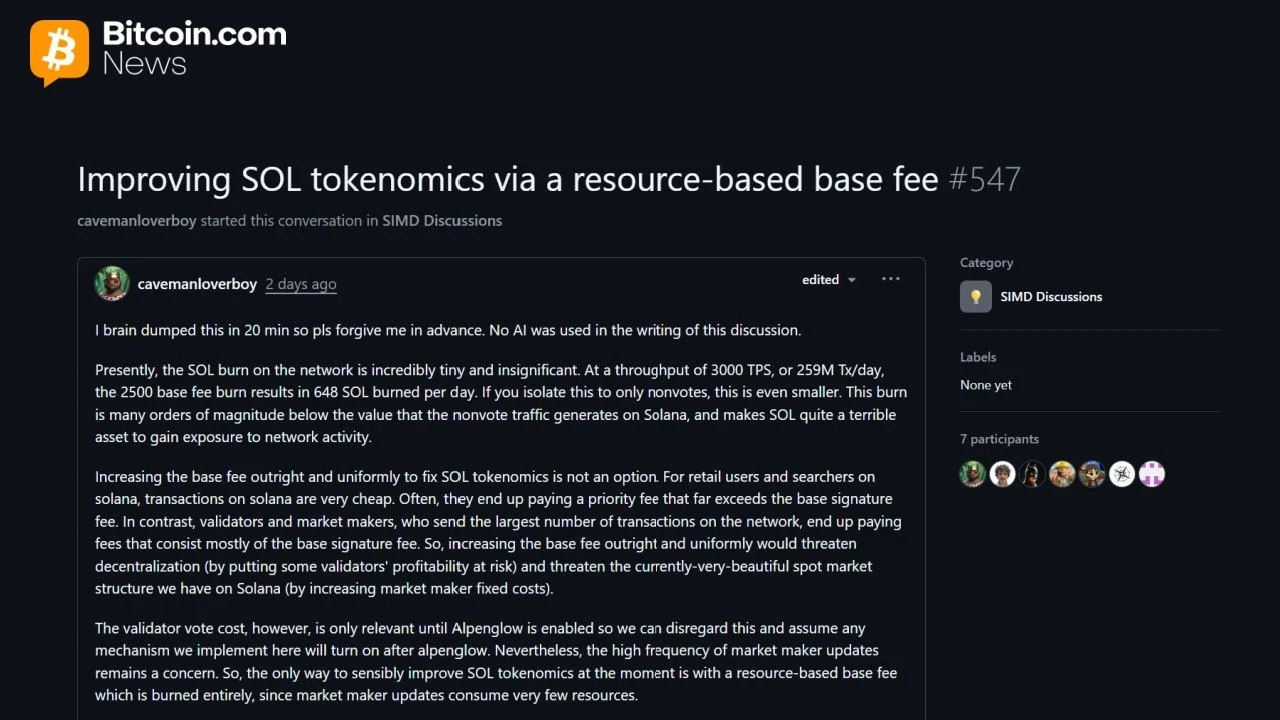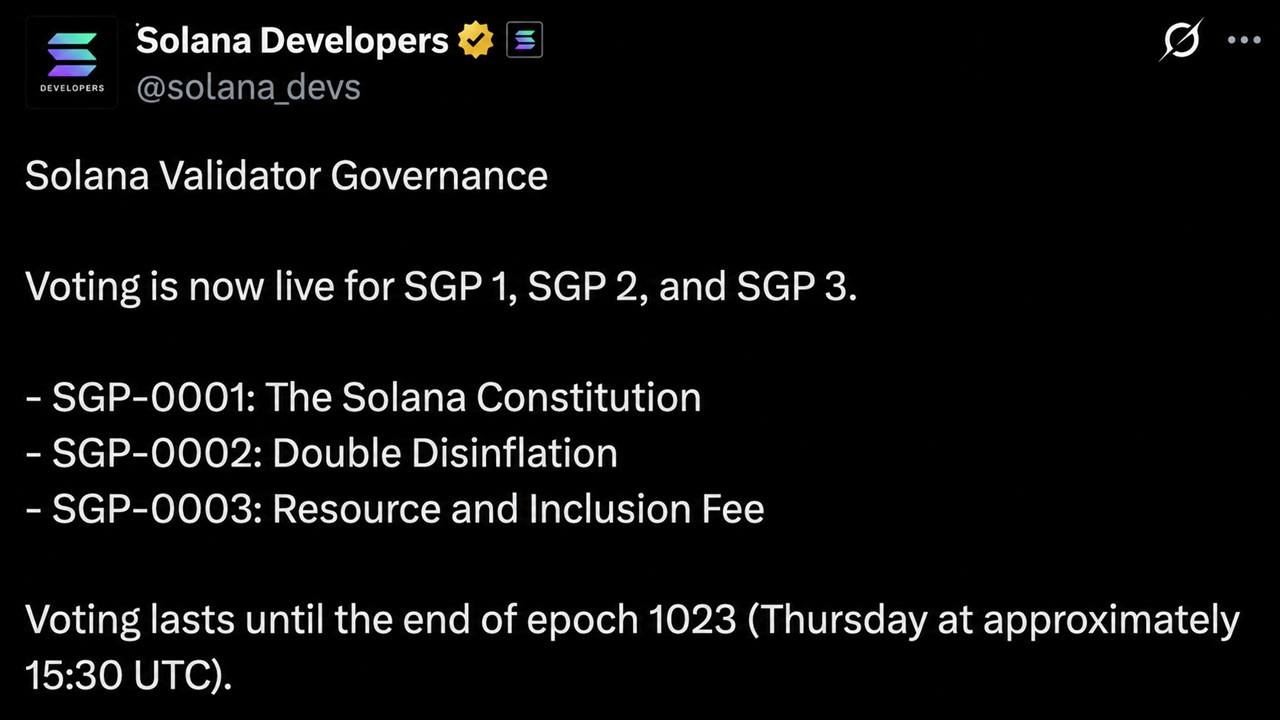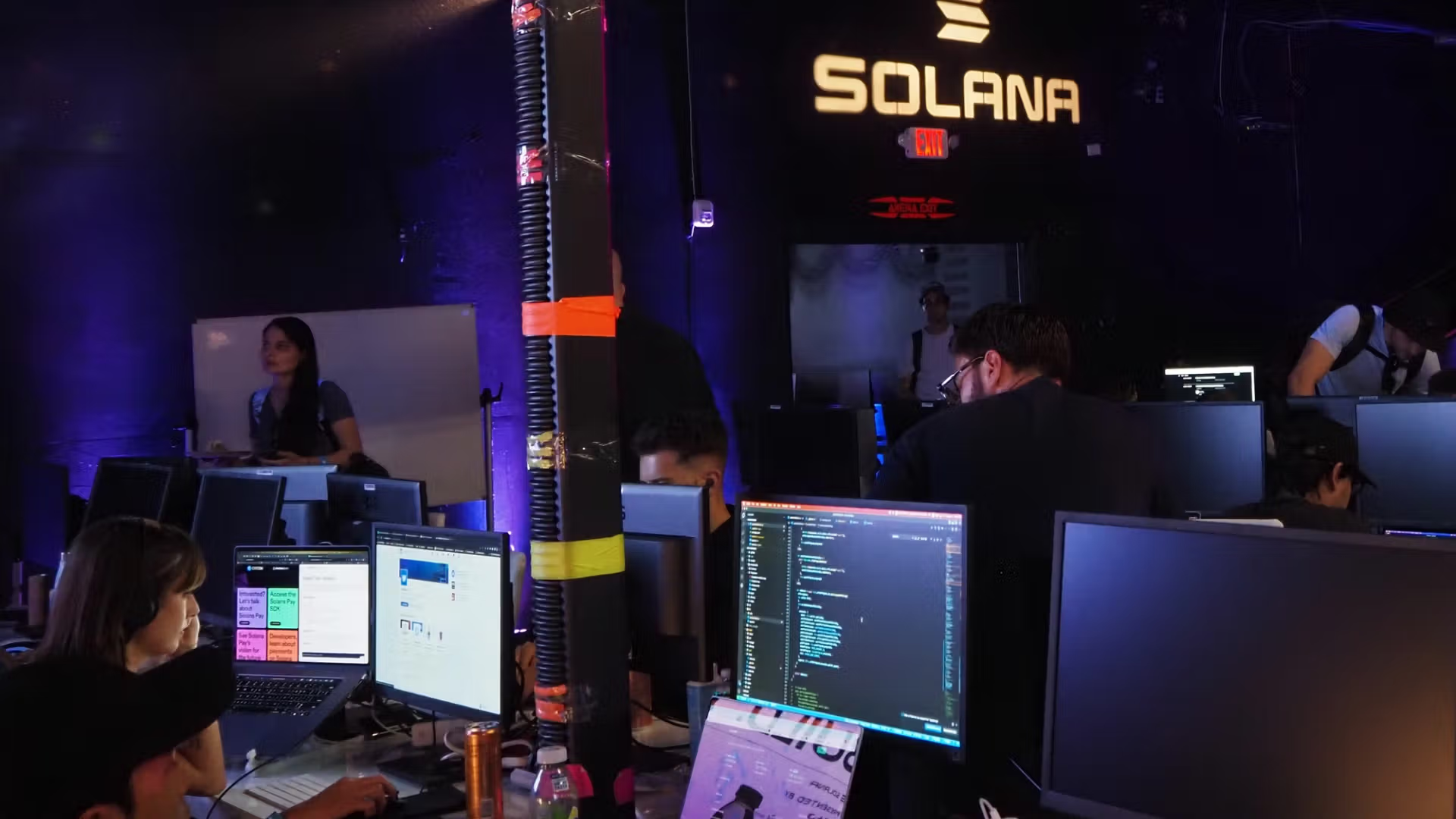
17 min ago2 min readA Solana Hacker House in Miami. (Danny Nelson/CoinDesk)SummarySolana validators are voting through Thursday on three proposals, with votes weighted by the amount of SOL staked.Two proposals would reduce SOL’s circulating supply by accelerating cuts to new issuance and burning part of each transaction fee.A third proposal would ratify a Solana Constitution and formalize the voting system already being used to decide all three measures.Solana validators began voting on three proposals — two of which would reduce the amount of SOL in circulation — on Sunday, with voting running until Thursday at about 15:30 UTC.The votes are weighted by how much SOL is staked, meaning locked up to help run the network. That gives the say to validators, the operators who run Solana's computers, and to ordinary holders who have handed their coins to a validator to stake on their behalf.Three new proposals are in progress on the Solana Validator Governance page. (Solana)Two of the three proposals address supply. SGP-0002 speeds up the rate at which Solana stops printing new SOL. The network currently cuts the amount it creates by 15% a year, and this would double that to 30%, reaching the floor sooner.SGP-0003 changes what a transaction costs and where the money goes. The fee would be split in two. A fixed portion goes to whoever produces the block, and a separate portion, scaled by how much computational work the transaction demands, is permanently destroyed. CoinDesk reported earlier this month that the change would increase daily burns from roughly 650 SOL to between 7,500 and 9,000 SOL, worth about $61,000 and $846,000, respectively, at Monday’s price.Less SOL created, and more of it destroyed, is why holders are paying attention, though neither proposal addresses demand.The final proposal, SGP-0001, does not touch supply but ratifies a document the network is calling the Solana Constitution, which sets out how decisions are made and switches on the software that runs those votes. Changes to Solana have until now been agreed informally among developers and the largest operators.All three votes are running simultaneously, which puts the sequence in an odd place. SGP-0001 is the proposal that formally establishes Solana's voting system, yet the two supply proposals are being voted on right now through that same system — and the results will be counted before anyone knows whether the rules governing the count have been ratified.SOL was trading above $96 early Monday, up 1.6% over the past 24 hours and 28% over the past week.12345678910Anvil: The Missing Collateral LayerAnvil: The Missing Collateral LayerAnvil is a shared on-chain collateral layer built on a programmable letter of credit: reserve assets as a guarantee -no loan, no interest, keep custody & yield.Jul 29, 2026Anvil is a shared on-chain collateral layer built on a programmable letter of credit: reserve assets as a guarantee -no loan, no interest, keep custody & yield.Why it matters:Anvil is a shared on-chain collateral layer built on a programmable letter of credit: reserve assets as a guarantee -no loan, no interest, keep custody & yield.View Full Report
New Solana vote could ramp daily SOL burns to $800,000 and slow new token creation
Two of the three proposals would reduce SOL supply growth by speeding up Solana’s inflation decline and raising daily fee burns from about 650 SOL to as much as 9,000 SOL.
505 words~2 min read