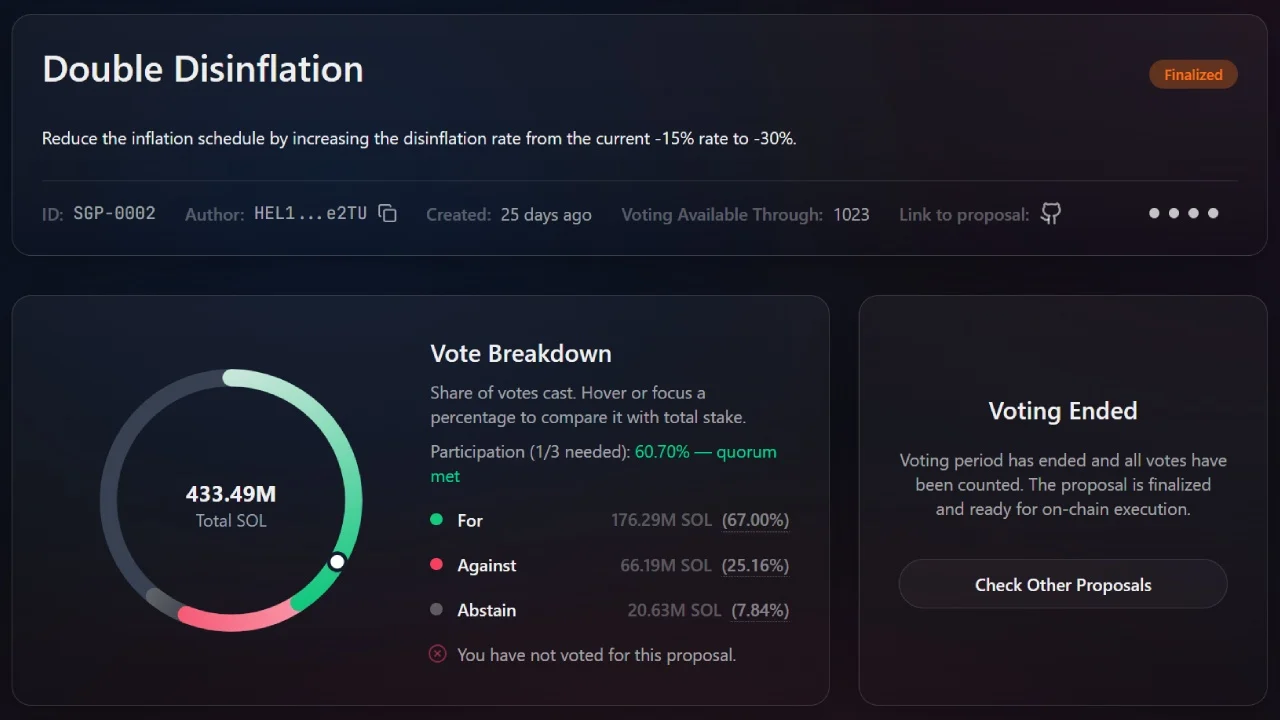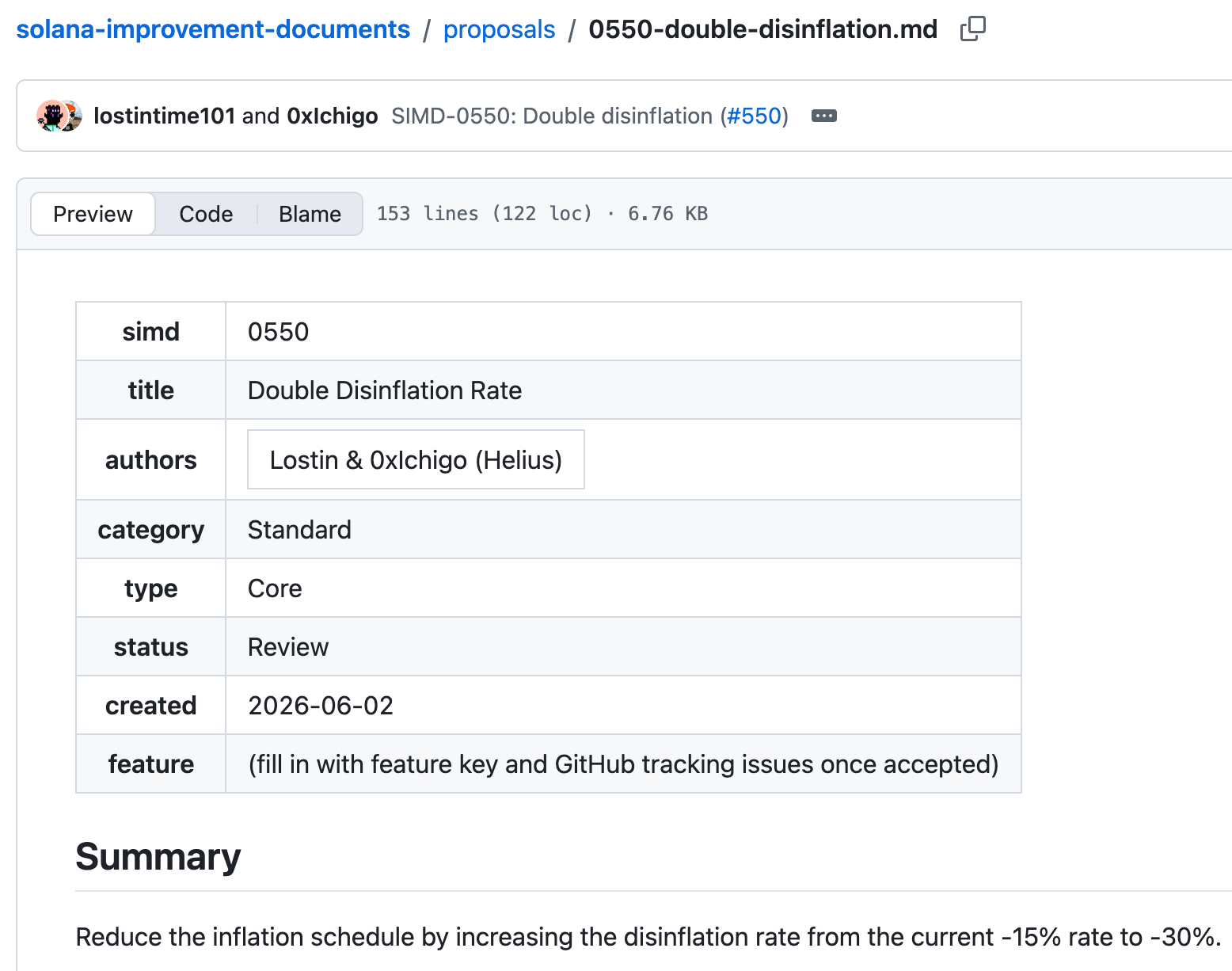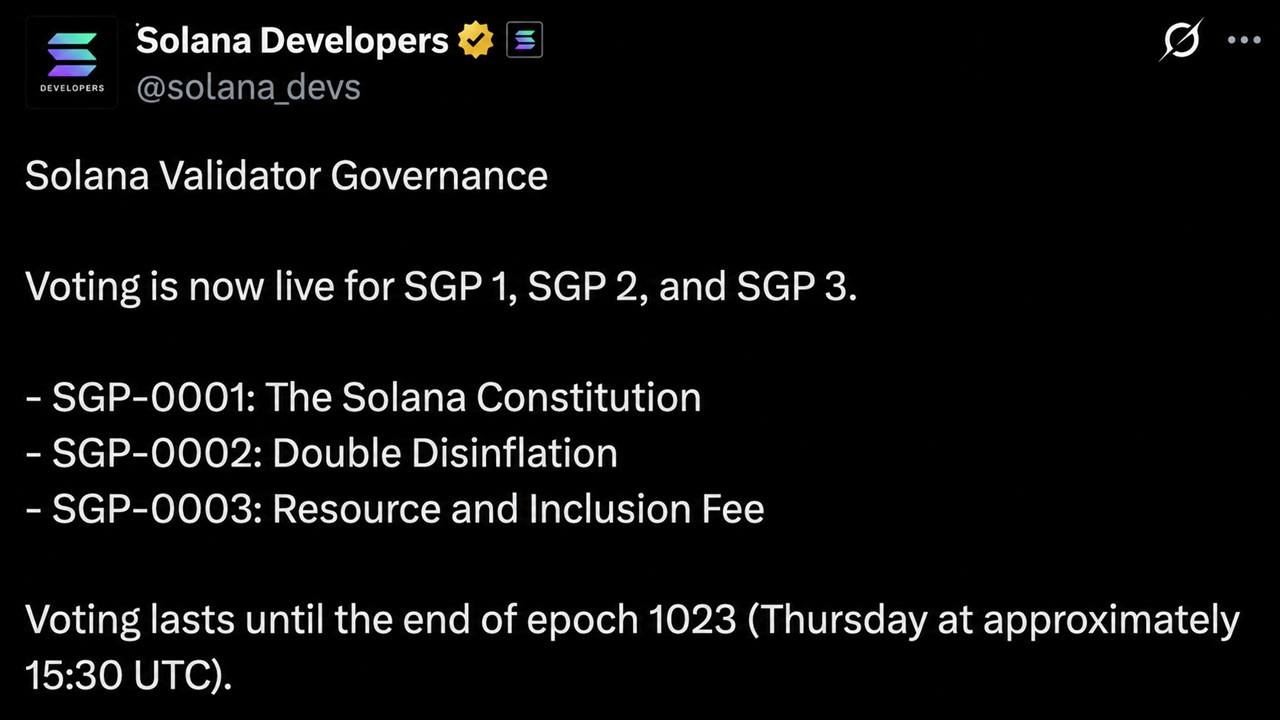
Solana’s inflation schedule just got a significant haircut. SIMD-0550, a proposal spearheaded by Helius Labs CEO Mert Mumtaz, has cleared formal governance after weeks of aggressive outreach to validators and stakeholders. The result: Solana’s annual disinflation rate doubles from 15% to 30%, meaning the network reaches its terminal inflation floor of 1.5% in roughly 2.8 years instead of the previously projected 5.7 years.
That timeline compression matters. It translates to approximately 18.9 million fewer SOL entering circulation over six years, a reduction worth about $1.51B at the time the projections were calculated. For a network that has faced persistent criticism about supply-side pressure on token price, this is the most consequential monetary policy change Solana has enacted through its governance process.
What SIMD-0550 actually changes
Solana’s inflation model works on a simple taper. Each epoch, the network’s inflation rate decreases by a fixed percentage, gradually approaching a terminal floor. Before SIMD-0550, that taper rate was set at 0.15, or 15% annually. The proposal doubles it to 0.30.
The practical effect is a 2.6% lower total supply trajectory over the coming years. Fewer tokens minted means less dilution for existing holders and less sell pressure from validator rewards hitting the open market. Solana’s current inflation rate sits well above 1.5%, and the original schedule wouldn’t have brought it to the terminal floor until around the first half of 2032. Under the new parameters, that arrival moves up dramatically.