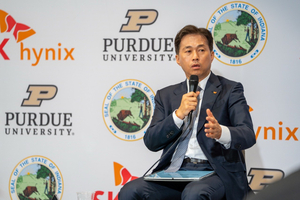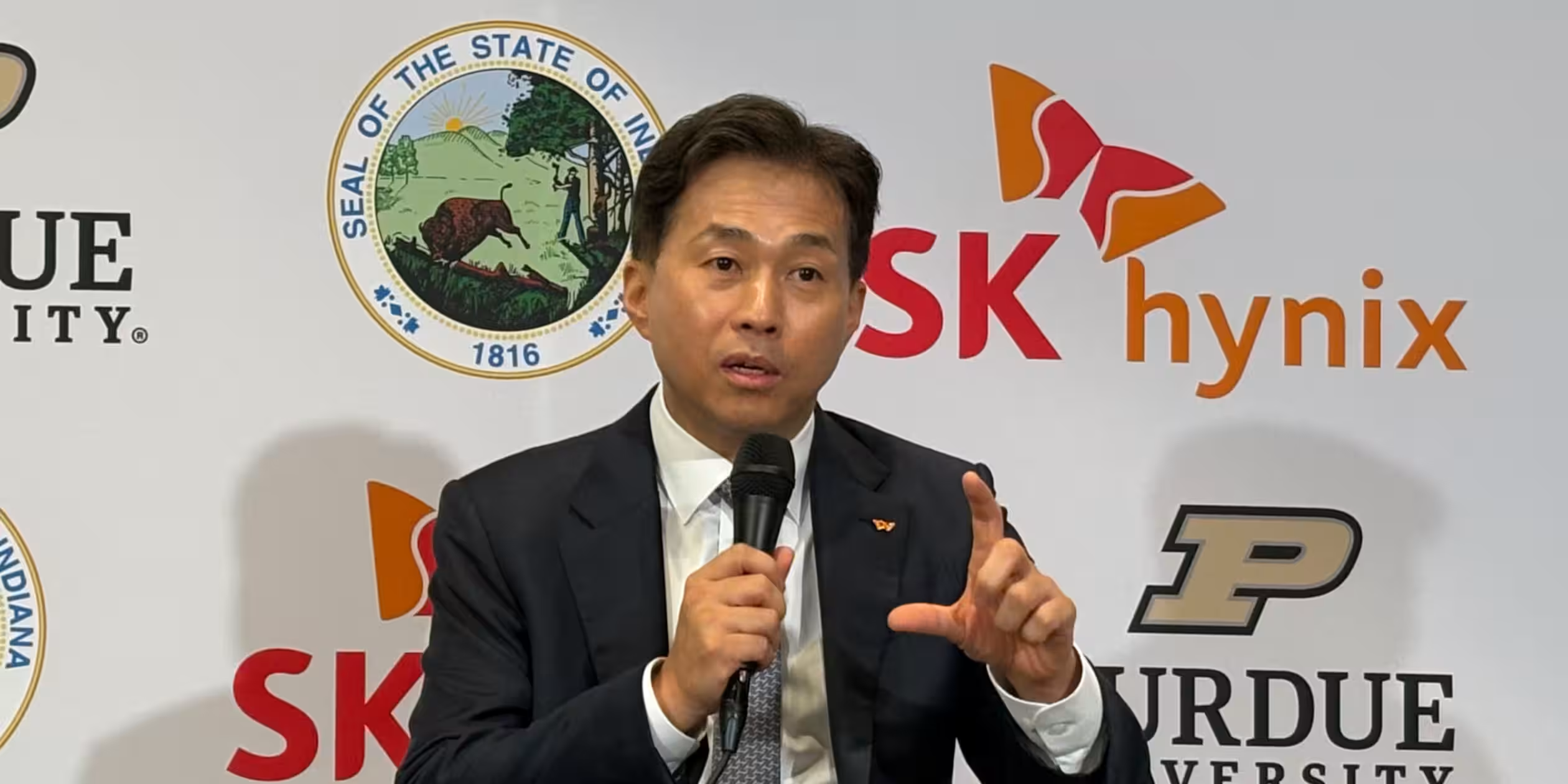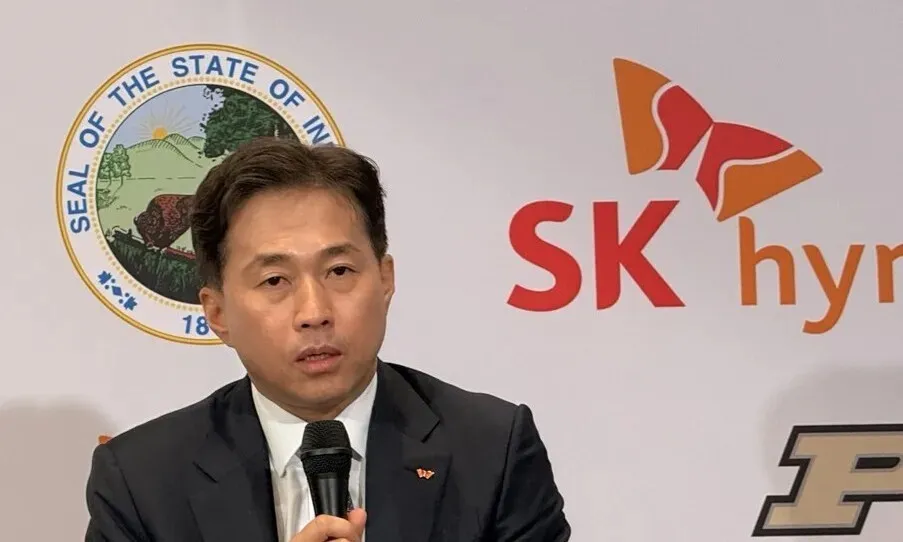
SK Hynix President and CEO Kwak No-jung speaks to reporters in West Lafayette, Indiana, on Aug. 27, 2026. (Kim Won-chul/Hankyoreh)
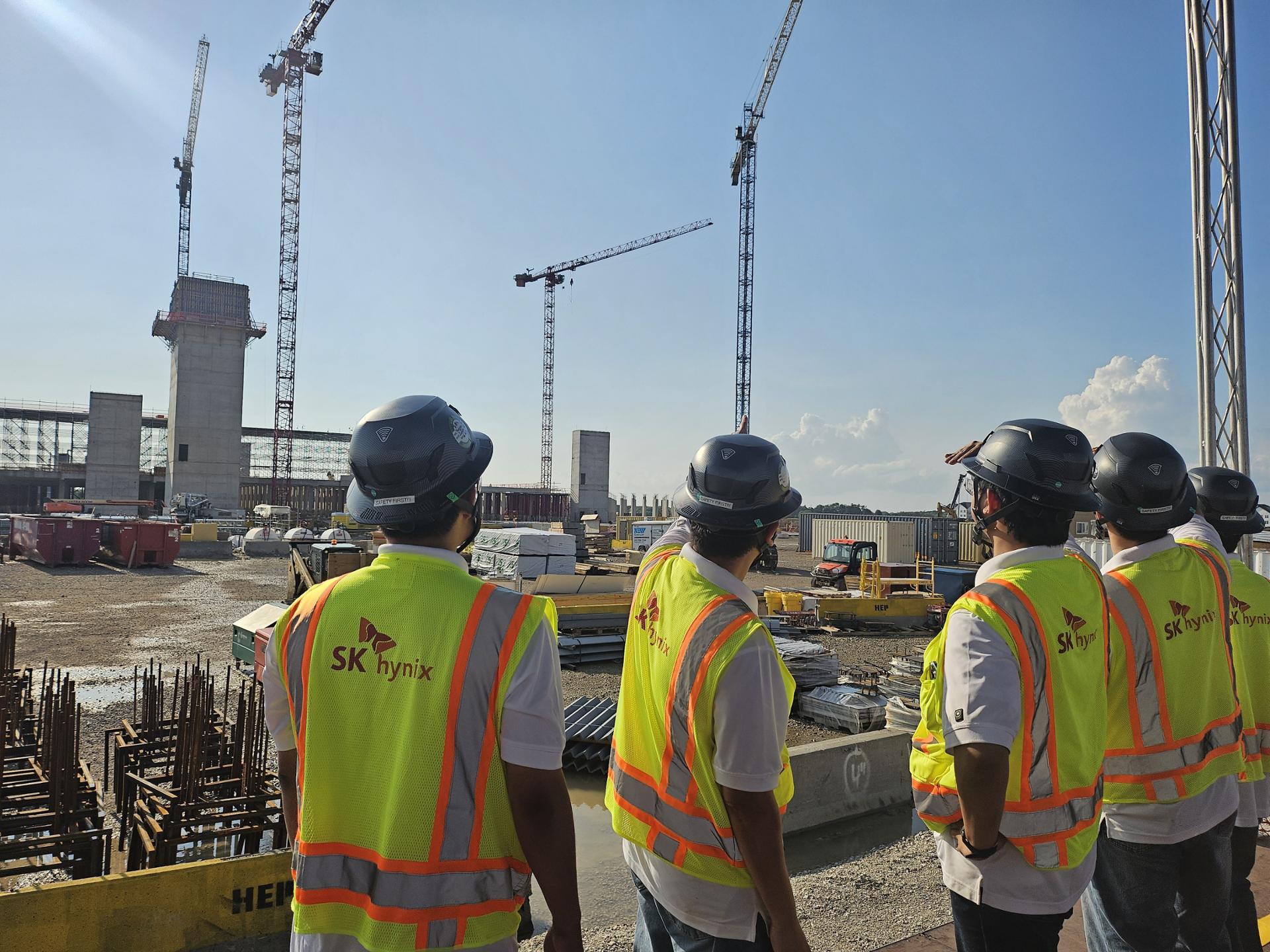
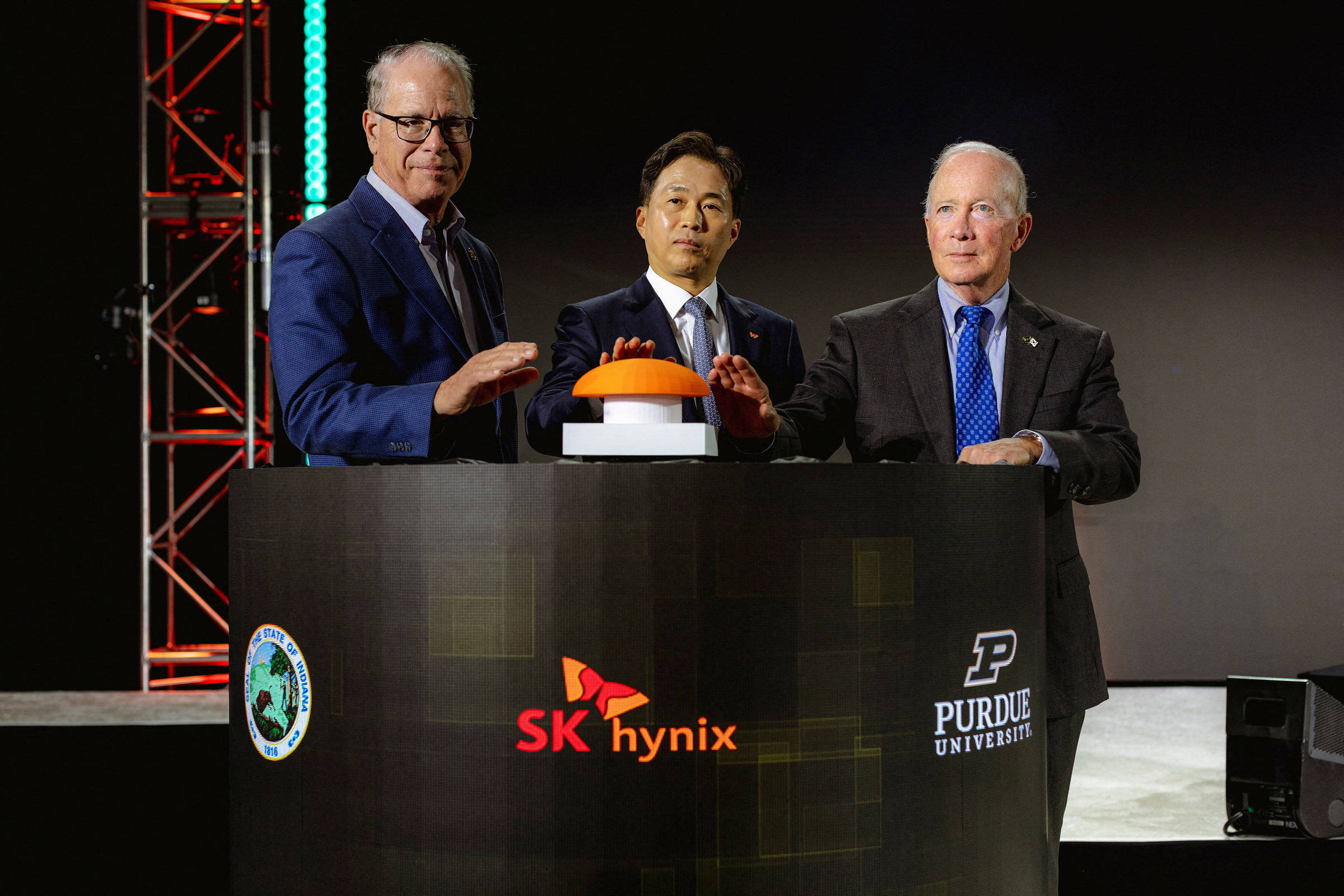
SK Hynix CEO Kwak Noh-jung on Thursday said the memory semiconductor shortage due to the spread of artificial intelligence will last through the end of 2030.He also left open the potential for more investment in the US given the latter's desire for chip companies to build front-end manufacturing facilities in America, but said that no specific candidate sites had been selected or investment plans finalized.At a news conference in West Lafayette, Indiana, after the groundbreaking ceremony for his company's Indiana fab, Kwak said this in answering a question on how long he expected the memory shortage to continue. His response was that while nothing is certain, no clear signals indicated a downturn, adding that the company expects the situation to “continue to the end of 2030."He also gave an optimistic projection for the post-2030 memory market, saying the next downturn will be different from before.“In the past, the memory business was essentially 100% commodity,” he said. “It means that as every chipmaker increased the volume and we competed in the same market, we could not properly forecast the demand,” he said, which made it “not easy” to adjust the output volume. But AI memory chips, including HBM, he added, are evolving into customized products requiring collaboration with clients from the early stages of product development."In the case of HBM, we need much more time to adjust chips inside our customers’ systems to maximize performance,” he said, noting that this allows earlier prediction of market demand than before."This means that even if a downturn is coming, I think it will not decrease sharply. Instead of that, [demand will] decrease slowly, or even plateau,” he said. “I don’t worry,” he said of what happens after 2030.