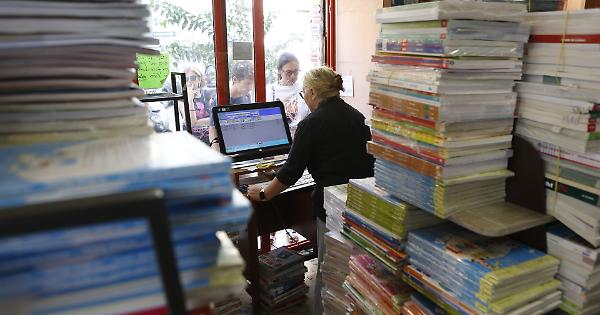
According to a survey published by Zurich, the cost of sending a student in Ireland to college in 2026 is €15,785 per year for those who live away from home. And €6,846 for those who live at home.The TU Dublin cost of living guide for 2026/27, meanwhile, says students living away from home can expect the cost of living to range “from €1,320 to €2,214 per month, depending on the length of stay and the type of accommodation chosen. While those living at home “can expect to spend €845 per month, or approximately €7,612 per year, with food and general living costs accounting for most expenses”. The costs are not insignificant and vary from student to student depending on circumstances and course. Students and families are feeling the bite.The costs of attending college are “monumental” for students, according to Enzo Crothers, president of UCD Student’ Union. “Students feel as though the odds are stacked against them year on year. And it’s only getting worse”.Jobs for students undertaking a full-time degree are now a necessity, he explains, irrespective of grants or parental support. “Most are working part-time during the semester, and are working full-time off semester as well.” And this is taking a toll on students and how they experience college life.“Students are expected to hold down a full-time degree, a part-time job, while still maintaining a social life. Students are routinely told these are meant to be the best years in your life. And yet they flash before your eyes, essentially, with the workload that you’re expected to keep up just to even afford college”.The very different demographics of the student population influence many of the student costs in varied ways, Crothers says. “There’s a distinction to be made. For students who are paying for rent, obviously rent is extortionate. And everyone is feeling that across the country. But students especially”.Accommodation on UCD campus is particularly expensive, he notes. “It’s the most expensive student accommodation in Ireland …You’re talking up to €1,300 a month in some cases. It’s nothing more than a cash grab in a lot of cases”. UCD Student' Union president Enzo Crothers says jobs are a necessity for students undertaking a full-time degree , irrespective of grants or parental support. Photograph: iStock “Then you also have a case of students who aren’t fortunate enough to be able to rent and they’re commuting each way, hours on end, every day. And that’s eating into more of their time – whether that’s work, study, their social life,or, in a lot of cases, their sleep as well, which is having a seriously negative impact on people.”Food also comes into the equation, he says. Crothers himself commuted his “entire way through college”, from Meath and Wicklow. “You’re either forced to bring in three meals a day with you … or you’re buying lunch and dinner out, which stacks up, especially when you’re in Dublin.”Students are working full-time jobs. They’re finishing college at five o’clock in the evening and then they’re going straight to work and then working double shifts at the weekend— Erin FoleyIncreasing fuel prices and public transport costs, are also a factor. Public transport in the capital “is very different to public transport for people who are commuting from outside of Dublin”, he says.Then there are the incidental expenses, the unavoidable and unexpected. “I don’t think it’s controversial to say that we’re living in an age of technology now, and a laptop is absolutely essential for students. If you’re buying one that’s going to last you for a four-year degree, you’re talking about spending €500 … that’s a serious amount of money for families and students. About a year ago my laptop broke, and I had to buy a new one. And that’s very much a shock to the budget for the year.” He adds: “There’s a perception from older generations that students are spending a lot of their money on drink. I can tell you, even if we were, you wouldn’t be getting very far with it.”The student contribution fee of €2,500 is a burden on all families, Crothers feels. “The idea that education in any form has to be paid for goes against any society’s moral standing, in my opinion. Education is a public good. It should be treated like a public good.”Transport to and from college can be a big cost and long commutes can eat into students' time SETU Student Union president Erin Foley describes the costs of going to college as “astronomical”, to the point that some families are being forced to make a decision about which of their children can go to college in a given year.Contribution fees are a significant burden, not only on students, but on students’ families, she says. For families with siblings close in age, having two or three students in college at the same time can prove an impossibility. It becomes a case of “you’ll have to wait another year, unfortunately – sorry. Your sister’s in third year. She’s got one year left. I want to pay for her first and then you can go in the next year,” Foley says. “Putting it [the contribution fee] back up to €2,500 has absolutely ruined students and some students are dropping out because of it.“The cost of accommodation alone; fees. [And] that’s not including all the rest of your bills, your food, transport. College students are working full-time jobs. They’re finishing college at five o’clock in the evening and then they’re going straight to work and then working double shifts at the weekend. That is the reality for students.”Of her own situation, Foley says: “I was missing lectures the whole time, just trying to put myself through college, because the cost of it is too high.”Like Crothers, she feels the college experience has completely changed for students. “With the cost of accommodation, students are driving. Someone that I was in college with for three years drove from Carlow every day down to Waterford because there was no accommodation he could afford. He was travelling two, three hours a day, with traffic, just to get to his lectures. He’d have to leave early then to go to his job. “It doesn’t feel like college is for students any more. It just feels like something the can include in statistics to say, ‘yes, we had this many students’.”David Malone: 'Sit down with them. Do an inventory of what they already have. Can they use second-hand books?' David Malone, chief executive of the Irish League of Credit Unions, says college costs can be a real pressure point for students, particularly when accommodation is involved. “We have heard that some of the monthly costs of having a student at college can be upwards of €2,200 … that’s a huge amount of money.”Even the costs of living at home “can be very sizeable”, he says. “Mobile phone, clothes, books, class materials, travel, food. All those things add up.”Credit unions provide bursary and scholarship opportunities for students, says Malone, as well as loan options for students. And there are ways to try to manage the college costs as a family, he adds.One tip he recommends is “involving the students in the financial planning themselves … Sit down with them. Do an inventory of what they already have. Can they use second-hand books?”[ Ireland’s most unusual and intriguing third-level coursesOpens in new window ]He also says there’s a discussion to be had around students saving some of their summer job income to help contribute to the costs. “You’re putting aside small amounts, especially with the upfront costs of the new term.”Parents shouldn’t feel guilty about needing to involve the student in contributing towards the costs, Malone says. “It’s not just the parents’ responsibility. It also educates the student around the value of money at an early stage. And that they understand the choices they’re making.”Another important conversation is “to agree who’s paying for what upfront as well”, Malone advises. “There have to be some choices made as to what’s possible and what’s not possible.”Shopping lists every week can help with managing food costs, he says. “Planning ahead is one of the big messages,” including looking at things such as subscriptions, phone and utility providers for the best deals.
Cost of college: How much can you expect to pay for third-level education in Ireland?
Rent, food, travel, books, laptops and the €2,500 contribution fee add up to a considerable amount for students and families
1,371 words~6 min read