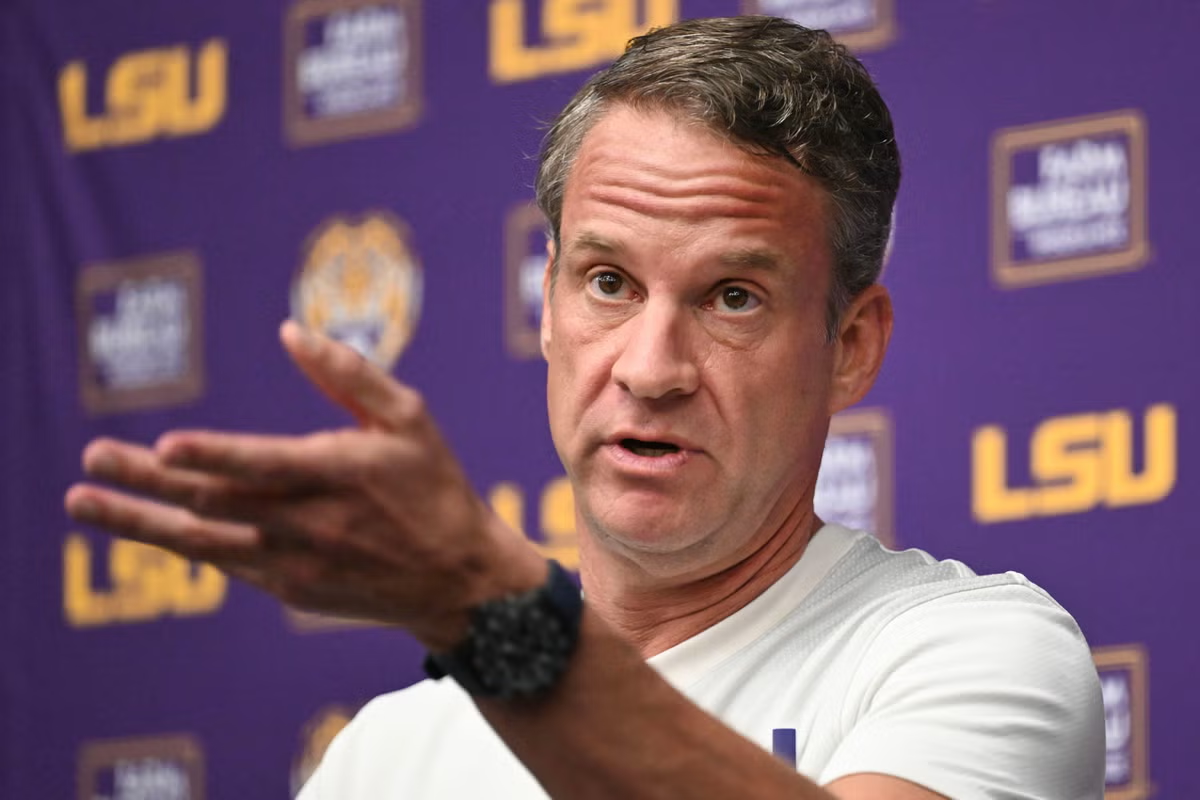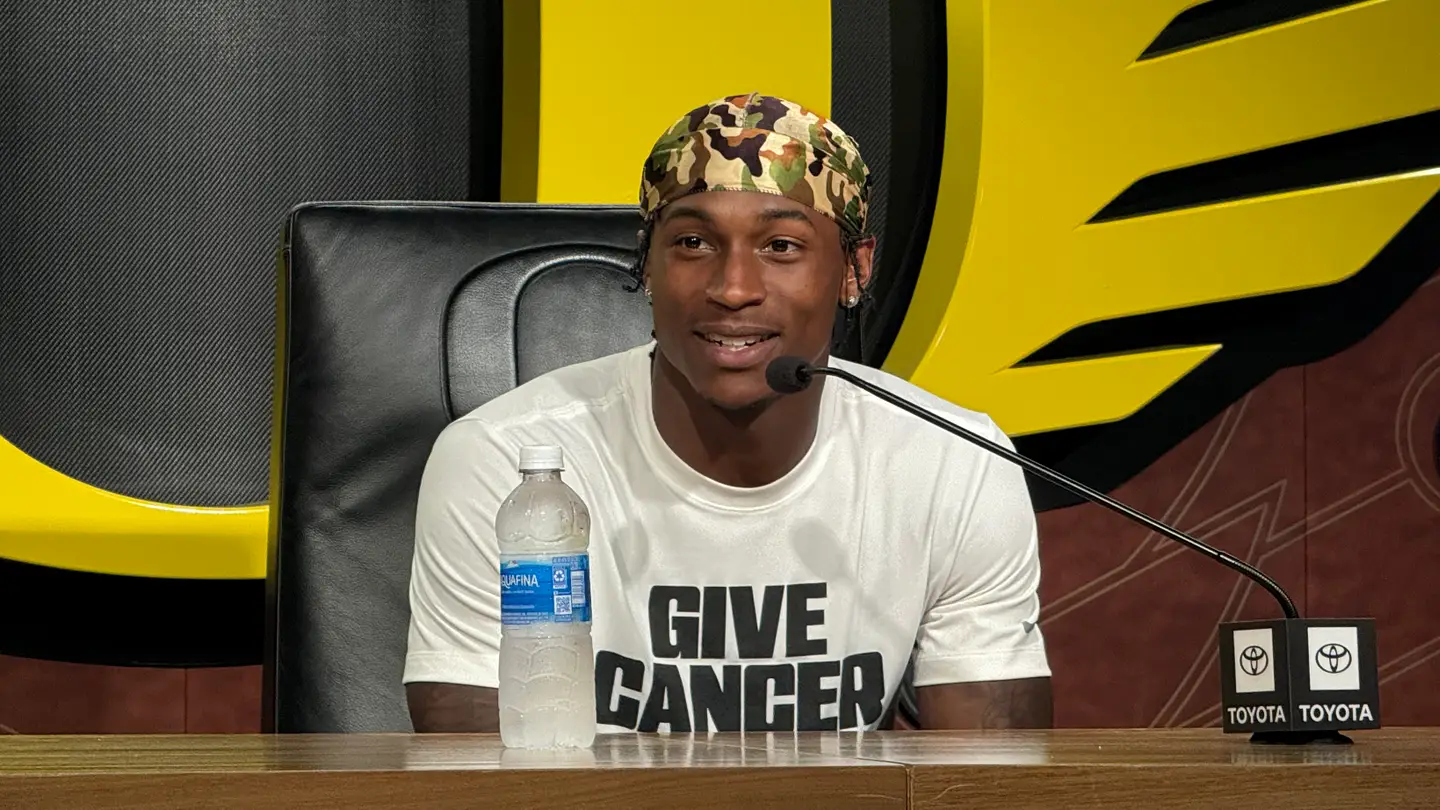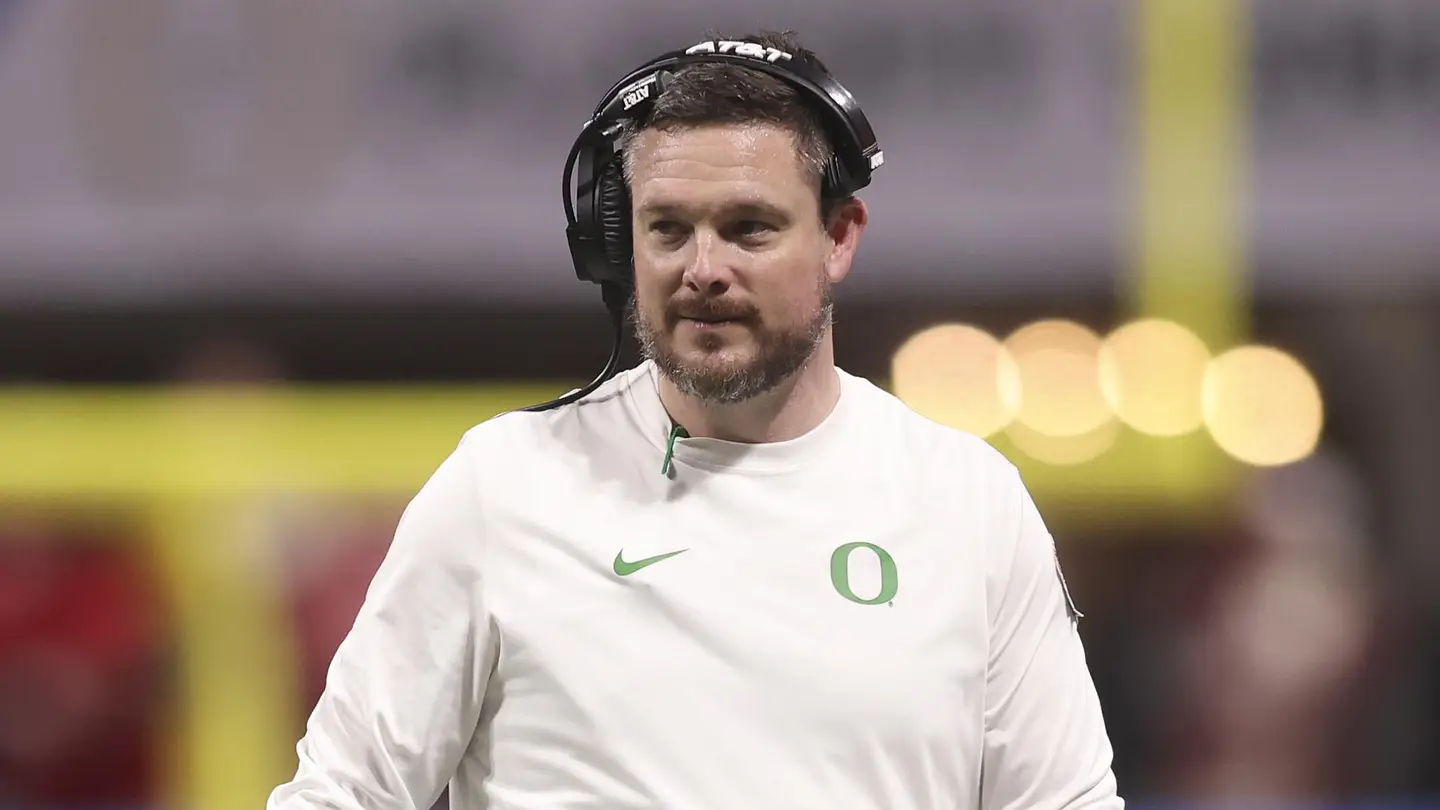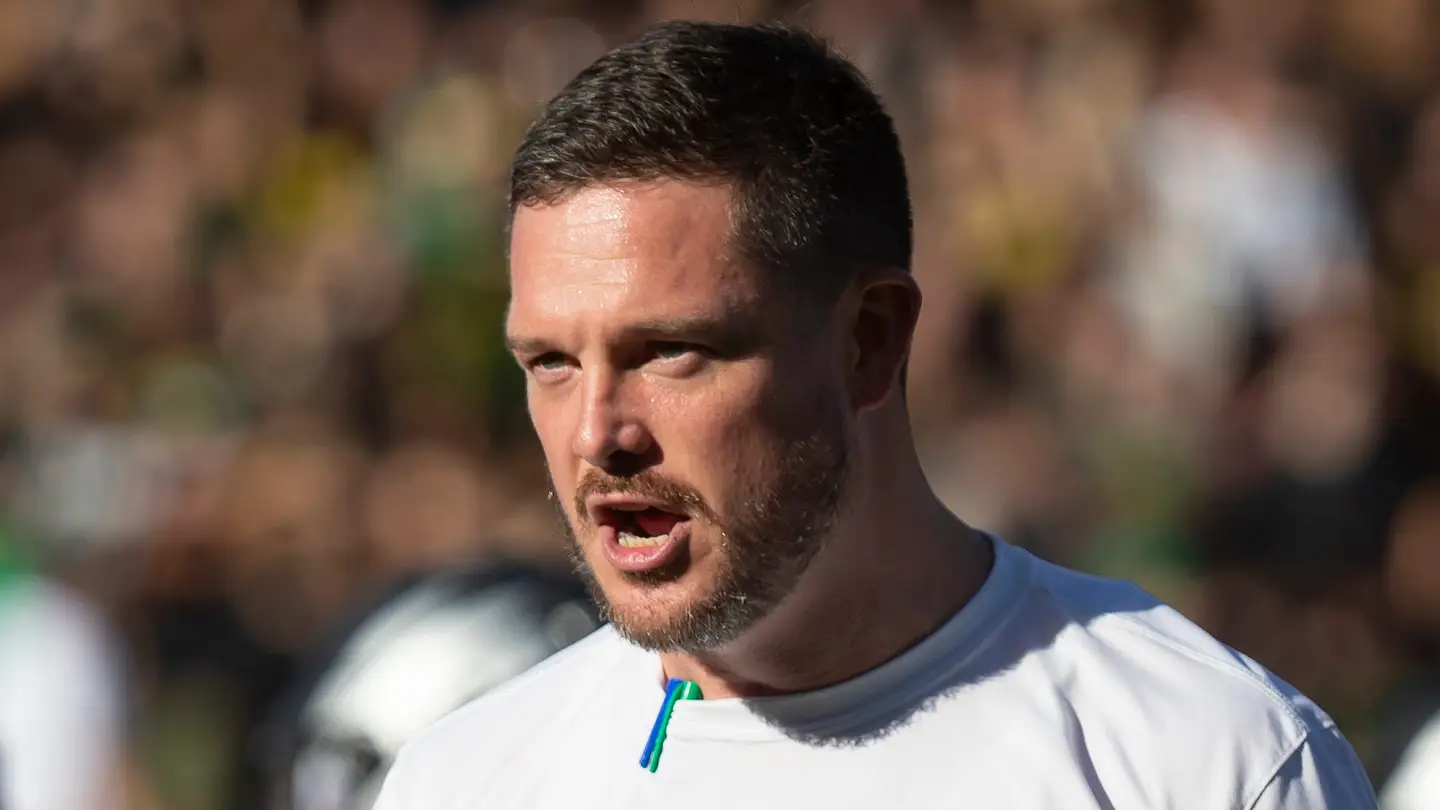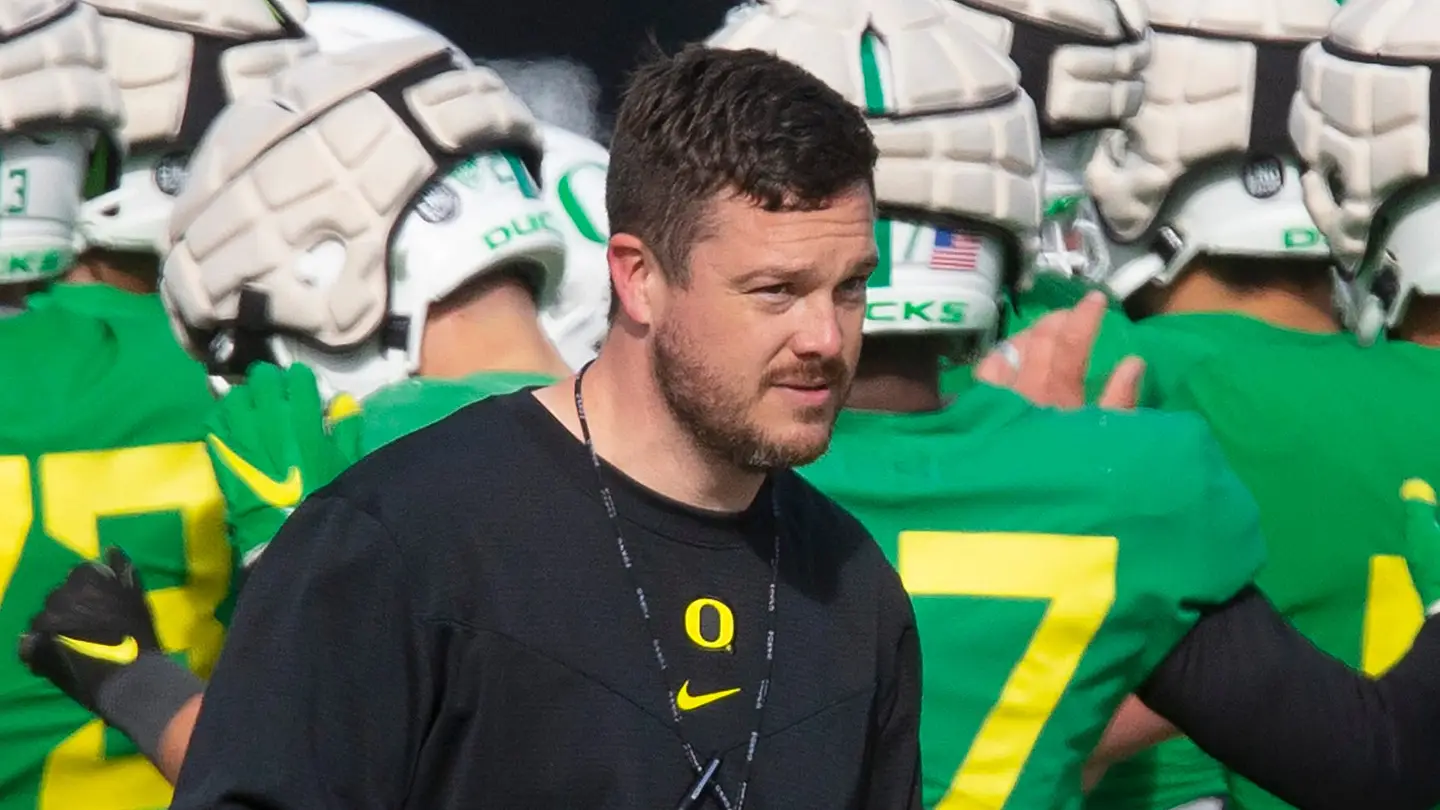
Since the NCAA Division I governing board voted to approve the five-for-five new eligibility structure for the 2026-2027 season in June, several unintentional consequences floated to the top of headlines, mostly including current NFL players finding their way back onto college rosters.With a flurry of legal suits popping up across the nation to allow those now professional athletes to return to college, Oregon Ducks coach Dan Lanning went viral for his staunch take on the matter, and the Big Ten Conference is now putting their foot down by stating they will not accept returning professional athletes to their college teams.Oregon head coach Dan Lanning speaks during a press conference on Aug. 15, 2026, at the Hatfield-Dowlin Complex in Eugene, Oregon. | USA TODAY Network via Reuters ConnectThe Big Ten Says "No" To NFL ReturnersThe league announced Tuesday that any athlete who declared for the NFL Draft and did not back out of the process, appeared on an NFL roster, or signed a contract with a professional team cannot come back and play for the Big Ten and it's teams. If a team defies the act and brings back a former professional player, the head coach of the violating team will be suspended for 50 percent of the teams' remaining games with an undisclosed fine as well."The conference continues to evaluate potential rules restricting professional athletes in other sports from conference competition," said the official conference statement on the matter.The Southeastern Conference (SEC) also announced their own ban towards returning NFL players shortly after the Big Ten released their statement. The NCAA has also stated players seeking to return to college ball has a "destabilizing" effect on the sport as a whole, opening up the "Pandora's Box" for athletes that played four years coming back for a potential fifth season.Oregon coach Dan Lanning oversees the Oregon Spring Game at Autzen Stadium in Eugene April 25, 2026 | USA TODAY Network via Reuters ConnectEvan Stewart And Iapani Laloulu Back Up Dan LanningAfter a fall camp scrimmage, Lanning said that there was plenty of "negatives" involved in athletes returning to the college competition, pointing to the limited space on coach's rosters that could mean cutting a younger talent to accommodate for the returning former professionals. Not a coach to shy away from critiquing the current state of college football Lanning's comments since went viral, with multiple national outlets reporting on his take.On Monday, senior wide receiver Evan Stewart and senior center Iapani "Poncho" Laloulu shared their thoughts:"I think I'm with Lanning on that one," Stewart said. "I don't really agree with that too much. I think once you play your your years and try to prove yourself. I mean, we all got a limited amount of time, so I mean, once you get that time and you make that decision to go and you think you're good enough to go, you can't can't really turn back on it. That's how I feel, but yeah, that's how I feel on it."“Yeah, I mean that's a tough question because, like, it kind of sucks, like you said, for the younger dudes that's coming in from high school trying to get that spot and to play the game. Right now, I don't think I have an answer for that question, but yeah, it's kind of tough," Laloulu added.Nov 22, 2025; Eugene, Oregon, USA; Oregon Ducks wide receiver Evan Stewart (7) celebrates during the game against the Southern California Trojans during the first half at Autzen Stadium. Mandatory Credit: Troy Wayrynen-Imagn Images | IMAGN IMAGES via Reuters ConnectWhere the Eligibility Rule StandsThere may be some stagnancy on a few of those NFL departers' hopes to go back to university, as a 2-1 ruling by the U.S. 10th Circuit Court of Appeals on Friday temporarily halted the original judge's orders that would've granted thousands of athletes another year at the college level. However, several more lawsuits are continuing or being filed across the country to address the issue for interested athletes (most being 2022-2023 high school graduates trying to reclaim a fifth year in college after four years played by the previous eligibility rules).The argument for athletes trying to return to college ball, there's concerns around potential business and professional opportunities that they missed simply by going through the college system a year too early. The Friday ruling gives the NCAA the ability to get back to their original intentions, featuring a five year eligibility term that starts either when the athlete graduates high school and enrolls before their nineteenth birthday till their nineteenth birthday to guarantee a full five years.Oregon’s receiver Evan Stewart, left, quarterback Dante Moore and Dakorien Moore dance during an open practice session leading up to their first-round CFP game against James Madison at Autzen Stadium in Eugene Dec. 14, 2025. | USA TODAY Network via Reuters ConnectWithout RedshirtsAnother big factor in the five-year eligibility guidelines is the elimination of redshirts. This decision was made in an effort to ease the difficulty of coaches and staffs managing athlete redshirt designations."It does not pause because a student-athlete does not compete, transfers, sits out, changes teams or takes time away from participation," said the NCAA's article clarifying the rules.There's a chance teams like the Ducks may play younger athletes on the field just to get the most out of their eligibility, but this is also a rule to keep in mind when players in the future like Stewart also experience a season-ending injury, and how the potential litigation around seeking an extra year goes.Jan 9, 2026; Atlanta, GA, USA; An Oregon Ducks color guard member on the field prior to the 2025 Peach Bowl and semifinal game of the College Football Playoff against the Indiana Hoosiers at Mercedes-Benz Stadium. Mandatory Credit: Brett Davis-Imagn Images | IMAGN IMAGES via Reuters ConnectHow This Affects The Oregon DucksBasically, since it appears the Ducks were staunchly against the recent lawsuits opening the door up for returning players, the recent judgement by the Big Ten will likely have a minimal to zero impact on Oregon. However, programs that were planning on bringing back former NFL players (most famously the LSU Tigers) may have to switch their season's plans to accomadate the recent conference rule enstatement.It will be interesting to see if a conference (most likely a group five league) chooses not to ban the avenue for NFL talent, in hopes top players for smaller schools come back for one more year. As this is an ever-evolving story, only time will tell.Sign up to our free newsletter and follow us on Facebook, X and Instagram for the latest news. Add us as a preferred source on GoogleFollow
How Big Ten's Rule Change On Returning NFL Players Impacts Oregon Ducks
Since the NCAA Division I governing board voted to approve the five-for-five new eligibility structure for the 2026-2027 season in June, several unintentional c
1,105 words~5 min read