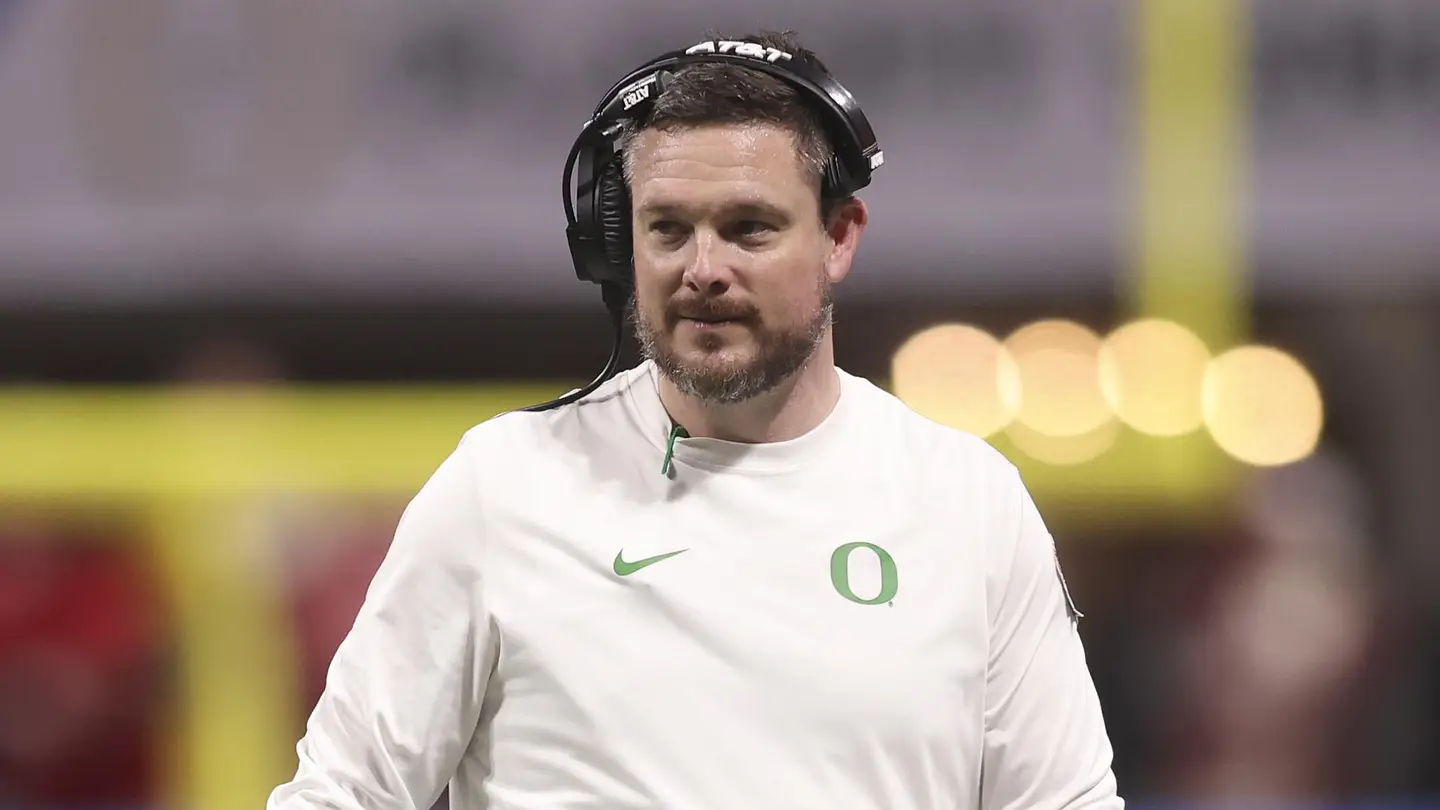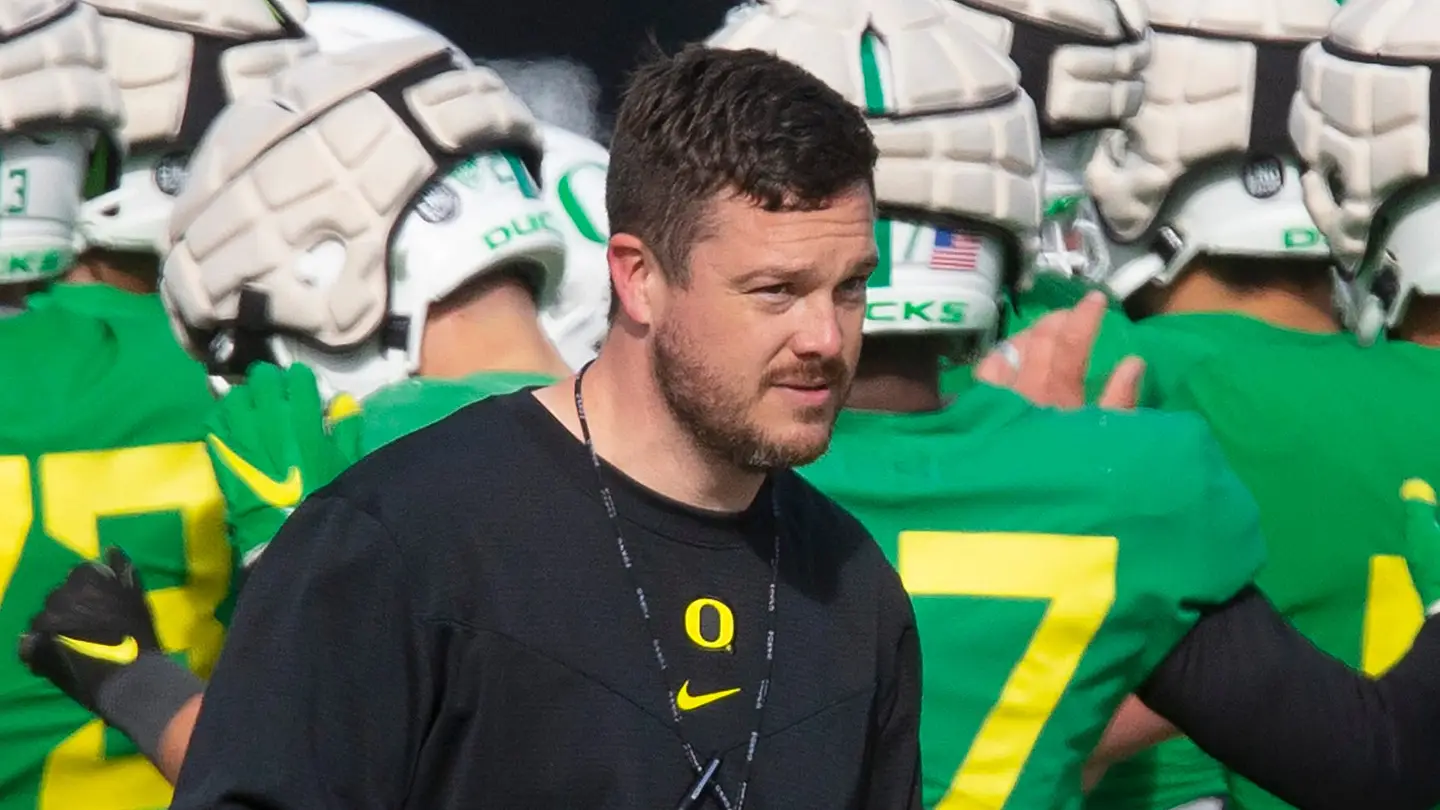
Back in late June, the NCAA's Division I Cabinet voted to greenlight a five-year, age-based eligibility structure in an effort to combat the complications around redshirt allowances. That means athletes out of high school will immediately be on that ticking clock, translating to (likely) more playing time earlier.Due to this recent change, programs across the nation will need to capitalize on their younger talent, and that includes the Oregon Ducks.Oregon head coach Dan Lanning as the Oregon Ducks host the Wisconsin Badgers on Oct. 25, 2025, at Autzen Stadium in Eugene, Oregon. | USA TODAY Network via Reuters ConnectKendre Harrison Shouted Out As Top Ducks Freshmen ProspectOne of the Ducks that might get some serious playing time and potentially excel, according to CBS Sports' Brad Crawford, is tight end Kendre Harrison. Crawford wrote about the Oregon football and basketball signee in his breakdown of the most exciting freshmen to watch in the Big Ten this year, with Harrison as the only representative from the Ducks.Only Michigan and Ohio State got multiple freshmen nods from Crawford, with the writer nabbing running back Savion Hiter and defensive lineman Titan Davis from the Wolverines alongside running back Legend Bey and wide receiver Chris Henry Jr. for the Buckeyes."As part of Oregon's offensive transition following Will Stein's departure to Kentucky as head coach, Harrison, along with others, learned what changes were being made schematically. With Dante Moore in charge, this passing game will still look like Oregon with subtle differences. Harrison is a plug-and-play athlete as long as he brings physicality as a multi-dimensional threat," wrote Crawford.Oregon tight end Jamari Johnson celebrates a touchdown as the Oregon Ducks face the Indiana Hoosiers in the Peach Bowl on Jan. 9, 2026, at Mercedes-Benz Stadium in Atlanta, Georgia. | USA TODAY Network via Reuters ConnectOregon Ducks' Tight End StandingsWith last season's stand-out Kenyon Sadiq departing the Ducks for the New York Jets via the 2026 NFL Draft, Oregon's tight end room now sits perched around junior Jamari Johnson. During his sophomore season with the Ducks after transferring from Louisville, Johnson put up 510 yards and three touchdowns off 32 receptions. Beyond Johnson, the only other older athlete in the tight ends room is defensive end turned tight end and Clemson transfer Markus Dixon, who registered 47 career snaps from scrimmage over 15 games in his two seasons with the Tigers.Beyond those two, Oregon's tight end room is full of fresh-faced talent. From Harrison, to freshman Penn State transfer Andrew Olesh, to freshman Dayton Raiola (bother to quarterback transfer Dylan Raiola), the Ducks are a tad stretched to find a definitive second-up for Johnson. Perhaps, that's where Harrison can rise to the occasion.Oregon tight end Jamari Johnson carries the ball after a catch as the Oregon Ducks face the Indiana Hoosiers in the Peach Bowl on Jan. 9, 2026, at Mercedes-Benz Stadium in Atlanta, Georgia. | USA TODAY Network via Reuters ConnectKendre Harrison Brings the Heat to EugeneIf the hype around Harrison comes to fruition, the freshman will be one of the top tight-end prospects brought in for the Ducks, as the class of 2026 athlete was pinned as the No. 15 overall player in 2026 by the Sports Center Next 300. The 6-7, 243-pound basketball and football standout brings a massive frame with the mobility and agility to develop into a force on the outside.Though his film does indicate Harrison isn't the swiftest of movers, his year-over-year improved route-running capability in terms of movement, despite not being the fastest, combined with his size, shows an athlete who could have an immediate impact on the field.Lucky for Harrison, the game's rules, Oregon's roster, and praise from analysts may cause the perfect storm to become an Oregon household name.Sign up to our free newsletter and follow us on Facebook, X and Instagram for the latest news. Add us as a preferred source on GoogleFollow
The Oregon Ducks Freshman Who Could Change the Offense
Back in late June, the NCAA's Division I Cabinet voted to greenlight a five-year, age-based eligibility structure in an effort to combat the complications aroun
646 words~3 min read