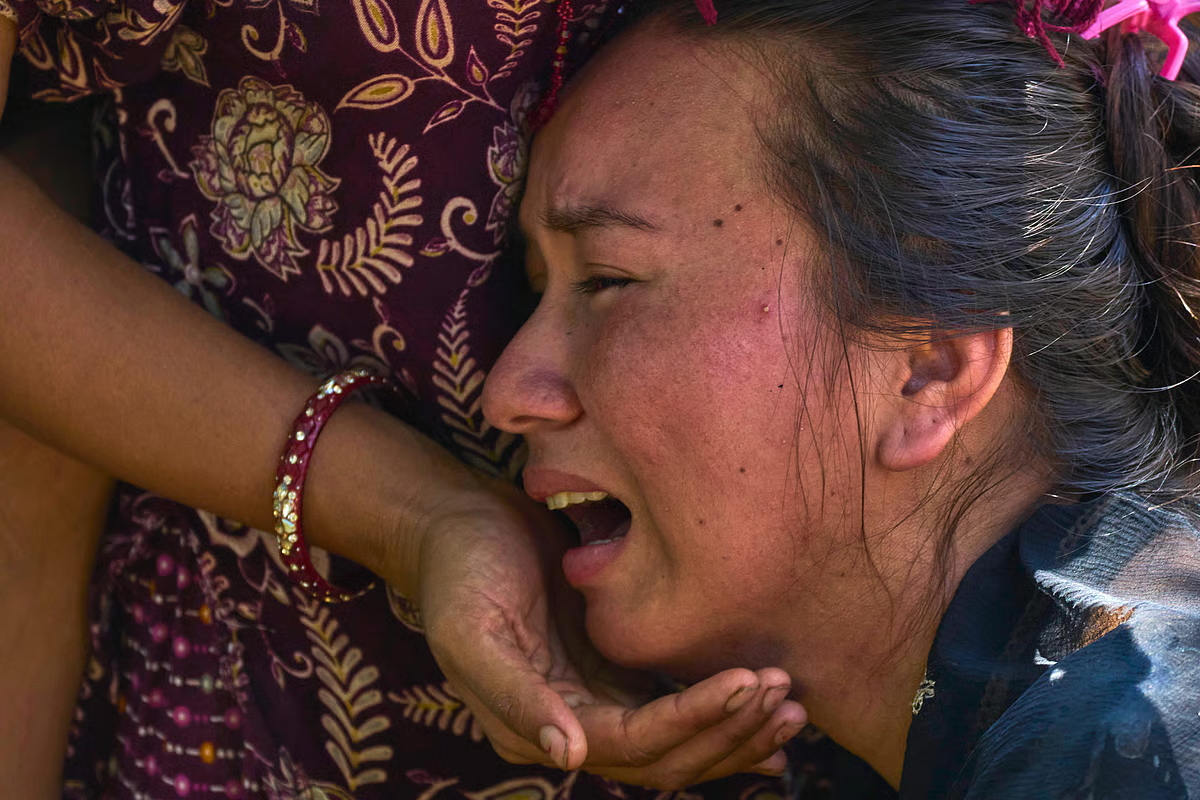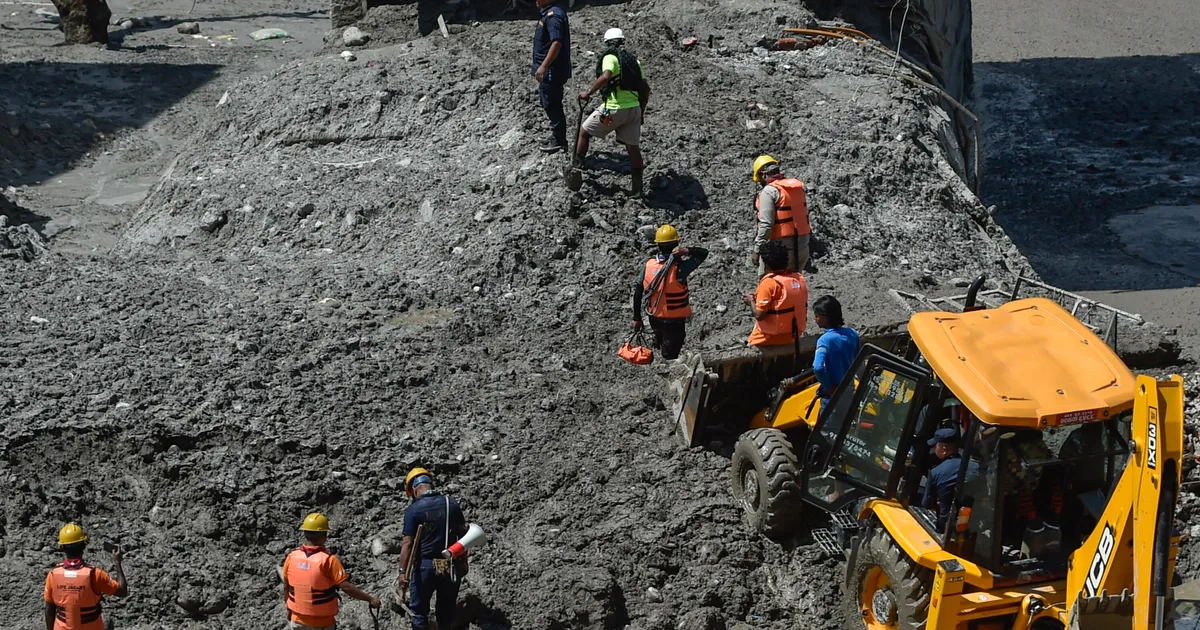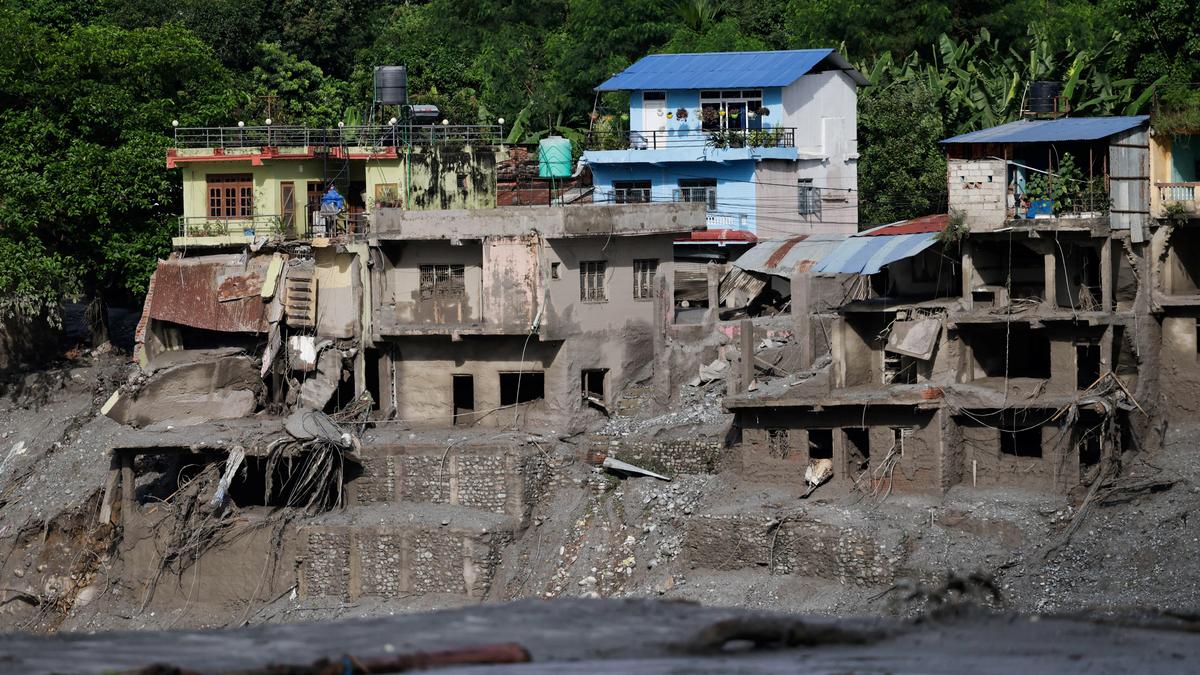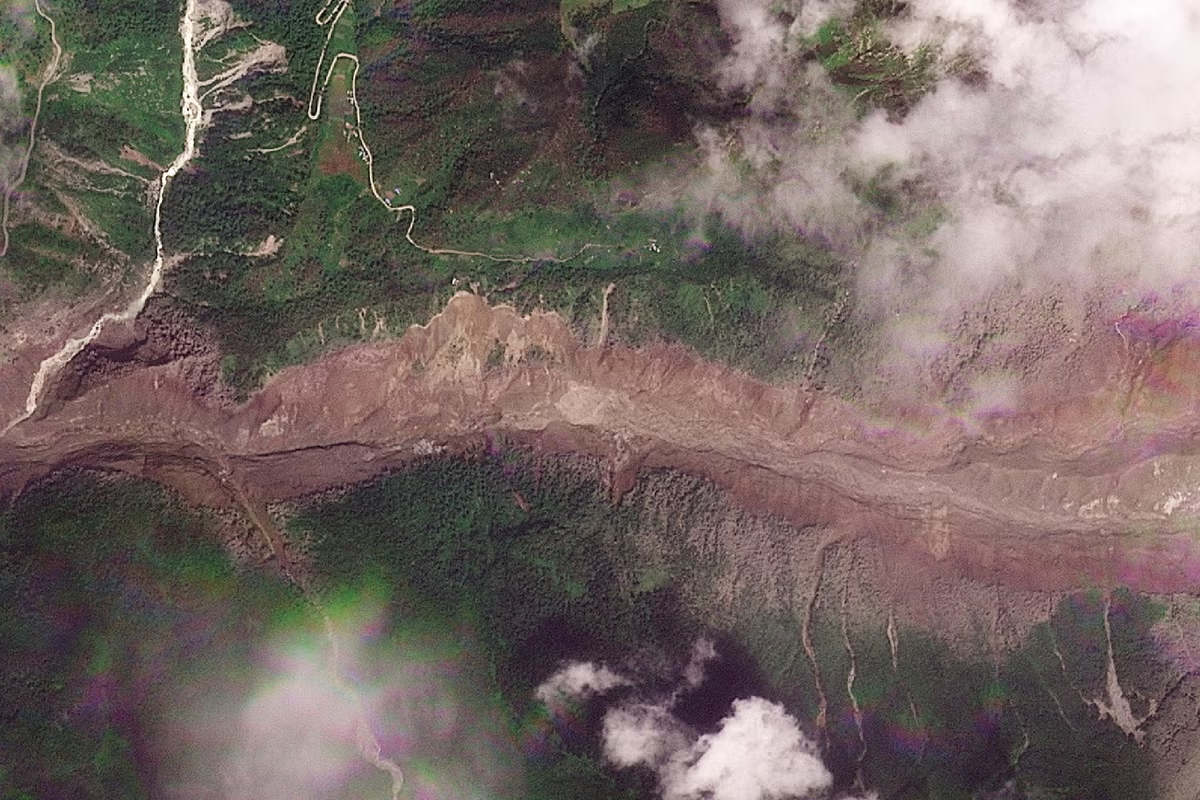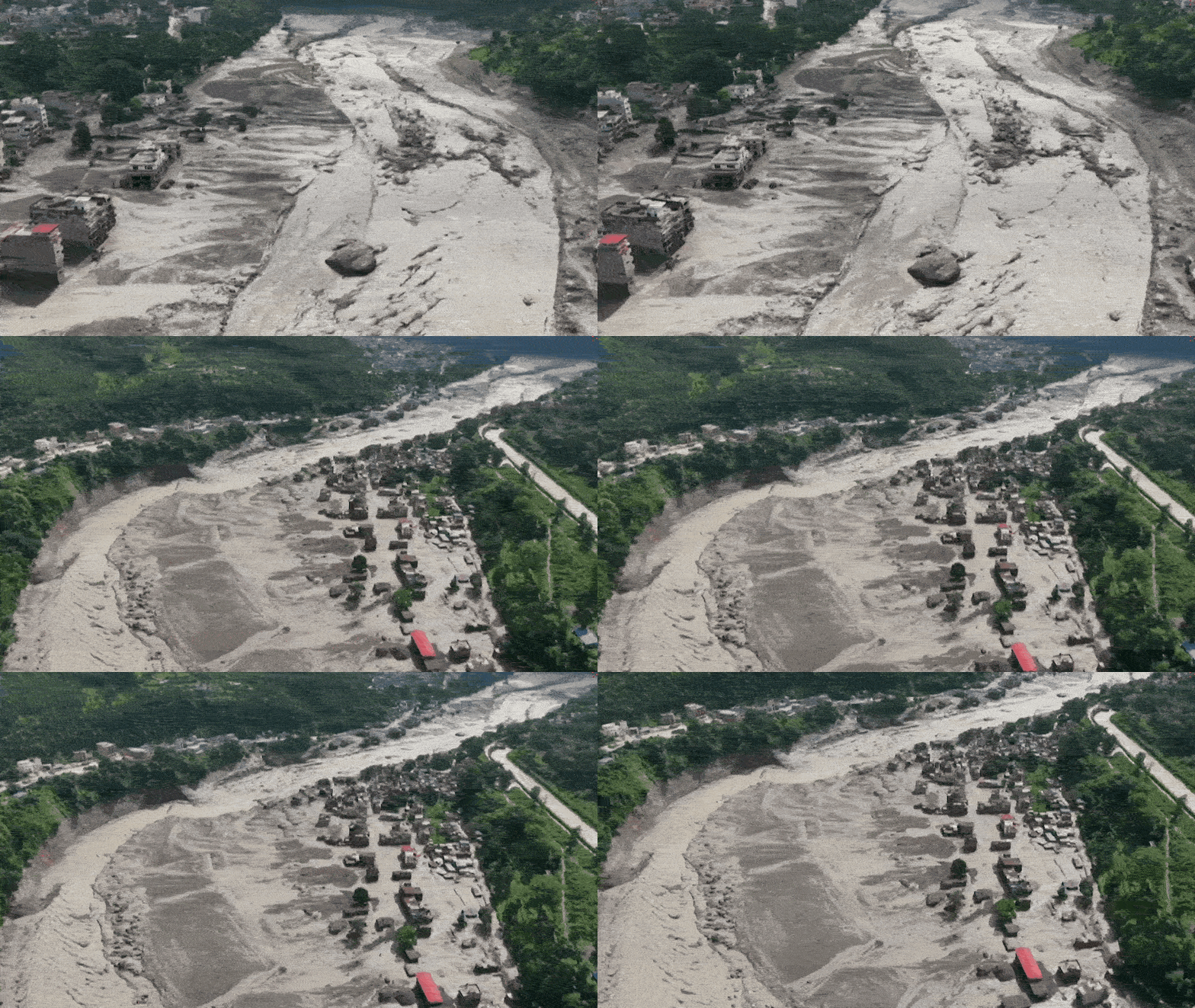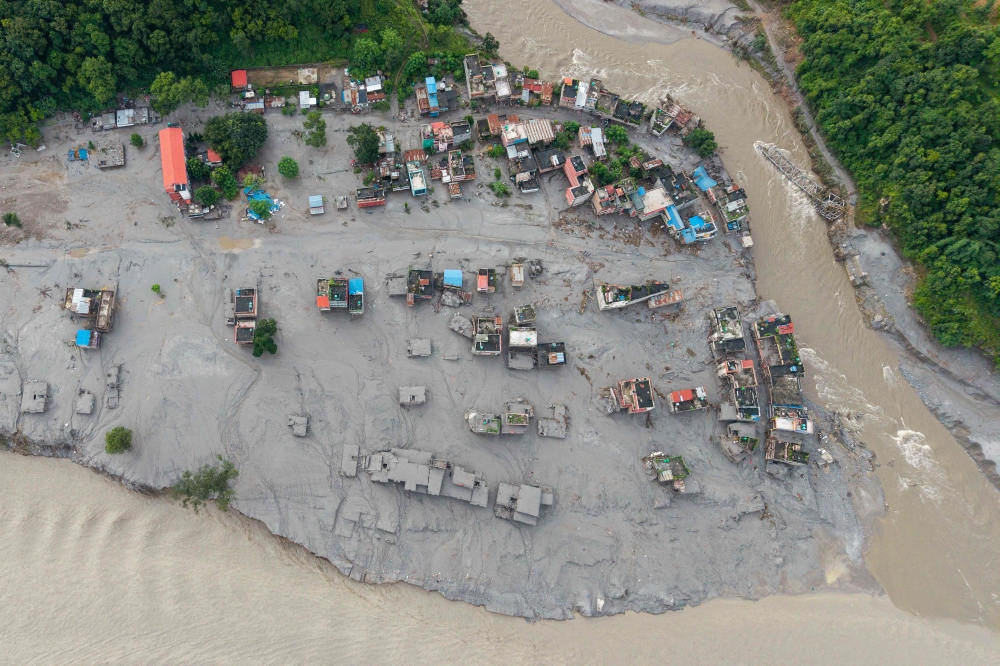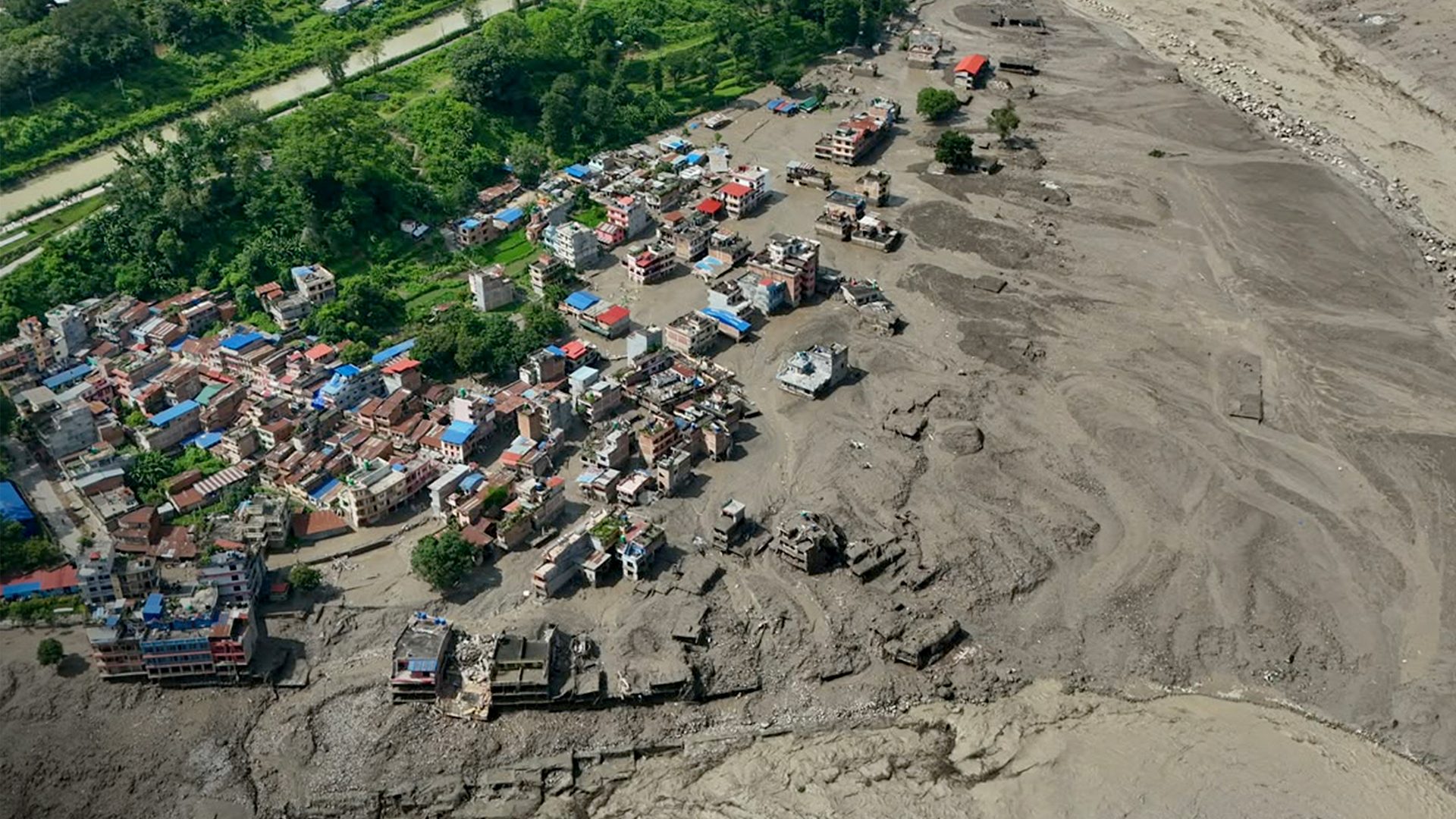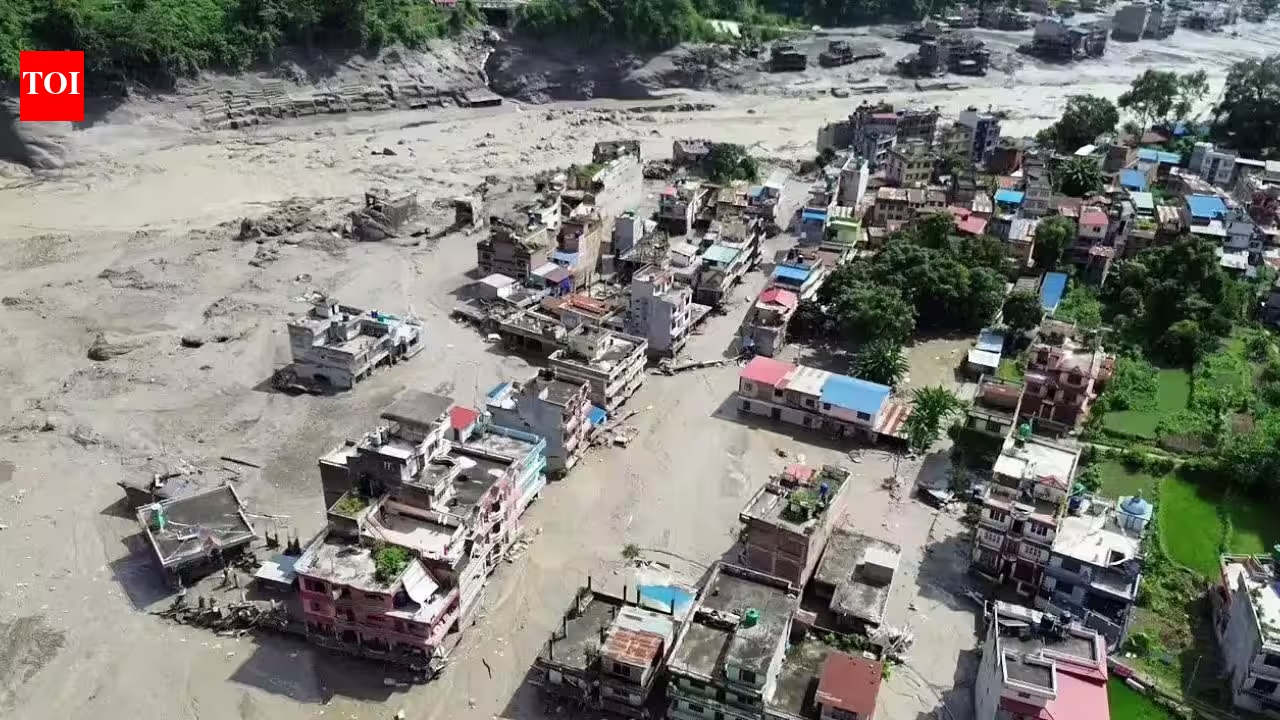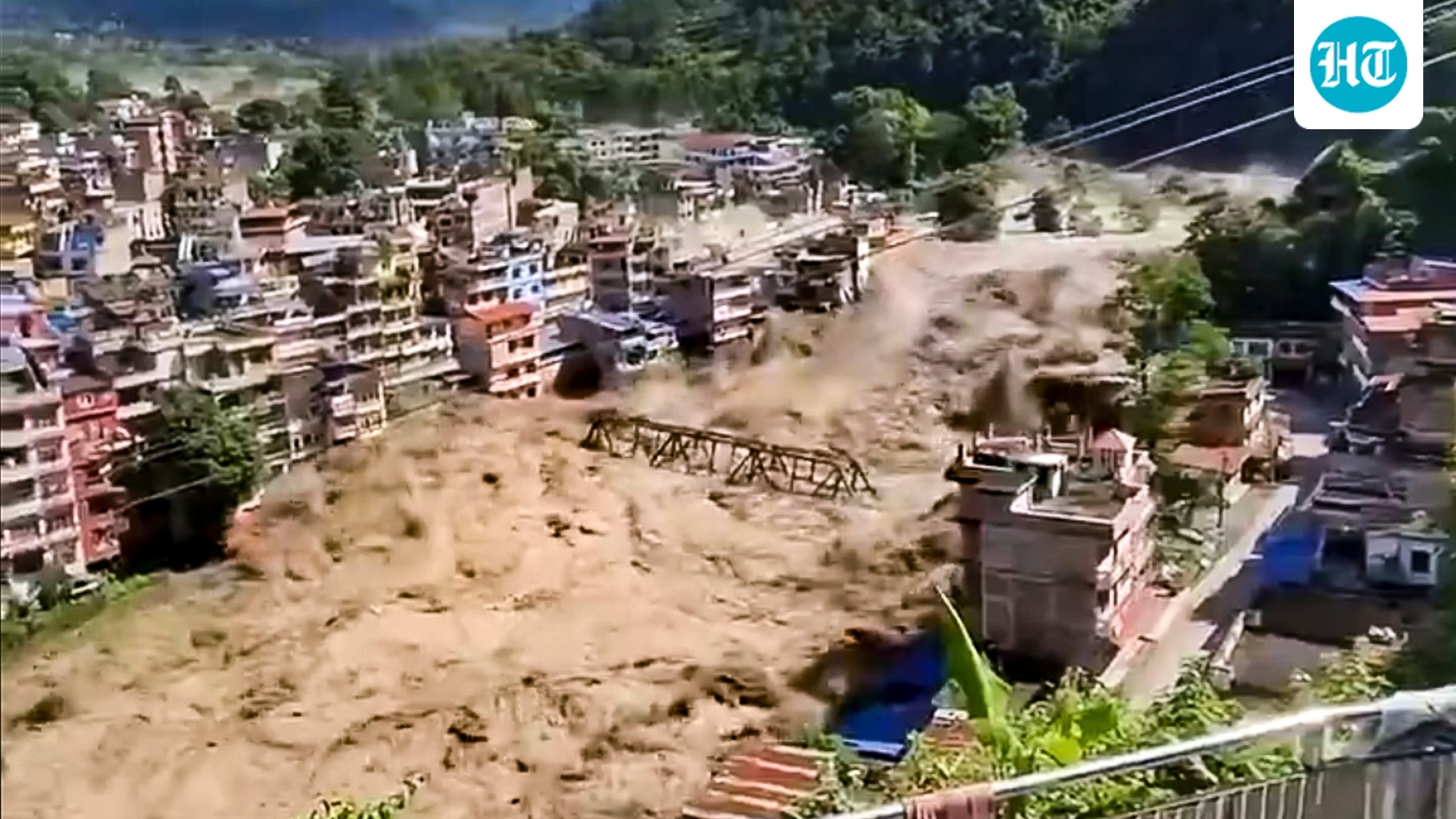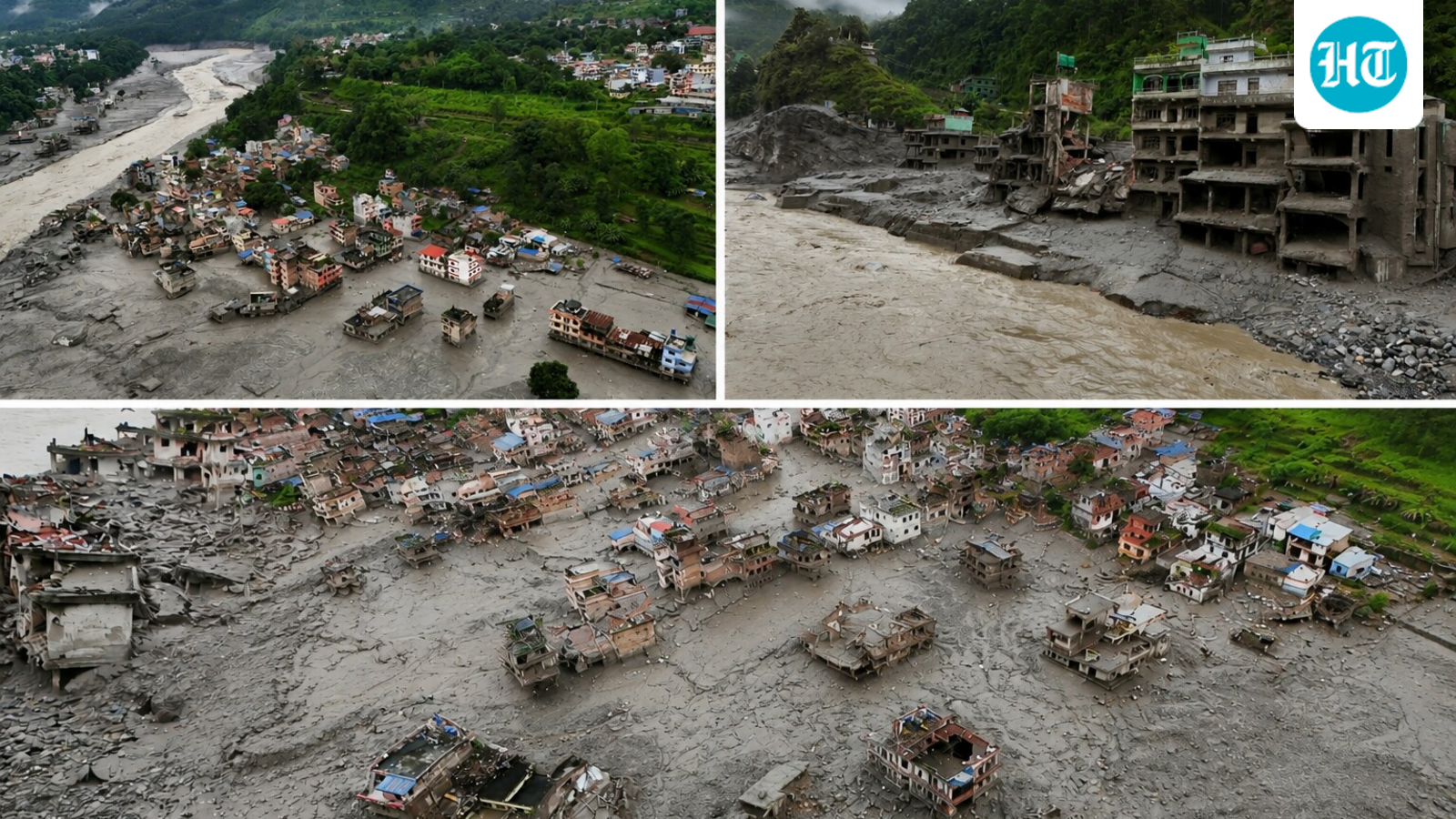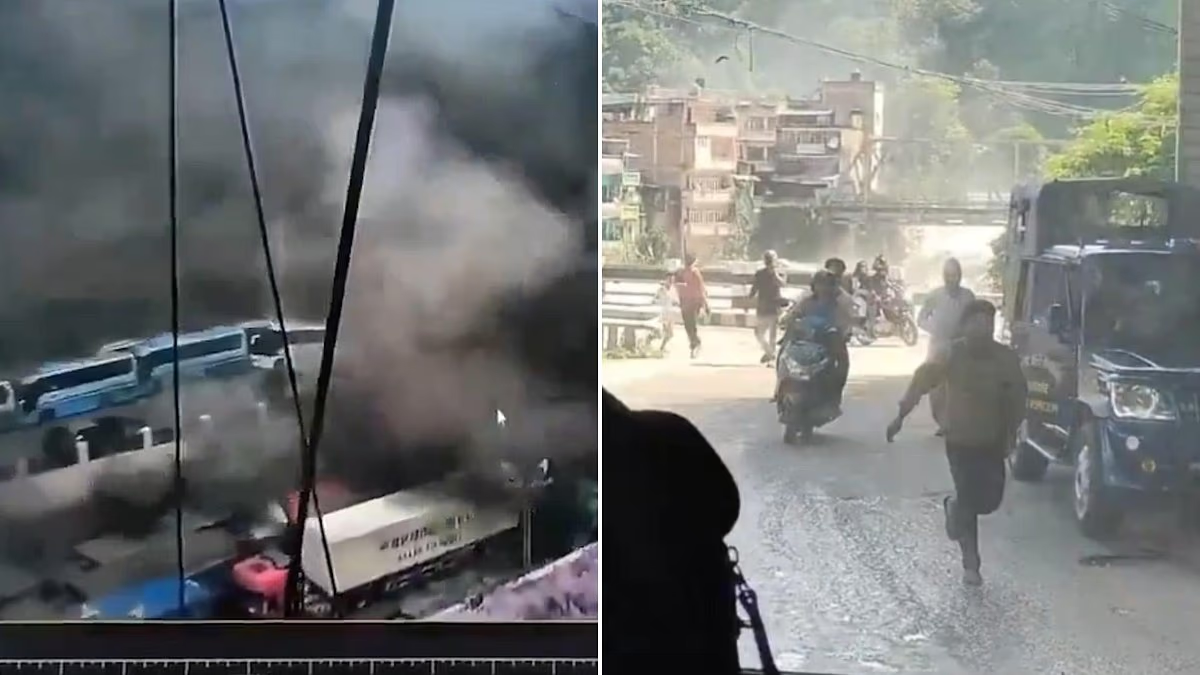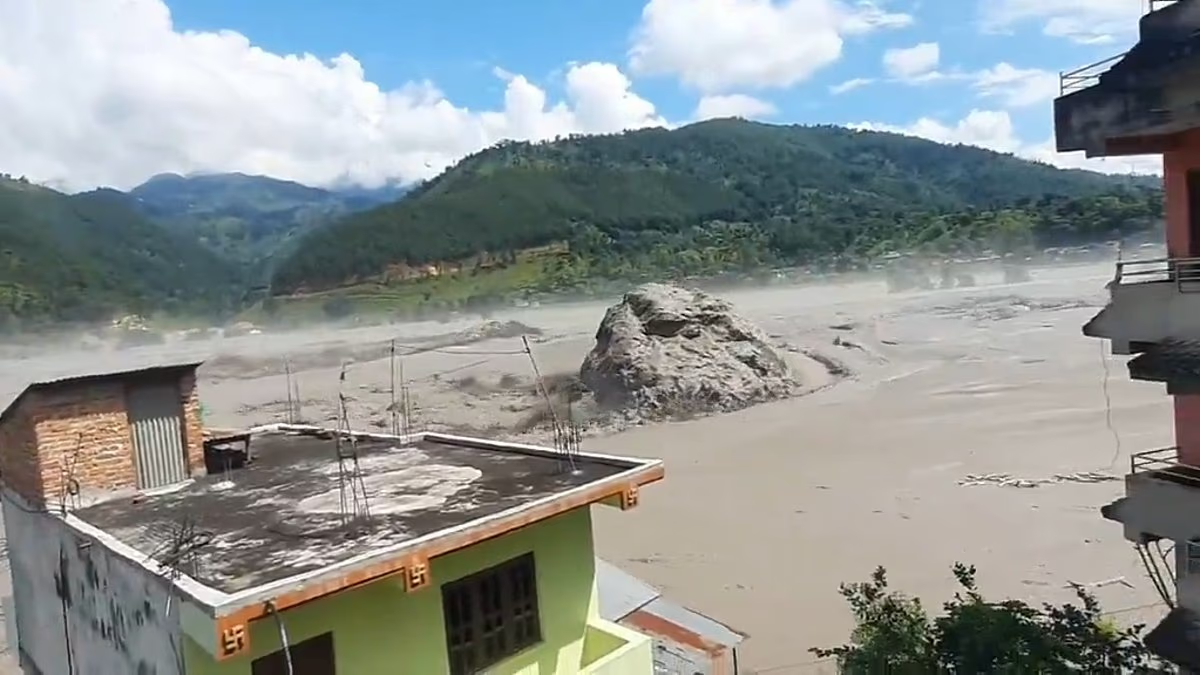
Astonishing new footage from Nepal has emerged showing the full brutal force of flash floods that caused devastation in Nepal on Wednesday.Hundreds of people have been killed or are still missing following the disastrous tsunami-like floods on the Nepal-Tibet border, which engulfed entire villages and swept away bridges. Emergency services have already recovered the bodies of at least 332 people, while more than 800 people are missing. In China-controlled Tibet, officials said 558 people are still missing, while three have been found dead. It isn't currently clear how many of these people overlap with the figures reported by Nepal. Many of those who survived the devastation managed to capture footage of the destruction the floods caused. One video taken in the mountainous country shows the water sweeping through a built up town. In the deep muddy water, an enormous boulder was seen slowly rolling past the town, which is situated in a valley. Horrified onlookers filmed the huge rock as it passed their homes. They were also filming the extent of the destruction caused by the floods. Horrified onlookers filmed the huge rock as it passed their homes Scores of men in orange hi-vis jackets and hard hats fled in terror as they watched the mass of water rush at them As the surge of water twisted down the river, onlookers screamed in terror as it came hurtling towards them Houses lie partially submerged in muddy water along a riverside after flash floods at Trishuli Bazar in Nepal's Nuwakot district on August 26, 2026 A military personnel rescuing a man stranded by massive floods and landslides along the Nepal-Tibet border on August 26, 2026Flood water had spread for several hundred metres across the valley, with trees bowing due to the sheer force of the water. Another terrifying clip showed petrified workers who were operating near a river running for their lives to escape the flood. Scores of men in orange hi-vis jackets and hard hats fled in terror as they watched the mass of water rush at them. One foolhardy man who stopped to film the flood quickly realised how dangerous it was and ran in fear from the water while screaming 'oh my god' over and over again. As the men managed to get to higher ground, the water that was rushing through the river was heard violently crashing. The man filming the incident turned around to witness a huge plume of water fly into the air. Upon seeing this the workers decided to abandon their path up a winding, muddy road, instead choosing to clamber up precarious rocks to get to higher ground as quickly as possible. Further down stream, people living in a small riverside village were forced to watch in horror as the tsunami-like wave thundered towards their homes. One video taken in the mountainous country shows the water sweeping through a built up town A vehicle is seen in the aftermath of a flash floods in Devighat in the Nuwakot district in Nepal. Thursday, August 27, 2026 An aerial view shows houses lying deluged in sludge after flash floods at Devighat, Bidur Municipality in Nepal's Nuwakot district on August 27, 2026 An aerial view shows houses lying deluged in sludge after flash floods at Devighat, Bidur Municipality in Nepal's Nuwakot district on August 27, 2026As the surge of water twisted down the river, onlookers screamed in terror as it came hurtling towards them.The river quickly burst its banks as the water, carrying debris from upstream, came closer. Nearby farms were quickly flooded with a thick sludge of muddy water. Within just a few minutes, the banks of the river were completely submerged as the whole area flooded. Another clip, this one taken from a more densely populated town, showed the water rising quickly and surging over a bridge in the centre of the settlement. Horrified locals could do little more than watch or run in terror. The panicked drivers of vans and cars were heard blaring their horns, desperate to get away from the water. Within just a few seconds, the bridge was swept away by the sheer force of the water. A glacier collapse in Nepal's mountains near Tibet appears to have triggered the disaster. As the surge of water twisted down the river, onlookers screamed in terror as it came hurtling towards them Nearby farms were quickly flooded with a thick sludge of muddy water An aerial view shows houses lying deluged in sludge after flash floods at Devighat, Bidur Municipality, along the confluence of the Trishuli and Tadi rivers in Nepal's Nuwakot district on August 27, 2026 An aftermath view of flash floods and mudslides along the Trishuli River in Nepal, August 26 2026 A construction vehicle is buried in the mud following flash floods and a mudslide in Galchhi, Nepal, August 27, 2026'A large chunk of glacier fell from about 5,200 metres (about 17,600 feet)... into a valley,' said Simon Cox, principal scientist at New Zealand's GNS Science.It 'transformed into this raging mass of debris... where it picks up rocks and sediment and trees and anything in the way and fires it on down through the canyon,' he told AFP.The wall of water first hit a border post, as documented in terrifying CCTV footage showing mud and debris engulfing the area as people fled before it.It then travelled downstream into Nepal, flooding villages and bringing down bridges and buildings. The glacier collapse was large enough to register as a seismic event, initially mistaken for an earthquake.But after further analysis, the US Geological Survey determined 'that the seismic event was instead a glacial collapse and debris flow, and that no earthquake had occurred.The collapse registered as a 5.2-magnitude 'seismic event', which took place at 8:37 am local time. An aftermath view of flash flood and mudslides on the Nepal-China border on August 26, 2026 in Nuwakot, Nepal A member of the security forces and his sniffer dog search for survivors following flash floods at Trishuli in Nepal's Nuwakot district on August 27, 2026 Volunteers use bulldozers to clear mud and debris along a road after flash floods at Trishuli in Nepal's Nuwakot district on August 27, 2026 People watch from a rooftop as houses lie deluged in sludge after flash floods at Trishuli in Nepal's Nuwakot district on August 27, 2026Estimating just how much of the glacier collapsed will take time, Cox said, but it could range from 'half a million cubic metres to tens of millions of cubic metres.' With the affected area largely inaccessible, experts are using satellite imagery and any available measurements on the ground to reconstruct the disaster.'We can look at satellite imagery taken before and after the event, and try and see what has changed, essentially looking for what is missing from the mountains in the 'after' imagery', said Lauren Vargo, a glaciologist at New Zealand's Victoria University of Wellington.Soon after the seismic activity was recorded, a nearby water monitoring station stopped transmitting, Nepali authorities said.Stations downstream began going offline one by one, though water was registered reaching up to 12.3m high in Kalikhola, near the Tibet border at 2.14pm, they added. Early speculation suggested a glacial lake outburst flood, or GLOF, a growing risk as glaciers melt due to climate change.A GLOF occurs when a fragile debris wall holding back a lake of glacier melt suddenly collapses, unleashing the water behind it.Some experts suggested a GLOF might have been involved.'Water does flow within glaciers and flows beneath glaciers,' said Adrian McCallum, a glaciologist at the University of the Sunshine Coast. Rescue workers rescue stranded residents from a house buried in sludge after flash floods at Trishuli in Nepal's Nuwakot district on August 27, 2026 A drone view shows mud covering buildings following devastating floods at Trishuli in Nuwakot district, Nepal, August 27, 2026 A drone view shows mud covering properties following a flash flood in Trishuli, Nuwakot district, Nepal, August 27, 2026 Army rescue team carry a survivor on a stretcher at an army rescue camp as search operations continue on August 27, 2026 in Nepal 'But to my mind, the only reason why a large volume of water should all of a sudden flow down a valley is because it has been released,' he told AFP.Other experts said they did not detect existing glacial lakes near the site of the glacier collapse, and theorised that water collected under the glacier might have cascaded down with the falling chunk.The falling glacier ice could also have briefly dammed the river, collecting water behind it that was released when it dislodged.Summer glacier melt upstream and monsoon rains would mean the rivers were already high, and the volume of water was also swelled by debris and mud picked up as it travelled kilometres from the initial collapse, added Mr Cox. Nepali authorities first received word of a flood around 9.00am local time, and began alerting areas along the Bhote Khoshi river to 'stay on high alert and stay in safe areas'.But it is unclear how many people received the warning, or how much time they would have had to respond.'The reality is, if you are in a community underneath a large glacier and potentially a glacier lake where a GLOF could occur, then to some extent, it's a ticking time bomb,' said Mr McCallum.And even for those receiving a warning, options would be limited, said Hatim Sharif, a hydrologist at the University of Texas San Antonio.'Running will not help,' nor will trying to flee by vehicle, he told AFP, because the mud and water moving at high speed form a lethal combination 'like liquid concrete'. Houses lie partially submerged in muddy water along a riverside after flash floods at Trishuli Bazar in Nepal's Nuwakot district on August 26, 2026 Damage in the aftermath of flash floods in Devighat in the Nuwakot district in Nepal, Thursday, Aug 27, 2026The only solution is to climb up a hill, at least 20ft, he estimated. While it is hard to immediately attribute any individual glacial event to climate change, the warming planet is a constant background stress on these ancient ice rivers, experts say.Glaciers are retreating globally, creating disaster risks but also depriving downstream communities of vital water sources.'The biggest way to mitigate the risk would be to reduce our greenhouse gas emissions to limit warming,' said Ms Vargo.
Astonishing flood footage emerges from Nepal
Astonishing new footage from Nepal has revealed the extent of the damage the powerful flood caused on Wednesday.
1,716 words~8 min read