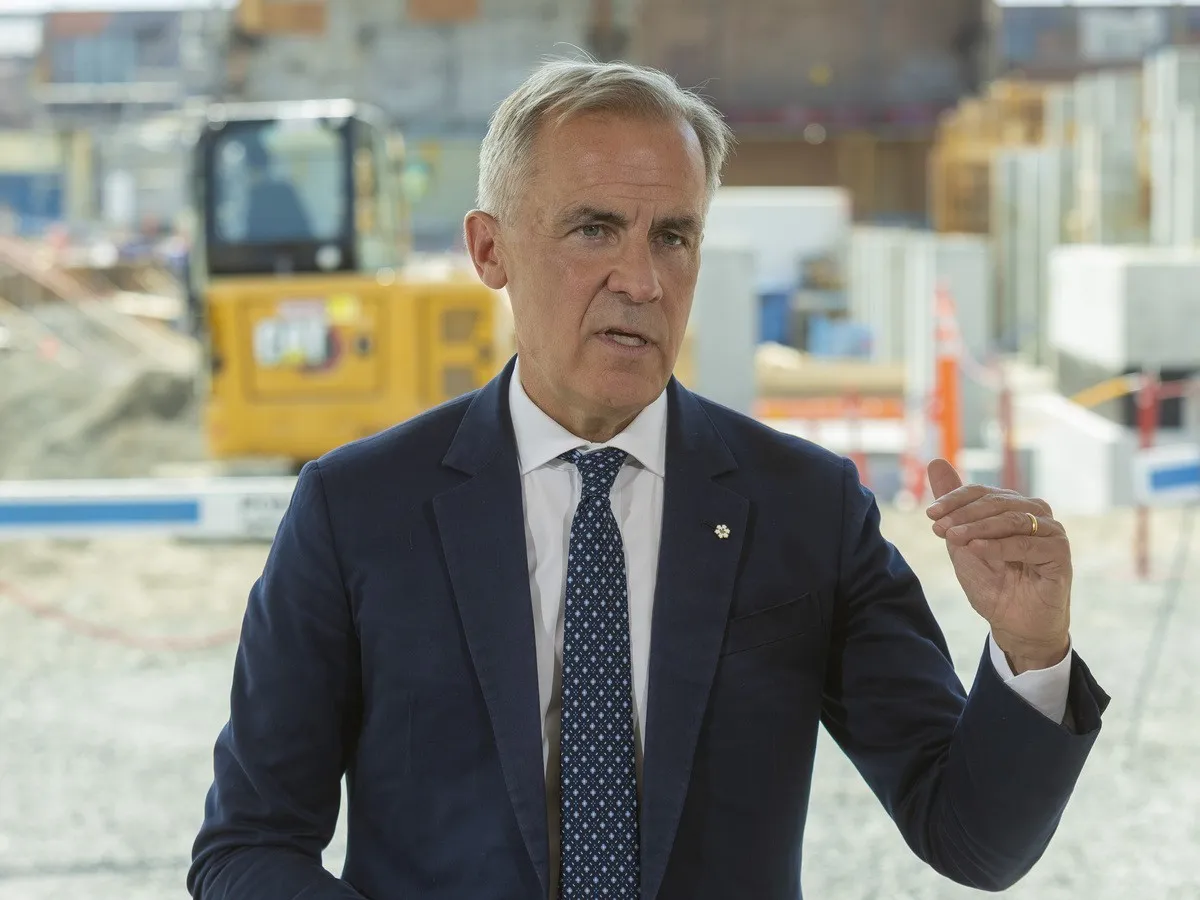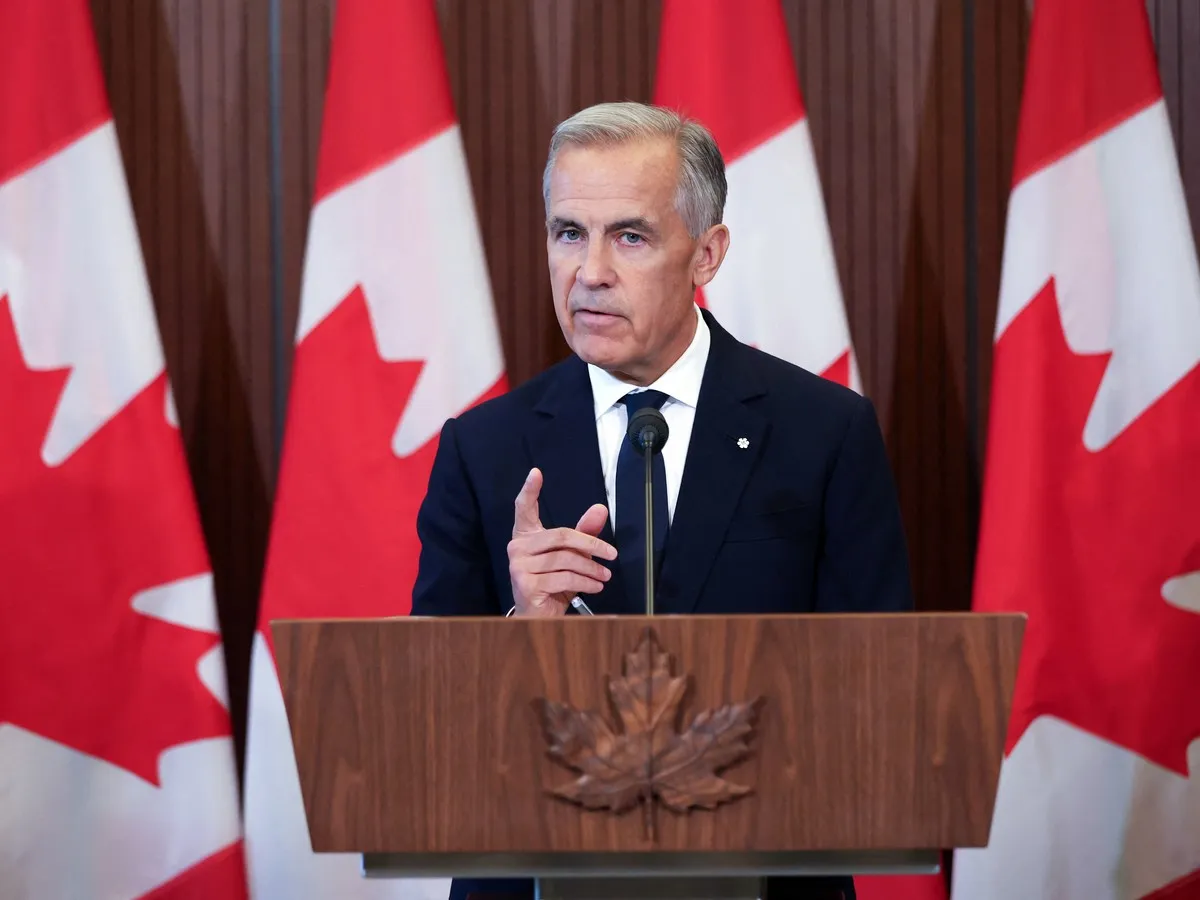
Skip to Content Subscribe My Account Manage My Subscriptions FAQ Newsletters Canada Canadian True Crime Canadian Politics Health World Israel & Middle East Financial Post NP Comment Longreads Puzzmo Diversions Comics NP News Quiz New York Times Crossword Horoscopes Life Eating & Drinking Style Sponsored Play for Ontario Travel Travel Canada Travel USA Travel International Cruises Travel Essentials Culture Books Celebrity Movies Music Theatre Television Business Essentials Advice Lives Told Tails Told Shopping Buy Canadian Home Living Outdoor Living Kitchen & Dining Tech Style & Beauty Personal Care Entertainment & Hobbies Gift Guide Travel Guide Amazon Prime Day Deals Savings National Post Store More Sports Hockey Baseball Basketball Football Soccer Golf Tennis Driving Vehicle Research Reviews News Gear Guide Obituaries Place an Obituary Place an In Memoriam Classifieds Place an Ad Celebrations Working Business Ads Archives Healthing Epaper Manage Print Subscription Profile Settings My Subscriptions My Offers Newsletters Customer Service FAQ Newsletters Canada World Financial Post NP Comment Longreads Puzzmo Diversions Life Shopping Epaper Manage Print Subscription HomeNP CommentStephen Nagy: U.S. trade deal dead until Canada stops being the 'Ugly Ally'The Liberals have disastrously mishandled Canada's relationship with the Trump administrationLast updated 22 minutes ago Canadian Prime Minister Mark Carney speaks at a press conference in Ottawa, Ontario, on August 22, 2026 after trade talks with the US collapsed. Photo by DAVE CHAN /AFP via Getty ImagesPrime Minister Mark Carney has undeniably brought a measure of dignity, sharp intellect and technocratic excellence back to the Prime Minister’s Office. This is a welcome change after a “lost decade” defined by poor governance and the severe mismanagement of Canada’s socio-economic environment and its most important relationship, with the United States.Enjoy the latest local, national and international news.Exclusive articles by Conrad Black, Barbara Kay and others. Plus, special edition NP Platformed and First Reading newsletters and virtual events.Unlimited online access to National Post.National Post ePaper, an electronic replica of the print edition to view on any device, share and comment on.Daily puzzles including the New York Times Crossword.Support local journalism.Enjoy the latest local, national and international news.Exclusive articles by Conrad Black, Barbara Kay and others. Plus, special edition NP Platformed and First Reading newsletters and virtual events.Unlimited online access to National Post.National Post ePaper, an electronic replica of the print edition to view on any device, share and comment on.Daily puzzles including the New York Times Crossword.Support local journalism.Create an account or sign in to continue with your reading experience.Access articles from across Canada with one account.Share your thoughts and join the conversation in the comments.Enjoy additional articles per month.Get email updates from your favourite authors.Create an account or sign in to continue with your reading experience.Access articles from across Canada with one accountShare your thoughts and join the conversation in the commentsEnjoy additional articles per monthGet email updates from your favourite authorsSign In or Create an AccountorHowever, Canadians must face an uncomfortable truth. Our teetering economy, lagging productivity and housing crises were entirely made in Canada. They predated the first and second terms of U.S. President Donald Trump. Yet, the governing Liberal Party has found it politically expedient to gaslight the public, blaming our current woes on the U.S. and the current occupant of the White House. It is always easier to point a finger at the caricature of the “Ugly American” than to admit we have spent the last decade or more behaving as an “Ugly Ally.”The National Post newsletter that doesn’t hold back, giving readers the unvarnished truth on media, politics and culture.By signing up, you consent to receive the above newsletter from Postmedia Network Inc.A welcome email is on its way. If you don't see it, please check your junk folder.The next issue of Right? will soon be in your inbox.We encountered an issue signing you up. Please try againUnder Justin Trudeau, the previous prime minister, Canada’s relationship with its most vital security and trading partner was disastrously mishandled. Cabinet ministers routinely prioritized domestic political points over cross-border diplomacy. We saw Trudeau explicitly campaign against “MAGA conservatism,” while Foreign Affairs Minister Mélanie Joly publicly mused about creating a “game plan” to deal with a hypothetical authoritarian shift in the US. After enjoying dinner and a selfie at Mar-a-Lago following Trump’s 2024 electoral victory, Trudeau flew back to Canada. Just days later, he called Kamala Harris’s electoral defeat a setback for women.While Ottawa was busy moralizing at Washington, it was asleep at the wheel on actual national security. The Trudeau government repeatedly ignored stark warnings from our Canadian Security Intelligence Service and think tanks like the Macdonald-Laurier Institute regarding foreign interference and elite capture, primarily orchestrated by Beijing. Consequently, Canada became the black eye of the Five Eyes intelligence alliance. We were left out of the Quad and AUKUS. We simultaneously managed to alienate India and frustrate Japan, a vital geoeconomic partner that has expertly navigated the very U.S.-China friction Canada fumbles.Carney has done his best to stop the bleeding, and for that, Canadians should be thankful. However, his geopolitical compass remains fundamentally miscalibrated.Rather than abandoning the partisan habit of using the U.S. as a scapegoat for Canada’s structural economic stagnation, Carney has continued the gaslighting. Worse, he has actively courted a “strategic partnership” with China, a state with a documented, deep track record of foreign interference in Canadian democratic institutions, and Washington’s primary strategic competitor.At his Davos 2026 address, Carney drew a false equivalence between the U.S. and China, suggesting Canada could somehow float above the fray as a neutral middle-power broker. This is a dangerous fantasy.Washington is not going to tolerate a contiguous neighbour and NORAD partner integrating its economy with a hostile strategic competitor. This is not uniquely a Trump phenomenon; it is a bipartisan Washington consensus. It was the Trump administration that inserted Article 32.10 into the USMCA (CUSMA) trade agreement, effectively giving the U.S. veto power over any free trade agreement Canada might pursue with a “non-market economy” like China. But the Biden administration maintained and rigorously enforced that exact same geoeconomic architecture.As abrasive and difficult as the current White House can be, Carney’s job is not to posture for the Davos crowd. It is to steer Canada away from self-destructive anti-American sentiment, manage the U.S. leadership with pragmatic cognitive empathy, and ensure Canada is anchored securely within the reorganization of the North American and global supply chains.We are not living in the 1990s. Canada is no longer a comparative middle-power heavyweight. While other nations have risen, our relative clout, military resources, and diplomatic credibility have severely declined. We cannot convene coalitions to resist American pressure while simultaneously relying on the American taxpayer to subsidize our continental defence.Canada desperately needs a new identity and a new grand strategy. That strategy cannot be rooted in a romanticized nostalgia for middle-power diplomacy, nor in a contrarian desire to poke Washington in the eye. It must be built on the cold, structural realities of our geographic, institutional, and cultural proximity to the United States. Until the Prime Minister’s Office accepts this, the “Ugly Ally” will continue to find itself isolated, outpaced and ignored.Stephen Nagy is a Senior Fellow and China Policy Project Lead at the Macdonald-Laurier Institute. His work focuses primarily on Indo-Pacific affairs, foreign policy, security, and great-power competition. Join the Conversation This website uses cookies to personalize your content (including ads), and allows us to analyze our traffic. Read more about cookies here. By continuing to use our site, you agree to our Terms of Use and Privacy Policy.
Stephen Nagy: U.S. trade deal dead until Canada stops being the 'Ugly Ally'
The Liberals have disastrously mishandled Canada's relationship with the Trump administration
1,243 words~6 min read