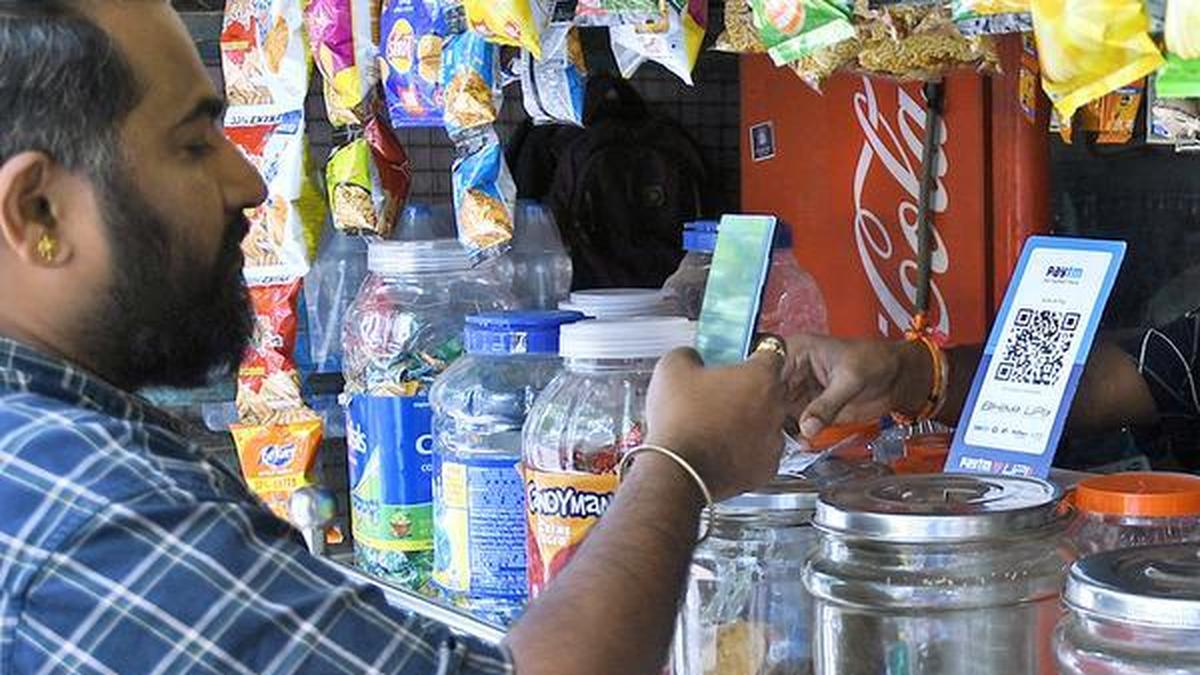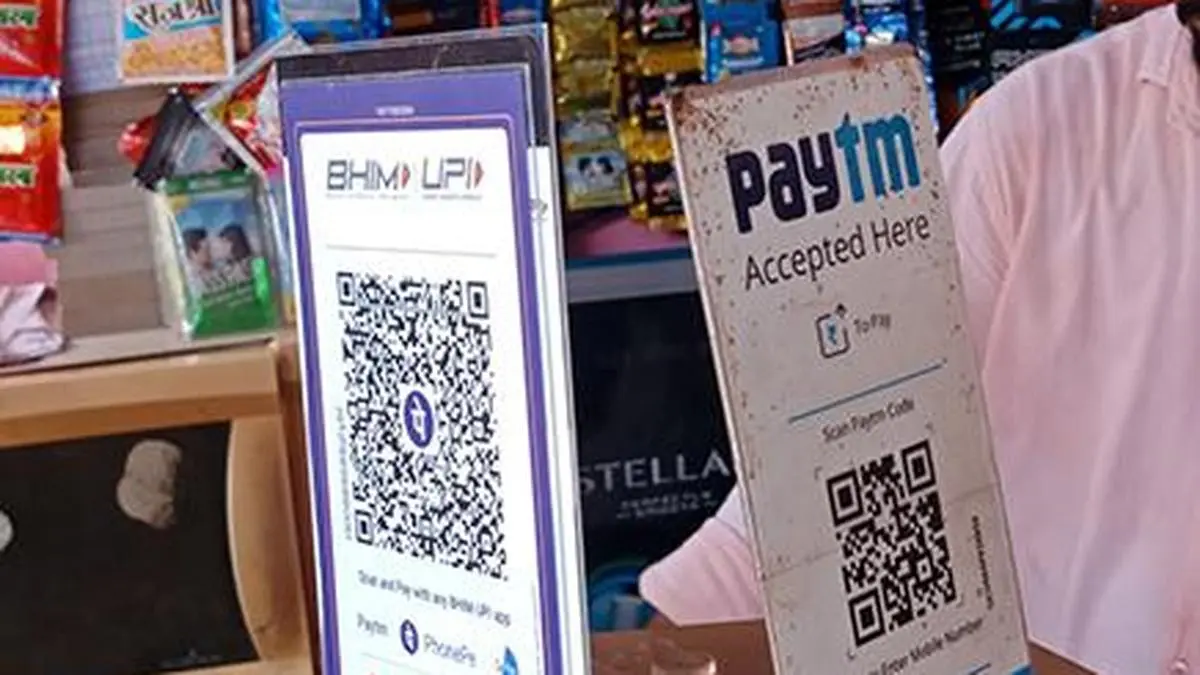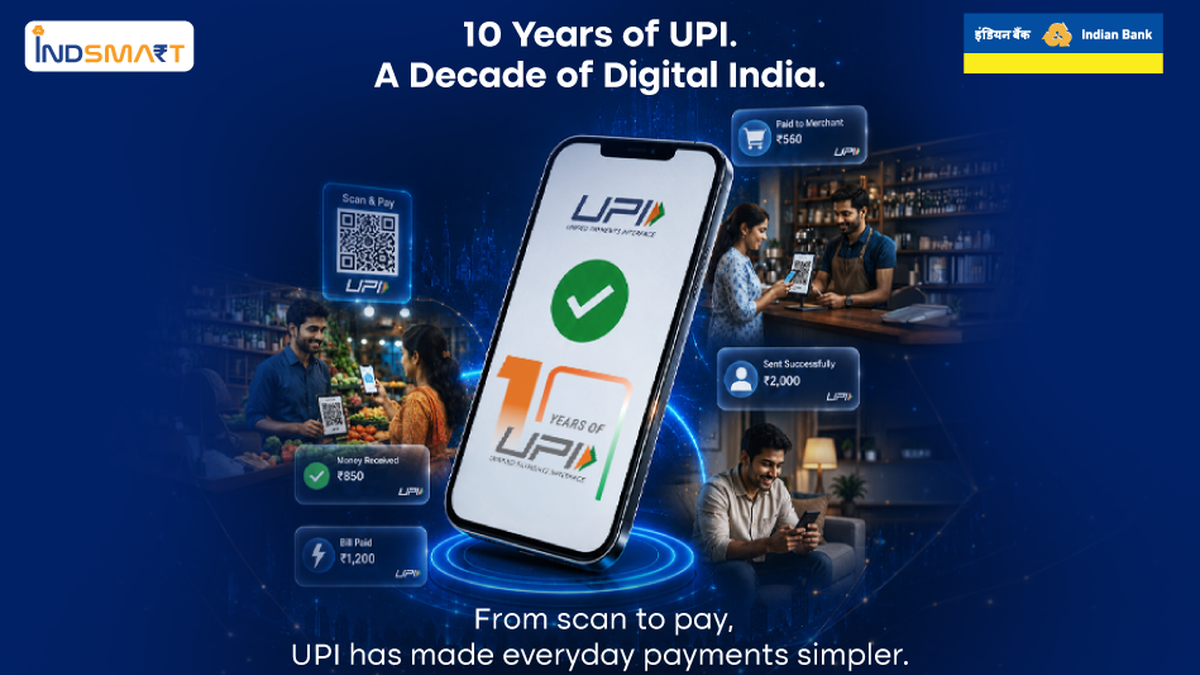
The Unified Payments Interface (UPI), celebrating its tenth anniversary in August this year, is unique in many ways as it democratised technology, altered consumers spending behaviour and elevated India’s position from a consumer of global payment technologies to an exporter of digital public infrastructure.Launched in 2016 with 21 banks, UPI is an open-access platform built by National Payments Corporation of India (NPCI). It now has over 700 lenders, daily processing about 66 crore transactions — a milestone recognised by the International Monetary Fund (IMF).An ACI Worldwide report said India accounted for 129.3 billion real-time payment transactions or 49% of global volume, followed by Brazil with 37.4 billion transactions (14%), Thailand with 20.4 billion (8%), China with 17.2 billion (6%) and South Korea with 9.1 billion (3%).What makes UPI a volume giant?Faster penetration of affordable smartphones and Internet, Aadhaar-based identity framework, and the government’s push to digital payments created a perfect environment for the exponential growth of UPI, making it a volume giant.However, it is not yet a value goliath. Officials, directly and indirectly, view that a platform handling trillions of rupees annually cannot depend indefinitely on a zero-cost model.Annual UPI transactions scaled from just 1.78 crore in FY17 to more than 24,162 crore in FY26 — nearly a 13,000-fold jump. Value expanded from ₹0.07 lakh crore to around ₹314 lakh crore during the same period.Retail payments accounted for about 81% UPI’s transactions by volume in FY25, but constitued mere 9–10% of total value, while systems like RTGS dominate large-value transfers.Displaying financial inclusion, anybody from a street hawker or a small merchant to auto drivers with a QR code can now accept digital payments without investing in expensive point-of-sale infrastructure. Simultaneously, the reduced transaction costs and expanded customer engagement also forced banks to rethink their traditional payment revenue models.What are UPI’s main global competitors and why?Brazil’s Pix is the closest comparison to UPI. Meanwhile, China’s digital payment revolution was driven mainly by private technology platforms — Ant Group’s Alipay and Tencent’s WeChat Pay.The U.S. payments ecosystem remains dominated by card networks such as Visa and Mastercard, along with bank-based systems like ACH. The United Kingdom has Faster Payments, while Singapore has PayNow.Although UPI leads in transaction volume, global acceptance and merchant integration are the areas where global networks have an advantage.What is the role of UPI in India’s economic diplomacy?Reflecting immense strategic significance, the payment infrastructure is fast becoming a key component of economic diplomacy.UPI is now operational internationally, with adoption and acceptance expanding across almost a dozen countries. The objective is to facilitate payments for Indian travellers and create cross-border payment connectivity that can reduce dependence on traditional correspondent banking channels.For decades, global payment systems were dominated by card networks and closed-loop platforms.India — which demonstrated that a low-cost, interoperable, real-time payment system could operate at massive scale — has attracted global interests. New Delhi has signed digital public infrastructure cooperation agreements with as many as 23 countries, covering areas such as digital identity, payments and data exchange.Namibia, Peru, South Africa, Kenya, Rwanda and other African countries have had discussions on adopting India’s digital payment infrastructure approach. Just as reserve currencies provide financial influence, digital payment networks can create technological influence.Next frontiers: What lies ahead for UPI?The UPI’s first decade marked building scale, adoption and trust, which have been achieved diligently. The next decade should ideally build on this strong foundation by focusing on sustainability, globalisation, and financial innovation.The time has come for the UPI to move beyond its role as payment gateway and evolve into a new generation of embedded finance, spanning digital lending, insurance products, investments, wealth management and cross-border remittances.While some of these use cases may remain constrained for now by regulatory and security considerations, the immediate priority should be to strengthen UPI as a robust settlement infrastructure for commerce, capital markets, taxation and business payments.What are the key challenges ahead?The key challenges before UPI include raising transaction limits and building confidence among corporates, regulators, and tax authorities.UPI is now largely used for low-value person-to-person and merchant payments, with normal transactions generally having ₹1 lakh per transaction limit. Select categories such as IPO applications, capital markets, and tax payments have higher limits, including up to ₹5 lakh in some cases.To attract large-value flows, UPI needs higher merchant transaction ceilings for verified businesses, tiered limits based on risk profiles, instead of uniform cap, corporate UPI accounts with maker-checker authentication similar to corporate internet banking, and bulk payment capability for salaries, vendor payments, GST (goods and services tax) payments and government transactions.Fiscal authorities have a role in integrating UPI data with GST architecture but a major barrier is the fear among small businesses that every digital receipt will trigger tax notices. According to Section 269SU of the Income Tax Act, specified businesses with turnover above ₹50 crore shall provide prescribed electronic payment modes, including UPI and UPI QR.Till this date, ₹5 crore is still the operative threshold for the GST e-invoicing. It is based on aggregate annual turnover (AATO), at PAN level, in any preceding financial year, not merely the current year’s turnover. E-invoicing involves electronic authentication of invoicesvia the Invoice Registration Portal (IRP), which issues a unique Invoice Registration Number (IRN) and QR code.The ₹5 crore-plus businesses use UPI widely as a payment channel than as a GST compliance channel. The missing link is converting UPI data into a voluntary or incentivised tax-compliance tool. Further, to also capture the huge NEFT/RTGS and cheque-based business payment ecosystem, UPI needs to integrate with enterprise resource planning systems and API-based payments for large companies.What are the monetisation issues faced by UPI?Monetisation remains unresolved. The zero-MDR (Merchant Discount Rate) model helped adoption but raises questions about long-term sustainability for banks and payment providers.The Parliamentary Standing Committee on Finance has already expressed its concerns on “the staggering mismatch between the ₹2,000 crore allocation and the industry’s estimated operational cost of ₹20,700 crore.”The UPI is expected to process up to 150 billion transactions per month and add 600 million new users, but the current government incentive covers “merely 11% of the industry’s actual costs and 14% of potential MDR collections.The next decade of UPI will not be determined by embeded finance alone, its success will depend on whether the neighbourhood retailer, small manufacturer, trader and service provider switch over to a digitally recorded economy. The tax administration has a crucial role in making that transition incentive-driven rather than enforcement-driven.
10 years of UPI: How can it expand new frontiers for digital payments? | Explained
Explore UPI's transformative journey in its 10th year, revolutionizing India's digital payments landscape and global economic diplomacy.
1,065 words~5 min read