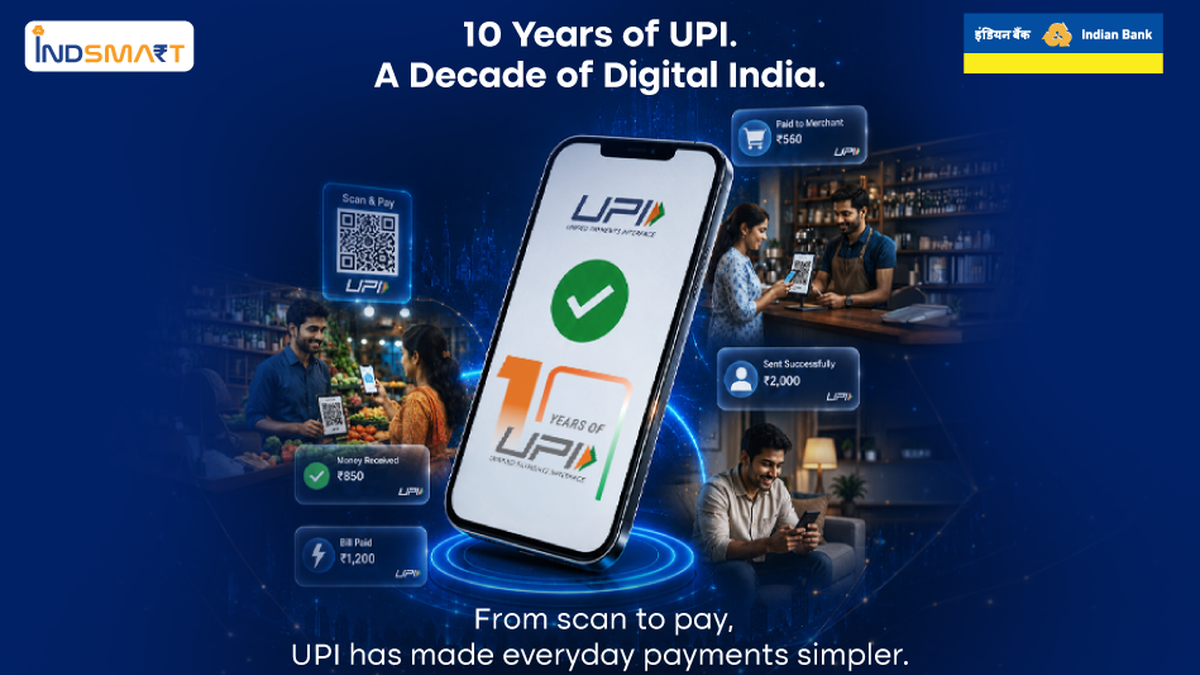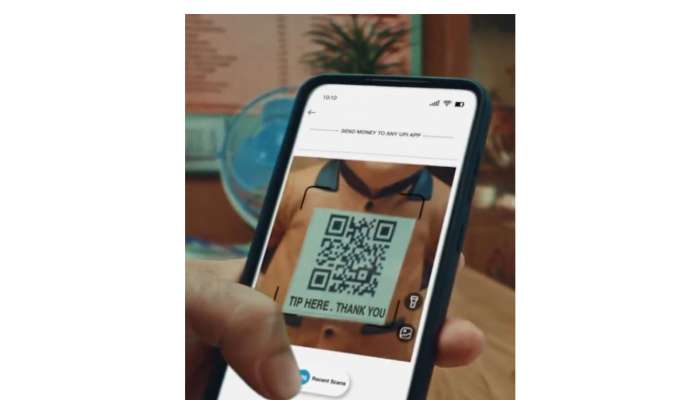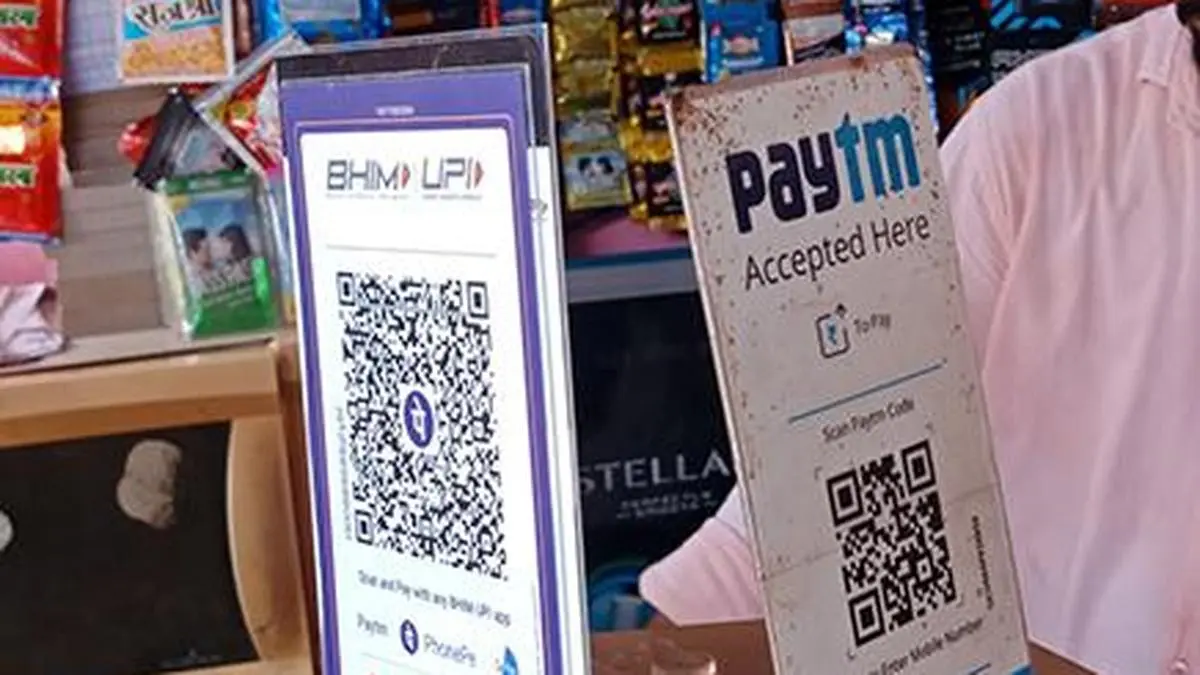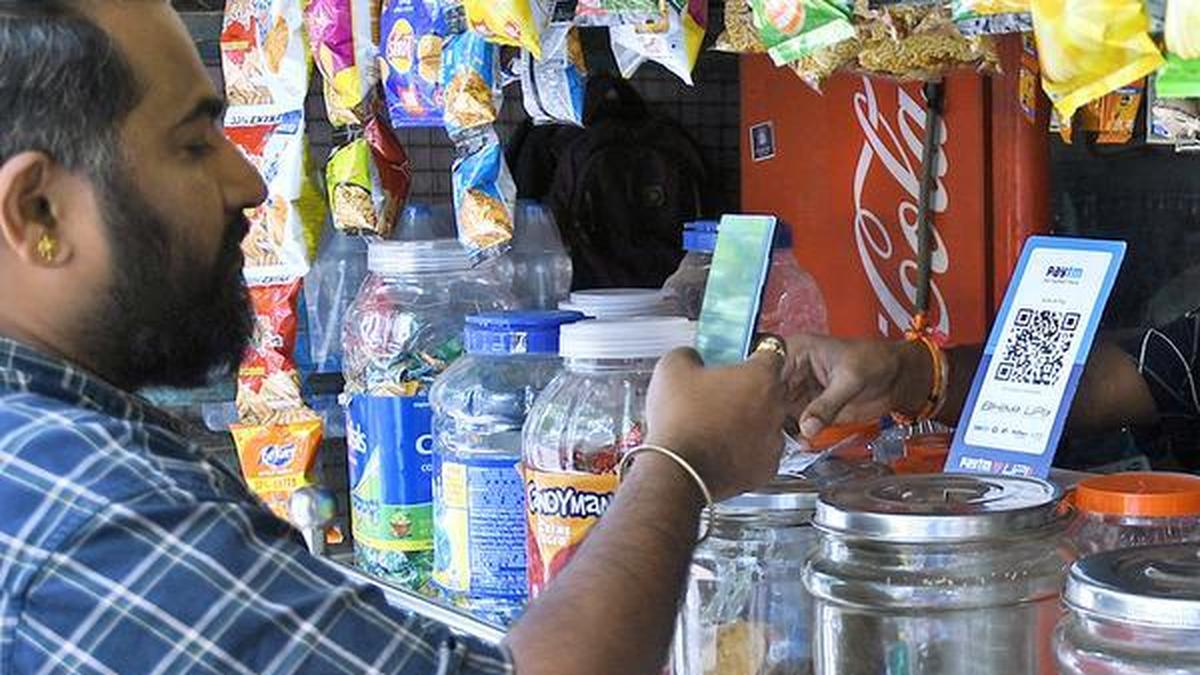
Ten years ago, on April 11, 2016, the Unified Payments Interface (UPI) began its journey with a simple but audacious proposition: money should move between bank accounts as easily as a message moves between two phones. Today, the most remarkable thing about UPI is not merely that it works at an extraordinary scale, it is that hundreds of millions of Indians no longer stop to marvel that it works. A payment is initiated, authenticated and completed in seconds, and life moves on. That, to my mind, is the highest compliment any infrastructure can receive. Truly transformative infrastructure eventually becomes invisible.What began as a pilot with just 21 banks in April 2016 has today expanded into an ecosystem of 741 banks live on UPI. From barely 2 crore transactions in FY2016–17, UPI surged to over 24,000 crore transactions in FY2025–26, an extraordinary nearly 12,000-fold increase in transaction volume and more than 4,000-fold increase in value, in less than a decade. India today accounts for close to half of the world’s real-time payment transactions. These numbers are impressive, but they are not the real story. The real story is what lies behind them: trust at population scale.UPI did not simply digitise cash. It digitised trust.For generations, trust in money was reinforced by what we could physically see and hold; a bank branch, a passbook, a cheque, a note exchanged across a counter. UPI changed that grammar. It made a mobile number, a virtual payment address or a small square QR code sufficient to complete an economic promise between two people who may never have met. UPI was akin to a financial address for the user who could transact without revealing sensitive details of his /her bank account.The QR code at a roadside tea stall may appear modest. Economically, it is anything but modest. It is perhaps the smallest “branch” of India’s financial system, requiring no marble floor, no cash counter and no fixed operating hours, yet connecting a micro-merchant to the same national payment rail used by the largest enterprises.This democratisation is where UPI’s true significance lies.Consider the everyday transaction. A vegetable vendor receives ₹80. A student pays ₹35 for a bus ride. A family pays a local electrician. A small shop collects its day’s sales without counting notes at closing time. In fact, the overwhelming majority of merchant UPI payments are small-ticket transactions; government data for FY 2025-26 show that 86 per cent of person-to-merchant transactions were below ₹500. The architecture has therefore succeeded not because it made large payments possible, banking could already do that, but because it made tiny payments effortless.In development economics, we often speak about the “last mile”. UPI teaches us that the last mile is not merely geographical, it is behavioural. Technology becomes inclusive only when using it is simpler than avoiding it. The pandemic accelerated this habit, but it did something more important than increase digital adoption. It demonstrated that payment infrastructure is also resilient. When mobility was constrained and physical commerce was disrupted, the ability to transfer value remotely helped households, merchants and institutions continue to transact. Habits formed under necessity endured because convenience proved durable. What began for many as an alternative became the default. This is also why UPI must be viewed as part of a much larger Indian achievement.Digital journeyUPI was not built in a vacuum. It was architected as part of India’s broader digital public infrastructure; the JAM Trinity of Jan Dhan, Aadhaar and Mobile, layered with the Account Aggregator framework, the e-KYC ecosystem, digilocker, etc. The journey has been marked by continuous innovation that transformed UPI from a simple payment interface into a comprehensive financial infrastructure. affordable mobile connectivity, India’s technology talent, enlightened regulation, institutional collaboration and the entrepreneurial energy of fintechs. The public and private sectors did not compete to build parallel closed fortresses. They collaborated on interoperable rails and then competed vigorously on the quality of services built on top of them. That design choice matters.Interoperability is one of the least glamorous words in technology, but perhaps one of the most powerful words in economics. It gives the customer freedom. It prevents innovation from becoming captivity. It allows a customer of one bank, using one application, to pay a merchant banking with another institution without needing to understand the machinery beneath the transaction. India did not build merely a faster way to pay. We built a common language for money.I find another aspect of this journey equally consequential. A payment is never only a payment. At scale, digital payments generate economic visibility. And economic visibility can become economic opportunity. For a small entrepreneur, a stream of digital receipts can gradually establish a record of business activity. For lenders, richer and consent-based digital information can improve the ability to assess cash flows. For the economy, more activity entering formal channels can improve transparency and efficiency.There is, however, an important principle here. A richer digital footprint must expand a citizen’s choices, not narrow them. Data should not become a new collateral that the customer unknowingly surrenders. Consent, purpose limitation, explainability and cyber security must remain embedded in the architecture. The more intelligent finance becomes, the more deliberate we must be about preserving agency. Inclusion cannot mean merely being visible to an algorithm; it must mean being treated fairly by the financial system. This is where the next chapter becomes particularly exciting.The first decade of UPI was primarily about the movement of money. The second decade can help improve the movement of opportunity.Leap in financial inclusionThe combination of digital payments, account aggregator architecture, GST-linked information, digital commerce networks and emerging credit infrastructure such as the Unified Lending Interface can enable financial institutions to understand viable borrowers more intelligently. RBI itself envisages ULI as digital public infrastructure capable of facilitating a seamless flow of information to lenders and making credit delivery more frictionless. The objective should not be lending without judgment; it should be better judgment.India’s next leap in financial inclusion will come not only from giving people an account or a payment handle, but from using technology responsibly to widen access to savings, insurance, investments and appropriately priced credit. Technology should ultimately be judged not by how sophisticated it becomes, but by what it enables us to accomplish. For Indian banking, that means taking technology deeper into the economy, to rural India, agriculture, small businesses and customers whose financial lives may not fit conventional templates. It also means retaining human accountability wherever decisions materially affect lives. UPI gives us a template for how that can be done: build for scale, design for inclusion, create interoperability, encourage innovation and never compromise on trust.For State Bank of India, this transformation, however, carries a special responsibility. Few institutions see India in all its economic diversity as closely as we do. We serve the salaried professional in a metro, the pensioner in a small town, the farmer, the student, the self-employed entrepreneur, the large corporate and the Indian living overseas.As India’s largest bank, SBI has had the privilege and the responsibility of helping take UPI from an innovation to an everyday habit across the country. The scale of that participation is perhaps best reflected in the fact that, in the first quarter of FY2027 alone, SBI handled and accounted for over 25 per cent of UPI remittances in the country. Our unique UPI user base has expanded from about 210 million in June 2025 to more than 250 million by June 2026, having helped extend digital acceptance deeper into the merchant ecosystem. For SBI, however, the significance of these numbers lies not in market share but in market creation, in enabling the customers participate confidently in the same payments’ ecosystem as India’s largest corporations. When nearly one in every four UPI remittances has an SBI connection, our role is not merely to process transactions; it is to help carry digital trust to the breadth of India.At this scale, digitalisation cannot mean simply asking customers to migrate from a branch to a screen. It must mean giving each customer the freedom to choose the channel most convenient to them, while ensuring that the experience remains secure, reliable and consistent. That philosophy is also behind our continuing investments in digital platforms and the rebuilding of YONO through YONO 2.0. For us, technology is not an alternative to banking; it is increasingly woven into banking itself. But scale imposes discipline. A system used occasionally may be forgiven for inconvenience. A system woven into daily life cannot. Reliability is not a technical metric alone; it is a promise to the customer. The next decade of UPI will therefore be defined as much by resilience as by innovation.As transaction volumes multiply, the ecosystem must continually invest in capacity, cyber security, fraud prevention, dispute resolution, customer awareness and high availability. Criminal ingenuity evolves alongside technological ingenuity. Social engineering, mule accounts, synthetic identities and AI-enabled fraud can erode confidence much faster than technology can build it. Our response must therefore combine stronger systems with more alert citizens.Convenience without security is fragile. Security without convenience is exclusionary. India’s achievement has been to pursue both; our responsibility is to preserve that balance.Growing UPI transactionsUPI Circle is extending controlled payment authority to trusted users. RuPay credit cards can already ride on UPI. In fact, the major share of Rupay credit card transactions are now through UPI. Biometric authentication is beginning to reduce friction in the payment journey. In July 2026 alone, more than 800 million UPI transactions, valued at over ₹35,000 crore, were authenticated using fingerprints or facial recognition. UPI linkage has now been enabled on CBDC (for loading of the digital wallet and interoperable payments to UPI QR) and ATM networks (UPI Cash withdrawal at ATM). The direction is clear: the payment of tomorrow may increasingly recede into the background of the customer journey; more intuitive and less intrusive, while remaining anchored in consent and security.Overseas presenceUPI’s international journey is equally significant. India’s payment interface now has a footprint across nine countries, with Cambodia becoming the latest addition in 2026. But I believe the larger export is not a payment brand. It is an idea. It is the idea that digital infrastructure can be designed as a public capability on which markets innovate. For emerging economies, this is a powerful proposition. They need not choose between slow legacy infrastructure and closed proprietary ecosystems. India’s experience demonstrates a third path, open, interoperable, scalable digital public infrastructure with room for banks, fintechs, governments and entrepreneurs to innovate together. This is economic diplomacy in code.Yet, even as UPI goes global, its most important frontier remains at home. There are still citizens who need greater digital confidence, merchants who require easier onboarding, regions where connectivity must improve, elderly customers who need assisted journeys, and victims of fraud who need faster resolution. Inclusion should never be measured merely by the number of people technically connected to a system. The meaningful test is whether they can use it confidently, safely and independently. The future must therefore remain “phygital”- digital where it creates convenience, human where it creates confidence.As India moves towards Viksit Bharat 2047, UPI offers a broader lesson in nation-building. The most valuable infrastructure is not always concrete and steel. Sometimes it is a protocol. Sometimes it is an identity layer. Sometimes it is a network that allows a street vendor and a multinational company to participate in the same economic architecture. When such infrastructure is inclusive, it does more than just improve efficiency. It enlarges possibility.A decade ago, UPI asked whether India could make bank-to-bank payments instant and interoperable. India answered emphatically. The questions for the next decade are larger.Can the digital footprint of a small business help it obtain timely formal credit? Can payments become safer even as they become invisible?Can our payment infrastructure support commerce, conducted increasingly by machines and AI agents while preserving human consent?I believe the answer to each can be yes, provided we remember what made the first decade successful. UPI succeeded because it combined ambition with simplicity, technology with policy, competition with collaboration and innovation with trust. The first decade made money move at the speed of a thought. The next must ensure that opportunity can move just as quickly. That would be the finest way to celebrate ten years of UPI: not by looking back at a payment revolution we completed, but by looking ahead to an inclusion revolution that has only begun.The writer is Managing Director – Retail Business & Operations, State Bank of IndiaPublished on August 24, 2026
Ten years of UPI: From a payment tool to India's economic Spine
Explore the transformative journey of UPI over ten years, evolving from a payment tool to a cornerstone of India's economy.
2,080 words~9 min read