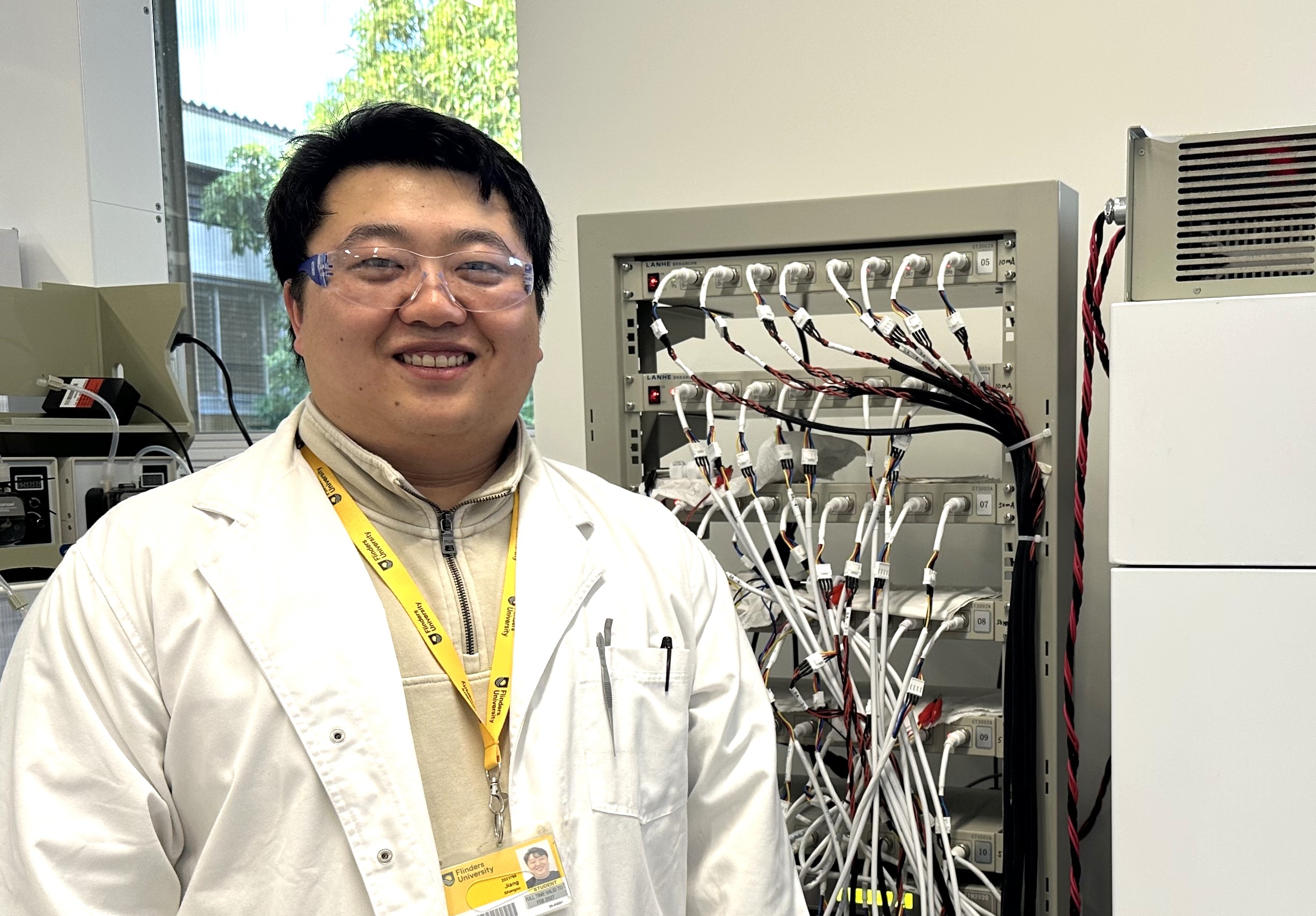
Flinders University researchers are developing a zinc-iodine battery storage system prototype in collaboration with industry, and which produced charge and discharge over 60,000 cycles in the lab.
In collaboration with industry partners, Flinders University researchers are developing a zinc-iodine battery storage system prototype based on their aqueous zinc-iodine battery (AIZB) design that can charge and discharge over 60,000 cycles.
Aiming to establish an alternative to large-scale lithium-ion (Li-ion) batteries, the researchers said their battery design uses a low-cost organic cyclodextrin-based polymer that helps store and control key chemicals, allowing it to charge quickly while maintaining performance.
“When fully charged in seven minutes, it can operate at 1.3 to 1.4 V with a capacity of 200 mAh/g over 8,000 cycles or charged in just three minutes and last for more than 60,000 cycles at 150 mAh/g,” they said.
Used in food, pharmaceuticals and cosmetic ingredients, the structure cyclodextrins acts like a cage, locking iodine compounds in place and preventing them from disrupting the battery’s operation.